Practical planning beats last-minute stress when travelling from London to Paris with children. Before you open a booking site, the most useful single thing to do is define your non-negotiables: number of travelers, exact travel dates, maximum total travel time you accept, and critical baggage or seating needs. With those fixed, you can compare direct versus connecting options, assess baggage allowances and connection risk, and check fare flexibility for cancellations or changes. This article gives a compact, family-focused pre-booking checklist and explains the route-versus-fare tradeoffs you’ll encounter. Follow it to prepare the exact details agents or booking engines will ask for, so you make an informed decision quickly and avoid surprise fees or inconvenient connections on the day.
See live routes for your exact travel day
Compare direct and connecting choices with the same baggage and traveler details.
Routing and the time-versus-comfort decision
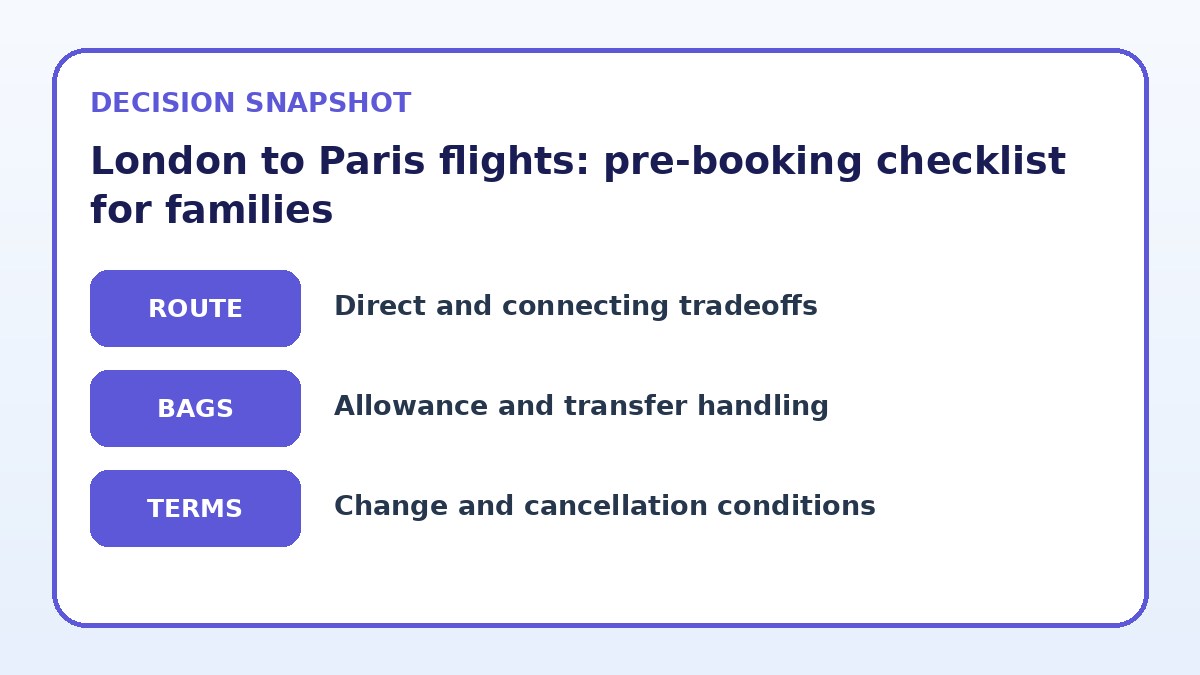
For families, the first routing choice is often direct versus connecting travel. Direct flights (or direct rail-air combinations where offered) usually reduce stress: less time in transit, fewer transfers, and lower risk of lost luggage. However, direct options can be more expensive or available only at less convenient hours. Before you search, decide how much extra travel time your family can tolerate for a lower fare—this decision will guide whether you should prioritize direct options on comparison pages or be willing to accept a single connection.
When comparing routes, line up departure and arrival windows that fit your family’s routine. Early mornings or late evenings might be cheaper but are harder with small children. A connection that shortens overnight waits or gives a midday arrival can be worth a slightly higher fare. Always check total door-to-door travel time, not just airborne time: include transfer time to and from airports, security, and any required minimum connection times noted on the carrier’s booking page.
Baggage, seats and connection risk
Families often need more checked baggage and specific seating arrangements, and these needs can change an apparently cheap fare into a higher final cost. Before you start comparing fares, count carry-ons, checked bags, and whether you’ll check a stroller or car seat. When viewing fares, check the fine print on the provider’s booking page for included baggage, allowed cabin bags, and fees for extra or oversized items. Verify whether infants and children have free allowance or require a paid seat to avoid surprises.
Connection risk matters if you choose a multi-leg itinerary. If a connection is tight, consider whether the carrier offers protected connections (single-ticket itineraries) or if you’d need to recheck luggage and clear security or border control between legs. For self-transfer options, add cushion time for delays, immigration, and baggage reclaim. If a missed connection would cause a long wait or require rebooking at your expense, you may prefer a slightly more expensive through-ticket that reduces that risk.
Compare flight-selection strategies
| Flight strategy | Best for | Risk to check |
|---|---|---|
| Book the fastest direct flight | Families prioritizing minimal travel time and fewer transfers | Often higher fares and limited departure windows; check baggage inclusions carefully |
| Choose a cheaper connecting itinerary | Families willing to accept longer travel time to save on fares | Higher connection risk and potential extra fees for baggage or rebooking |
| Buy a mid-tier flexible fare | Families needing change flexibility and seat selection guarantees | Higher upfront cost but reduces financial risk if plans change |
| Mix carriers or book self-transfer | Families seeking lower fares and more schedule options | More complexity, no protected connection—verify transfer time and baggage rules |
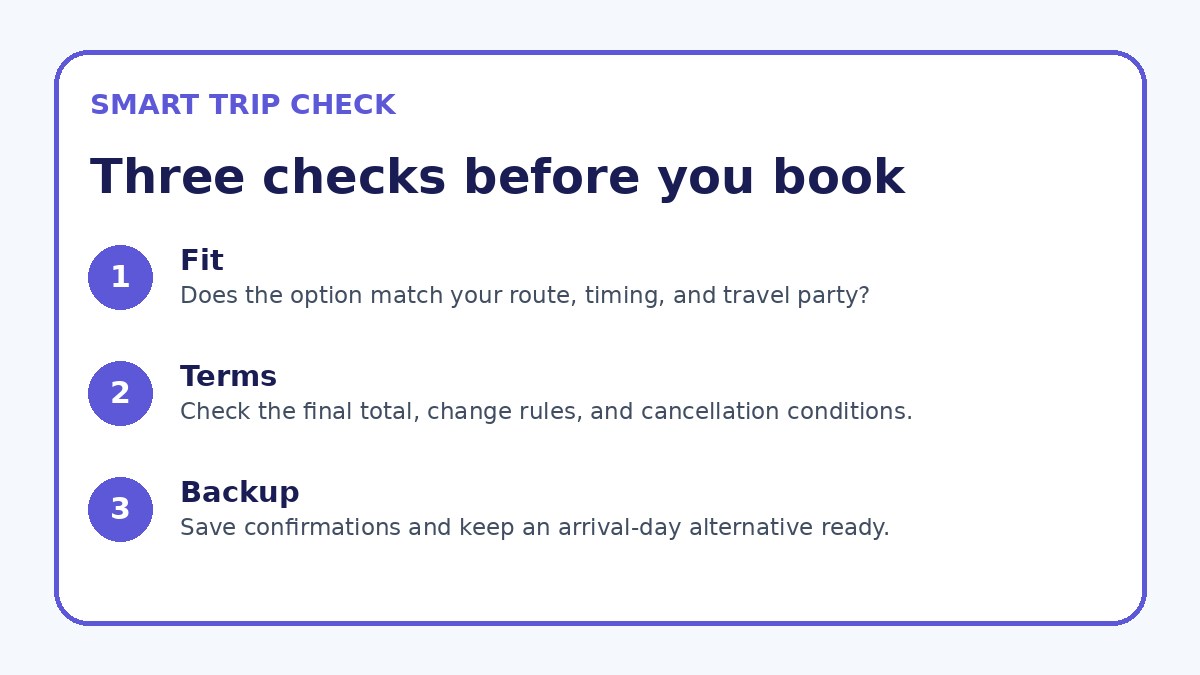
Recheck the complete itinerary
Confirm airports, connection handling, baggage, and change conditions before deciding.
Schedule fit and practical family timing
Match flight times to your family’s daily rhythms. Younger children often travel best mid-morning after breakfast, while older kids may handle late departures. Factor in time to get to the airport, check in, pass security, and settle—add at least 60–120 extra minutes depending on terminal and whether you need to check bags. Remember local transport to and from airports: some routes require longer ground transfers that change the effective departure time for your family.
Also plan meal and medication needs into the schedule. Long connections can be useful if they allow a relaxed break, but make sure airport facilities meet your needs—family restrooms, feeding areas, or quiet spaces may influence which airport or connection you prefer. When comparing itineraries, shortlist those with comfortable arrival times at your destination so your family can adjust without wasting an entire day.
Flight details to verify
- Set exact travel dates and preferred departure/arrival windows for each day before searching to filter realistic options.
- Write down every traveller’s full name, date of birth, and passport details if you plan to purchase seats requiring identity verification.
- Count carry-ons, checked bags, strollers and car seats; then verify baggage allowances and fees on the airline’s final booking page.
- Decide whether you need refundable or changeable tickets and check the exact change/cancellation rules and any associated fees.
- Note required seat arrangements and check when paid seat selection opens so you can reserve seats together as soon as booking allows.
- Compare total door-to-door time for each itinerary—including transfers to/from airports—rather than comparing airborne time alone.
Fare conditions: flexibility, refunds and seat selection
Fare rules are where many family plans break down. Before you select a fare, explicitly check the change and cancellation terms shown on the provider’s final booking page. Low-cost fares often restrict seat selection and changes and may charge for any checked baggage. If you need the option to change dates because of illness or school matters, a more flexible fare can be worth the premium—calculate the break-even point between a flexible fare and the cost of likely change fees.
Also confirm who is permitted to select seats and at what cost, and whether group or family seating is guaranteed. Look for how refunds are processed and whether vouchers are issued instead of cash. If you’re booking through a third party, verify the exact fare conditions and baggage inclusions on the operating carrier’s own booking confirmation so you know which rules apply at check-in and how to claim assistance if plans change.
Flight Guide questions travelers ask
Should I always prefer a direct flight from London to Paris with children?
Direct flights reduce handling and the chance of missed connections or lost luggage, so they are often the best choice for families. However, direct options may be less flexible on timing or more expensive than connecting itineraries. If a connection adds only a small amount of travel time and saves substantially on fare, it can be acceptable—provided you confirm protected connections, reasonable layover length, and baggage transfer policies on the carrier’s final booking page.
How far in advance should families book seats and baggage for London to Paris travel?
Book as soon as your travel dates are fixed to secure adjacent seats and included baggage allowances, because low-cost fares and standard economy seats can sell out. If you need a guaranteed row for a child or space for a stroller, select seats at booking or immediately after. Always verify the carrier’s seat assignment policy and when paid seats open, and double-check baggage rules at the provider’s booking page—policies and fees can vary between fare classes.
What do I need to verify on the airline’s final booking page before paying?
Confirm full fare conditions: change and cancellation rules, exact baggage allowance, seat selection costs, and whether the itinerary is protected if there’s a connection. Also verify traveler names and ages, any infant or child fare rules, and special assistance requests. If booking through an agent or aggregator, cross-check these details on the operating carrier’s own booking or confirmation page to ensure there are no discrepancies or missing inclusions.
Final decision note
A family-friendly booking starts with clear priorities: set who’s travelling, choose exact dates, and agree in advance whether you value time, cost, or flexibility most. Use those criteria to shortlist direct or connecting itineraries, then verify baggage, seat and fare rules on the carrier’s final booking page before you pay. Keep a cushion for connections if you self-transfer, and prefer fares that offer the level of change flexibility your family might realistically need. If you want a quick market check, Trip.com or similar aggregators are useful for comparing current options, but always confirm the final fare rules with the operating carrier before finishing your booking.
Continue planning
Check current options and final conditions
Use the provider page to confirm live availability, the final total, cancellation terms, and every condition that matters to your trip.
This evergreen planning guide was created with AI-assisted drafting and a structured quality review. It does not display live prices, schedules, availability, visa guidance, or provider rankings. Verify current details before booking. Some links are affiliate links; we may earn a commission at no additional cost to you.