Practical answer first: for most families the fast intercity train will balance time, comfort and convenience, while coach or car can save money if you accept longer travel and baggage hassle. A ferry is not a direct option between Rome and Florence; consider it only as part of a scenic coastal detour combining local trains and buses. When deciding, weigh total door‑to‑door time, how much walking or transfers your kids can handle, luggage and car‑seat needs, and whether you want flexible change policies. This guide compares the realistic choices available, explains tradeoffs parents care about, and gives a checklist to use when you compare schedules and fares on booking pages like those of train operators, coach companies, or Trip.com.
Train: why most families choose it
Trains between Rome and Florence are a straightforward family option because they offer fast city-center to city-center travel, space to move around, and toilets on board. High-speed intercity services usually only need a single reservation and avoid airport transfers; that reduces time spent on roads or juggling suitcases. For families traveling with strollers, many stations have elevators but check station maps and accessibility notes on the operator’s site. If someone in your party needs a car seat, trains avoid the complexity of fitting and moving seats between different vehicles.
When comparing train tickets, look beyond base fare: see whether seats are reserved, whether you can change or cancel, and whether discounted family or child fares apply. Consider total door-to-door time — getting to and from stations often needs a taxi or transit trip, which adds to the schedule, especially with children and luggage. Verify luggage allowances and storage space, and note whether quiet coaches or family areas are available. Always confirm the final details on the train operator’s booking page before purchasing tickets.
Coach and bus: budget choice with tradeoffs
Coaches and long-distance buses connect Rome and Florence with typically lower fares and more last‑minute availability than trains. For families on a tighter budget who can tolerate longer journeys, a coach reduces transport costs and may operate from terminals with good access to budget accommodations. Coaches can carry large bags underneath the hold, which simplifies luggage handling, but you should plan for restroom breaks and less legroom than trains, which can matter with young kids who need to move around.
Assess coach schedules and pick times that align with your children’s nap or quiet hours to reduce stress during longer trips. Check pick-up and drop-off locations carefully — some budget services use out-of-center stations or bus depots that require extra travel to reach your hotel. Confirm baggage policies and whether pushchairs fold for hold stowage. As with trains, visit the coach company’s final booking page to verify boarding instructions, any seat selection options, and refund/change rules before you commit.
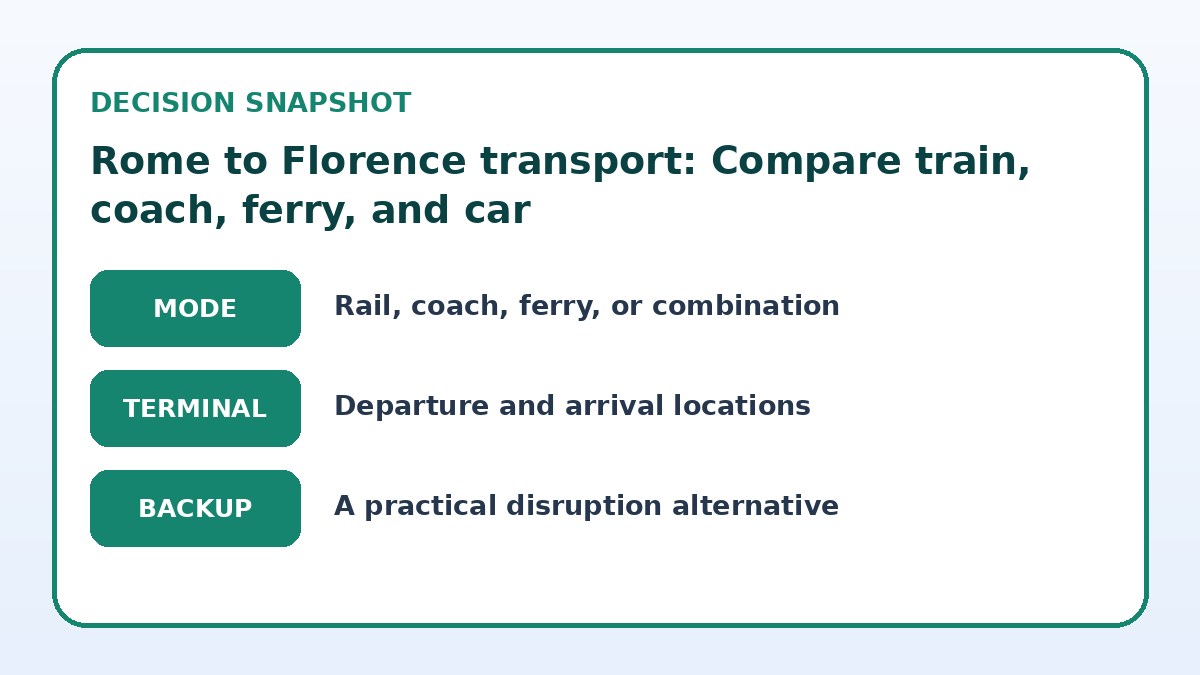
| Approach | Best for | Tradeoff to check |
|---|---|---|
| Fast intercity train | Families needing quick, reliable city-center to city-center travel | Less flexibility for spontaneous stops; must handle last-mile transit with luggage |
| Long-distance coach | Cost-conscious families willing to accept longer travel times | Longer journey, fewer facilities and more limited on-board space for children |
| Hiring a car | Families wanting flexibility, rural stops, or lots of luggage and equipment | Parking, restricted city zones, and driving stress in historic centers |
| Coastal ferry + trains/buses | Families seeking a scenic detour and slower-paced travel | Requires multiple transfers and more travel time; not direct to Florence |
Driving and car hire: flexibility vs city logistics
Hiring a car and driving lets families travel at their own pace, stop for scenic breaks, and carry more gear without worrying about luggage limits. This is appealing if you plan to explore smaller towns, vineyards, or the Tuscan countryside on the way to Florence. A car is also useful when traveling with multiple children or bulky equipment such as strollers and car seats — you control the schedule and can pack what you need without constant lifts on and off trains or buses.
City logistics are the main downsides: Florence’s historic center has restricted traffic zones and limited parking, and Rome’s traffic and parking rules add stress. Budget any additional time for finding legal parking spots and for walking from parking to your accommodation. If you hire a car, confirm whether child seats are included or can be reserved, check fuel and toll policies, and read the rental company’s full terms on their booking page. Sometimes a mixed approach—train to Florence then a day car hire—is the better compromise.
Before you book
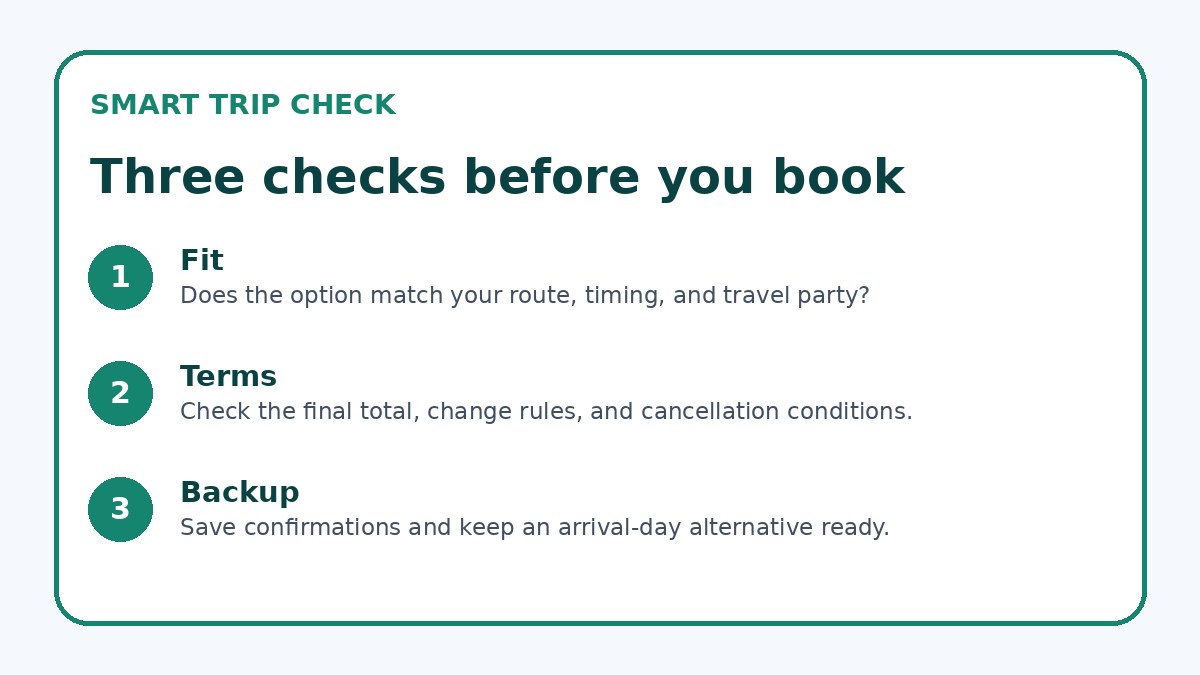
- Check total door-to-door travel time including transfers, local taxis, or transit to stations and ports.
- Confirm seat reservations, child fares, stroller policies, and luggage allowances on the provider’s booking page.
- Verify whether car seats are required by law and if rental companies supply or allow your own seats.
- Compare change and cancellation terms so you know fees if plans shift or you need to rebook.
- Identify pickup and drop-off locations precisely — some coaches and cheaper services use out-of-center terminals.
- Plan arrival logistics in Florence: parking options, pedestrian zones, and how far your accommodation is from the station.
Ferry and coastal detours: for a scenic family adventure
A direct ferry between Rome and Florence does not exist because Florence is inland; a ferry is only relevant if you plan a coastal detour via ports such as Civitavecchia or Livorno combined with local trains or coaches. Families who enjoy slower travel and seaside stops can break the trip into multiple legs, adding a boat segment for variety. Make this choice only if the extra time and connections suit your children’s routines — long transfer days are harder with small kids.
If you consider a ferry, plan every connection carefully: check port transfer options, berth schedules, boarding rules, and how luggage is handled on ferries compared with trains. Factor in weather-related changes and whether onboard facilities meet your family’s needs. For final confirmation of schedules, vehicle embarkation rules, stroller policies, and onboard amenities, always verify details on the ferry operator’s booking page or an aggregator such as Trip.com, because those particulars can change.
Frequently asked questions
Is train travel with children easy between Rome and Florence?
Yes, many families find trains straightforward because they run between central stations and usually avoid airport transfers. Trains offer room to walk, onboard restrooms, and often family‑friendly seating arrangements. Still, check whether seats are reserved and verify luggage space and stroller accessibility on the specific service you plan to use. If you need a quiet carriage or adjoining seats for a stroller and children, confirm those options on the train operator’s final booking page before you buy.
Can I bring a car seat on a coach or train?
Policies differ: trains generally allow you to carry belongings like a car seat but won’t provide an installation point; coaches store large items in the hold and may not have space to secure a car seat. If you require a car seat for safety during road travel, bring one that’s portable and check whether the coach company permits it in the cabin or if renting a car with included seats is easier. Always verify the provider’s official rules about child restraints on their booking or help pages.
Should families drive between Rome and Florence or stick to public transport?
Driving is best for families who want flexibility, side trips, or to carry bulky equipment; it’s ideal for countryside exploration. However, Florence’s restricted zones and limited parking make city driving and parking more difficult, and traffic in both cities can be stressful. If your itinerary centers on Florence’s historic area, consider taking a train and using a short-term car hire for day trips instead. Check rental terms, parking maps, and city access rules on official sites before choosing to drive.
Final planning note
Choosing how to travel Rome to Florence with your family depends on what you value most: speed and simplicity point toward the train; lower ticket costs point toward coaches; freedom and scenic side trips point toward hiring a car and planning stops; a coastal ferry is a niche, scenic alternative that requires extra connections. Use the checklist to compare door‑to‑door time, luggage and car‑seat needs, and cancellation flexibility, and always confirm exact schedules, boarding locations, and policy details on the provider’s booking pages — including any aggregator like Trip.com you might use to compare live availability. With those facts in hand, you can pick the option that keeps your family comfortable and minimizes surprises.
Continue planning
Check current options and final conditions
Use the provider page to confirm live availability, the final total, cancellation terms, and every condition that matters to your trip.
This evergreen planning guide was created with AI-assisted drafting and a structured quality review. It does not display live prices, schedules, availability, visa guidance, or provider rankings. Verify current details before booking. Some links are affiliate links; we may earn a commission at no additional cost to you.