If your Sapporo itinerary is mostly city meetings and easy public-transit access, you may not need a car. But driving unlocks flexibility for visits to suburbs, Hokkaido tech parks, or same-day trips to Otaru or hot-spring areas outside the city. The real decision hinges on pickup and return terms: where the car is collected, whether airport counters add fees, the required paperwork, and how flexible returns are for late flights. This article gives the practical answer up front — decide to rent only if pickup/return windows match your business schedule and the insurer's permitted drivers and damage-excess terms suit corporate policy — then walks you through route value, insurance wording to verify, pickup/return friction to anticipate, and a clear non-driving fallback.
Deciding whether to drive: route value for a business trip
Start by mapping your appointments and lodging in Sapporo. Driving adds clear value when meetings are spread across multiple wards, when you must carry samples or equipment, or when you plan same-day side trips to nearby towns that lack fast rail links. Consider typical Sapporo traffic: central wards are dense and well served by subway and trams, while corporate parks and some research campuses lie beyond easy transit. If your schedule clusters around Odori, Susukino, and the main station, a car may be more hassle than help.
Quantify the benefit: estimate door-to-door times with and without a car, adding parking time and return-to-airport transit for business flights. Include hidden costs such as parking fees at client sites and time hunting for stations versus driving straight to an industrial park. Where public transit offers frequent, predictable service and saves time in central Sapporo, favor transit; where meetings are dispersed or start very early or end late, driving is likely worth the extra planning.
Decide whether driving earns its place
| Mobility strategy | Best for | Cost or friction to check |
|---|---|---|
| Full rental for the whole business trip | Travelers with many off-center meetings or equipment to move | Higher total cost, parking hassles, and more pickup/return paperwork to manage |
| Rent only for specific days | Trips mixing central meetings with occasional out-of-city visits | Requires careful scheduling and extra pickups may mean depot shuttles or fees |
| No rental — rely on rail, tram, and taxis | Tightly scheduled city-centric itineraries and short stays | Less flexibility for remote meetings and potentially higher taxi costs for many off-hour trips |
| Private-hire or pre-booked transfer services | Critical meetings where timing reliability outweighs cost | More expensive per trip but reduces pickup/return risk and administrative overhead |
Check live rental choices only after the route test
Use the exact driver, dates, pickup point, and return plan to compare current conditions.
Insurance wording and corporate liability you must verify
Insurance sections in rental terms matter more for companies than leisure travelers. Look for explicit clauses on who qualifies as an authorized driver (employee names, additional drivers, and restrictions on age), whether corporate credit cards are accepted for damage waivers, and whether business use—including delivery of samples or client visits—is covered. Check what counts as a prohibited use (for example, competitive testing, racing, or off-road) and whether crossing Hokkaido prefectural borders affects coverage.
Don’t guess about excess and collision damage waivers. Confirm the size of any deductible and whether the rental company or an optional protection package reduces or eliminates it. If your company has a global insurance policy or corporate rental agreement, cross-reference the provider wording. Always print or save the exact insurance wording shown on the provider’s final booking page and the certificate you’ll present at pickup — that document is what counter staff will check.
Compare the full rental conditions
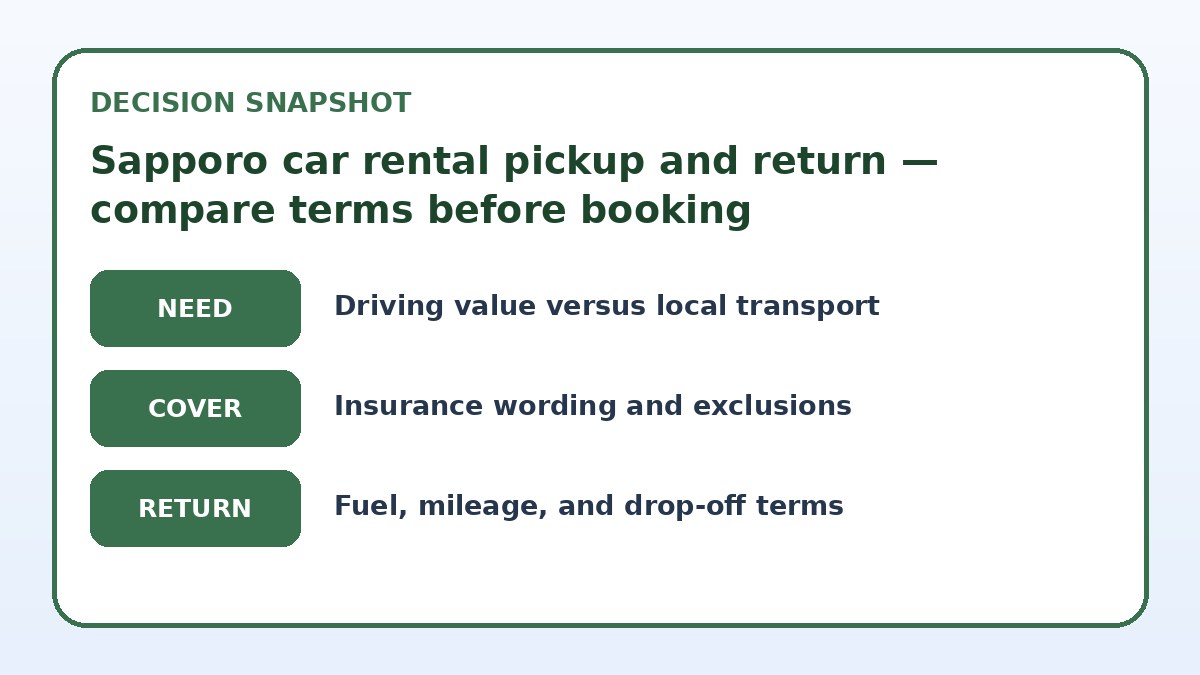
Confirm insurance wording, exclusions, deposit, fuel, mileage, and return terms on the final page.
Pickup and return friction: what to expect at airports and city depots
Pickup friction commonly arises from location, operating hours, and shuttle logistics. Some depots in Sapporo are offsite and require a shuttle bus; others have limited counters that close late. For airport pickups, confirm whether the counter is inside arrivals or in an external lot and whether returning a car outside counter hours triggers an after-hours fee or a drop-box procedure. On the final booking page, check exact counter address, contact number, and the supplier’s instructions for late arrivals — those details decide whether your late flight risks costly surcharges.
Return friction can sabotage a tight business schedule. Confirm where to refuel, whether fuel policies require a full tank, and how odometer and vehicle condition are verified at drop-off. If you must return at an offsite depot before a flight, verify shuttle timing to the terminal and whether staff will inspect the car immediately or note any damage later. If the provider notes 'post-return inspections' or holds the security deposit for days, factor that into corporate reconciliation and card authorizations.
Car rental terms to verify
- Screenshot the rental provider’s exact pickup counter address, shuttle instructions, and open hours from the final booking page.
- Confirm and document which drivers your corporate policy allows and add them to the booking if required.
- Get written confirmation of insurance excess amounts and whether optional waivers reduce that deductible.
- Note the fuel policy and plan to refuel at a clearly listed station to avoid return penalties.
- If returning outside counter hours, confirm drop-box procedure and shuttle timing for airport transfers.
- Compare door-to-door transit times for each meeting and budget the cost difference against rental and parking fees.
Non-driving fallback: transit and private-hire options that keep commitments
When pickup or return terms look risky for a tight business schedule, arrange reliable alternatives. Sapporo’s subway, tram, and JR services cover central areas with high frequency; taxis and app-based private-hire vehicles handle off-hour trips or locations poorly served by rail. For early-morning meetings or late returns, a pre-booked airport transfer or a company-arranged private car reduces the risk of missed flights or cancelled meetings, even though unit cost per trip is higher than a day rental.
Hybrid approaches can also work: rent a car only for specified days when you need it and use transit or taxis for core-city meeting days. If you plan this, verify one-way rental policies and whether returning a car at a different depot or airport is permitted and what fees apply. Use Trip.com or the rental provider’s site to compare current availability and exact pickup/return pages, and always retain screenshots of the supplier’s return instructions before you travel.
Car Rental & Road Trip questions travelers ask
Can I use my corporate credit card and corporate insurance to cover Sapporo car rentals?
Many companies use corporate credit cards for rental payments and have corporate insurance arrangements, but coverage terms vary by supplier. Before booking, verify on the provider’s final booking page whether that card type is accepted and whether the supplier recognizes external insurance or requires purchase of its own waivers. Print or save the supplier’s insurance and payment wording and bring a copy to the counter. If any required acceptance is unclear, contact the rental company directly and request email confirmation.
What documents and ID do I need to pick up a rental car in Sapporo as a business traveler?
Typically you’ll need a valid driver’s license recognized in Japan (an international driving permit plus your home license if required), passport, the credit card used for booking, and any company authorization letter if your firm requires one. The rental supplier’s final booking page will list exact ID and documentation, including any age or license-experience requirements. Bring printed booking confirmation with insurance wording and the contact number for the counter in case of arrival or verification issues.
How should I handle returning a car if my flight departs late at night or is delayed?
Check whether the rental location supports after-hours returns and what procedure to follow — some depots offer a physical drop box plus a shuttle, others require staff inspection before you leave. On the final booking page confirm drop-off hours, the address to leave keys, and whether an after-hours fee applies. If your flight could arrive late, consider arranging a same-day airport transfer or book a company-approved private-hire vehicle to avoid incurring unexpected fees or being unable to return the car before counter closure.
Final decision note
For business travelers in Sapporo, the pickup and return terms often determine whether renting is practical. Drive when dispersed appointments, equipment transport, or off-hour meetings make time savings decisive; otherwise rely on transit, taxis, or targeted short-term rentals. Before booking, verify the supplier’s exact pickup counter, shuttle rules, insurance wording, authorized-driver clauses, fuel policy, and after-hours return procedure on the final booking page — those documented lines are what counters and corporate accounting will use. If any critical term is ambiguous, secure a non-driving fallback so your meeting schedule stays on track.
Continue planning
Check current options and final conditions
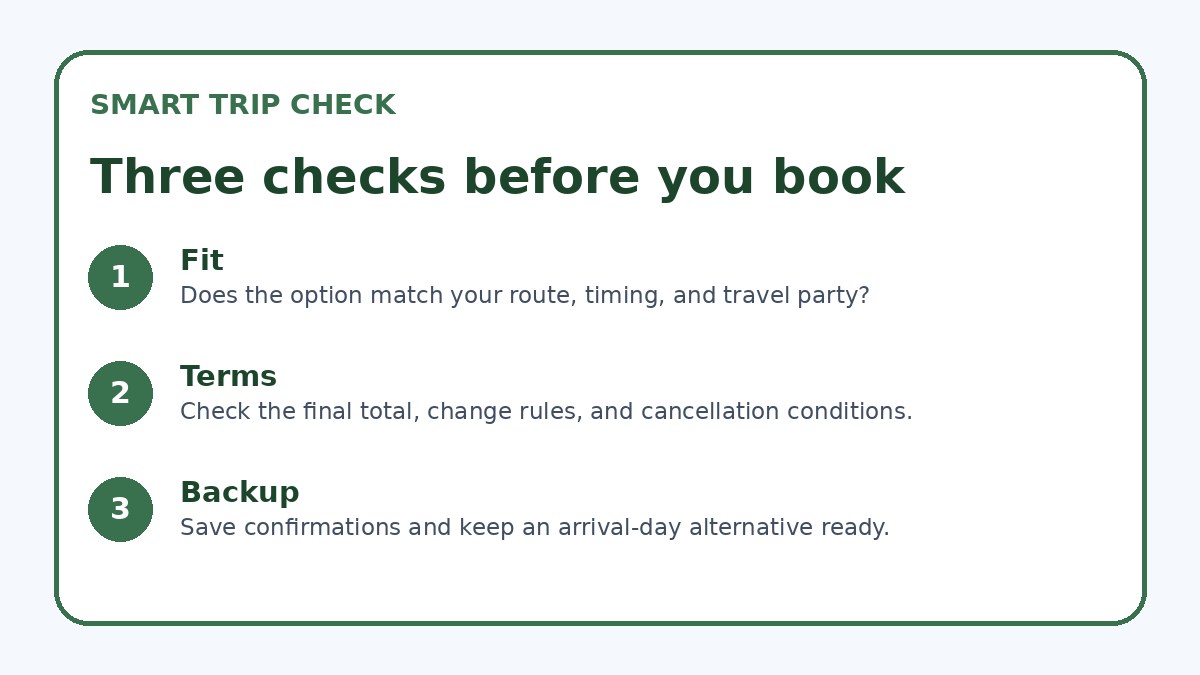
Use the provider page to confirm live availability, the final total, cancellation terms, and every condition that matters to your trip.
This evergreen planning guide was created with AI-assisted drafting and a structured quality review. It does not display live prices, schedules, availability, visa guidance, or provider rankings. Verify current details before booking. Some links are affiliate links; we may earn a commission at no additional cost to you.