Practical answer: pick the mode that matches how much luggage, how flexible your schedule, and how comfortable you want transfers to be—rail if you value city-centre speed and simplicity, coach for lower-cost door-to-door options, and ferries or road combinations if you prioritise scenic routes or specific drop-off points. For first-timers the travel day succeeds or fails on transfer realism: how you get to the terminal, how long security and border steps take, and whether your luggage and onward transfer are straightforward. This guide focuses on preparing the travel day end-to-end: choosing between rail, coach, ferry or mixed routes; assessing terminal fit and luggage friction; building timing flexibility; and picking a disruption backup. Read on for the practical checklist, decision tradeoffs, and spoken reminders of what to verify on booking pages so you aren’t surprised at the last minute.
Choosing between rail, coach, ferry or mixed routes
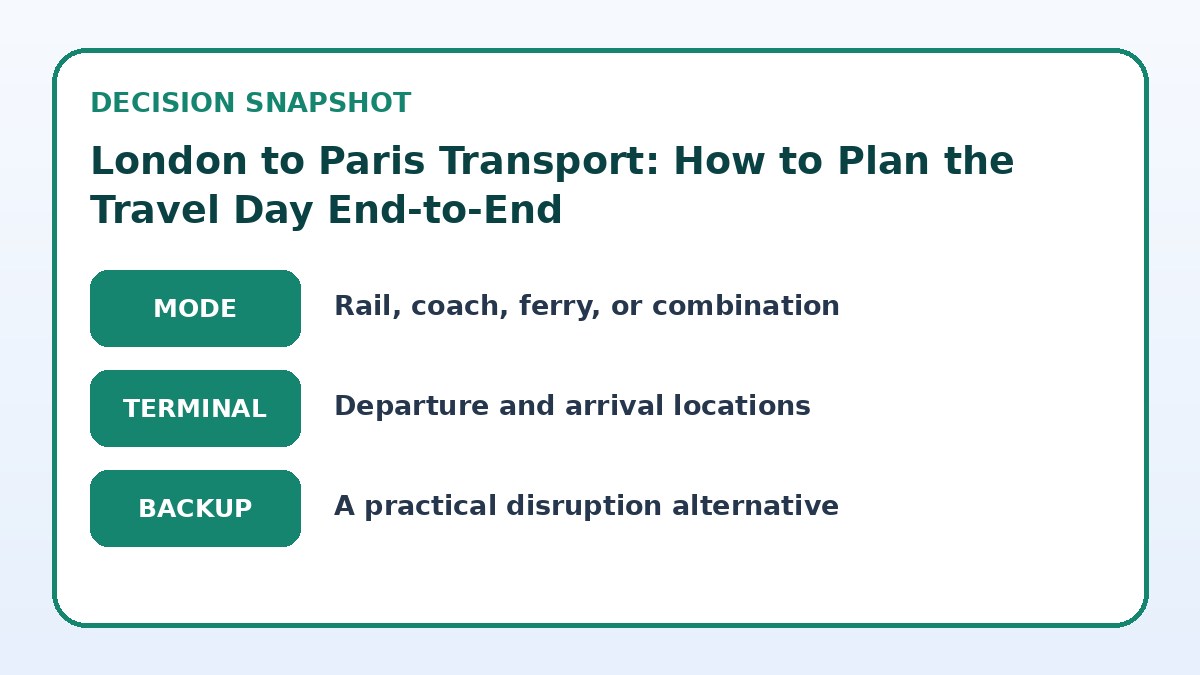
Start by listing priorities: fastest door-to-door, lowest number of handlings for luggage, simplest transfers, or lowest cost. Rail trips between central London and central Paris often reduce the number of transfers because both termini sit in the city, so they suit travellers who prefer minimal navigation on the travel day. Coaches trade off time for simplified fares and sometimes closer pickup points for specific neighbourhoods. Ferries or mixed road-and-sea options add scenic variety but typically increase transfer planning and boarding steps.
Compare direct versus connecting options within each mode. A direct train or coach minimizes points where something can go wrong, but a connecting route might open earlier or later departure windows and possibly stretch savings if you’re flexible. When checking providers on booking pages, verify exact station names, transfer requirements (for example whether a shuttle or a local train is needed), and the policy for rebooking or disruptions so you have actionable comparisons rather than vague claims.
Choose the end-to-end journey plan
| Journey approach | Best for | Friction to check |
|---|---|---|
| Direct high-speed rail | Minimising town-centre transfers and reducing luggage handoffs. | Less flexibility on departure times and usually requires booking earlier for preferred seats. |
| Coach services | Door-to-door pickup flexibility and lower-entry fares when you’re budget-minded. | Longer journey time and more exposure to road delays and comfort limitations. |
| Ferry plus road combinations | Scenic travel and those needing a specific coastal arrival or vehicle transport. | More boarding steps, often extra check-in time, and higher transfer complexity. |
| Mixed-mode planning (train+coach or coach+ferry) | Customising arrival points, saving money with flexible legs, or reaching outlying hotels. | Increased risk from multiple connections and greater need for careful time buffers. |
Check live intercity options
Look beyond the ride itself and compare terminals, transfers, luggage, and arrival fit.
Terminal fit and luggage/transfer friction
Terminal fit is about where services start and finish, and how easy it is to keep moving after arrival. For first-time travellers, a central arrival station that links directly to city transit or taxis reduces the mental load of the travel day. Luggage friction matters: long walks, steep escalators, or multiple platform changes can make a short trip exhausting if you’re carrying heavy bags. Check whether your chosen service stores luggage on board, requires lift use, or offers porters—if any—on the operator’s final booking page.
Think through the full sequence: your accommodation to the departure point, any intermediate transfers, and finally from the destination station to your hotel. If you have big suitcases, favour options with fewer handoffs and ground-level loading. If your itinerary includes a timed check-in or tour after arrival, add extra buffer specifically for luggage handling. Confirm practical details like whether tickets are printed or mobile, and whether you’ll need ID or passports at departure and arrival to avoid surprises.
Timing flexibility: building realistic buffers
Replace optimistic timings with realistic ones based on your mobility, luggage, and familiarity with stations. For example, allow extra time for exits that require lifts or long corridors, and anticipate local transportation schedules after arrival. Build buffers not just for transport delays but for simple human needs: restroom stops, coffee, or a last-minute map check. If you must meet a set time in Paris—an event, dinner or hotel check-in—calculate arrival windows back from that commitment and choose departures that still leave comfortable slack.
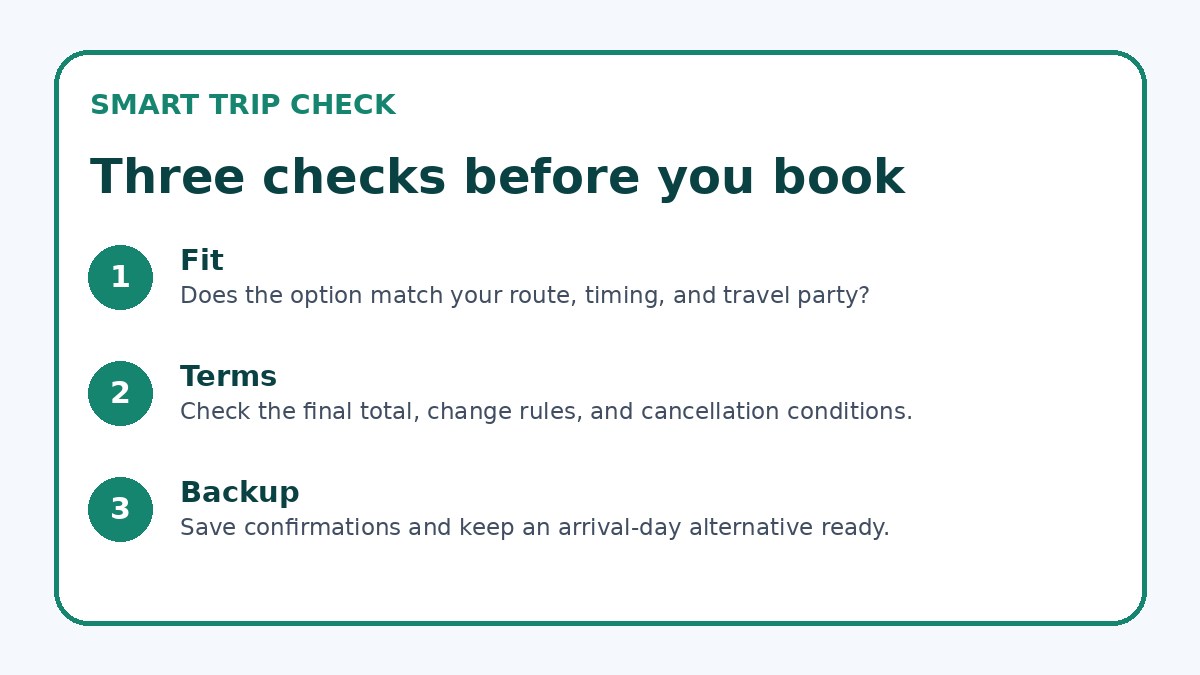
Use confirmed schedules only as the baseline; create two cushion layers: a generous personal buffer for pre-boarding and a plan B that you can reach within an hour or two of your planned arrival. Where possible, book flexible tickets or refundable luggage options and keep the confirmation page handy. Before finalising bookings, verify on the operator’s page how long before departure doors open, recommended check-in times, and whether there are separate passport-control queues that could change your timing needs.
Compare the practical alternatives
Use the final page to confirm what is actually offered on your dates and save a workable fallback.
Intercity travel checklist
- Verify exact departure and arrival station names on the operator’s booking page and note the nearest city transit or taxi options.
- Measure luggage dimensions and weight limits; choose the mode that minimises the number of times you must lift and carry bags.
- Plan two timing buffers: one for getting to the terminal and one for potential delays en route or at border checks.
- Screenshot or print tickets, ID pages, and alternative-service details so you can act offline if mobile networks fail.
- Pre-identify a realistic backup: a later scheduled service, a coach route, or a nearby hotel and how to reach it from arrival.
- Share your itinerary and an estimated arrival window with anyone meeting you, and set an alarm for when to leave your accommodation.
Disruption backup and day-of communication
Pick one concrete backup that you can execute quickly if your primary service is delayed or cancelled. A backup might be a later train or coach with a simple walk from your arrival point, a pre-identified taxi rank capable of driving you across the channel route, or a nearby hotel for an unexpected overnight. Write down or screenshot essential details—alternative departure points, phone numbers for taxi companies, and the exact names of alternative stations—so you can act without wrestling through apps under stress.
On the travel day, maintain simple communication routines: share your updated arrival time with anyone meeting you in Paris, keep digital copies of tickets and IDs, and set two reminders for departure (one for leaving your accommodation and another for arriving at the terminal). Consider portable battery power, a printed map or written directions, and a small emergency cash amount in the local currency. Finally, use official operator pages to verify rebooking rules and platform changes rather than relying on third-party summaries.
Rail & Intercity Transport questions travelers ask
How early should first-time travellers arrive at the departure terminal?
Arrive with enough time to handle ticket checks, bag stowage and basic navigation rather than merely meeting a printed start time. For train departures, many travellers allow 45–90 minutes depending on how familiar they are with the station, whether they have to check or tag luggage, and whether they need to pass passport control. For coach or ferry services, add extra time for boarding lines and vehicle loading. Check the operator’s recommended arrival window on the booking page and add a personal cushion based on mobility and luggage.
What documents and ID do I need for crossing from London to Paris?
Document rules can change, so verify what forms of ID or travel documents are required on the operator’s booking page or the relevant government sites before you travel. Carry the originals of passports or any required ID, and have digital copies accessible. If your route involves coach or ferry crossings that undergo border checks, expect to present ID at departure and arrival. Keep documents in an easily reachable place and avoid storing them deep in checked luggage.
If my primary service is delayed, how should I switch to an alternative on the day?
First, check the operator’s rebooking or refund policy directly on their booking page to know your rights. Next, use pre-saved alternatives: identify the nearest station or coach terminal with regular services and the earliest departures you could reach. Contact customer service or a station help desk for guidance on same-day changes. If public options are limited, evaluate taxi or rideshare links for short distances to an alternative hub, and keep a small emergency budget for that contingency.
Final decision note
Preparing the travel day between London and Paris is less about picking a single ‘best’ mode and more about matching the mode to your real-world constraints: luggage, transfers, timing flexibility, and how you handle disruption. Choose the option that reduces the number of handoffs and aligns with your comfort moving through stations; then build realistic buffers, confirm terminal logistics on booking pages, and select one clear backup you can execute quickly. Communicate your plan to anyone meeting you, keep physical and digital copies of tickets and ID, and prioritise end-to-end door-to-door practicality over theoretical savings. With these preparations you’ll lower stress and increase the chances that the travel day feels smooth rather than rushed.
Continue planning
Check current options and final conditions
Use the provider page to confirm live availability, the final total, cancellation terms, and every condition that matters to your trip.
This evergreen planning guide was created with AI-assisted drafting and a structured quality review. It does not display live prices, schedules, availability, visa guidance, or provider rankings. Verify current details before booking. Some links are affiliate links; we may earn a commission at no additional cost to you.