If you’re booking Sydney to Auckland flights for the first time, start by deciding whether you value the simplest route or a lower fare. Direct routing reduces the number of times you check or collect bags and shortens time in airports, while cheaper fares can come with tighter baggage limits, longer connections, or stricter change rules. For short trans-Tasman hops, routing, baggage allowance, and connection risk interact: a cheaper connecting itinerary may save money but multiply the chances of delay, missed connections, or additional baggage fees. Before you search live fares, have exact travel dates, number of travelers, and the size and contents of your luggage ready. That way you can compare not just headline fares but how much time at each airport you must budget and what baggage costs will apply on the booking page.
See live routes for your exact travel day
Compare direct and connecting choices with the same baggage and traveler details.
Routing and the route-versus-fare tradeoff
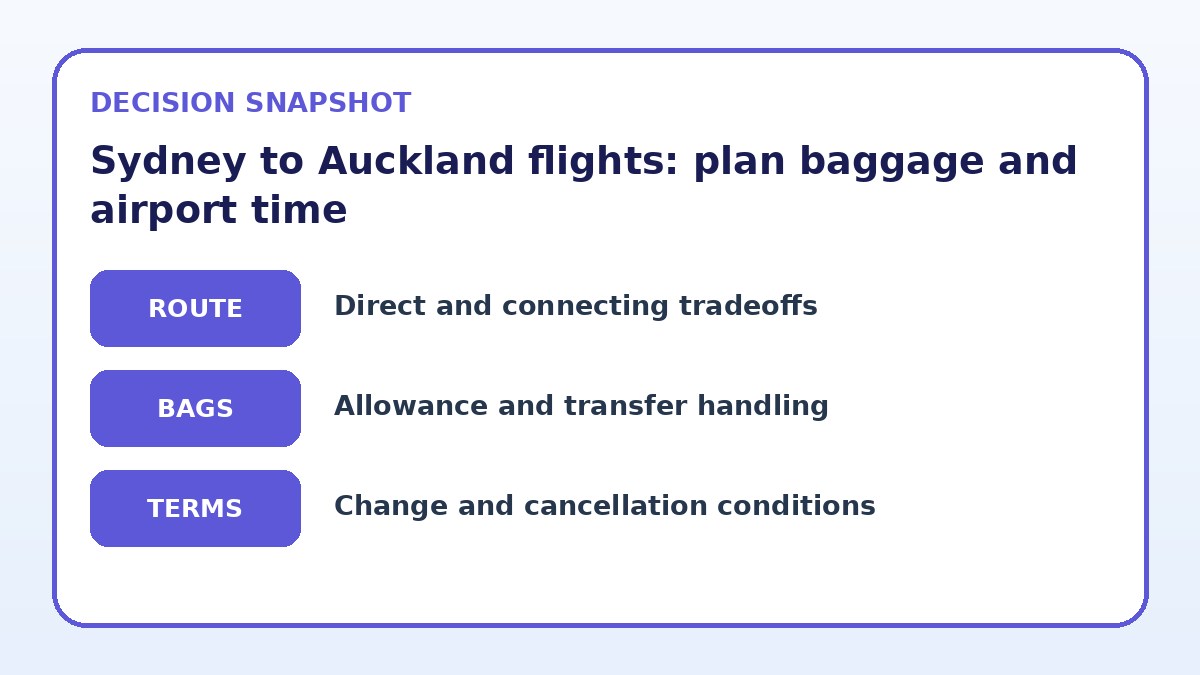
Your first decision is whether to prioritise a direct route or a lower fare that might involve connections. Direct Sydney to Auckland flights typically mean one takeoff and landing, less time in transit, and fewer points where baggage can be delayed. Connecting itineraries can be cheaper or open more schedule choices, but each additional segment adds time to get between gates and increases the chance of missed connections. Before you commit, list how important on-time arrival is for your itinerary—tight plans on arrival, like a cruise or an event, usually justify paying more for a non-stop flight.
When comparing fares, look beyond the headline price. A lower fare that excludes checked luggage, seat selection, or carries restrictive change/cancellation terms may end up costing more once you add required options. Also confirm whether a connection would require you to exit and re-enter security or customs, which can add significant time. Write down your preferred travel dates and the number of passengers, then check schedules and fare conditions side-by-side so you can weigh the pure cash saving against the operational convenience of a simpler route.
Baggage allowances, packing strategy, and extra costs
Baggage allowances vary by fare class and carrier; some low-cost fares include carry-on only, while other fare types bundle a checked bag. Before you finalise booking, measure and weigh a typical packed bag and compare that to the airline’s published free allowance on the booking page. If you need both a carry-on and checked bag, factor the cost of adding a checked bag at booking rather than at the airport, where fees are often higher. Consider redistributing items between travellers to avoid an extra checked piece.
Packing strategy matters for trans-Tasman travel: use a reliable carry-on that fits the airline’s size limits so essentials stay with you, and pack items that would be difficult to replace in your carry-on. If your outbound or return involves a connection, confirm whether your tickets are on a single itinerary or separate bookings; separate tickets can require you to claim and recheck luggage during a connection. Finally, check the airline’s policy for sports equipment, musical instruments, and batteries—these items frequently have special rules and fees.
Compare flight-selection strategies
| Flight strategy | Best for | Risk to check |
|---|---|---|
| Book the shortest direct flight | Travelers with tight schedules or important onward connections | Usually higher base fare and possibly fewer fare discounts or flexibility options |
| Choose a connecting itinerary with lower base fare | Budget-conscious travelers who can accept longer travel time | Higher connection risk and potential extra costs for baggage or delays |
| Buy a flexible/refundable fare | Those who value change flexibility and lower rebooking stress | Higher upfront cost compared with restricted ticket types |
| Purchase the cheapest fare and add extras a la carte | Travelers who are disciplined about packing light and pre-booking essentials | Can become costly and complex if you need to add baggage, seats, or changes later |
Recheck the complete itinerary
Confirm airports, connection handling, baggage, and change conditions before deciding.
Connection risk and airport time: how much padding to add
Connections increase the operational complexity of your trip. If you choose a connecting itinerary, allow comfortable minimum connection time that accounts for disembarking, walking between gates, passport control, and possible baggage re-drop. When designing padding, add time for peak-hour congestion at Sydney Airport departures and at Auckland arrivals, and for the possibility of slight delays. For first-time visitors, err on the side of more time rather than less—missing a connection can cascade into extra nights, rebooking fees, or long waits for the next available segment.
If you prefer less stress, pick flights with longer layovers or a single-carrier itinerary where the airline handles baggage transfers and rebooking in case of delay. Verify on the carrier’s final booking page whether the connection is protected (single-ticket) or not. If your journey involves separate tickets, plan at least double the transfer time you might otherwise accept because you’ll likely need to collect and recheck luggage and clear security again.
Flight details to verify
- Confirm your exact travel dates, number of passengers, and full legal names before comparing live fares.
- Measure and weigh the luggage you intend to take and record dimensions for carry-on and checked items.
- On the airline booking page, verify the baggage allowance, measurement limits, and fees for additional pieces.
- If your itinerary includes a connection, confirm whether all segments are on one ticket and whether transfers are protected.
- Allocate at least double your comfortable transfer time for connections on separate tickets to allow baggage re-check and security.
- Save or screenshot the final fare rules, baggage details, and booking confirmation email immediately after purchase.
Schedule fit, fare conditions, and what to verify before booking
Match flight times to your ground plans. Early departures may require an overnight stay near the airport in Sydney, while late arrivals in Auckland could affect onward transit options. Check the fare conditions for change and cancellation terms, baggage inclusions, and whether seat selection is included or extra. For flexible or business-sensitive travel, give more weight to fares with lenient change policies even if they have a higher headline price. Have exact traveller names and passport details ready so you can confirm fare rules and restrictions at checkout.
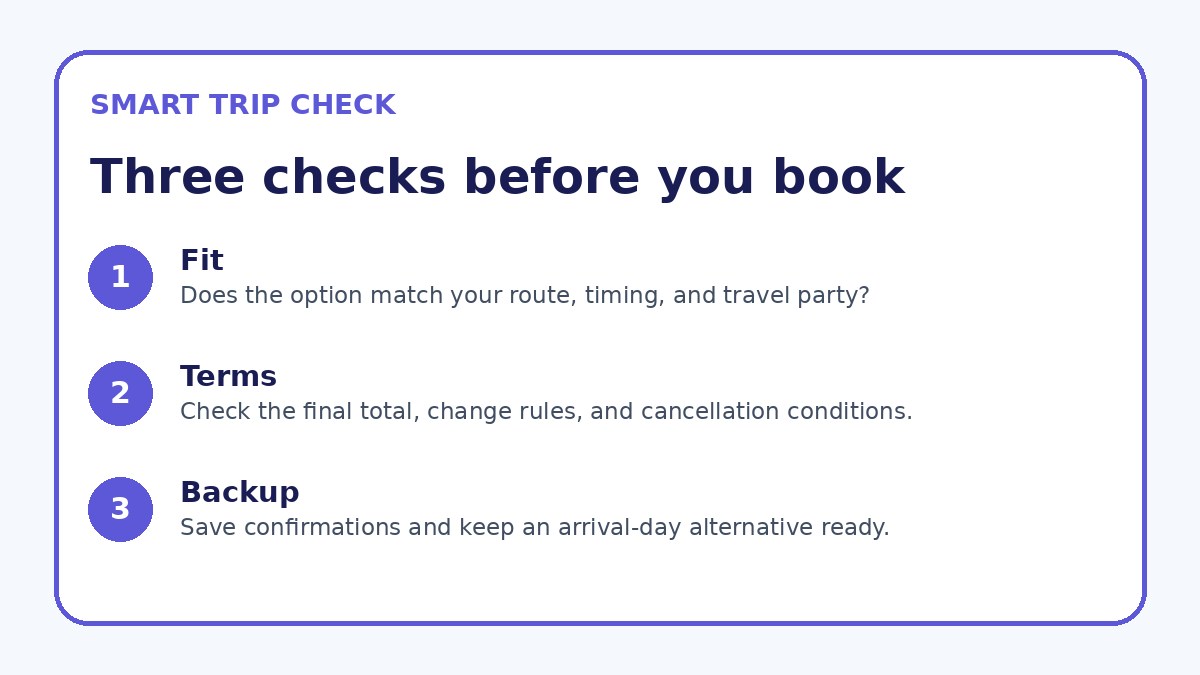
Before you click purchase, verify three things on the airline or travel agent’s final booking page: the exact baggage allowance with dimensions and weight, the full list of change/cancellation fees or rules, and whether any connection is on a single itinerary with protected transfers. If you compare results on an OTAs like Trip.com, use that as a quick baseline, but always confirm the final conditions with the operating carrier. Take screenshots or save the booking confirmation email containing baggage and fare rules.
Flight Guide questions travelers ask
How much airport time should I allow for a direct Sydney to Auckland flight?
For direct departures, plan to arrive at Sydney Airport early enough to clear check-in, security, and border checks—typically at least 90 minutes for international departures if you have checked baggage. Early morning or peak periods can add queues. On arrival in Auckland, allow an additional 30–60 minutes for disembarkation, immigration and baggage claim, though times vary by flight and terminal. Always check the airline’s recommended check-in deadline and the airports’ official guidance before travel.
Can I rely on my airline to transfer checked bags if I book different carriers?
If all segments are on a single ticket under one itinerary, the operating carrier(s) generally arrange baggage transfer between flights; confirm this on the booking page. With separate tickets or different carriers without interline agreements, you will likely need to collect and recheck baggage between flights, which requires more connection time. Verify transfer protection and baggage handling rules in the fare conditions, and consider buying a single-ticket itinerary or longer layover if baggage transfer is essential.
What should I check about baggage rules for special items like sports gear or batteries?
Special items often carry different rules and fees. Check the airline’s policy for items such as surfboards, golf clubs, e-bikes, or large musical instruments on the final booking page—these items can require advance notification, special packaging, or separate booking and fees. Batteries and devices with lithium cells have specific carry-on and checked baggage restrictions; review the carrier’s hazardous goods guidance. If in doubt, contact the airline before booking to confirm handling and any additional costs.
Final decision note
Organising baggage and airport time for Sydney to Auckland flights is primarily about deliberate tradeoffs: simpler routing reduces transfer risk and airport stress, while bargain fares often shift costs and time onto you in the form of baggage fees or tighter connections. Prepare exact travel dates, passenger names, and luggage measurements before you compare options so you can evaluate fares on equal terms. Always verify baggage allowances, connection protection, and fare-change rules on the carrier’s final booking page, and keep a saved copy of your booking details. When in doubt, prioritise a little extra airport padding—first-time visitors will value the reduced stress and clearer contingency options.
Continue planning
Check current options and final conditions
Use the provider page to confirm live availability, the final total, cancellation terms, and every condition that matters to your trip.
This evergreen planning guide was created with AI-assisted drafting and a structured quality review. It does not display live prices, schedules, availability, visa guidance, or provider rankings. Verify current details before booking. Some links are affiliate links; we may earn a commission at no additional cost to you.