Short practical answer: for most first-time visitors to Milan, a car is unnecessary and often more hassle than help. The city's transit network, compact historic center, and extensive walkable neighborhoods make public transport, trams, and taxis the easier way to see major sites like the Duomo, Brera, and Navigli. Choose a car if your itinerary includes rural Lombardy, multiple day trips to remote lakes or vineyards, or if you travel with heavy equipment and need flexibility. Before you click "book," compare where you’ll stay, how many people and bags you have, and the exact places you want to visit outside the city. This guide helps you weigh benefits, costs, and the practical checks to decide whether a Milan car rental actually improves your trip or just adds stress.
Why most first-time visitors skip a Milan car rental
Milan is compact and highly walkable in its main neighborhoods; many landmarks cluster close together and are well-served by metro lines, trams, and buses. Public transport is frequent and takes you quickly between central points, while taxis and ride-hailing can fill gaps late at night or for door-to-door trips. Parking in the centro storico is limited, and drivers unfamiliar with local signage risk fines for entering restricted zones. For a short city-first visit focused on museums, shopping, and neighborhood cafes, choosing not to rent a car often saves time, money, and stress.
Walking and transit also let you relax into Milanese life: lingering in piazzas, changing plans on the fly, and avoiding the responsibility of urban driving. If your party is small and luggage light, you’ll find that trains to nearby towns depart regularly from central stations, making rail day trips efficient. Budget travelers benefit from avoiding rental insurance, fuel, and parking expenses, while families with young children might prefer the simplicity of staying near public transport nodes rather than wrestling with a vehicle in a busy city.
When a rental car makes sense for your Milan trip
A car adds clear value when your itinerary includes rural destinations or poorly connected sites outside Milan: remote villas, dispersed wineries, mountain passes, or a flexible tour of northern Lombardy. Driving also matters for travelers with mobility needs who rely on private transport for door-to-door convenience, or groups with large amounts of luggage and equipment. If you plan to base yourself outside the city in smaller towns with limited train service, a rental can be the most practical way to move between sights without long transfers.
Deciding to rent should follow a realistic road-test of your planned stops: list each day’s start and end point, estimate driving distances, and check public-transport alternatives for each leg. Consider one-way rental fees if you want to pick up a car in Milan and drop it off elsewhere, and think about seasonal road conditions if you’ll drive to alpine areas. Renting only for the days you actually need a car—pick up the vehicle the morning you leave the city, return it when you’re back—lets you mix the convenience of a car with the simplicity of city transit.
| Approach | Best for | Tradeoff to check |
|---|---|---|
| No car — use transit, walking, taxis | Short stays focused on central Milan attractions | Less flexibility for remote day trips; rely on schedules and transfers |
| Rent only for day trips | Visitors who want freedom for 1–3 excursions outside the city | Repeated pick-ups/drop-offs add time and potential fees |
| Full-trip rental based in Milan | Travelers with heavy gear or multi-destination rural itineraries | Higher parking, ZTL hassle, and urban driving stress |
| Hybrid: train in + rental outside | Combine easy city access with targeted countryside driving | Requires careful scheduling and coordination between modes |
Practical checks before you book any Milan car rental
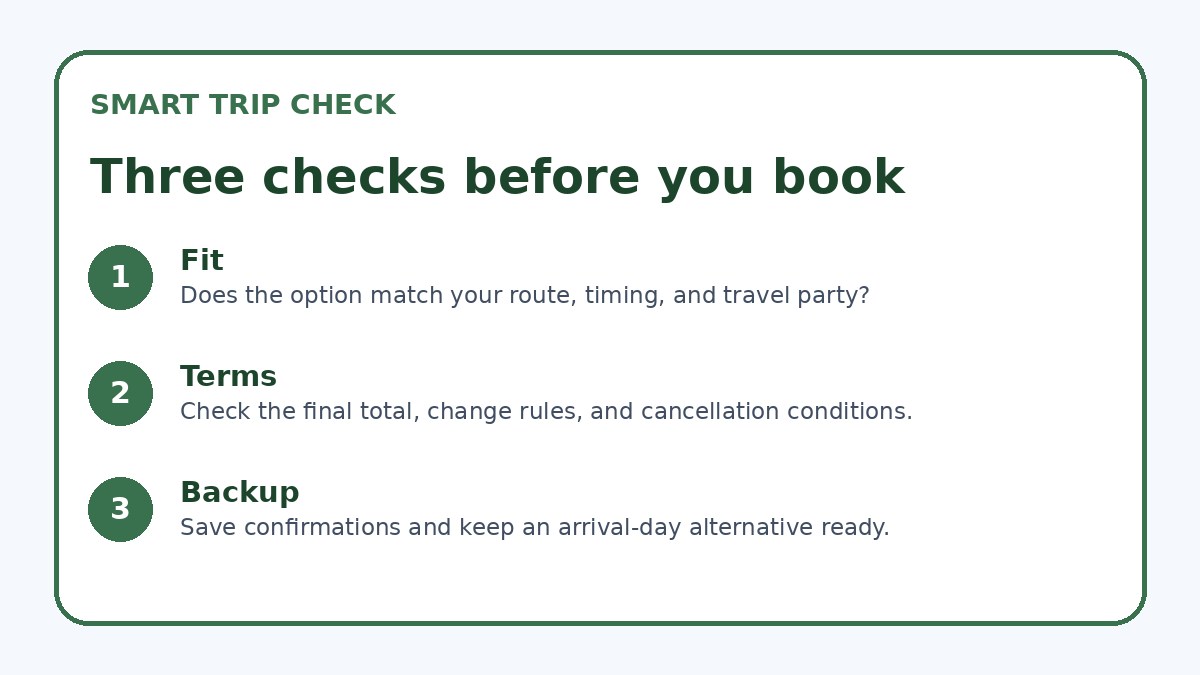
Confirm the exact address and ZTL (limited traffic zone) rules around your accommodation: many central streets restrict vehicle access for non-authorized cars at certain hours. Ask your hotel or host whether they can register your rental plate to obtain temporary access, or whether they offer a private parking spot. Verify what the rental company requires to pick up the car—driver age, international driving permit if needed, and the documents needed to avoid delays at the desk. These are details that commonly change, so always confirm them on the rental provider’s final booking page before purchase.
Next, check the parking situation near places you plan to visit: look for official parking garages versus on-street parking and whether spaces accept credit cards or require coins. Examine insurance options carefully on the provider page—what’s included vs optional —and understand liability limits, deductible amounts, and whether your personal credit card offers coverage. Finally, make a practical route test: map the driving time and alternative train or bus connections for each day to see whether the time spent driving outweighs convenience.
Before you book
- Map each day’s start and end points and compare driving time vs train or bus alternatives before booking a car.
- Ask your accommodation if they can register your rental plate for ZTL access or provide private parking information.
- Confirm all rental terms on the supplier’s final booking page: driver age limits, insurance details, fuel policy, and required documents.
- Check parking options at the sites you plan to visit: public garages, street parking rules, and payment methods.
- If renting for part of the trip, reserve the car for exact pickup and drop-off dates to avoid unnecessary days and fees.
- Download offline maps and check whether your international driver’s license or permits are needed for Italy.
Alternatives and hybrid approaches to consider
If you want some of the freedom a car gives without city driving hassles, try a hybrid plan: rely on Milan’s transit system while renting a car only for a two- or three-day excursion outside the city. This reduces parking fees and ZTL exposure while still letting you reach places that trains don’t serve well. Another option is to book day tours or private drivers for specific remote destinations; compare those costs and convenience against round-trip car rental plus fuel and parking so you can make a level cost-benefit decision based on door-to-door time, not sticker price.
Also explore regional rail and bus services that run to many Lombardy attractions: trains to Como, Bergamo, and Pavia are frequent and terminate close to town centers, eliminating the need to park. For airport logistics—arriving at Malpensa or Linate—decide whether to rent a car at the airport or wait until you reach your hotel; picking up a car at an airport can be convenient for immediate day trips but sometimes exposes you to more traffic and higher collection fees. If you plan both urban sightseeing and rural driving, prepare for both modes: pack a compact navigation app, confirm parking at each stop, and leave buffer time for unexpected delays.
Frequently asked questions
Will I get fined for driving into central Milan without knowing ZTL rules?
Yes, driving into a ZTL (Zona a Traffico Limitato) without authorization often results in fines issued automatically by cameras. Hotels sometimes register guests’ plates to allow temporary entry for check-in; always ask your accommodation to clarify and, if needed, arrange registration. If you rely on a rental car, confirm the renter’s policy for handling ZTL fines and whether they add administrative fees for processing tickets. To avoid surprises, map routes that skirt restricted zones or plan to park outside and use transit.
Is it easy to find secure parking in Milan if I rent a car?
You can find secure parking garages and private lots near many central areas, but availability and cost vary by neighborhood and time of day. Central districts often have limited on-street parking and many spaces are reserved or metered; expect to pay more and potentially walk farther than you planned. When booking, check whether your hotel offers on-site parking and whether the rental provider suggests garages that accept larger vehicles. Always verify parking opening hours, height restrictions, and payment methods on the specific garage’s information page before you go.
Can I rely on trains and buses instead of a Milan car rental for day trips?
Often yes: regional rail and intercity buses serve many Lombardy destinations efficiently, with frequent departures to places like Como, Bergamo, and Pavia from central Milan stations. Trains generally arrive close to town centers, eliminating parking concerns and letting you walk or use local transit on arrival. For remote rural spots or dispersed wineries, train connections may be limited and you may need local taxis or an organized tour. Compare door-to-door travel times and total costs (including transfers and local taxis) to decide whether a rental car still makes sense.
Final planning note
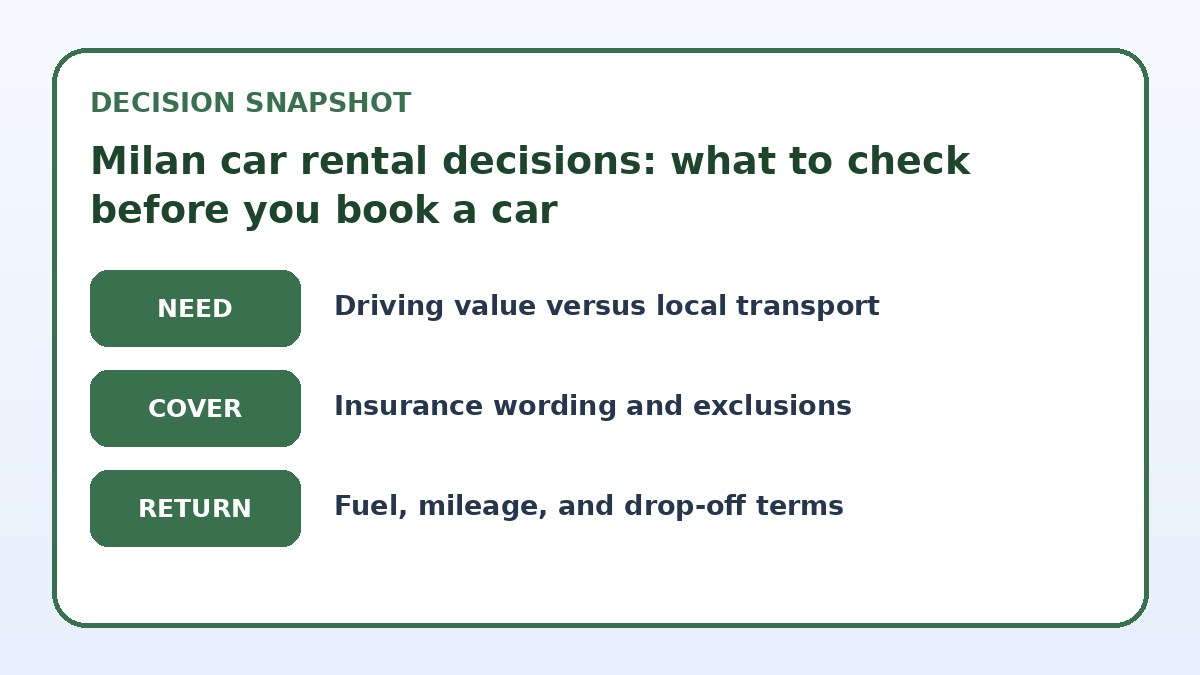
Deciding whether a Milan car rental fits your first visit comes down to three questions: where you’ll spend most of your time, how many off-city destinations you plan, and how comfortable you are with urban driving and parking rules. If you’ll stay mainly in central Milan and prioritize museums, shopping, and frequent short trips, skip the car and use public transport plus taxis when needed. If your trip centers on the wider Lombardy region, or you need accessibility and luggage flexibility, renting for the rural legs—or the whole trip—can pay off. Use the practical checklist above, confirm all rental terms on the provider’s final booking page, and consider a hybrid approach to get the best of both worlds.
Continue planning
Check current options and final conditions
Use the provider page to confirm live availability, the final total, cancellation terms, and every condition that matters to your trip.
This evergreen planning guide was created with AI-assisted drafting and a structured quality review. It does not display live prices, schedules, availability, visa guidance, or provider rankings. Verify current details before booking. Some links are affiliate links; we may earn a commission at no additional cost to you.