Practical answer first: for most families visiting Singapore, you probably do not need a rental car—public transport, taxis, and rideshares cover almost all family-friendly attractions efficiently. Consider renting only if your itinerary includes frequent early starts or late finishes, destinations outside the island’s dense urban core (for example on business or private logistics trips), or you have very young children and equipment you prefer to keep with you. Singapore’s traffic is manageable but parking, ERP (electronic road pricing) charges, and tight one-way streets can add complexity and cost. Use a rental temporarily when convenience outweighs expenses and time spent coordinating public transport; otherwise, rely on the city’s extensive rail and bus network and point-to-point private transport. Read the sections below to weigh tradeoffs, check what to verify on provider pages, and assemble a simple checklist before you book.
When renting a car makes sense for families
Rent a car if your family plans lots of early-morning departures, late returns, or day trips that start outside central public-transport corridors. Door-to-door travel is especially valuable with strollers, car seats and multiple children because it reduces transfers, waiting time and exposure to heat or rain. A private vehicle also helps when visiting attractions with limited taxi access, carrying sports equipment, or when mobility needs make repeated standing and walking difficult for members of your group. Factor in the convenience of carrying snacks, extra clothing and medical supplies without juggling luggage on trains or buses.
Also consider rentals for hybrid itineraries that combine Singapore with short drives across the border to nearby regions, if your documentation, insurance and entry permissions are in order. Families who value privacy and flexibility for mid-day naps, unpredictable schedules or multiple stops will find a hired car saves hassle. That said, verify pickup and drop-off policies, child-seat availability, and whether the company allows cross-border travel where relevant. Always check the rental agreement for mileage limits, fuel policies and any restrictions that would affect your planned route.
When to skip renting and use public transport
Singapore’s MRT and bus network is dense, clean and child-friendly; trains reach most attractions within short walking distance and buses fill remaining gaps. For families based in central neighborhoods—Marina Bay, Orchard, Bugis or Little India—public transport plus short taxi rides usually delivers faster, cheaper door-to-door journeys than driving, once you factor in parking search time and charges. Trains and buses are air-conditioned, wheelchair-accessible, and many stations have lifts and elevators that simplify stroller or pram use. Public transport also removes the stress of navigation, one-way streets and traffic rules unfamiliar to visitors.
Choose public transit when your itinerary clusters urban attractions and restaurant stops rather than long, dispersed drives. Rideshares and taxis are plentiful for point-to-point trips that feel inconvenient by bus or train, and fares are transparent through apps. Also consider the environmental benefits of fewer private vehicles. If you decide not to rent, reserve family-friendly hotels near MRT lines, confirm elevator availability and plan transfers with stroller-friendly routes. For convenience comparisons, time sample door-to-door journeys using transit apps and a driving route planner to see which saves time and hassle for your specific schedule.
| Approach | Best for | Tradeoff to check |
|---|---|---|
| Rent a car for the whole trip | Families needing total door-to-door control, frequent stops, or lots of bulky gear. | Higher cost, parking hassle, and need to navigate local rules and tolls. |
| Use a car selectively (day rentals) | Families with a few long day trips but otherwise staying central. | You still pay rental and parking for those days, plus time to pick up and drop off. |
| Rely on public transport and taxis | Families focused on city attractions who prefer lower cost and less driving stress. | Less control over timing and space for large equipment or many bags. |
| Mix transit with rideshare/taxi for special trips | Families who want flexibility without car ownership costs or parking chores. | Variable fare costs and potential waits during peak periods or bad weather. |
Key cost and practical tradeoffs to weigh
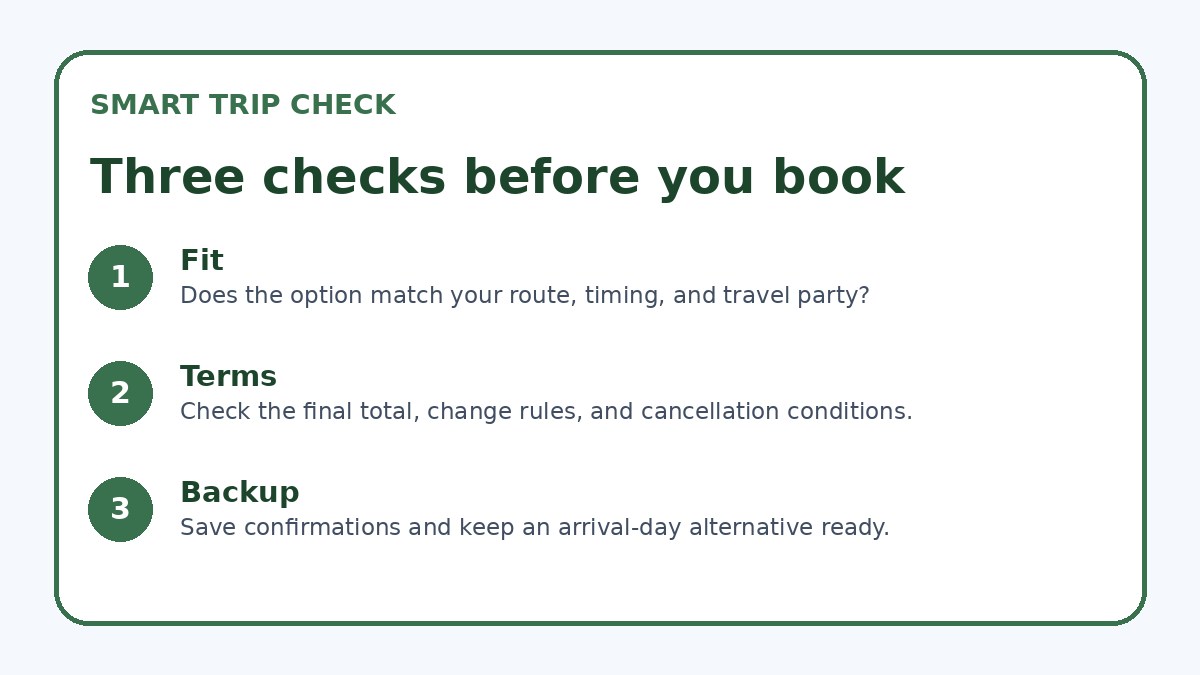
Compare total trip costs, not just the headline rental rate. Add parking fees, daytime or ERP tolls, fuel or pre-paid fuel policies, and any extra charges for child seats, GPS or late drop-offs. Some rental firms charge per-day rates for infant or booster seats or limit the number supplied, so check whether you need to bring your own seat and whether your airline will allow it as checked baggage. Remember that time costs matter too: parking searches, payment machines, and occasional congestion can make short trips longer than expected.
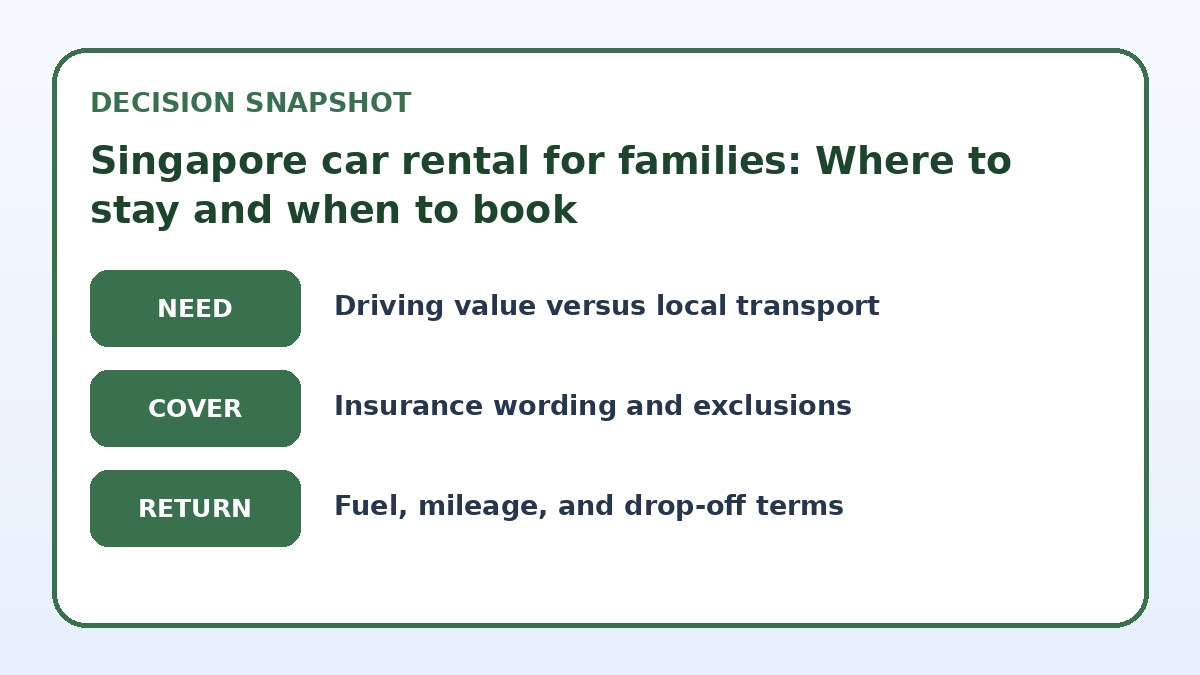
Insurance and liability are particularly important for families. Verify what the collision-damage waiver, third-party liability and roadside assistance actually cover, and whether your personal auto insurance or credit card offers overlap. Confirm excess/deductible amounts, and whether there are exclusions for driving in certain districts. On the provider’s final booking page, check the exact wording for fuel policy, mileage limits, one-way fees and the process for reporting damage. If any term is unclear, contact the rental company directly before completing the booking.
Before you book
- Map your exact daily itinerary and mark arrivals/departures, early starts or late finishes to test if driving saves time.
- Check hotel or apartment parking availability, rates, and any height or reservation restrictions before booking a vehicle.
- Verify child-seat availability, exact fees, and installation assistance on the rental company’s final booking page.
- Compare total cost including rental rate, parking, tolls/ERP, fuel policy, insurance excess, and any one-way fees.
- Photograph the car on pickup covering all sides, interior, and existing damage; ensure rental staff notes any defects.
- Save emergency numbers, insurance details and the rental agreement on your phone and in printed form for quick access.
Practical tips for booking and using a rental safely
Book a vehicle size that comfortably fits car seats and luggage—an economy car may not suffice for two seats plus a stroller. Reserve child seats in advance and request installation help if available; otherwise, practice installing seats securely before you travel. Inspect the car thoroughly with your phone camera at pickup, noting existing scratches, dents and tyre condition, and get any existing damage recorded on the rental agreement. Keep a printed or downloaded copy of your booking, insurance documents and local emergency numbers accessible.
Plan parking and daily routes in advance to avoid expensive or illegal parking and unnecessary driving. Use official parking apps or on-site payment machines to pay for regulated lots and garages; observe loading-zone restrictions when stopping to collect children. Leave extra time for transfers, and if you hit congestion, switch to a taxi or MRT for the rest of your journey. Finally, check provider pages for up-to-date pickup locations, airport shuttle terms, and whether they enforce child-seat rules—these specifics can change and must be verified on the company’s final booking page.
Frequently asked questions
Does Singapore require special permits or documents to drive as a visitor?
Visitors generally need a valid driver’s licence and an international driving permit if their licence isn’t in English—requirements depend on your home country. Rental companies will list acceptable licence types and any additional ID requirements on their booking pages, so verify the exact documentation needed before arrival. Also confirm whether your insurance or credit card provides rental coverage, and check whether the rental firm imposes age limits, additional young-driver fees or rules for cross-border travel, if applicable.
Are child seats mandatory and how easy is it to get them from rental firms?
Child-seat rules vary by country; many Singapore rental providers offer infant and booster seats for an additional fee, but availability can be limited during busy periods. Don’t assume a suitable seat will be on hand—reserve seats when you book and confirm the model and installation instructions on the final booking page. If you have a specific safety standard in mind, consider bringing your own foldable seat if your airline allows it as checked baggage; otherwise, check with the rental company about ISOFIX compatibility and installation support.
How do parking and road charges affect driving in Singapore?
Parking is widely regulated and can be costly in central areas; many hotels charge to park and public lots use pay-by-app or machines. Singapore also uses electronic congestion and road-pricing systems in some zones; rental firms may pass those charges to you or include them in invoices, so check how they bill tolls on the provider’s booking page. Factor in time to find legal parking and any penalties for unpaid charges when estimating the convenience and total cost of driving versus public transport.
Final planning note
For most family trips to Singapore, public transport combined with occasional taxis or rideshares delivers the best mix of convenience, cost and stress reduction. Rent a car when your itinerary includes many dispersed destinations, heavy equipment, or scheduling demands that public transit cannot meet—then book carefully, verify child-seat availability, and total all costs including parking and tolls. Use the checklist to test your plan, photograph the car at pickup, and confirm the final rental terms on the company’s booking page. If you prefer to compare options quickly, Trip.com can help you view current availability and provider terms, but always validate crucial policy details directly with the rental company before you finalize your booking.
Continue planning
Check current options and final conditions
Use the provider page to confirm live availability, the final total, cancellation terms, and every condition that matters to your trip.
This evergreen planning guide was created with AI-assisted drafting and a structured quality review. It does not display live prices, schedules, availability, visa guidance, or provider rankings. Verify current details before booking. Some links are affiliate links; we may earn a commission at no additional cost to you.