If you plan to bring extra bags to Da Nang, deciding whether to rent a car starts with fuel and mileage rules — they shape cost, pickup friction and insurance coverage more than vehicle type. Practically: driving makes sense when your route has multiple stops, tight public-transport connections, or bulky items that are hard to carry. But before you sign a contract, confirm how the provider measures mileage, whether fuel is prepaid or returned full, and how they list luggage capacity and roof/cargo options. This article walks through the tradeoffs you’ll face, what to read on the final booking page, and a realistic fallback if driving becomes more hassle than helpful. Use these checks to avoid surprise fees at drop-off and to choose the mobility approach that matches your luggage, route, and tolerance for extra paperwork.
Decide whether driving improves your Da Nang trip
Start by mapping what you actually need to move. If your plan is a single airport transfer and a hotel close to the beach, driving often adds time dealing with pickup, parking and return logistics that can outweigh comfort. Conversely, a multi-stop coastal route or trips inland to the Hai Van Pass area (or multiple day trips with heavy beach or equipment bags) may justify the convenience of a private car. Consider door-to-door time, how often you’ll load and unload luggage, and whether you’re comfortable driving in local traffic conditions.
Factor luggage dimensions, not just bag count. Bulky surfboards, musical instruments, or oversized suitcases change the equation: they might require a larger vehicle, a roof box, or separate cargo transport. Those choices affect both fuel consumption and mileage: a roof box increases drag and fuel use, and larger vehicles may have higher per-day charges and stricter mileage caps. Balance convenience against these operational costs before choosing to drive.
Decide whether driving earns its place
| Mobility strategy | Best for | Cost or friction to check |
|---|---|---|
| Self-drive rental car | Flexible multi-stop itineraries and carrying irregular, bulky gear on your own schedule. | You manage pickup/return friction, fuel and mileage rules, possible roof-cargo costs, and insurance wording. |
| Private transfer (pre-booked) | Direct airport-to-hotel moves or door-to-door trips with heavy items and minimal paperwork for you. | Less flexible schedule, potentially higher cost for many short separate trips, and limited control over stops. |
| Taxi or rideshare | Short hops in the city with a couple of bags where convenience matters more than cost predictability. | Space limits, variable pricing, and potential refusal for oversized items; check driver willingness before boarding. |
| Public transport + luggage shipping | Saving cost and avoiding driving while still moving bulky items between hotels or attractions. | Requires coordination and lead time; luggage shipping adds handling risk and may not be instant. |
Check live rental choices only after the route test
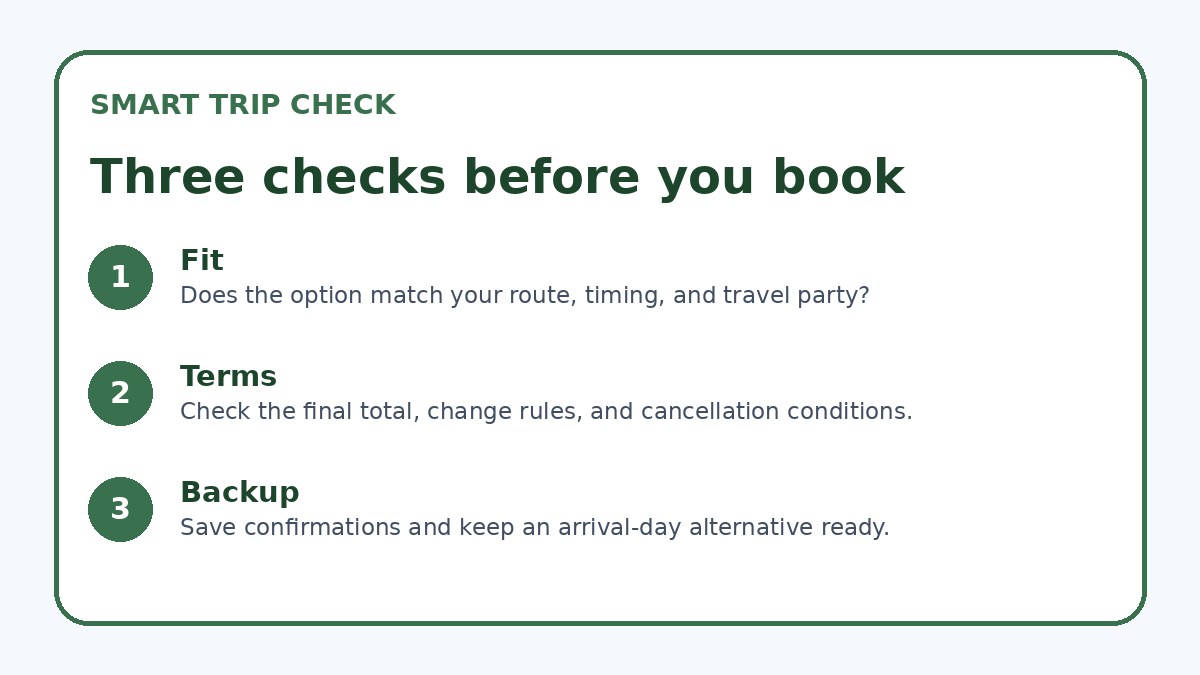
Use the exact driver, dates, pickup point, and return plan to compare current conditions.
Route value, mileage limits and fuel policies to compare
When checking routes, estimate total kilometres for your planned itinerary — include airport transfers and local side trips — then compare that to the rental’s mileage rules. Providers typically offer unlimited mileage, daily limits, or fixed-kilometre packages; exceed those limits and you’ll pay per-kilometre fees that add up. Also ask whether cross-province travel is permitted if you plan to leave Da Nang city limits; some contracts restrict travel or require notice for long one-way journeys. Keep a realistic buffer for detours and traffic-slowed diversions.
Fuel policies vary and the wording matters. The common options are full-to-full (you return the same level of fuel), pre-purchase (you pay up front for a tank and return emptier, which may or may not be cost-effective), or administrative refuel fees (rental company refuels at a higher per-litre rate and adds a service charge). To avoid surprises, note the exact clause on the supplier’s final booking page: how fuel is measured, whether partial fill receipts are accepted, and any minimum refuel charge.
Compare the full rental conditions
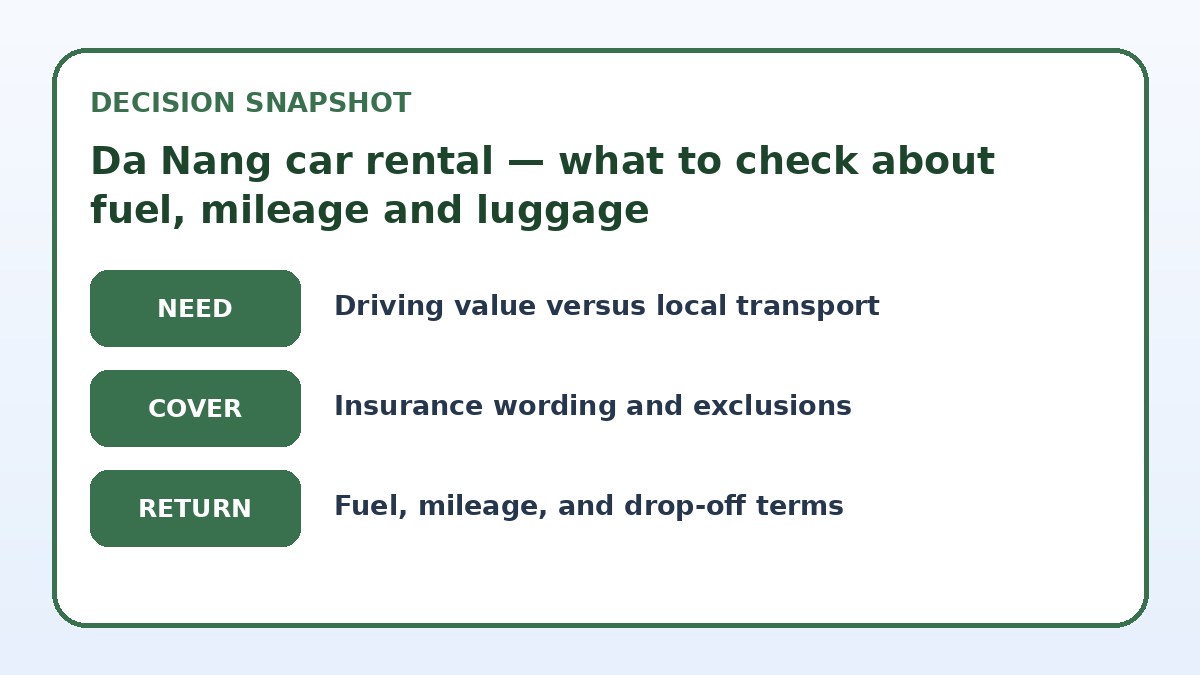
Confirm insurance wording, exclusions, deposit, fuel, mileage, and return terms on the final page.
Insurance wording, pickup/return friction and luggage liability
Insurance coverage for rentals often focuses on collision damage waiver (CDW) and third-party liability, but luggage and roof-cargo damage are frequently excluded or limited. Look for explicit mentions of interior damage, missing items, roof box and roof rack coverage, and whether excess reduction or personal effects coverage is offered. Note the stated excess amount, how claims are processed, and whether you need to file local police reports for certain losses — the contract wording on the final page tells you which documents the company requires at claim time.
Pickup and return friction affects travel time and stress. Inspect the vehicle with clear, timestamped photos of existing scrapes and of the cargo area layout. Check the provider’s process for reporting damage at pickup and whether they require you to return the vehicle with a full tank or accept a fuel receipt as proof. If you’re collecting or dropping off late at night, confirm staffing or key-drop procedures and whether extra fees apply — these operational details often live in the terms and should guide your choice of supplier.
Car rental terms to verify
- Calculate your estimated total kilometres and compare that to the rental’s mileage allowance or per-kilometre charges on the booking page.
- Confirm the fuel policy wording (full-to-full, pre-purchase, or company refuel) and the exact method for proving fuel level at return.
- Measure your luggage (dimensions and weight) and verify vehicle trunk volume or explicit luggage limits listed in the rental terms.
- Read the insurance section for exclusions on roof racks, interior cargo damage, and personal effects; note the excess amount and claim process.
- Photograph the vehicle’s exterior and cargo area at pickup, timestamp images, and keep copies of fuel receipts and the rental contract.
- Check pickup and return procedures for after-hours drop-off, one-way fees, cross-province travel limits, and any required local permits.
A non-driving fallback and practical packing options
If you opt not to drive, plan how to move extra luggage efficiently. Private transfers can accommodate large items with less paperwork and typically load/unload for you, but check whether the quoted vehicle type and luggage allowance match your needs before booking. Shared taxis or rideshare services are flexible for medium luggage loads but may require splitting into multiple vehicles. For bulky or valuable gear, consider pre-arranged courier or luggage-shipping services between hotels — these reduce carrying stress but need scheduling and trust in the handler.
When packing, prioritize compact, protective bags and measure dimensions so you can compare them against vehicle luggage capacity or roof box specs. Use soft-sided duffels that compress into trunks more easily than rigid suitcases. If you expect to add a roof box, confirm the rental provider permits roof fittings and whether they include installation; if not, bring straps and protective covers and get explicit written consent on the booking page to avoid contract disputes at return.
Car Rental & Road Trip questions travelers ask
Will my large suitcases fit in a typical Da Nang rental car?
Luggage fit depends on the specific vehicle model and the dimensions of your bags. Rental categories (compact, sedan, SUV) indicate general capacity but do not guarantee fit for oversized items. Measure your bags and compare those dimensions against the vehicle’s stated trunk volume or explicit luggage limits on the booking page. If the company lists roof-box or roof-rack availability, confirm whether installation is included and whether roof cargo is allowed in the contract wording to avoid unexpected refusal at pickup.
How do fuel policies affect the total cost when I have extra luggage?
Extra luggage can push you toward a larger or roof-equipped vehicle that consumes more fuel; therefore fuel policy has a bigger impact. With full-to-full, you pay only what you use, provided you return the tank at the same level. Prepaid fuel avoids refuelling stops but can be inefficient if you don’t use the whole tank. Administrative refuelling fees are usually the costliest. Always check the rental’s exact fuel clause on the final booking page and estimate fuel consumption using the larger vehicle’s likely economy for your planned kilometres.
Does insurance usually cover damage to roof boxes or straps?
Many standard rental insurances exclude roof-box damage and interior cargo wear, or they limit coverage unless you buy specific add-ons. The contract will list exclusions and the process for claiming damage to accessories. Look for explicit coverage options for roof equipment, check the stated excess for such items, and note whether installation or improper use is cited as grounds for denial. If protection for gear is important, secure written confirmation on the booking page or consider separate cargo insurance or couriering valuables.
Final decision note
For travelers with extra luggage, a Da Nang car rental can be a practical solution only after you compare mileage caps, fuel policy wording, and accessory/insurance coverage against your route and baggage profile. Self-driving delivers independence for multi-stop plans and bulky items, but it brings pickup friction, potential refuelling penalties and often specific exclusions for roof or interior cargo damage. Private transfers or organized luggage shipping reduce the paperwork and liability but trade flexibility. Before you book, read the final booking page carefully for mileage measurement, precise fuel clauses, permitted cargo options and insurance exclusions — and use that information to choose the mobility strategy that matches both your comfort level and your bags.
Continue planning
Check current options and final conditions
Use the provider page to confirm live availability, the final total, cancellation terms, and every condition that matters to your trip.
This evergreen planning guide was created with AI-assisted drafting and a structured quality review. It does not display live prices, schedules, availability, visa guidance, or provider rankings. Verify current details before booking. Some links are affiliate links; we may earn a commission at no additional cost to you.