Practical answer up front: if you prioritize predictable baggage allowances, specific checked-bag permits, and tailored flight choices, book flights and baggage separately; if you want one point of contact for changes and a single payment, a package can be better. Before you decide, compare the same travel dates, number of travelers, and exact baggage allowances across options. That means lining up identical outbound/return flight times (or acceptable alternatives), the same hotel room type, and the same baggage weight and piece limits. Pay attention to whether the package includes checked bags, charges for overweight/extra pieces, and who handles refunds or schedule changes. Read final booking pages carefully for luggage rules, transfer details, cancellation fees, and how to make changes — those provider pages determine the contract you will rely on.
Test package value fairly
| Booking approach | Best for | Tradeoff to check |
|---|---|---|
| All-in-one package (flight + hotel + transfers) | Travelers who want one vendor to handle itinerary changes and a single payment point. | May hide restrictive baggage rules; verify included checked-bag pieces and excess charges before booking. |
| Flight + hotel bundled but baggage not specified | Shoppers seeking convenience with partial control over airline choice. | Requires extra verification — you could end up buying baggage separately at higher cost. |
| Separate flight and hotel bookings | Travelers needing exact baggage allowances, carrier choices, or specialized gear handling. | More admin: multiple policies, potential missed-connection risks, and separate change fees. |
| Book flight with large-baggage-friendly carrier and add hotel separately | People with oversized or heavy luggage prioritizing airline baggage terms over package convenience. | Missed-baggage protection and transfer coordination depend on your separate arrangements. |
Check current package and separate options
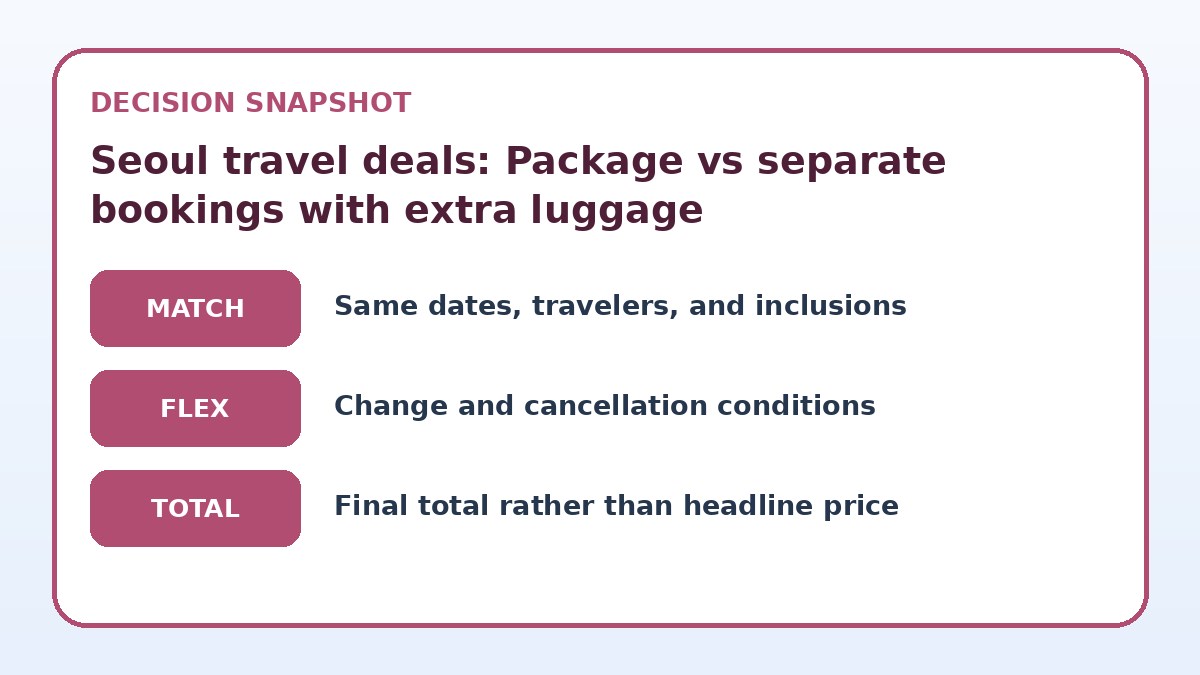
Use identical dates, travelers, room needs, baggage, and flexibility so the comparison stays meaningful.
Inclusions: what must be on the table
The first comparison point is a line-by-line checklist of what each option actually includes. For flights, identify whether checked luggage is part of the fare, how many pieces are allowed, and the per-piece weight or total kilogram allowance. For hotels, confirm room type, bed configuration, and whether there are any baggage-related services (such as early check-in or luggage storage). For airport transfers or tours bundled with the package, find out whether the transfer vehicle has space limits or surcharges for oversized or extra bags. If the package is vague, request the final fare class or terms from the provider before assuming baggage is covered.
Don’t forget ancillary inclusions that affect your luggage experience: seat selection (important for carry-on stowage), domestic transfers that may charge extra for bulky items, and whether local trains or shuttles are part of the route — their space constraints matter. When comparing separate bookings, add up the airline’s baggage product prices and any hotel storage fees you might need. Put those totals next to the package’s single price, but treat that package price as conditional: verify the baggage allowance and change/cancellation rules on the vendor’s final confirmation page.
Flexibility: changes, cancellations, and missed connections
Travelers with extra luggage often need flexibility: late equipment decisions, swapped itineraries, or unpredictable connections. Separate bookings give you the freedom to choose flexible fares, pick carriers with more generous baggage policies, or add prepaid baggage only when needed. However, that flexibility also means multiple cancellation and change policies to track — a flight change might not protect a separately booked transfer or hotel. Evaluate how each option treats schedule changes and missed connections and whether the package provider offers protection for knock-on effects.
Packages can simplify problems because one provider usually manages rebooking and claims, but the package contract determines the provider’s obligations and remedies. Ask how the supplier handles missed connections when a delay on the inbound flight causes you to miss a prearranged transfer or tour — is a rebook included, or will you be responsible for extra fees? Always request the text of those terms or a link to the final booking conditions; verbal assurances are insufficient when baggage surcharges and added nights could become costly.
Look past the headline total
Compare inclusions and change conditions before deciding whether a package is genuinely useful for this trip.
Deal comparison checklist
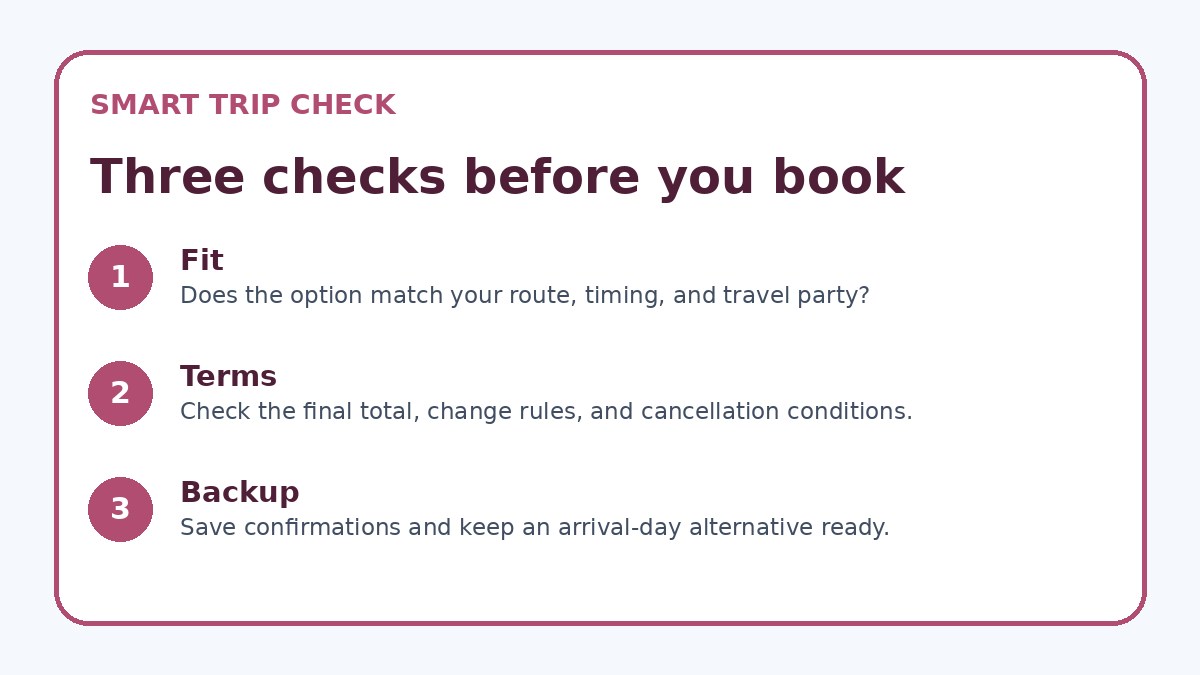
- Line up identical travel dates, traveler counts, and outbound/return time windows before comparing package and separate quotes.
- On the final booking page, confirm exact checked-bag allowance (pieces and weight), fees for extra or overweight bags, and whether prepaid purchase is required.
- If using a package, request the airline fare class and carrier names so you can verify baggage rules on the carrier’s terms.
- Check transfer vehicle size and baggage limits if the package includes airport pickup to ensure your luggage fits without surcharge.
- Calculate total out-of-pocket baggage costs for separate bookings (prepaid plus possible airport fees) and compare to the package price.
- Document change and cancellation fees for each component and ask how the provider resolves missed connections involving separate suppliers.
Traveler-specific value: when extras tip the decision
Your personal priorities should guide whether a package or separate booking is better. If you travel with photographic gear, sports equipment, or multiple checked bags, the per-piece pricing and overweight rules will be the biggest cost drivers. In such cases, weigh the predictable bundled allowance of a package (if it actually includes the needed baggage) against the ability to choose an airline with a generous free- or low-cost baggage policy when booking separately. Families with multiple pieces might find a package that includes two checked bags per person delivers convenience; solo travelers with specialty gear may prefer to buy tailored add-ons.
Other traveler factors matter too: frequent flyers with status can sometimes secure extra allowance on separate tickets, while less confident planners benefit from a package’s single vendor handling. Consider transit: if your Seoul route includes domestic legs or low-cost carriers, check bag transfer rules between airlines. Also think about arrival logistics — a package that includes an oversized-vehicle transfer could remove the stress of hauling bags on public transport, but confirm the vehicle size and any baggage limits on the booking page.
Final terms: the contract that governs baggage costs
The fine print is decisive. Before purchase, open the final booking page and read the baggage policy, change and cancellation terms, and the dispute or refund process. For packages, find the exact fare class and carrier list to confirm baggage rules under the airline contract. For separate bookings, review each airline’s baggage allowance and whether prepaid baggage must be purchased online before check-in to avoid higher airport fees. Also check whether seat assignments, excess baggage purchases, and refunds are processed by the airline or through the package provider.
When a vendor’s listing is unclear about luggage, request written confirmation. If you use an online comparison like Trip.com, remember it shows availability and basic terms but the carrier or hotel terms on the final confirmation page are the contract. Note processing times for refunds, any requirement to present receipts for excess-fee reimbursement, and the precise steps to file a claim. Treat those clauses as part of the decision: a slightly higher fare with clear, generous baggage terms can be cheaper than a low headline price with surprise baggage charges.
Travel Deals & Booking Strategy questions travelers ask
If a package includes checked baggage but I need an extra oversized bag, who pays the surcharge?
You must read the package’s baggage policy on the final booking page to see what the included allowance covers and whether oversized or special items are excluded. If the package lists a standard checked allowance but not oversized items, expect the airline or transfer provider to charge an oversize fee at check-in. The package provider’s terms should state whether they reimburse or assist with those fees; if not specified, plan to pay the surcharge and keep receipts. Always request written confirmation from the package vendor about handling oversized items before you finalize the booking.
Can I mix a low-cost carrier for the short leg and a full-service airline for the international flight in a package?
You can, but mixing carriers usually affects baggage transfer and protections: low-cost carriers often treat baggage separately and might not be contractually tied to the package for missed connections. Verify on the package’s final terms which carrier operates each segment and whether the package vendor accepts responsibility for delays on one carrier that cause problems on another. When separate carriers are used, consider buying flexible fares or travel insurance that explicitly covers missed connections and added baggage fees rather than relying solely on the package’s provider to absorb costs.
How do I avoid paying higher baggage fees at the airport when traveling to Seoul?
Prepay baggage online when offered by the airline, because airport rates are frequently higher; select a fare class that includes the checked allowance you need; and choose carriers with baggage policies that match your luggage profile. If you’re booking a package, confirm that prepaid baggage is included and that the fare class is specified. Also measure and weigh luggage at home and read airline dimensions and weight limits on the final booking page. If traveling with unusually shaped or heavy items, contact the airline or transfer provider in writing to confirm handling and any additional charges.
Final decision note
There is no single right choice for all travelers with extra luggage. If you need tight control of baggage allowances, prefer a specific carrier, or travel with oversized gear, separate flight bookings combined with a carefully chosen hotel usually give the best control. If you value a single point of contact, simpler payments, and centralized rebooking after disruptions, an all-in-one package can be worth it — but only after you verify the baggage inclusions and change/cancellation terms on the provider’s final booking page. Match the same dates and traveler counts when comparing offers, calculate total likely baggage charges, and get written confirmation of any luggage promises before you pay. Consider checking current listings on comparison sites such as Trip.com, but take the airline and package provider’s final booking terms as the contract that governs your baggage rights and fees.
Continue planning
Check current options and final conditions
Use the provider page to confirm live availability, the final total, cancellation terms, and every condition that matters to your trip.
This evergreen planning guide was created with AI-assisted drafting and a structured quality review. It does not display live prices, schedules, availability, visa guidance, or provider rankings. Verify current details before booking. Some links are affiliate links; we may earn a commission at no additional cost to you.