Practical answer first: if you need maximal cancellation flexibility for a short-notice or changeable business trip to Jeju, favor separate refundable or fee-free-change flight and hotel options over deeply bundled packages unless the bundle explicitly matches your change and refund needs. Bundles can be fine if they clearly list refundable elements, allow individual-item cancellations, or include travel credit for unused portions, but many packaged deals lock dates or apply steep change fees. Before you book, compare identical dates, traveler counts, and room/seat types across package and standalone options. Verify the provider’s final booking page for precise change windows, who issues refunds (agency vs. carrier), and whether credits are transferable. This guide walks through the critical inclusions, flexibility mechanics, traveler-specific value, and the exact terms you must check before committing to a Jeju travel deal.

Test package value fairly
| Booking approach | Best for | Tradeoff to check |
|---|---|---|
| Book flight and hotel separately with fully refundable or free-change options | Travelers needing maximum flexibility and clean corporate refunds | Higher upfront cost and more time spent comparing supplier policies |
| Buy a bundled package that specifies refundable components and individual cancellations allowed | Managers who want consolidated invoices without sacrificing component flexibility | You must verify written terms; some bundles still restrict refunds or use vouchers |
| Purchase a low-cost bundled nonrefundable package for a fixed-schedule trip | Business trips with firm dates and strict budget controls | High risk and likely penalties or lost value if dates change or attendees shift |
| Use a managed-travel agency package with negotiated change terms for corporates | Companies with travel programs needing central control and negotiated protections | May require corporate enrollment and the agency’s own amendment procedures that differ from supplier rules |
Check current package and separate options
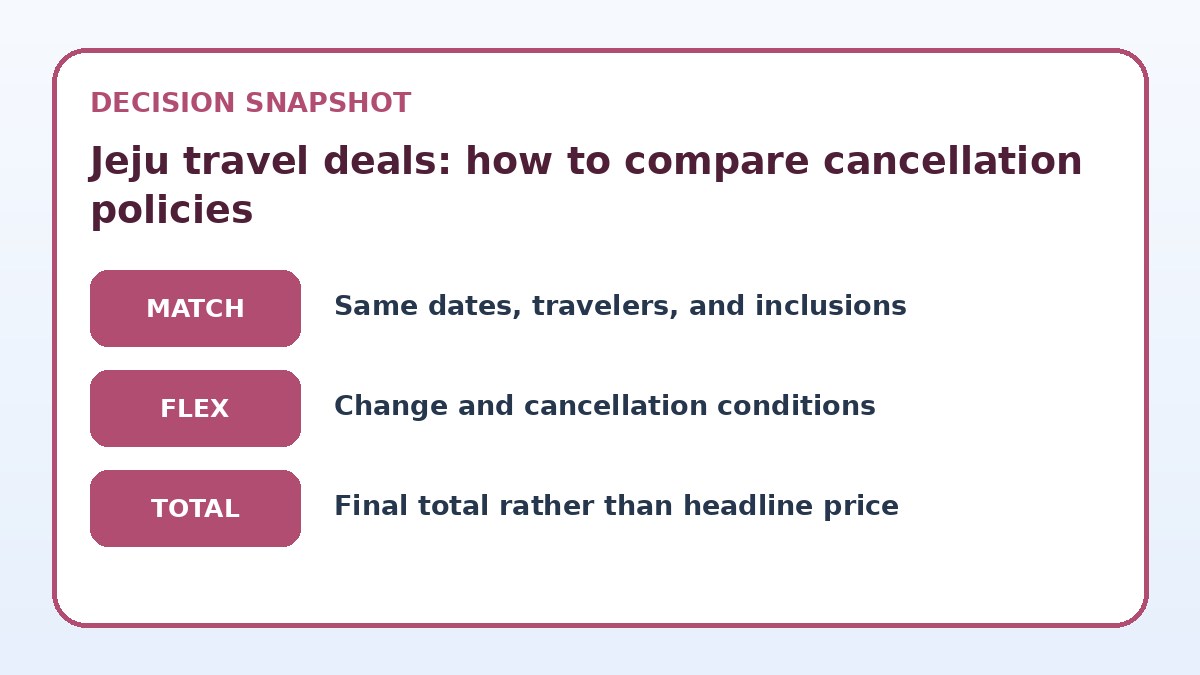
Use identical dates, travelers, room needs, baggage, and flexibility so the comparison stays meaningful.
What you must compare before judging a package useful
Start by lining up identical inputs: the same calendar dates, number of travelers, room configuration, flight classes (economy, premium), and transfer or rental-car inclusions. Only compare totals after matching those factors. A package that bundles a lower-rated room or a nonrefundable economy fare isn’t comparable to a refundable hotel night plus a flexible flight. Also check whether airport transfers are private or shared, and whether they are refundable or credited separately. Mismatched inclusions produce false savings that evaporate the moment changes are required.
Next, inspect who holds the contract and who processes refunds. Many bundled deals are sold by agencies that consolidate separate supplier rules; they may impose their own change fees or issue vouchers instead of refunds. On the suppliers’ booking pages—airline and hotel—look for the fare or rate code and the cancellation/change policy language. If the bundle’s documentation does not reproduce supplier cancellation rules and the agency’s own terms, request those details before you pay.
Inclusions: what to treat as flexible and what isn’t
Different inclusions have different flexibility expectations. Hotels frequently offer both refundable and nonrefundable rates for the same room — the former typically allows cancellation up to a defined time without penalty. Flights sell distinct fare classes: some permit changes with a fee, some include free changes for a fare premium, and others are strictly nonrefundable. Transfers, activities, and rental cars often fall in between; many require 24–48 hours’ notice for free cancellation, while specialized excursions are usually nonrefundable after a cutoff.
When a package bundles these elements, demand written clarity on each component’s cancellability. Ask whether the package price can be prorated if you cancel one component (for example, if you change flights but still need the hotel). Also verify whether bundled extras that seem low-cost—like breakfast or guided tours—are genuinely included or offered as optional add-ons at check-in. For business trips, prefer packages that allow component-level adjustments or that explicitly state a substitution or credit policy.
Look past the headline total
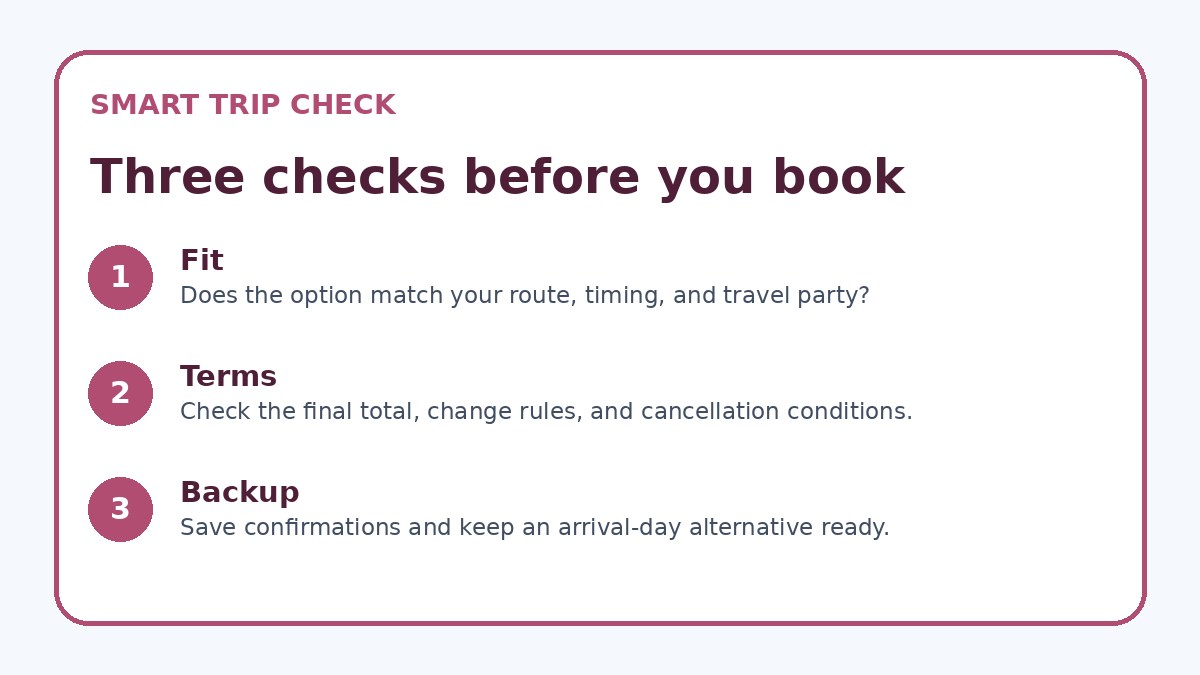
Compare inclusions and change conditions before deciding whether a package is genuinely useful for this trip.
Deal comparison checklist
- Match identical travel dates, traveler counts, and room types when comparing package and separate prices.
- Request and save the exact cancellation and change policy language for each component before paying.
- Confirm whether refunds return to your original payment method or are issued as nontransferable travel credit.
- Check who is the contract holder (supplier or agency) and whether the agency applies its own change fees.
- Ask for itemized invoices or supplier receipts to ensure corporate expense compliance.
- If considering a bundle, verify whether components can be cancelled or modified individually without voiding the entire package.
Flexibility mechanics: credits, refunds, and change fees
Not all refunds are equal. Refunds to the original payment method are simplest for corporate expense reporting; vouchers or travel credits may be harder to reconcile with company policies. When reviewing a Jeju travel deal, look for the timeline and method of reimbursement: immediate refund, delayed refund after supplier reconciliation, or nonrefundable credit valid for a limited period. If the bundle’s vendor is intermediary, determine whether credits are transferable or locked to the account that made the booking.
Change fees are another critical factor. Some fares allow date changes for free but require a fare difference; hotels may waive cancellation fees up to a cutoff date but impose a full-night penalty after. For business travelers whose dates can shift, a predictable fee structure (clear flat fees or free change windows) is better than opaque, case-by-case handling. When in doubt, get the fee schedule in writing and compare the worst-case cost of changing or canceling a bundled package versus separate refundable bookings.
Traveler-specific value: how to weigh convenience against risk
Business travelers value speed, clear billing, and compliance with company travel policies. A bundle can save time by consolidating one invoice and a single point of contact, which appeals to travel managers and busy professionals. But that convenience can be outweighed if the package ties multiple components together so a single change triggers penalties across flights, hotels, and transfers. Consider who handles amendments—an agency desk or the airline/hotel directly—and whether your finance team can accept vouchers or needs refunds to the original card.
For frequent last-minute itinerary shifts, prioritize refundable or changeable fare classes and hotel rates, even if they appear slightly more expensive upfront. If your employer reimburses full costs only with certain documentation, confirm that the bundle provides itemized supplier receipts. When policy-compliant receipts or auditor-friendly refunds matter more than a modest cost saving, separate flexible bookings often outperform tight bundles. Conversely, if your itinerary is fixed and efficiency is the priority, a documented, component-level-flexible package may be the right tradeoff.
Travel Deals & Booking Strategy questions travelers ask
How can I confirm a package’s cancellation terms are as flexible as separate bookings?
Ask the seller to provide the specific cancellation and change policy text for each component (flight fare class, hotel rate, transfer, activity). Then cross-check those policies on the supplier’s direct booking pages or by contacting the airline and hotel directly. Confirm who issues refunds—supplier or agency—and whether refunds go back to the original payment method or become travel credit. If the package documentation is vague, request written confirmation before payment; vague language often hides restrictions that matter to business travelers.
If my company requires refunds to the original card, what should I watch for in Jeju deals?
Look for explicit language that refunds are returned to the original form of payment. Many agencies issue vouchers or travel credits instead, which can complicate corporate reconciliation. Ask the provider how refunds are processed and the expected timeline. If an intermediary handles refunds, verify whether the hotel or airline will refund directly or route funds through the agency. Keep documentation showing the refund pathway to satisfy your finance team’s audit requirements.
Are managed-travel agency packages a safer choice for flexible business travel to Jeju?
Managed-travel agencies can offer negotiated protections, consolidated billing, and a single amendment contact—advantages if your company enrolls in their program. However, agency contracts sometimes introduce their own amendment fees or voucher-based refunds. Before relying on an agency package, review the negotiated change and cancellation terms carefully, and ensure they align with your company’s reimbursement and documentation policies. For some travelers, separate refundable supplier bookings remain preferable despite the extra administrative steps.
Final decision note
Choosing between bundled Jeju travel deals and separate bookings comes down to a clear assessment of flexibility needs, corporate reimbursement rules, and the actual contract terms. For unpredictable schedules, separate refundable or free-change bookings usually give cleaner refunds and simpler expense reporting. Bundles can save time and consolidate invoices, but only when each component’s cancellation policy is explicit and allows component-level changes. Before you commit, match identical search criteria, obtain written terms for every element, and confirm refund method and timing. If you need an easy place to compare current supplier policies, you can check a marketplace like Trip.com, but always verify final cancellation language on the supplier’s or agency’s booking page before payment.
Continue planning
Check current options and final conditions
Use the provider page to confirm live availability, the final total, cancellation terms, and every condition that matters to your trip.
This evergreen planning guide was created with AI-assisted drafting and a structured quality review. It does not display live prices, schedules, availability, visa guidance, or provider rankings. Verify current details before booking. Some links are affiliate links; we may earn a commission at no additional cost to you.