Practical answer first: for most travelers carrying extra luggage between Barcelona and Madrid, take a high-speed train if you can comfortably manage your bags in the station and want the simplest door-to-door flow; choose a coach if you prefer lower-cost, flexible boarding with fewer luggage size rules; split the trip (e.g., first mile by cab to a peripheral station) only when it reduces transfer friction. The rest of this guide helps you translate that choice into a travel-day plan: how to stage bags, which terminal layouts favor you, timing buffers to book, and realistic backup options if trains or coaches are delayed or full. I focus on end-to-end practicality — moving your bags from origin door to destination door — rather than just the in-vehicle experience. Follow the checklists and verification steps so you can make a confident booking and arrive at your final address without last-minute scrambling.

Choosing between train and coach for heavy luggage
When you’re packing more than usual, the first decision is about terminal fit and luggage handling rather than pure travel time. High-speed trains often depart from central stations with long platforms, lifts, and staff, but you may still face stairs, crowded mid-platform boarding, or long walks from city exits to streetside pickups. Coaches usually load large cases into underfloor bays handled by staff, which reduces the need to carry heavy bags across platforms, but coach stations may be farther from your origin or destination address, adding a local transfer leg.
To decide, map the full door-to-door journey: front door to departure terminal, terminal transfer time, onboard comfort, and arrival terminal to final address. Estimate the physical effort (stairs, cobbled streets, walking distance with luggage), not only minutes on the vehicle. If you can book reserved seats and a lift-access route on the train, that often beats the coach for predictable city-center-to-city-center travel. But if the coach terminal minimizes steps and has staff who handle trunks, it can be the less strenuous option for very heavy or bulky loads.
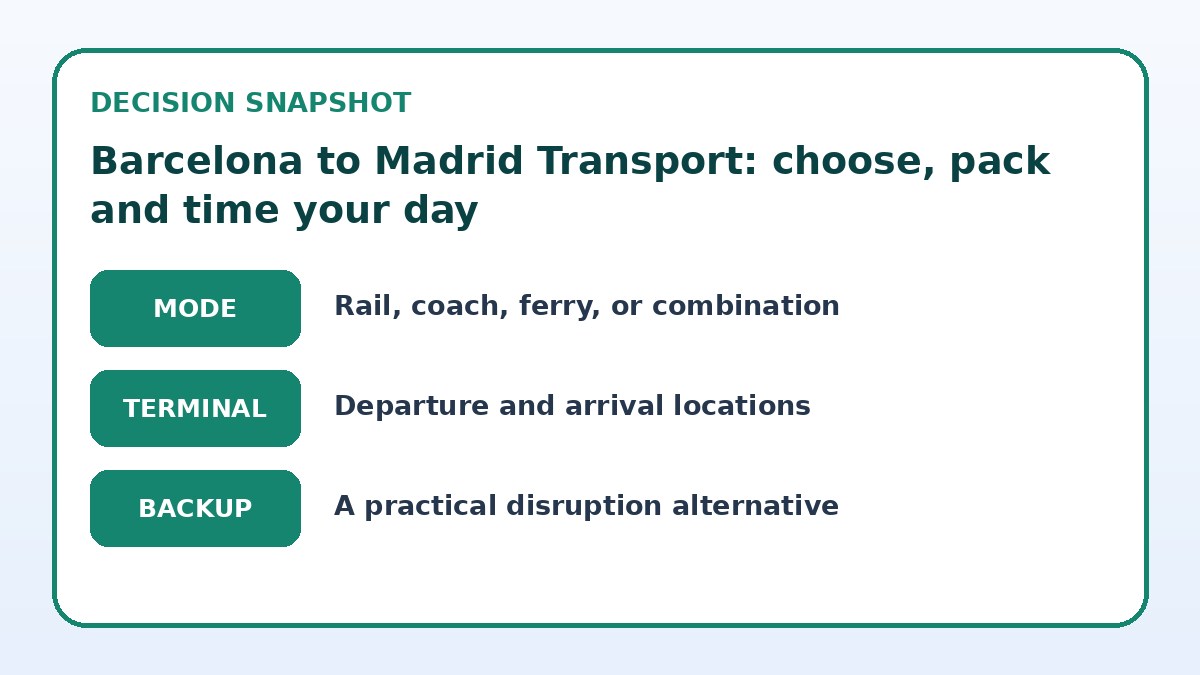
Choose the end-to-end journey plan
| Journey approach | Best for | Friction to check |
|---|---|---|
| Prioritize train reservations with seat and assistance options | Travelers who want predictable city-center-to-city-center door-to-door flow | May require more walking within stations and stricter luggage dimensions or carriage rules |
| Choose coach departures from terminals with staffed luggage bays | Those carrying oversized, heavy trunks who prefer not to handle bags between legs | Coach terminals can be further from final addresses, adding a local transfer or longer taxi ride |
| Split-mode: taxi to peripheral station or airport plus a faster intercity leg | Travelers avoiding busy central stations or with mobility constraints needing shorter walking legs | Adds complexity and extra local fares; requires arranging taxis that fit multiple large bags |
| Door-to-door private transfer or booked courier for luggage-only delivery | Travelers valuing minimal handling who will pay more for direct, hands-off service | Higher cost and variable availability; needs advance booking and verification of insurance and timelines |
Check live intercity options
Look beyond the ride itself and compare terminals, transfers, luggage, and arrival fit.
Staging luggage and transfer friction at terminals
Staging luggage before you leave home reduces stress. Pack a small carry-on with essentials (documents, a change of clothes, phone chargers) so you can manage unexpected waits or a disrupted onward ride. Measure and photograph your luggage so a taxi driver or station porter immediately knows what to expect. If you plan to check bags with a station service or use a cloakroom, verify hours and size limits on the provider’s booking page before you travel.
At the terminal, pick routes with elevators, ramps, or level boarding whenever possible. Arrive early enough to handle security lines or porter requests: a 30–60 minute margin is common for train travel, longer if you require special assistance. For coach departures, identify the exact bay or dock — coach terminals can reassign stands last minute — and keep your phone charged to get real-time bay updates. Consider pre-booking a porter or a transferable courier if walking is a limiting factor.
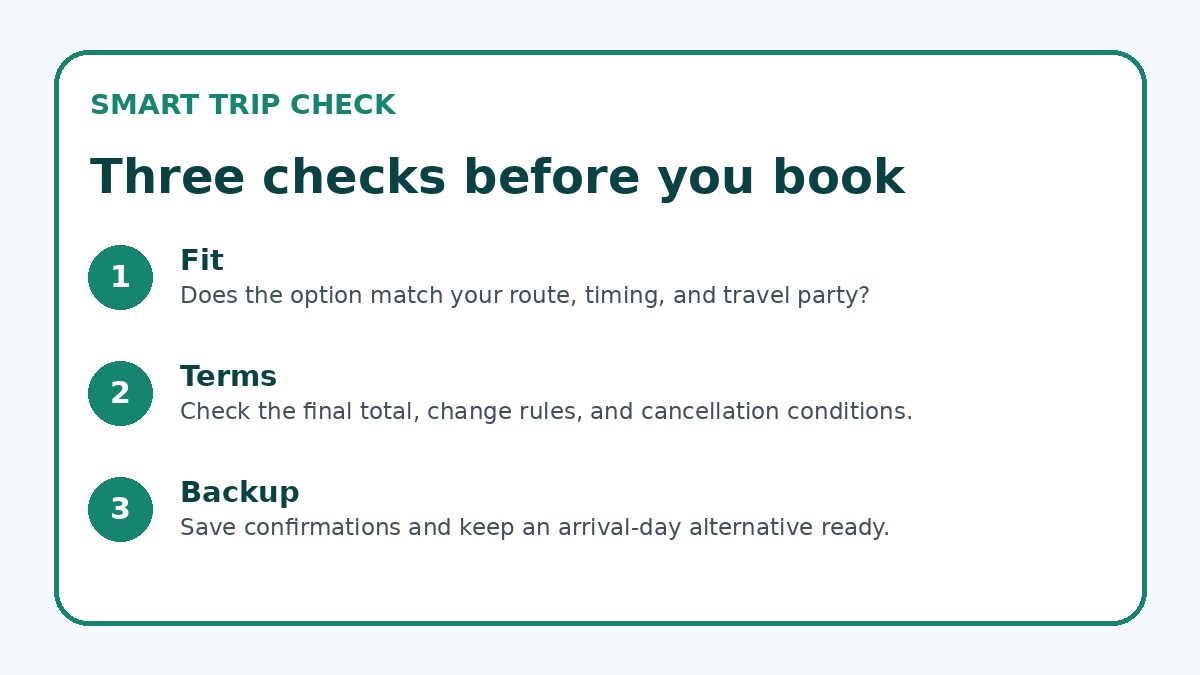
Timing flexibility and practical buffers
Build time buffers for each leg: pickup to terminal, boarding, and terminal to final destination. Heavy luggage slows you and can add 10–30 minutes per transfer step. When booking, choose departure times with comfortable arrival windows at both ends of the day: avoid tight late-evening arrivals when luggage services and taxis may be harder to access. If you must travel at rush hour, add extra time for station crowds and longer taxi waits.
If you have a flexible schedule, prioritize departures that reduce peak-city transfer friction — mid-morning trains often mean easier urban navigation and more available porters. For coaches, allow additional time for roadside boarding and potential traffic. When comparing specific departures, check the provider’s final booking page for boarding instructions, platform access, and whether assistance for heavy bags is available; if that page lacks clear details, call or email to confirm before you travel.
Compare the practical alternatives
Use the final page to confirm what is actually offered on your dates and save a workable fallback.
Intercity travel checklist
- Measure and photograph every bag; note weights and dimensions to confirm they fit provider limits before booking.
- Map the precise walk from your origin to the departure terminal and from arrival terminal to your destination, noting stairs, elevators, and cobbled streets.
- Reserve a taxi or rideshare vehicle sized for your luggage at both ends, and confirm pickup windows at the arrival terminal.
- Pack a small essential carry-on with documents, chargers, medications, and a clean change of clothes for potential delays.
- Verify luggage handling policies, boarding bay info, and assistance availability on the carrier’s final booking page and call customer service if unclear.
- Identify an alternate departure and a nearby luggage storage or cheap daytime hotel as your disruption recovery option.
Disruption backups and end-to-end recovery plans
A realistic backup plan treats the whole door-to-door route, not only the next vehicle. Choose an alternate departure an hour or two later on the same day and make sure taxis or rideshares can be booked at short notice near both terminals. Identify a nearby luggage storage point or hotel that can take your bags for a few hours if a missed connection means you need to regroup. Keep physical and digital copies of reservation references, and note contact numbers for station customer service.
Also know your replacement modes: if a train is cancelled, can you join a later train, or is there an intercity coach or regional rail that reaches your arrival city with acceptable extra effort? If both rail and coach options are limited, pre-identify an accessible private transfer company or an airport route that accepts heavy luggage. Verify cancellation and change policies on the carrier’s booking page, and if you want a third-party comparison, check Trip.com for current availability and conditions but confirm details with the provider before paying.
Rail & Intercity Transport questions travelers ask
How much earlier should I arrive at Barcelona train or coach stations with extra luggage?
Aim to arrive 45–75 minutes before departure if you have heavy or bulky luggage. That gives time for taxi unloading, finding lifts or ramps, handling luggage check-in or porter services, and reaching your assigned seat without rushing. If you require accessible boarding or have oversized items that need staff handling, factor in the upper end of that range. For coach departures, also allow extra time for locating the correct bay and for staff to load underfloor compartments. Confirm specific recommended arrival times on the carrier’s booking page, because instructions can vary by operator and terminal.
Can I leave luggage at stations in Barcelona or Madrid if I have a long layover or disruption?
Many major stations offer left-luggage services or luggage lockers, but sizes, operating hours, and item restrictions differ. Before relying on that option, check the station’s official information on its booking or information page for hours and maximum suitcase dimensions. If station storage doesn’t suit your needs, search for nearby private luggage storage shops or a day-use hotel that accepts bags; these options can be more flexible for oversized items. Always verify opening times and insurance coverage before leaving valuables.
What documentation and photos should I carry when traveling with expensive or unusual luggage?
Keep digital and printed copies of reservation references, hotel and arrival-address details, and contact numbers for carriers and porters. Photograph each bag from multiple angles and include identifiable contents if they’re high value, which helps with claims if damage or loss occurs. Pack receipts or serial numbers for expensive items in your small carry-on and note their contents on a simple inventory list. If you hire a courier or porter service, get a written receipt that lists the items and their condition before transfer, and save any tracking or booking confirmation emails.
Final decision note
Preparing the travel day between Barcelona and Madrid when you’re carrying extra luggage comes down to realistic door-to-door planning: choose the mode that minimizes the most painful parts of your route, not just the fastest vehicle. Map every step, reserve suitable local transfers, and pack an essentials bag so a delayed or rearranged leg won’t spoil the first hours at your destination. Verify luggage rules, terminal access, and assistance options on provider booking pages, and set a clear disruption backup: an alternate departure, nearby storage, or a hotel that can temporarily hold bags. With those pieces in place, you’ll lower the physical strain and reduce the chances of a late-night scramble on arrival.
Continue planning
Check current options and final conditions
Use the provider page to confirm live availability, the final total, cancellation terms, and every condition that matters to your trip.
This evergreen planning guide was created with AI-assisted drafting and a structured quality review. It does not display live prices, schedules, availability, visa guidance, or provider rankings. Verify current details before booking. Some links are affiliate links; we may earn a commission at no additional cost to you.