For busy professionals flying Seoul to Singapore, the practical decision is often between a slightly higher flexible fare and a lower, restrictive fare that risks costly changes. Before you select a ticket, gather exact travel dates, preferred time windows, loyalty numbers, and whether you must keep a meeting-day fixed. The right choice balances routing (direct versus connection), baggage and connection risk, schedule fit for meetings and overnight stays, and the fine print on fare change and refund conditions. This guide gives a concise recommendation up front: if you need schedule certainty for meetings, favor fares with low or waived change fees and clear rebooking rules; if your dates are fixed and cost is the priority, a restrictive fare can work but prepare a contingency fund and plan for extra time at connections. Read on to compare tradeoffs and prepare the specifics you'll need when you check live options.
See live routes for your exact travel day
Compare direct and connecting choices with the same baggage and traveler details.
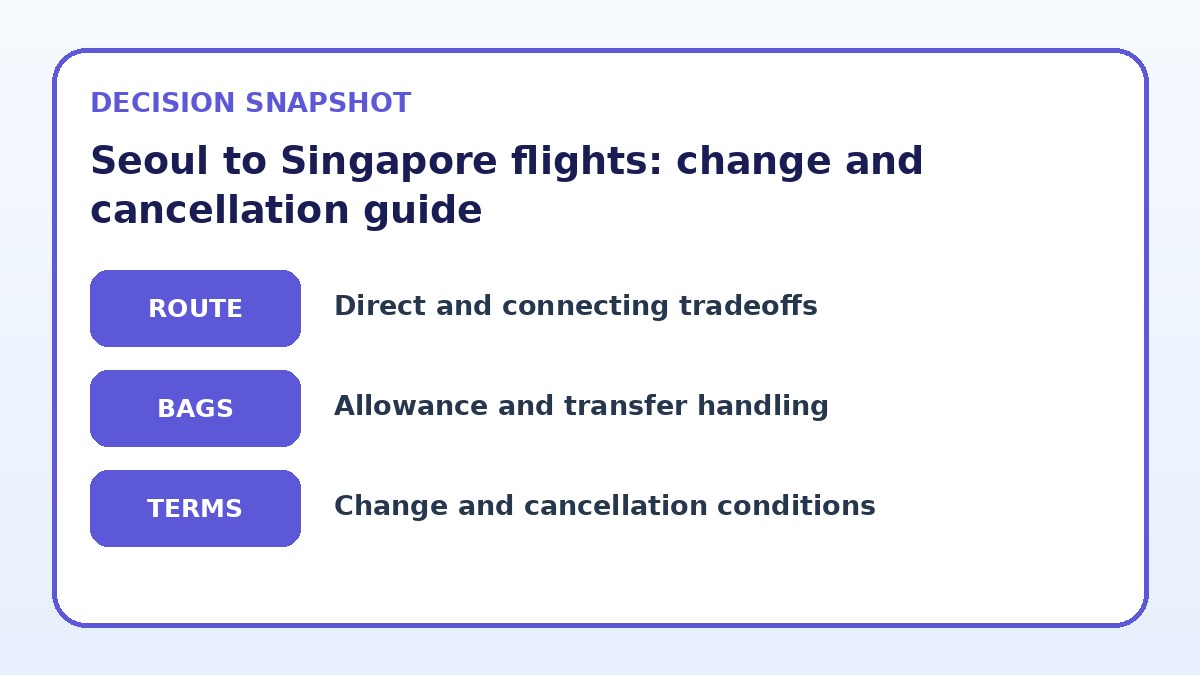
Routing: direct versus connecting options
On the Seoul to Singapore route you will typically see direct flights and one-stop or multi-stop itineraries. Direct flights reduce connection risk and simplify baggage transfer and timing around meetings, but they can be less flexible on schedule times or seat availability. Connecting itineraries sometimes offer lower fares or better departure/arrival windows, but add complexity: missed connections, longer minimum connection times, or the need to clear security and transfer terminals. When evaluating routing, consider total journey time from office to hotel or meeting, not just airborne time, and whether aircraft and terminal changes require additional ground transit.
When comparing routes on a booking page, look at the full itinerary details: minimum connection time, terminal transfers, and whether the same airline or partner handles both segments. Codeshare or partner connections might protect you under a single itinerary, making rebooking easier if the first leg is delayed; separate tickets increase your risk because carriers may not be obliged to assist. Also check baggage through-check promises—if your bags are not checked through, you must clear immigration to recheck, which affects minimum connection safety margins and the practical feasibility of tight schedules.
Baggage and connection risk for business travel
For business travelers carrying a laptop, presentation materials, or a suit, baggage rules matter for both cost and convenience. Verify carry-on allowances and checked baggage rules for each fare class before booking, because low-cost or basic economy fares often limit or charge for checked bags. If your itinerary includes connections on different carriers, confirm whether baggage is checked through to your final destination or if you'll need to collect and recheck it. That extra step can add 60 to 120 minutes in some airports and introduces risk of missed connections and lost items—unpleasant if you have a critical meeting on arrival.
Beyond the physical risk, connection reliability affects change and cancellation choices. If you prefer to avoid any chance of an unplanned overnight due to missed connections, prefer itineraries with longer transfer windows or select a single-ticket itinerary where the carrier has responsibility for rebooking. When savings from a tight connection are tempting, weigh them against the potential cost of a last-minute alternative flight, additional lodging, or couriering missing materials. If you regularly travel with fragile or time-sensitive cargo, consider travel insurance that covers delays and baggage loss and verify that it applies to the routing you pick.
Compare flight-selection strategies
| Flight strategy | Best for | Risk to check |
|---|---|---|
| Lowest upfront fare (restrictive ticket) | Travelers with fixed, short trips and clear no-change plans | Lowest cost but high change/cancellation penalties and limited baggage or seat options |
| Flexible fare with waived or low change fees | Frequent business travelers needing schedule certainty | Higher upfront price but lower risk and simpler rebooking when plans shift |
| Mixed strategy: low fare with separate contingency ticket | Cost-sensitive travelers willing to manage risk proactively | Potentially complex and more expensive if contingency is triggered; requires time to manage |
| Corporate-negotiated or agency-booked fare | Employees covered by company travel policies or preferred programs | May provide favorable change terms but can be constrained by corporate approval processes |
Recheck the complete itinerary
Confirm airports, connection handling, baggage, and change conditions before deciding.
Schedule fit: aligning flights with meeting needs
Business trips hinge on timing—arriving the evening before a morning meeting, or leaving after a late presentation, can determine whether a fare is acceptable. When booking, map your flight choices against your meeting schedule, factoring in travel time from airport to meeting location, usual immigration and customs waits, and local traffic at your arrival hour. Also consider whether you need a margin for potential overruns or client hospitality; a slightly later return flight with a flexible change policy can avoid stress if meetings run long. Use the carrier’s published minimum connection times only as a baseline—real-world variability can be higher, especially in peak periods.
If you have multiple meeting options or a tentative return date, choose a fare class that permits date changes with reasonable fees or waived penalties for corporate accounts. Some fare categories allow free changes within a timeframe or provide a credit toward future travel instead of a refund; others impose a fixed fee plus any fare difference. For day-of changes, especially on short-haul regional sectors like Seoul–Singapore, confirm whether rebookings are allowed same-day and whether any fare difference applies. Gather company travel policy approval thresholds before you book so you can select options that match internal expense and approval workflows.
Flight details to verify
- Collect exact travel dates, full traveler name as on passport, frequent flyer number, and company billing code before searching fares.
- Open the fare rules for each candidate and copy the change fee, refundability, and any deadlines to a comparison note.
- Confirm whether baggage is checked through on multi-leg itineraries or will need to be collected and rechecked.
- Compare total door-to-door travel time including transfers and local ground transit, not just airborne time.
- Ask your company travel manager whether corporate rates waive change fees or require bookings through a designated portal.
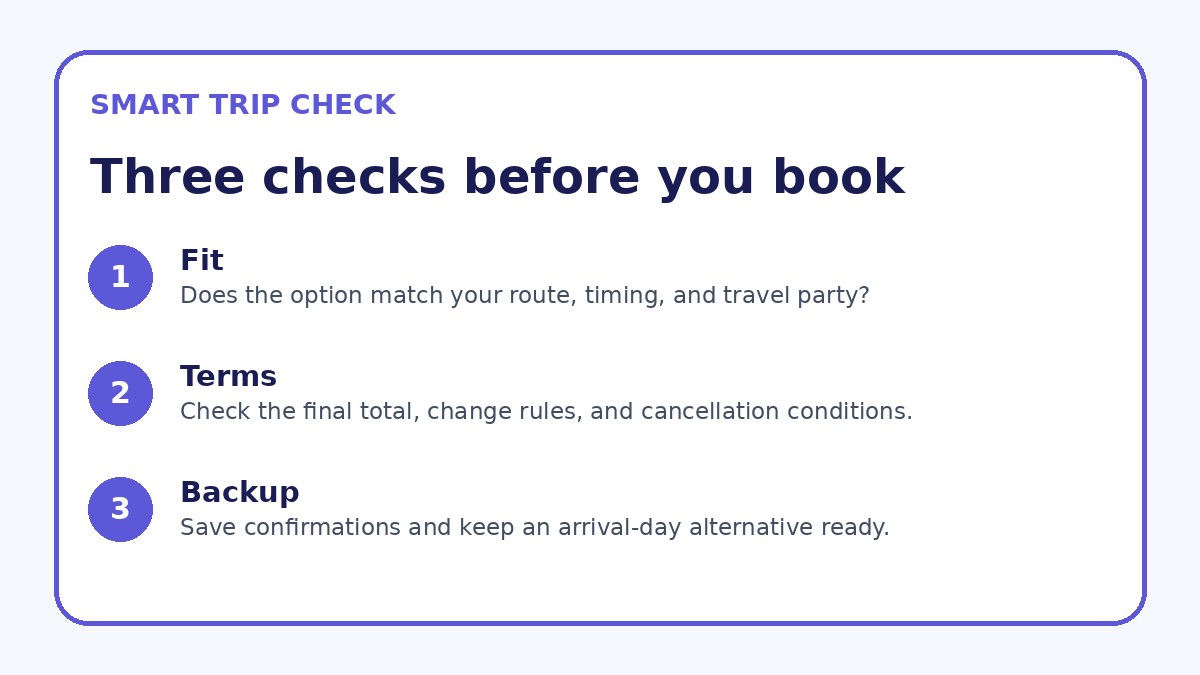
- Take screenshots of the final booking page showing fare rules and price breakdown, and save the booking confirmation email.
Fare conditions: what to verify on the booking page
When you compare live options, check these specific fare-condition items: whether the fare is refundable or eligible for a refund credit, the exact change fee and whether the airline waives it for corporate or elite-status travelers, how fare differences between original and new flights are handled, and any deadlines for making permitted changes without penalty. Don’t rely on summary labels like “flexible” or “semi-flex”—open the fare rules or tariff page and read the change and cancellation sections. For routes with multiple operators or interline segments, confirm which carrier’s rules apply to each leg and whether a single ticket covers the whole trip.
Also note add-on fees that often appear late in booking: baggage charges, seat-selection fees, and third-party booking fees when purchased through agency portals. If you plan to use miles or a corporate discount code, verify how these interact with change and cancellation policies—some award tickets are more restrictive, and some corporate-negotiated fares require the company travel desk to process changes. Finally, save or screenshot the full fare rules and booking confirmation; if you need to dispute a fee later, the carrier or your company travel manager will need those exact terms.
Flight Guide questions travelers ask
How do I know if a fare’s 'change fee' applies only to ticket-issued changes or to date changes too?
Fare rules vary: some specify fees for any reissue or rebooking while others list separate fees for date changes, routing changes, or name corrections. On the booking page, open the detailed fare rules or tariff and look for language that explicitly lists change, cancellation, and reissue conditions. If the wording is ambiguous, use the carrier’s official contact channel or your corporate travel agency to request the exact application—for example, whether a requested new date within the same fare class triggers only a small administrative fee or requires payment of a fare reprice. Keep written confirmation of the agent’s answer.
If I book two separate tickets to save money, will an airline rebook me if my first flight is delayed?
Generally, if you book separate tickets, the second carrier is not obligated to assist if you miss the connection because of a delay on the first ticket. That leaves you responsible for making new travel arrangements and paying any fare difference. If you must use separate tickets, build generous connection time, consider travel insurance that covers missed connections on separate bookings, or buy a flexible option for the second leg to reduce financial risk. For firm protection, book a single itinerary under one ticket or rely on interline partner routing where carriers accept responsibility for connection disruptions.
What exactly should I confirm with the carrier before relying on a waiver or flexible policy?
Ask the carrier to confirm in writing (email or booking screenshot) which tickets or fare classes are covered by the waiver, the time window for making free changes, whether rebooked travel must occur within a specific period, and whether any taxes or fare differences are still payable. Also confirm whether the waiver applies to bookings made through third-party platforms and whether it extends to companion tickets or award bookings. If your company negotiates a waiver or special term, verify whether the carrier or the corporate travel desk must process the change to get the benefit; retain the confirmation as proof in case of disagreement.
Final decision note
Choosing between Seoul to Singapore flight options is a practical tradeoff: cost versus flexibility. Business travelers who prioritize meeting certainty should favor fares or corporate arrangements that minimize or waive change penalties and clarify rebooking procedures; those with fixed, immutable dates can accept restrictive fares if they understand the baggage and connection implications. Always gather exact traveler details, read the fare rules in full, and confirm baggage-through policies and which carrier’s rules govern each leg. Before finalizing a booking, compare live options on the carrier’s site or your company portal and keep screenshots of the fare rules and confirmation. If you want an easy comparison point, check Trip.com as one place to view current availability and conditions, then verify everything on the provider’s final booking page.
Continue planning
Check current options and final conditions
Use the provider page to confirm live availability, the final total, cancellation terms, and every condition that matters to your trip.
This evergreen planning guide was created with AI-assisted drafting and a structured quality review. It does not display live prices, schedules, availability, visa guidance, or provider rankings. Verify current details before booking. Some links are affiliate links; we may earn a commission at no additional cost to you.