If you’re planning an Auckland trip with kids, the practical question isn’t just cost but how changeable the booking will be when plans shift. Start by comparing the exact inclusions, cancellation windows, and who can make changes or claim refunds — not the headline bundle price. For family travel, flexible terms often matter more than a small discount because illness, school changes, or flight disruptions are more likely to affect groups than solo travel. This article lays out what to compare before deciding on a package or separate bookings, explains how different suppliers typically structure family-friendly flexibility, and gives a checklist of specific items to confirm on any final booking page. Follow these steps to avoid false savings and choose the option that preserves both your budget and your peace of mind.
Test package value fairly
| Booking approach | Best for | Tradeoff to check |
|---|---|---|
| All-in-one package (single supplier handles flights, hotel, transfers) | Families who want one point of contact for changes and possibly simpler claims processing. | May adopt the strictest cancellation rule across components and limit flexibility for swapping or refunding individual items. |
| Book flights and hotel together, activities separately | Families wanting central handling of major elements but flexible, refundable activity choices. | You still face split rules for refunds: a flight/hotel reseller may control major refunds while activities have their own policies. |
| Separate bookings for flights, hotel, and transfers | Families needing maximum control to pick the most flexible supplier for each component. | More administrative work during disruptions and multiple contact points when changes or refunds are required. |
| Bundle base package with added flexible add-ons (insurance, flexible tickets) | Families who want a lower base rate but are willing to pay for specific flexibility protections. | Add-ons can be costly and may not cover all change scenarios; read exactly what each add-on covers before relying on it. |
Check current package and separate options
Use identical dates, travelers, room needs, baggage, and flexibility so the comparison stays meaningful.
What to compare first: the must-have checklist for bundles
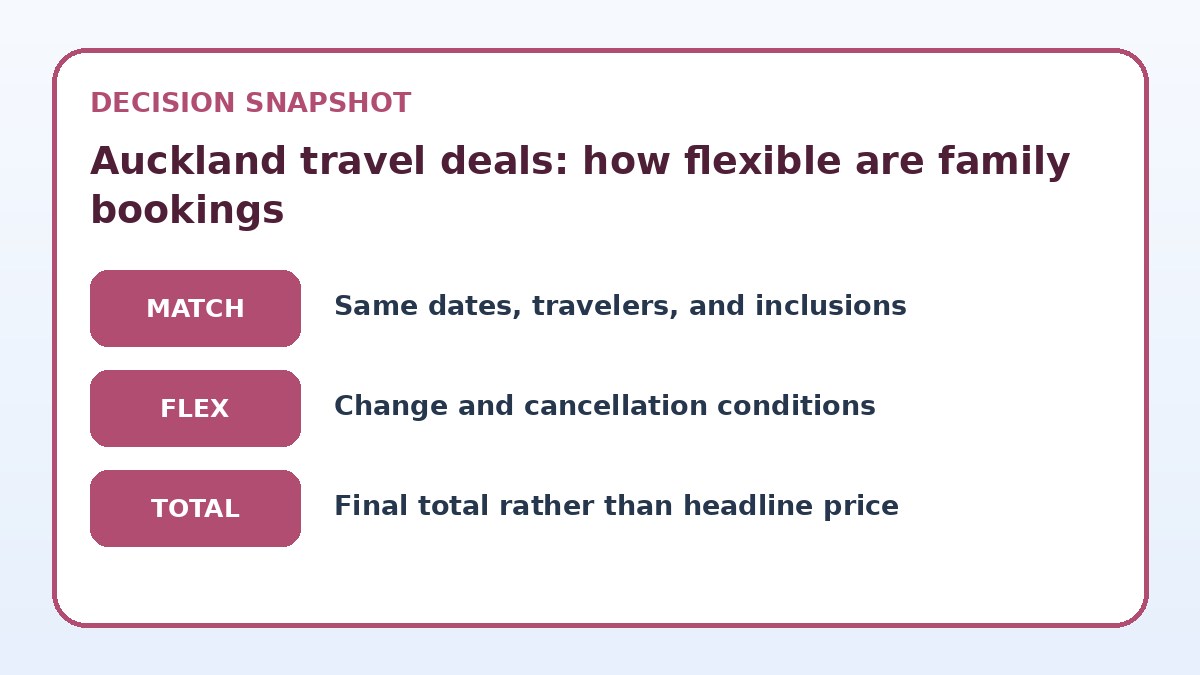
Before you judge whether a bundled Auckland travel deal is a good fit for your family, confirm four baseline items for the same set of dates and travellers: flights (including fare conditions), hotel room type and bedding configuration, transfers or car hire, and any prebooked activities or passes. If the bundle lists an allowance for a family room but doesn’t specify bedding or maximum occupancy, it’s not equivalent to a separately chosen room and can create surprises at check-in. Always match the exact occupancy and ages of children — some fares and package rules treat infants, toddlers, and older children differently.
Next, compare the cancellation and change conditions side by side for each component. Bundles sometimes inherit the strictest supplier rule or add a single cancellation policy that applies to the whole package; other times components retain their individual policies. That difference can mean a full refund is possible if a hotel cancels but not if the airline does. Write down the cut-off times for free cancellation, change fees, and how refunds are processed (credit, voucher, or direct refund), then use those specifics to judge whether the bundle offers meaningful flexibility for your family.
Inclusions matter: what’s often missing from bundles
A low headline price can hide missing family essentials. Common omissions in bundles include child fares for local attractions, infant equipment in the room, luggage allowances on the airfare, and airport-to-hotel transfers sized for a family group. If you need a cot, a larger car seat, or extra luggage, confirm whether those are included or available for an additional fee. For families, convenience items such as prebooked family-friendly rooms, late check-in, or flexible meal plans can be worth more than a small cash saving.
Also check how third-party activity bookings are handled: are they fully refundable, refundable with a penalty, or nonrefundable? If an included tour cancels for weather or capacity reasons, understand whether the package supplier will rebook, refund, or issue vouchers. These distinctions affect how much time you’ll spend managing changes while on a family trip and whether the package supplier will handle refunds centrally or force you to deal with multiple vendors.
Look past the headline total
Compare inclusions and change conditions before deciding whether a package is genuinely useful for this trip.
Deal comparison checklist
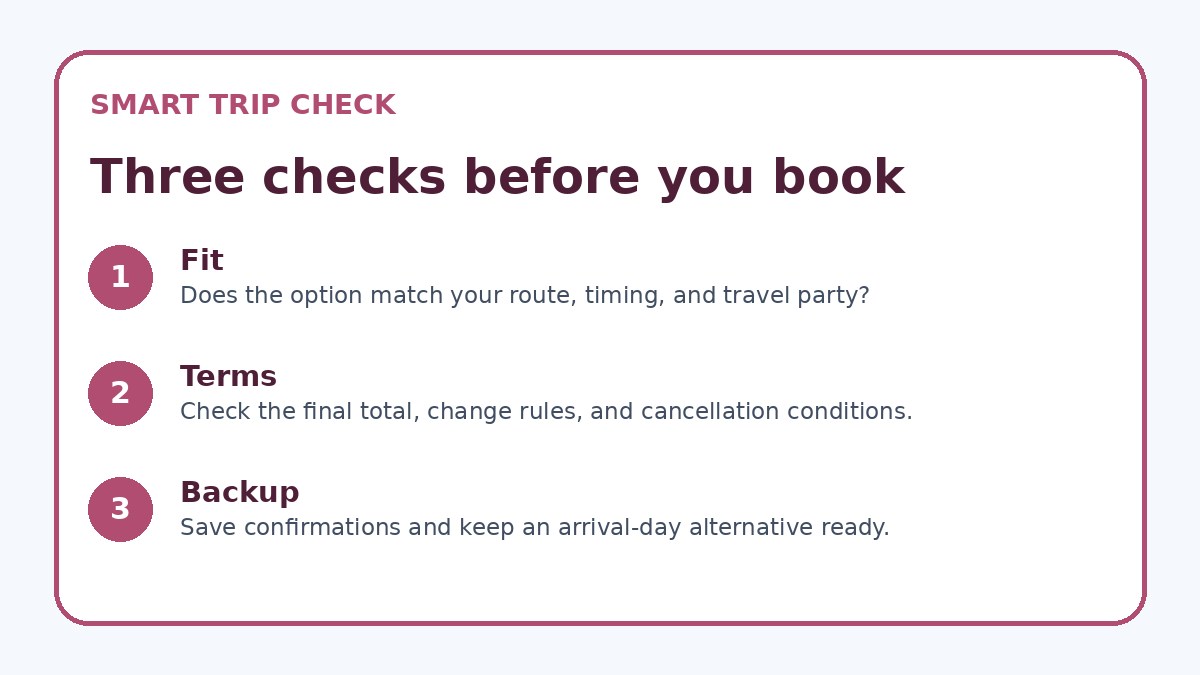
- Match the same dates, number of adults, and exact ages of children across all options before comparing prices.
- Open the final booking page and copy the cancellation and change policy for every component (flight, hotel, transfer, activity).
- Confirm who is authorised to request changes or refunds and whether name or passenger swaps are permitted without fees.
- Verify how refunds are issued (card, bank, voucher) and the expected timeline for receiving any returned funds.
- Check whether included items for children (beds, cots, meals, tickets) are explicitly listed or will incur extra charges.
- If considering add-on flexibility (insurance or flexible tickets), obtain the precise coverage wording and confirm exclusions.
Flexibility that matters for families: who can change what
Families need to know who on the booking can request changes, how name changes are processed, and whether children’s fares can be adjusted without penalty. Some packages require the lead passenger to make all changes and may charge a fee for name or passenger swaps; others allow each component to be modified directly with the supplier. Look for explicit language about changes due to illness, school closures, or travel disruption. If a provider has a family-specific waiver or flexible family policy, confirm its exact scope and whether it applies to all components of the package.
Also check how refunds are handled for multi-component bookings. If a flight is cancelled and only the flight component is refundable, will the supplier automatically refund other components or require separate claims? Knowing the refund flow helps families decide whether a bundled booking centralises problem-solving (one point of contact) or fragments it across airlines, hotels, and tour operators. Centralised handling can be easier but isn’t always more generous, so read the terms carefully on the supplier’s final booking page.
Final terms and verification: what to confirm before you click pay
On the provider’s final booking page, verify the full cancellation policy for every component and save or print those terms. Confirm whether change or cancellation fees scale with group size, whether refunds are issued to the original payment method or as vouchers, and any deadlines for free changes. When a bundle quotes flexible booking, check whether that flexibility has blackout periods or excludes special fares. If you see a promise of a family-friendly rule, get the exact wording and store it with your reservation confirmation.
If you’re comparing a bundled package to separate bookings, simulate the same scenario for separate components and compare the net outcome if one component must change or cancel. Consider how easy it will be to move dates, whether you’ll lose a connecting hotel or transfer, and whether insurers will cover the combined arrangement. For extra reassurance, consider using a comparison site or an agent to pull the exact terms for the identical dates and traveller mix; Trip.com can be used once to check availability and terms, but always rely on the supplier’s final booking page for legal cancellation language.
Travel Deals & Booking Strategy questions travelers ask
Is it safer for families to book everything in one package or to book each part separately?
There’s no one-size-fits-all answer. One package gives a single contact for changes and may simplify rebooking during disruption, which many families appreciate. Separate bookings let you pick the most flexible airline fare, the hotel with the most forgiving room policy, and flexible activity suppliers, reducing the chance one strict component ruins the whole trip. Compare the net outcome for a likely change scenario (for example, a cancelled flight) and choose the option that minimizes both financial loss and time spent on claims.
What specific cancellation details should I look for when booking Auckland travel deals for my family?
Look for the exact deadlines for free cancellation or fee-free date changes, whether refunds are full or partial, and if refunds are issued as vouchers or back to your original payment method. Check whether penalties increase with the number of passengers and whether infant or child tickets have different rules. Also verify whether disruptions (weather, operator cancellation) prompt automatic rebooking or require you to file separate claims with each supplier.
Can travel insurance replace flexible booking rules for family plans?
Insurance can help but it’s not a complete substitute for flexible booking terms. A policy may reimburse certain covered reasons for cancellation or interruption, but it usually requires documentation and can take time to settle. Insurers also exclude some causes and may impose excesses, so read policy exclusions carefully. Ideally, combine flexible booking options for high-risk components (like refundable fares) with insurance that covers gaps such as illness or specific nonrefundable costs.
Final decision note
For families planning an Auckland trip, the sensible decision hinges on cancellation and change mechanics as much as headline cost. Start by matching identical dates, passenger counts and inclusions, then compare how refunds and changes work for each component. Decide whether you value a single point of contact over component-level flexibility, and don’t rely on summary promises — copy the exact cancellation wording from the supplier’s final booking page. If you need a quick cross-check of availability and terms, you can consult a comparison site such as Trip.com, but base your booking decision on the provider’s legal terms. Prioritise options that protect your family from common disruptions and make post-booking changes straightforward.
Continue planning
Check current options and final conditions
Use the provider page to confirm live availability, the final total, cancellation terms, and every condition that matters to your trip.
This evergreen planning guide was created with AI-assisted drafting and a structured quality review. It does not display live prices, schedules, availability, visa guidance, or provider rankings. Verify current details before booking. Some links are affiliate links; we may earn a commission at no additional cost to you.