Practical answer first: for most families visiting Los Angeles, renting a car improves flexibility — especially for beach days, day trips to nearby parks, and carrying children’s gear — but only if you accept occasional traffic and parking costs. If your stay concentrates on a single neighborhood with easy transit or you plan to rely on rideshares for short hops, you can avoid driving entirely. This guide explains when driving genuinely adds value, what to verify at pickup and return, how to interpret insurance wording, and a clear non-driving fallback. Use the decision criteria here to choose the right mobility approach for your family, then confirm exact fees, coverage limits, and pickup/return procedures on the provider’s final booking page — and consider comparing availability on Trip.com before you book.
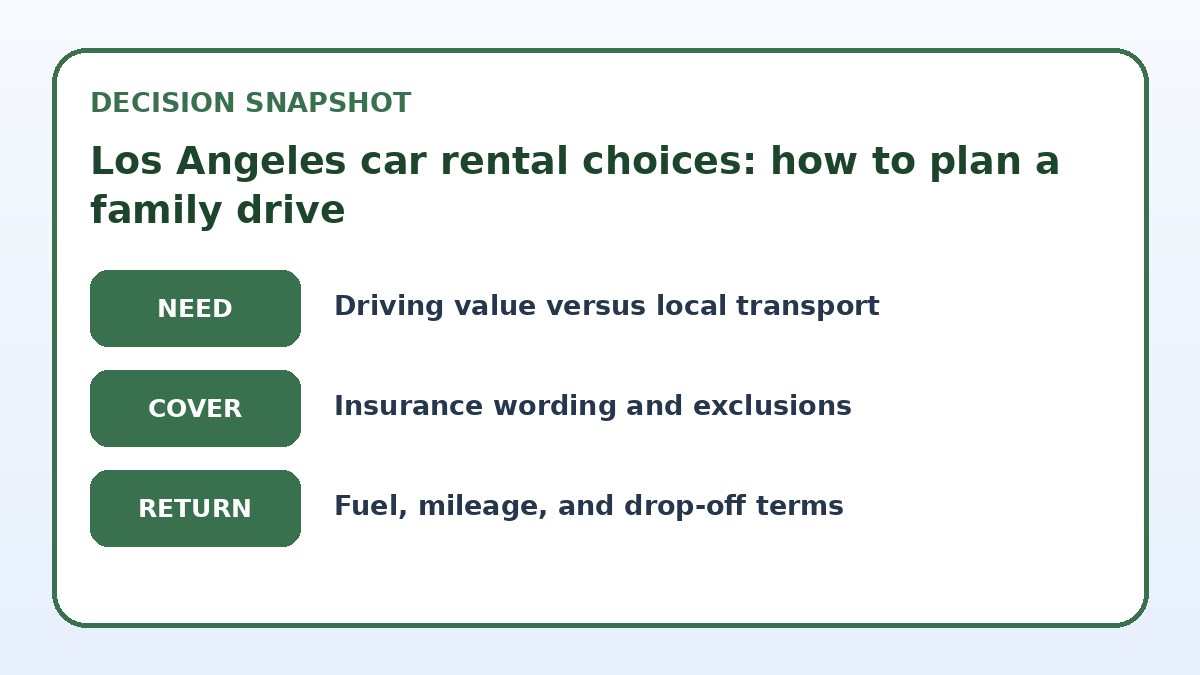
Does driving add value for your family’s Los Angeles trip?
Deciding whether to rent a car starts with your itinerary. If your days are a loop — museum mornings, neighborhood afternoons, one nearby beach — you can often combine transit, scooters, and occasional rideshares to avoid the cost and stress of driving. But if your plan includes multiple day trips (Santa Monica to Griffith Park to Long Beach, for example), or you need to transport a lot of gear like camping equipment or child seats, a car will likely save time and make those transitions manageable. Consider also traveling patterns: families with toddlers appreciate the door-to-door predictability a vehicle offers when naps or sudden needs arise.
Think about lodging too. Staying centrally in a neighborhood with frequent bus and metro service reduces driving need, whereas scattered suburban stays or homes with no nearby transit make a car more attractive. Weigh the intangible benefits — the independence to change plans on the fly, flexibility to chase better weather, and simplified logistics for supermarket stops — against annoyances: congestion, parking hunts, and the mental load of urban driving. Write a short sample day for each approach and compare how much of your day is spent in transit versus at attractions.
Decide whether driving earns its place
| Mobility strategy | Best for | Cost or friction to check |
|---|---|---|
| Full rental for entire stay | Families needing daily flexibility and frequent day trips outside central LA. | Higher parking and rental days cost; more exposure to congestion and pick-up/return friction. |
| Hybrid: rental only for specific day trips | Families who mostly stay central but want a few distant excursions (beaches, parks). | Extra booking and pickup logistics; must time rentals tightly to avoid wasted days. |
| Public transit + rideshares | Families staying in transit-rich neighborhoods who prefer to avoid driving stress. | Less luggage convenience and potential higher per-ride costs during busy periods. |
| Private driver or guided day tours | Families that want door-to-door service without driving or parking worries. | Higher per-day cost and less schedule flexibility than self-driving. |
Check live rental choices only after the route test
Use the exact driver, dates, pickup point, and return plan to compare current conditions.
Insurance wording: what to verify at booking and pickup
Insurance descriptions can be confusing and vary by provider. On the booking page and again at pickup, verify whether a collision damage waiver (CDW) or loss damage waiver (LDW) is presented as optional or included, and ask whether it covers both damage and theft. Confirm the policy’s deductible amount and whether the provider lists any exclusions that matter to families, such as roof or undercarriage damage. If you plan to use a personal auto policy or a credit card benefit, ask the counter whether those options are accepted and whether they act as primary or secondary coverage — this affects whether your personal insurer pays first.
Also check liability coverage limits and local compulsory minimums; rental counters sometimes offer supplemental liability or personal accident protection that fills gaps, but those products vary and can duplicate existing coverage. Request written confirmation of any verbal assurances the agent gives, and take photos of the car before you drive off noting any pre-existing damage. Finally, if you’ll cross county or state lines on a longer family drive, confirm that the insurance terms still apply on those routes.
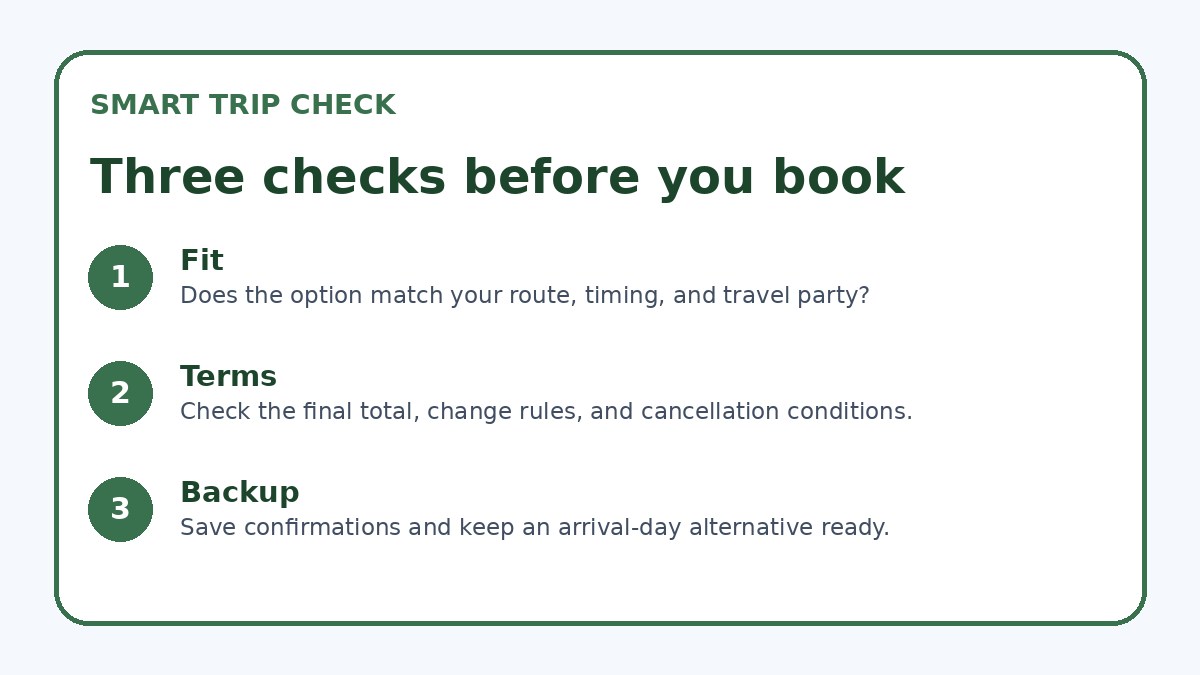
Compare the full rental conditions
Confirm insurance wording, exclusions, deposit, fuel, mileage, and return terms on the final page.
Pickup, return and practical friction points
Pickup locations differ substantially: airport counters are convenient but can mean longer lines, shuttle rides, and extra airport-related fees; off-airport locations might be quieter but require a shuttle and extra time. For families, a counter with a dedicated family lane or fast check-in option is a real time-saver. Ask about child-seat availability and installation help — some providers will install seats at pickup, others will only hand them over. Confirm whether the rate includes a second driver, and whether adding an additional household driver will cost extra, because shared driving reduces fatigue on long days.
Return procedures are equally important. Verify after-hours returns, where to drop keys, and whether there is a documented fuel policy that might hit families who refuel on the road. Photograph the car at drop-off if a full inspection is not performed and get a receipt confirming return time and odometer reading. If you plan to pick up or return at peak times, build in extra cushion for traffic and counter lines. Lastly, ask exactly which charges appear on the final bill versus what is estimated at booking so you can contest unexpected fees quickly.
Car rental terms to verify
- List your main daily destinations and mark which are hard to reach without a car to test if renting is necessary.
- Confirm child-seat rules and any installation assistance at pickup; reserve seats in advance when possible.
- Verify deductible amounts, CDW/LDW coverage, and whether your credit card offers primary rental insurance.
- Note exact pickup/return locations and after-hours procedures; photograph the car at both pickup and drop-off.
- Estimate parking availability and hourly/daily parking fees at each hotel or attraction on your route.
- Compare total rental days, one-way drop fees, and fuel policy on the final booking page before confirming.
Non-driving fallback: plan B options and when to use them
A credible non-driving plan combines transit, rideshares, and strategic transfers. Los Angeles has an expanding network of buses and metro lines that connect many tourist areas; combine those with local shuttle services, bike shares, and rides for the last mile. For families, pre-planned taxi or rideshare transfers between accommodations and major attractions relieve the stress of navigating parking. Choose a centrally located base to minimize daily transit time; staying near a metro line or a well-served bus corridor reduces the number of rides you’ll need and keeps toddlers’ time in transit manageable.
Also consider hybrid approaches: rent a car for one or two full-day excursions and rely on public transport the rest of the trip. When evaluating this option, compare the daily rental minimums, child-seat rental rules, and the hassle of swapping transport mid-trip. If you use rentals only for day trips, plan pickups in the morning and returns by evening to avoid overnight parking charges and simplify logistics. Keep a shortlist of dependable ride providers and check recent availability on sites like Trip.com before your trip to understand current conditions.
Car Rental & Road Trip questions travelers ask
Will my personal auto insurance or credit card usually cover a Los Angeles rental?
Many personal auto policies and some credit cards offer rental coverage, but terms differ. Ask your insurer if coverage applies in California, whether it is primary or secondary, and what deductibles or exclusions exist. For credit cards, confirm the card’s specific rental insurance benefit (coverage limits, eligible vehicle classes, and how to activate it) because some cards require you to pay with the card and decline the rental company’s CDW to use the benefit. Always get written confirmation of acceptance at the rental counter and verify coverage details on both your insurer’s and card issuer’s final statements.
How do I manage child seats and booster requirements for my family?
Policies around child seats vary by provider and can carry extra fees. You can bring your own seats (often safest and cheapest) but ensure they meet U.S. safety standards and are easy to install with the vehicle you choose. If renting seats, reserve them in advance and confirm the size/age suitability for your children. At pickup, request assistance installing seats if you need it and photograph the installation for your records. On the booking page, check whether the provider charges per seat, per day, and whether there are height or weight restrictions for boosters.
What should I check on the rental provider’s final booking page?
On the final booking page confirm the exact pickup and return addresses, total rental days, included mileage, fuel policy, and whether any airport or location-specific fees apply. Review the insurance options offered and read the deductible figures and exclusions carefully. Check terms about additional drivers, young-driver fees, and rules for returning the car after hours. If you’ll be traveling outside Los Angeles or crossing state lines, verify permissions and any geographic restrictions. Finally, save or screenshot the confirmation and the provider’s contact details for easy reference while traveling.
Final decision note
Choosing whether to rent a car in Los Angeles with your family comes down to a clear tradeoff between flexibility and friction. If your itinerary spreads across beaches, parks, and suburban attractions, a rental simplifies logistics and carries children’s gear easily; if you plan to stay within a well-served neighborhood, a transit-plus-rideshare plan reduces parking headaches and stress. Use the checklist to verify child-seat options, insurance terms, pickup and return details, and parking costs before booking. Compare full-rental and hybrid options against non-driving strategies, then confirm exact terms on the rental provider’s final page and consider checking availability on Trip.com for current options before you commit.
Continue planning
Check current options and final conditions
Use the provider page to confirm live availability, the final total, cancellation terms, and every condition that matters to your trip.
This evergreen planning guide was created with AI-assisted drafting and a structured quality review. It does not display live prices, schedules, availability, visa guidance, or provider rankings. Verify current details before booking. Some links are affiliate links; we may earn a commission at no additional cost to you.