Practical answer up front: choose the door-to-door option that minimizes transfers and luggage handling for your priorities — speed, cost, or reliability. For most business trips between Los Angeles and San Francisco that involve suitcases or equipment, prioritize a single hand-off, clear baggage rules, and terminals with good onward ground links. That might mean a direct rail-plus-shuttle door-to-door booking, a coach with onboard storage and city-center stops, or a private car for true zero-transfer convenience. Flights can be fastest point-to-point but add security lines, checked-bag waits, and transfers to downtown. Read on to weigh terminal fit, luggage friction, timing flexibility, and a realistic disruption backup so you can pick the option that gets you to the meeting on time with your luggage intact.

Choose between rail, coach, rideshare, and mixed options
Start by matching the trip’s tightness and luggage profile to the mode’s typical strengths. Rail generally gives roomy luggage areas and a chance to work en route without repeated security checks, while coach services often offer underfloor bays for larger suitcases and umbrella cancellations policies. Rideshares or private cars eliminate transfers and let you load and lock baggage yourself, which is best for presentations, samples, or delicate gear. Mixed options — for example, a train into the city combined with a short rideshare to the office — can hit a sweet spot if you want fewer transfers but also a central arrival. Decide whether minimizing transfers or minimizing travel time is your priority, then shortlist modes that match.
When shortlisting, consider where each service actually stops. A downtown rail station may put you closer to meetings than an airport but could require a longer initial transfer from your starting point. Coach terminals vary: some are curbside downtown, others sit at transit hubs that add a local ride. Rideshare pickups depend on pickup zones and traffic, and private car services often include meet-and-greet handling for luggage. For business travelers, the most practical choice is the one that reduces total door-to-door time and luggage handling, not just the transit leg alone.
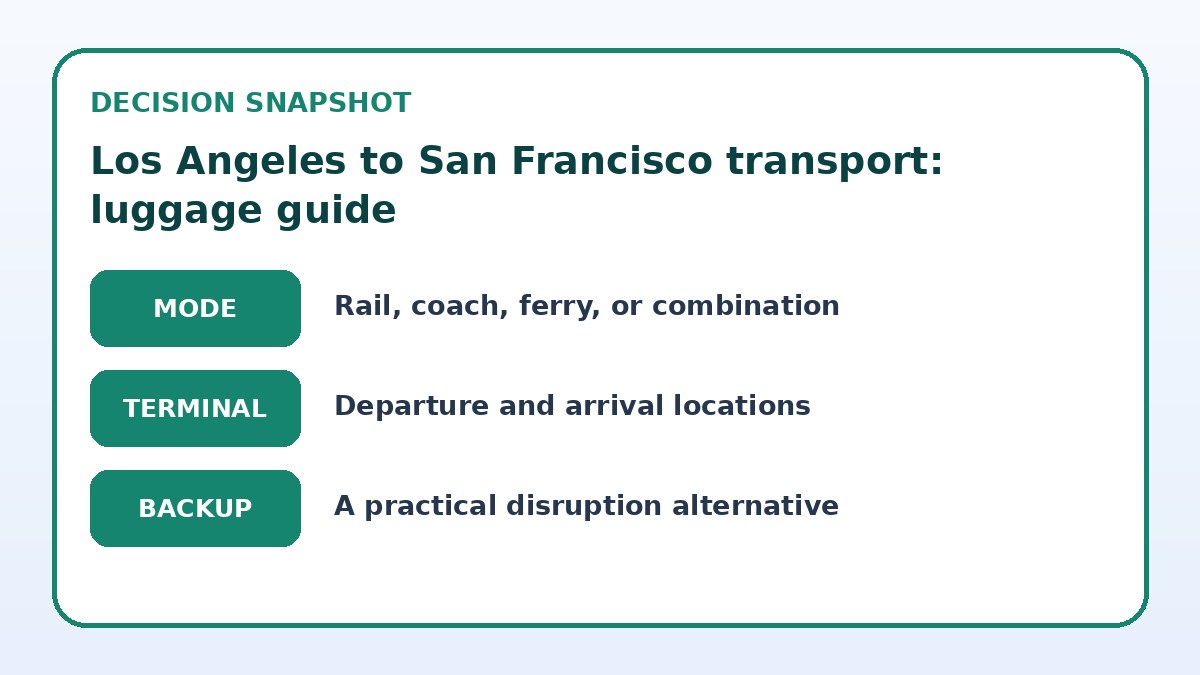
Choose the end-to-end journey plan
| Journey approach | Best for | Friction to check |
|---|---|---|
| Prioritize zero-transfer private car (door-to-door) | Tight schedules, fragile or bulky luggage | Higher cost and potential traffic delays versus predictable handling |
| Choose direct rail to downtown then short rideshare | Comfortable work time onboard and city-center arrivals | May require a short last-mile vehicle with an extra hand-off |
| Use intercity coach that stops near business districts | Large checked bags and straightforward terminals | Longer travel time with limited schedule flexibility than some trains |
| Mix modes: flight plus downtown transfer only when fastest | When air legs significantly reduce total door-to-door time | Adds security and checked-bag processing, increasing luggage friction |
Check live intercity options
Look beyond the ride itself and compare terminals, transfers, luggage, and arrival fit.
Terminal fit and luggage/transfer friction
Terminal fit means whether the boarding and arrival points line up with your hotel or office. Airports force a security screening and often a checked bag process; that adds unpredictable waits and the risk of missing a tight connection. Train stations and major coach terminals typically allow you to stay with carry-on luggage until boarding, reducing handling. If you must check a suitcase, verify how many times it will be reloaded and whether transfers require separate baggage claims. Each extra handling step increases both time and the chance of damage or misplacement, so map the number of expected hand-offs before you commit.
Also assess the physical friction: stairs, elevators, distance between platforms, and whether terminal staff assist with heavy bags. For example, a busy downtown station without escalators can slow you down with a wheeled suitcase. Some operators let you pre-book assistance or portage; others operate on a first-come basis. When traveling with samples, tech equipment, or garment bags, plan packaging that makes a single-person transfer manageable. If you foresee needing help, reserve a pickup that includes door-to-door handling or schedule a porter service at the origin and destination.
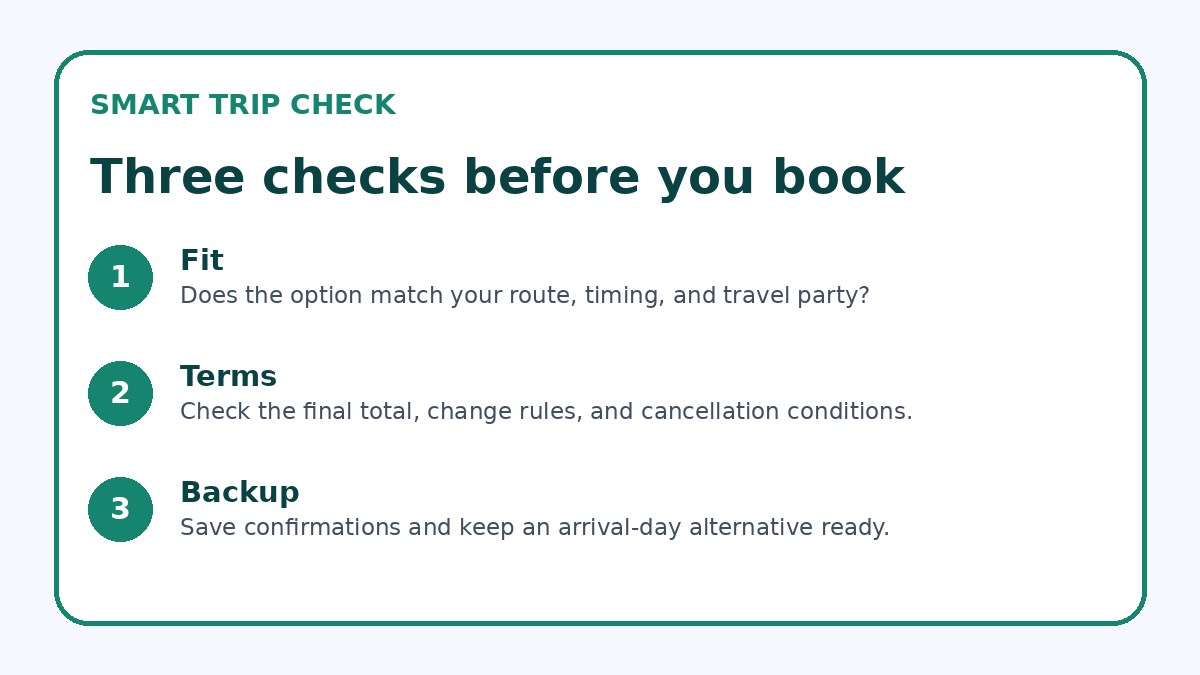
Timing flexibility and business scheduling
Business travel often means fixed meeting times, so build schedules with buffers for luggage processing and local traffic. Flights may shave hours off pure travel time but give you less schedule predictability because of security, baggage claim, and airport transfers. Rail and coach services can be more forgiving: boarding usually begins earlier and there’s less wait for checked luggage. If your schedule can absorb moderate variability, choose the cheaper or more comfortable mode; if not, prefer options with fewer connection points even if costlier. Always align departure and arrival slots to allow a margin that covers local commuting from the station or terminal to your meeting venue.
Consider service frequency: higher-frequency modes let you pick later options with less risk after delays, while low-frequency choices require stricter planning. If you cannot be late, pick a journey with multiple departures per day so you can shift to the next available slot without complex rebooking. For evening or early-morning travel, verify how baggage handling and terminal services operate during off-hours; limited staff at smaller stations may increase friction and make a door-to-door car more sensible for critical appointments.
Compare the practical alternatives
Use the final page to confirm what is actually offered on your dates and save a workable fallback.
Intercity travel checklist
- Confirm the baggage allowance, maximum dimensions, and overweight procedures on the provider’s official booking page before buying.
- Map door-to-door time: estimate from your origin door to final meeting location, including expected transfers and luggage handling.
- Reserve a rideshare or local transfer for the last mile if the arrival terminal isn’t within easy walking distance of your destination.
- Pack a small carry-on with meeting essentials and valuables so one delayed bag won’t derail your appointment.
- Pre-book porter or assistance services if you have heavy or bulky equipment to avoid carrying multiple bags through stations.
- Save contact numbers for customer service and baggage offices for all booked legs; screenshot booking references for offline access.
Disruption backup and realistic contingency plans
A robust backup plan keeps the meeting intact even if the primary leg falters. Identify one or two alternative same-day paths: a later direct coach, a different rail service, or a rideshare that can meet you at the nearest major hub. Pre-save phone numbers and apps for these alternatives, and confirm cancellation and rebooking rules on the operator’s final booking page. If your primary option involves checked luggage, know where lost-and-found or baggage service desks are at both ends and what documentation you’ll need to report an issue.
Also prepare an on-the-go mitigation kit: a compact garment bag or garment folder, a portable charger, a small toolkit for fragile gear, and a checklist for essential documents. If time is critical, consider splitting items: carry the essentials with you and ship nonessential equipment ahead to the destination address or meeting venue. Trip.com can be used to compare current availability, but always verify baggage rules, terminal addresses, and transfer options on the provider’s official booking page before you finalize any reservations.
Rail & Intercity Transport questions travelers ask
Can I avoid checked luggage when traveling between Los Angeles and San Francisco for business?
Yes, many business travelers avoid checked bags by packing strategically: use a carry-on and a compact personal item for essentials, choose versatile clothing, and limit bulk by wearing heavier items. When planning, verify each operator’s permitted carry-on size and rules on liquids or equipment. If you must bring larger items, consider shipping nonessential materials ahead to your hotel or meeting venue, or reserve a private car for door-to-door handling to eliminate the checked-bag step and keep everything under your control.
How should I compare total door-to-door time rather than just the in-vehicle duration?
Calculate door-to-door time by adding origin transfer, check-in or boarding time, expected in-vehicle duration, and arrival transfer to the meeting place. Include luggage drop, wait for checked-bag retrieval if applicable, and likely traffic for road legs. Compare alternatives on this basis: a short flight that lands far from downtown plus a taxi may be slower overall than a longer train that arrives centrally. Build in a buffer for unexpected delays and choose the option whose realistic total time matches your meeting commitments.
What’s a practical disruption backup if my primary intercity leg is delayed or canceled?
Identify at least two same-day alternatives before travel: another train, a later coach, or a rideshare/car service that can bridge the gap. Know rebooking and refund policies on the provider’s final booking page so you can act quickly. If you must be present at a fixed time, consider pre-booking a flexible last-mile transfer or a private car that you can extend if the main leg runs late. Finally, pack a meeting-ready carry-on containing key documents and tech so you can still attend if a checked bag is delayed.
Final decision note
For business travelers moving between Los Angeles and San Francisco with luggage, the practical priority is minimizing transfers and luggage handling while meeting your time constraints. Balance the predictability of door-to-door car service against the comfort and work-friendly environment of rail, and weigh coach services when you need generous checked-bag space without downtown-airport transfers. Always verify baggage rules, terminal addresses, and rebooking policies on the operator’s booking page before purchasing. Prepare a disruption backup, pack a meeting-ready carry-on, and consider shipping nonessential items ahead when possible. With these steps you'll reduce friction and keep focus on the meeting, not the baggage.
Continue planning
Check current options and final conditions
Use the provider page to confirm live availability, the final total, cancellation terms, and every condition that matters to your trip.
This evergreen planning guide was created with AI-assisted drafting and a structured quality review. It does not display live prices, schedules, availability, visa guidance, or provider rankings. Verify current details before booking. Some links are affiliate links; we may earn a commission at no additional cost to you.