If you’re traveling solo between Toronto and Montreal, the central decision is how much flexibility you truly need: a fully refundable ticket, an exchangeable fare with a change fee, or a restrictive saver-style option. The practical answer: choose a fully refundable or flexible-exchange ticket if your dates, timing, or onward plans might change; pick a restrictive fare only when your schedule is fixed and you want the lowest upfront cost. That stated, there are sensible middle paths — exchangeable fares with modest fees or tickets that allow same-day changes for a fee — that suit many solo travelers who value a balance of price and freedom. Below you’ll find the decision criteria, the tradeoffs for each ticket type, what to confirm on a provider’s booking page, and an actionable checklist to finish booking with confidence.
Ticket flexibility types and what they mean for solo travelers
Fares typically fall into three practical categories: refundable/flexible, exchangeable with fees, and restrictive/non-changeable. Refundable tickets let you cancel for a cash refund or get a full credit with little to no penalty. Exchangeable fares allow date or time changes in return for a fee and sometimes a fare difference; these suit travelers who anticipate possible but not guaranteed changes. Restrictive fares are the cheapest option in many systems but may forbid changes or apply steep penalties if you need to alter your booking. For solo travelers, the right type hinges on how likely your plans are to shift and the cost of rebooking compared with the initial savings.
When deciding, factor in hidden friction points beyond the headline policy. Consider the provider’s actual process for changes: can you adjust online quickly, or must you call an agent? Is there a same-day change window, and does the fare difference apply? Also look at what happens when the provider cancels or delays a service — some flexible fares include more generous operational protections. These operational details affect solo travelers more than group trips because you’ll need to manage any disruption alone, potentially arranging last-minute transfers, luggage handling, or alternative accommodation.
How to compare direct and connecting options on the Toronto–Montreal route
Do not assume every option is nonstop. Trains or buses may offer direct runs while other services require a change. For air travel, some itineraries connect via another city. When comparing tickets, verify whether the itinerary is direct or involves connections and how ticket flexibility applies across each segment. A single-ticket journey typically treats the full itinerary as one contract—flexibility rules then apply to the whole trip—whereas if you book separate legs, each ticket follows its own change and refund rules, increasing the risk of uncovered missed connections.
Solo travelers should weigh the operational reliability of each mode: a direct option reduces the number of dependent segments and the chance you’ll need to use change or refund options. If you choose a connecting itinerary because it’s cheaper, prefer a single-ticket connection that includes protection for missed connections. On the provider’s booking page, confirm whether the ticket links segments and how changes to one part affect the rest. Where multiple providers are involved, verify whether delays qualify for rebooking protections or require purchasing flexible coverage separately.
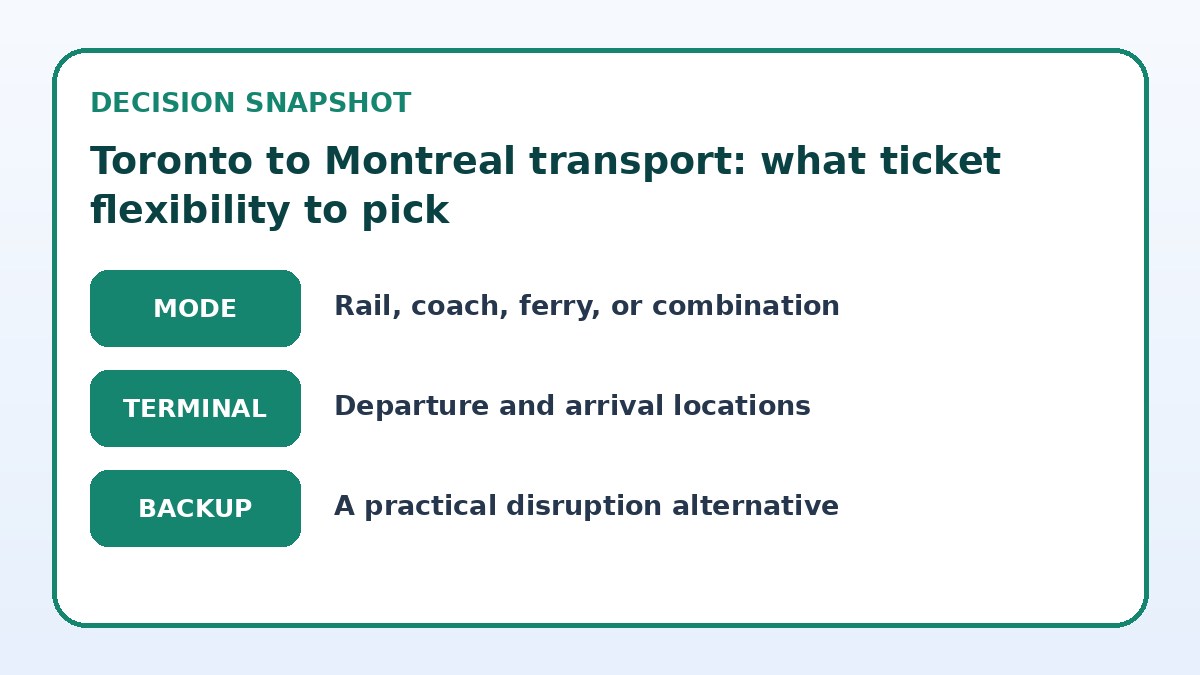
| Approach | Best for | Tradeoff to check |
|---|---|---|
| Fully refundable/flexible ticket | Solo travelers with uncertain dates or important onward connections | Higher upfront cost but low hassle and straightforward refunds or rebooking |
| Exchangeable ticket with fees | Travelers who want a balance between price and changeability | Moderate fee on changes and possible fare differences; cheaper than full flexibility |
| Restrictive/no-change fare | Firm itineraries where saving on the ticket is the priority | Lowest initial price but high cost if plans change or you miss connections |
| Split-ticket or mixed-mode booking | Budget-focused solo travelers willing to manage separate policies | Can be cheaper but increases risk of uncovered disruptions and complex rebooking |
Cost tradeoffs: price now versus potential rebooking costs later
A restrictive ticket typically costs less up front, but any change may trigger substantial fees or force you to buy a new seat. Calculate the break-even point: how many dollars would you pay in change fees or in a new fare if plans shift, versus the extra premium for a flexible ticket? For solo travelers on a tight budget, a restrictive fare can be reasonable when your schedule is firm, but if there is even a modest chance you’ll change plans, a mid-tier exchangeable ticket may be the smarter financial choice.
Also factor in indirect costs: missing a connection might mean paying for additional transport, a night in a hotel, or loss of nonrefundable bookings at your destination. Solo travelers are often responsible for solving disruptions without help, so erring toward flexibility can reduce stress and out-of-pocket surprises. Before booking, review change fee caps, whether taxes and service charges are refundable, and whether the provider offers credits that expire quickly rather than cash refunds—these specifics determine the real monetary tradeoff.
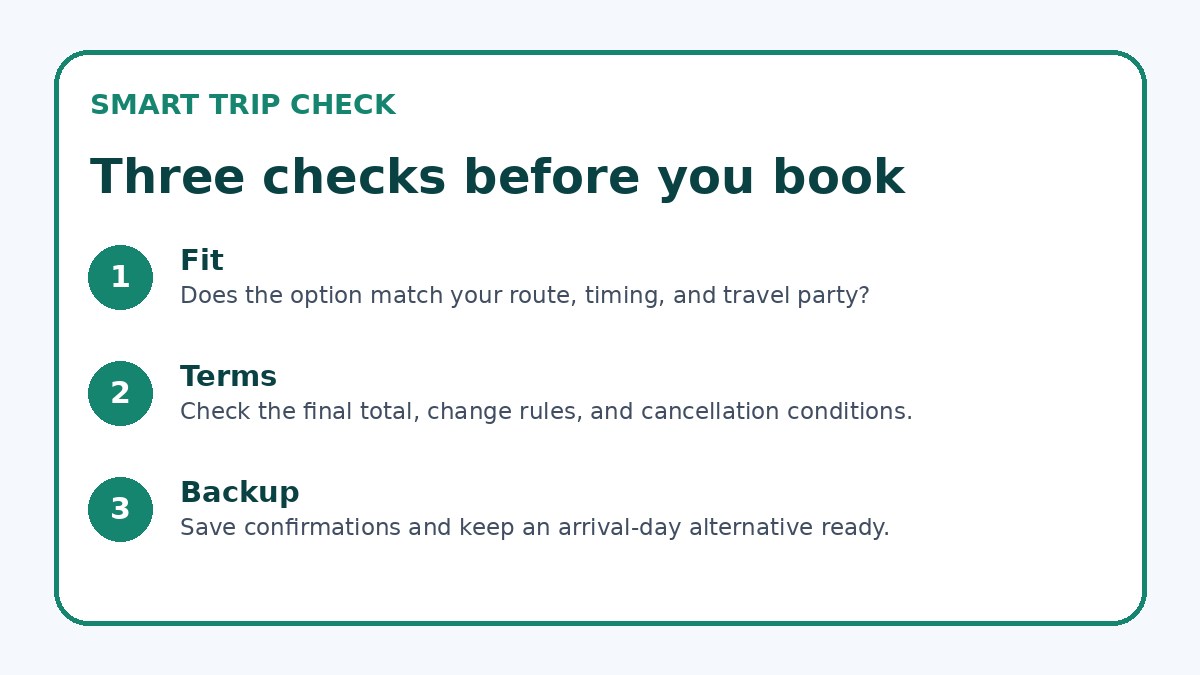
Before you book
- Decide how likely your travel dates will change and choose refundable, exchangeable, or restrictive accordingly.
- On the provider’s booking page, read the precise change and cancellation wording and note any fees or windows.
- Confirm whether refunds are issued to your card or only as travel credit and the credit’s expiry policy.
- Verify if your chosen itinerary is direct or has connections and whether the ticket covers missed connections.
- Check whether ancillary items (bags, seats) are refundable or transferable if you change the base ticket.
- Save screenshots of the final terms and your confirmation email in case you need to dispute a later charge.
Practical booking checks and what to confirm on the provider page
On the provider’s final booking page, verify the exact wording of change and cancellation terms: how much the fee is, any blackout windows, and whether refunds are issued to the original payment method or only as travel credit. Confirm the deadline for free changes or refunds (for example, up to 24 hours after purchase) and whether same-day or near-term changes are allowed. If the ticket includes seat selection, luggage allowance, or other ancillary services, see how those are treated if you change or cancel—sometimes ancillary fees are nonrefundable even if the base fare is refundable.
If you’re comparing options across providers, check whether customer support and the change process are online, by phone, or need an in-person visit. Trip.com can be useful as one place to compare current availability and high-level conditions, but always verify policy details on the provider’s official booking page before finalizing. Finally, for those combining modes (train then bus or flight plus rail), confirm whether a single booking covers all segments and what protections exist for missed connections when disruptions occur.
Frequently asked questions
Can I change a cheap restrictive ticket if my plans change?
Restrictive tickets often have limited or no free changes; some carriers permit changes for a substantial fee plus any fare difference. Before purchasing, inspect the provider’s booking page to see whether changes are allowed, what the exact fee is, and whether refunds are restricted to travel credit. If you anticipate any chance of change, compare the total cost of likely change fees against a higher-priced exchangeable or refundable fare to decide which is actually cheaper for your situation.
How do I protect a single-ticket connection between Toronto and Montreal?
When booking connecting services, prefer a single itinerary under one contract so the provider is responsible for missed connections due to delays. On the booking page, confirm whether the connection is protected and what rebooking or accommodation the carrier provides for missed segments. If you must book separate tickets, allow generous buffer time between connections and consider travel insurance or a flexible fare on the more critical leg to reduce the risk of uncovered disruptions.
What should solo travelers check about refunds and credits?
Confirm whether refunds go back to your original payment method or are issued as nonrefundable travel credit, and note any expiry for credits. Check if taxes and service charges are refundable and whether the provider charges an administrative fee for processing refunds. Keep a copy of all booking confirmations and cancellation terms you saw at purchase; having that evidence speeds up disputes and helps customer service resolve refund requests more quickly.
Final planning note
Choosing ticket flexibility for Toronto to Montreal travel comes down to weighing certainty against upfront cost. Solo travelers who need the freedom to change plans should prefer refundable or flexible-exchange fares to avoid stress and unexpected replacement costs. If your schedule is fixed, restrictive fares can save money but carry the risk of steep change fees and complicated rebooking if circumstances shift. Use the checklist above, confirm exact policies on the provider’s final booking page, and consider a middle-tier ticket if you want budget discipline with some breathing room for adjustments.
Continue planning
Check current options and final conditions
Use the provider page to confirm live availability, the final total, cancellation terms, and every condition that matters to your trip.
This evergreen planning guide was created with AI-assisted drafting and a structured quality review. It does not display live prices, schedules, availability, visa guidance, or provider rankings. Verify current details before booking. Some links are affiliate links; we may earn a commission at no additional cost to you.