Practical answer up front: many first-time visitors to Vancouver do fine without a rental car if you plan to stay in the city, use public transit, or take a few organized tours. Rent a car if your trip includes multiple day trips to Sea-to-Sky destinations, remote parks, or if you’re staying outside downtown in neighborhoods with limited transit links. This guide helps you weigh the tradeoffs—cost, parking, convenience, and the seasons—so you can make a confident decision before booking. I’ll explain the key criteria to compare, the situations where a car is a clear advantage, and the smart alternatives to consider for a relaxed, efficient visit.
Where a Vancouver car rental shines
A car is most useful when your plans extend beyond the compact core of Vancouver. If you want the freedom to follow a flexible schedule for destinations like Squamish, Whistler, the Fraser Valley wine route, or remote provincial parks, driving removes the time limits of scheduled buses and tours. A car also pays off if your accommodation is outside transit-rich areas—on the North Shore, in suburbs, or on Vancouver Island where ferries and schedules can add planning friction. For families, groups, or travelers with a lot of gear—bikes, ski equipment, or camping supplies—the cargo space and door-to-door convenience matter.
Driving also makes sense for multi-stop road days where public transit would require transfers and long waits. If you plan to hop between small coastal towns, dispersed trailheads, or shoreline viewpoints, a vehicle reduces transit dead time and lets you carry picnic supplies, extra layers, or weather-protection gear without juggling bags on buses. Finally, renting offers a safety net in shoulder seasons when lower-frequency transit or early closures can limit options—though you should always verify ferry, park, and seasonal road conditions before leaving.
Why many first-time visitors skip a car
Vancouver’s downtown is dense, walkable, and well served by SkyTrain, buses, SeaBus ferries, and bike lanes—making car-free travel simple for typical city sightseeing. Popular attractions like Stanley Park, the Vancouver Aquarium, Robson Street shopping, and Granville Island are reachable without driving. Choosing not to rent avoids parking costs, downtown congestion, and the stress of city driving and narrow residential streets. Rideshares and taxis also plug gaps for short trips where transit would be slower late at night or with heavy luggage.
Public transit, organized day tours, and point-to-point passenger ferries let you reach most highlights without the overhead of insurance decisions, fuel stops, and vehicle inspections. If you plan to book a single, guided day trip to places like Whistler or the Capilano Suspension Bridge, organized transfers can be easier and sometimes safer, as mountain or coastal driving involves variable conditions and occasional closures. Skipping the car can free your budget for experiences, dining, and tours instead—provided you’re comfortable scheduling around transit routes and tour departure points.
| Approach | Best for | Tradeoff to check |
|---|---|---|
| Full trip rental | Road-focused itineraries with multiple day trips and gear | Higher parking hassle and city driving stress; more full-trip costs to manage |
| No car, transit and tours | City-centered visits prioritizing museums, parks, and restaurants | Less flexibility for remote day trips; dependent on schedules and tour availability |
| Hybrid: short-term rental | City stay plus 1–3 targeted day trips outside Vancouver | Requires planning pick-up/drop-off and coordinating with transit days |
| Guided transfers and shuttles | Travelers who prefer not to drive but want access to mountain or coastal sites | Less on-site autonomy and fixed departure times compared with self-driving |
How to weigh costs, parking, and insurance
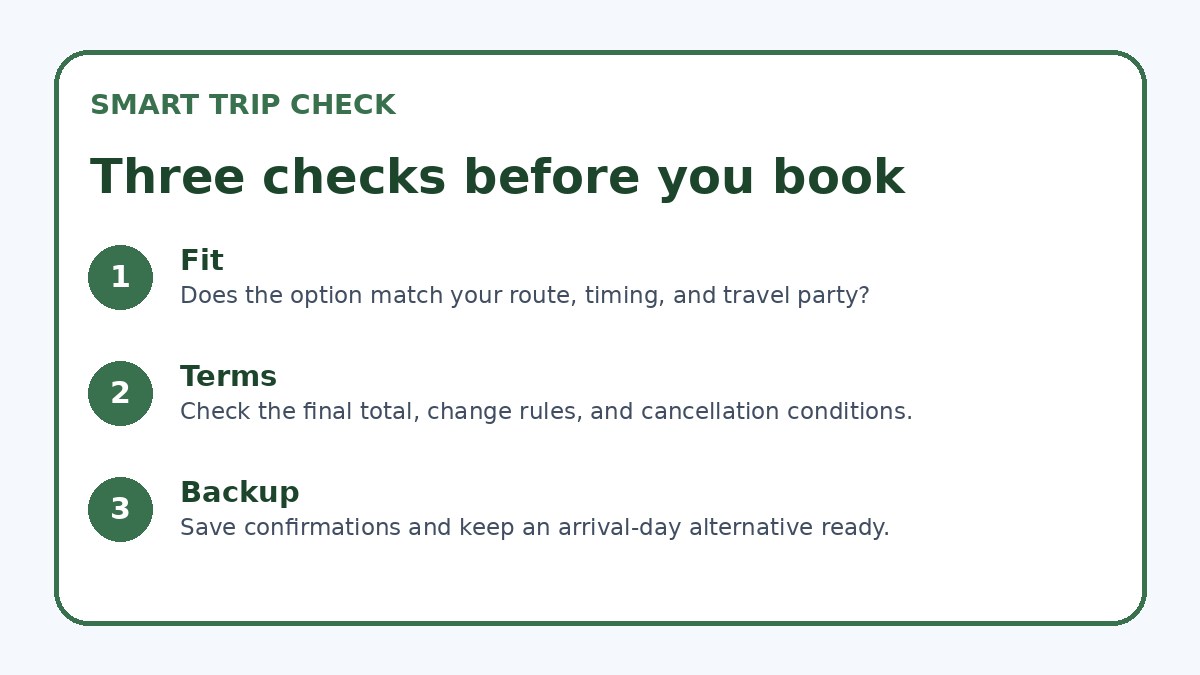
When comparing quotes for a Vancouver car rental, add all likely costs to the base rate in your calculation. Consider insurance options, fuel, any cross-border or ferry restrictions if you plan to travel beyond the mainland, and estimated parking expenses at your hotel and destinations. Many downtown hotels have paid on-site parking or limited complimentary spots; residential and meter parking rules vary by neighborhood and can include strict enforcement. If you’re renting at YVR or the city center, check where the rental company’s pickup location is and whether shuttle or extra fees apply.
Insurance is a big decision point—credit card coverage and your personal auto policy may include some protection, but verify limits, deductibles, and regional exclusions before declining offered coverage. Also check vehicle class: a compact car is easier for city parking and narrow streets, while an SUV or wagon may be better for mountain weather and carrying gear. Finally, ask the rental provider about winter tire or chain requirements if you visit during snowy months; always verify those details on the company’s booking page, as they change seasonally.
Before you book
- List the places you must visit and mark which require long drives or multiple transfers—rent if several are remote.
- Check hotel or Airbnb parking availability and typical costs; confirm with the property before booking.
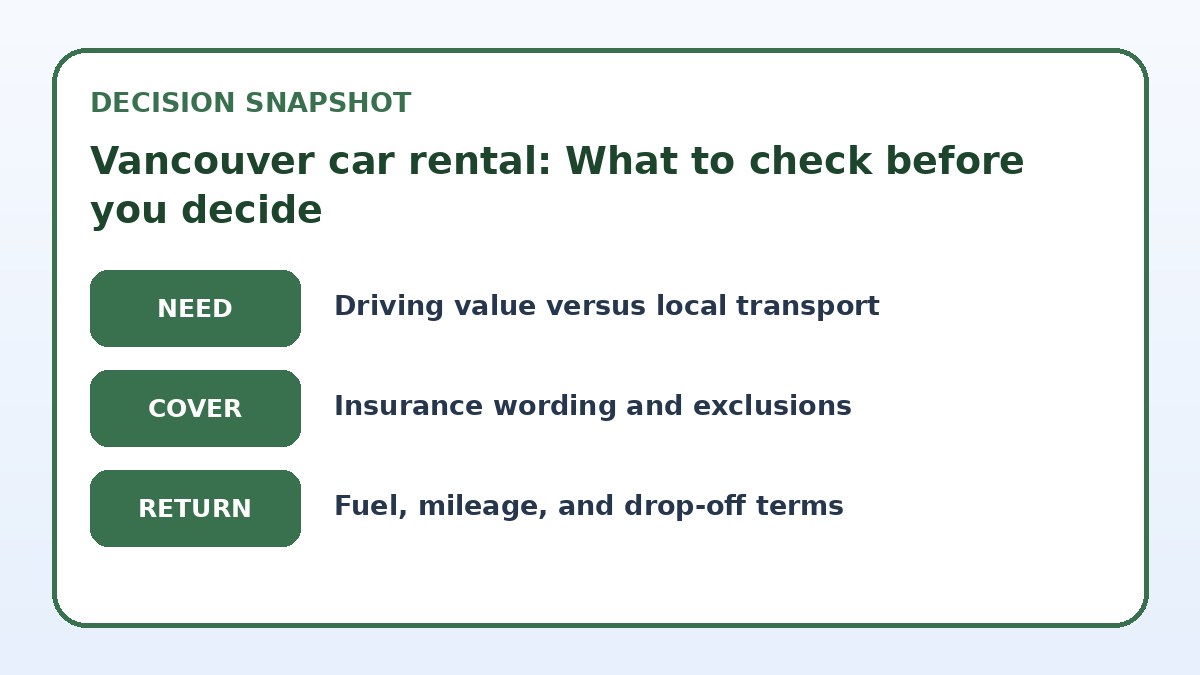
- Compare rental quotes including add-ons: insurance, airport surcharges, taxes, and one-way drop fees.
- Decide vehicle size based on passengers, luggage, and season; ask providers about winter tires if relevant.
- Map transit and tour alternatives for each day-trip to see if public options meet your timing needs.
- Confirm pickup/drop-off locations and hours on the rental company's booking page before finalizing.
Alternatives and blended strategies to renting
You don’t have to choose strictly for-or-against a car—mixing approaches can capture the best of both worlds. Consider booking public-transit-friendly accommodation for the city core and renting a car only for the days you need to make long drives. Many rental desks allow one-way or multi-day hires, which can be scheduled to begin on your planned day trip and returned when you’re back in the city. Check closing times, drop-off locations, and additional one-way fees on the provider’s final booking page before confirming.
Other alternatives include guided day trips that handle driving logistics, seasonal shuttle services to hiking areas, and bike or e-bike rentals for urban exploration. If you expect to rely on transit and occasional rideshares, plan your itinerary so tour departures and ferry times match transit windows, or book small private transfers for early-morning starts. You can also compare availability and conditions on Trip.com for some options, but always verify key terms—pickup/drop-off locations, kilometer limits, and insurance—directly with the rental company.
Frequently asked questions
Can I rely on public transit to see Vancouver’s main attractions?
Yes. Vancouver’s core neighborhoods are well connected by SkyTrain, buses, SeaBus ferries, and local bike routes, making it easy to reach Stanley Park, Gastown, Granville Island, and main shopping streets without a car. Transit frequencies vary by route and time of day, and some attractions require a short walk from the nearest stop, so plan a little extra time. For trips beyond the city—mountain towns, certain provincial parks, or ferry-only coastal communities—transit may be slower or require transfers; compare organized tours and shuttle options when a direct public route isn’t available.
What parking and driving challenges should I expect in Vancouver?
Downtown street parking is limited and often metered with time limits, and many hotels charge for on-site parking. Residential neighborhoods can have permit programs and narrow streets, which make maneuvering and finding free spaces difficult. Pay attention to temporary no-parking signs, loading zones, and rush-hour restrictions. When driving outside the city, mountain routes can be winding and weather-dependent; check road conditions before you go. Always verify parking rules and hotel policies directly with the property you’ve booked to avoid surprises.
How do I decide between renting a compact car or a larger vehicle?
Choose a compact if you’ll mostly stay in the city where parking is tight and streets are busier; smaller cars are easier to park and usually cheaper. Opt for an SUV or larger vehicle if you have winter travel, expect rougher roads, or need room for bikes, skis, or camping gear. Consider passenger comfort for long drives: more legroom matters on multi-hour day trips. Finally, check the rental provider’s information about vehicle features—cargo capacity, roof racks, and winter equipment—on their booking page before selecting your car.
Final planning note
Deciding whether a Vancouver car rental fits your first visit comes down to a simple question: will you spend most of your time inside the city or traveling to dispersed destinations? If your plans center on downtown attractions, museums, and nearby neighborhoods, avoiding a car reduces cost and stress. If you want flexibility for mountain and coastal day trips, carrying outdoor gear, or staying in transit-thin suburbs, renting is likely worth it. For many travelers a hybrid approach—using transit in the city and renting for a few targeted days—strikes the best balance. Use the checklist to compare real costs and schedules, verify insurance and pickup details on the rental page, and book the option that keeps your trip smooth and focused on experiences, not logistics.
Continue planning
Check current options and final conditions
Use the provider page to confirm live availability, the final total, cancellation terms, and every condition that matters to your trip.
This evergreen planning guide was created with AI-assisted drafting and a structured quality review. It does not display live prices, schedules, availability, visa guidance, or provider rankings. Verify current details before booking. Some links are affiliate links; we may earn a commission at no additional cost to you.