Short answer: for most families visiting central Ho Chi Minh City, renting and driving yourselves rarely improves the trip; it adds cost, stress, and parking headaches without matching convenience. Driving can make sense if your plan includes day trips outside the urban core—beaches, Mekong Delta homestays, or multiple remote stops where schedules and luggage make public transport impractical. Before you book, compare door-to-door time, total cost with insurance and parking, and how confident the designated driver is with busy Southeast Asian traffic. This guide directs parents through the specific tradeoffs you’ll face in Ho Chi Minh City: which routes actually gain from a car, the crucial insurance wording to verify, pickup and return friction at city locations, and practical non-driving fallbacks that keep your family mobile and safe.
Does driving improve your family itinerary?
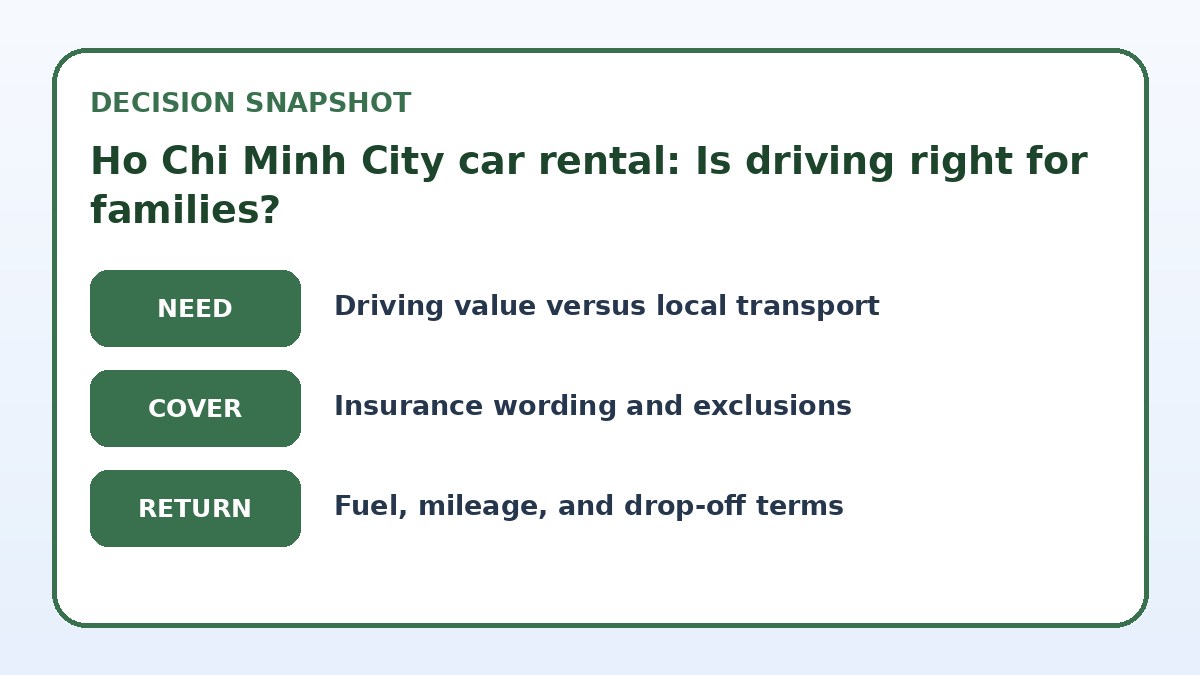
Start by mapping each day of your trip and asking: are you leaving the urban core regularly, or spending most time in District 1, 3 and the main museum and market areas? A car shows clear value if your family itinerary includes multiple out-of-town stops—coastal beaches, countryside homestays, river trips—or if you have mobility needs that make repeated vehicle transfers necessary. Driving grants flexibility for flexible departure times, luggage-loaded travel, and outings where public transport is sparse or nonexistent.
Conversely, if your days center on museums, markets, and restaurants inside the city center, a car is often more burden than benefit. Traffic congestion can turn short distances into long drives, and secure parking near attractions is limited and can be expensive. Balance travel time door-to-door against simple options such as short taxi rides, ride-hailing, or guided excursions that drop you directly at attractions without the parking and urban navigation overhead.
Decide whether driving earns its place
| Mobility strategy | Best for | Cost or friction to check |
|---|---|---|
| Self-drive rental | Families making multiple out-of-town stops, traveling with lots of gear, or needing flexible, door-to-door travel. | Higher responsibility for navigation, parking, insurance details, and potential local driving stress. |
| Private driver or van hire | Groups who want control over schedules and routes without the burden of driving and parking. | More expensive than taxis for short trips and requires trust in the local driver’s familiarity and safety practices. |
| Taxis and ride-hail | City-center families seeking low-friction transfers, short rides, and no parking worries. | Costs add up for long day trips; vehicle size and child-seat availability vary by provider. |
| Public transit plus walking | Families on a tighter budget with older children who can handle walking and transfers. | Less privacy and comfort, potential crowding, and limited usefulness for remote destinations. |
Check live rental choices only after the route test
Use the exact driver, dates, pickup point, and return plan to compare current conditions.
Insurance and coverage: what to check
Insurance language matters. On the vehicle rental contract, focus on collision damage waiver (CDW) terms, the deductible or excess amount, and whether loss-of-use fees apply. Verify third-party liability limits to ensure adequate protection if you cause injury or property damage. If a provider offers third-party insurance or supplemental protection, read the exclusions—many policies exclude driving on unpaved roads, driving outside Vietnam, or drivers under a specified age.
Also confirm who qualifies to drive: some contracts restrict additional drivers, require an international driving permit alongside your national license, or exclude drivers with limited experience. For families, check if child seats are available as optional equipment and whether their installation is covered. When booking, the final provider page should show the exact insurance language, the excess amount, instructions for claims, and how local police reports are handled—verify these before confirming.
Compare the full rental conditions
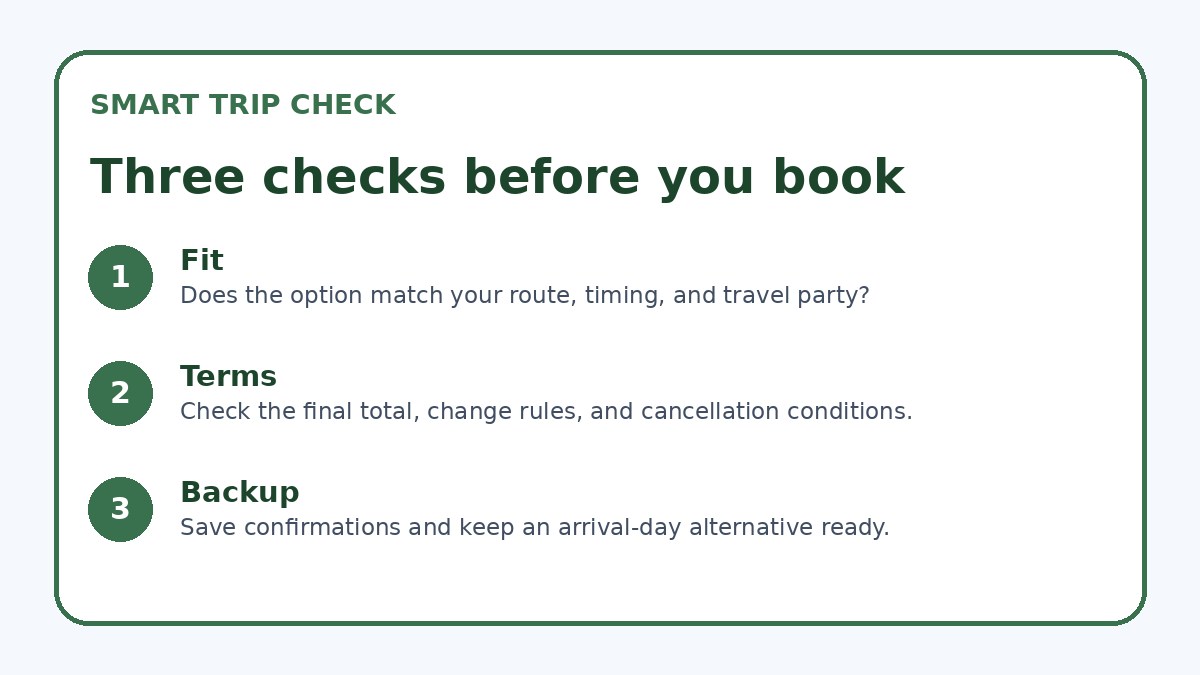
Confirm insurance wording, exclusions, deposit, fuel, mileage, and return terms on the final page.
Pickup, return and practical friction
Pickup and return logistics can add surprising time and cost. Airport pickups often add fees, and collecting a car in central neighborhoods can mean navigating narrow streets and one-way systems with tired children. Inspect the car carefully for pre-existing damage, take timestamped photos, and get any scratches documented by the rental agent to avoid disputes. If late-night returns or specific drop-off locations matter, confirm the provider’s after-hours return process and any associated charges on the booking page.
Think about parking and fuel too. Secure long-term parking can be limited near hotels and attractions; at best you’ll pay for guarded lots or valet and at worst you’ll need to circle looking for a spot. Fuel policies (full-to-full vs pre-purchase) change trip math; confirm what the vehicle must be returned with to avoid refueling penalties. Finally, evaluate child-seat availability, booster rules, and whether technicians can demonstrate installation during pickup—these practical frictions are where a rental can cost patience rather than money.
Car rental terms to verify
- Map each day’s start and end points and mark whether trips leave the urban core; if more than two days do, a car may be useful.
- Read the rental contract’s insurance wording on collision damage waiver, excess amount, and third-party liability before booking.
- Confirm driver eligibility rules: acceptability of your license, need for an international driving permit, and any age restrictions.
- Ask the provider about child seats, their installation, and whether they’re charged separately or included.
- Compare total door-to-door time for driving versus private transfer plus local taxis for each major day.
- Verify pickup/return hours and after-hours procedures on the booking page to avoid surprise charges or long waits.
Non-driving fallback: family-friendly alternatives
If you opt not to drive, build a layered mobility plan: pre-book airport or long-distance private transfers for arrival and intercity legs, then rely on taxis and ride-hailing for short hops and errands. Ride-hailing apps in Ho Chi Minh City commonly offer car sizes that fit a stroller or small suitcases; confirm car-size options in-app and carry a compact travel stroller if walking is part of your plan. For guided day trips outside the city, choose tours or private drivers who provide child-friendly vehicles and can accommodate stops tailored to family needs.
Public transit is improving and can work well for older kids who handle crowds: the metro lines and buses now cover key corridors and avoid surface traffic delays. But with younger children, avoid long multi-transfer routes and opt for direct routes even if slightly costlier. Also factor in nap schedules, restroom breaks, and meal timing—comfort and simplicity often trump saving a little money when traveling with children. Prepare a plan B (a local taxi number or a reliable ride-hail app) for any timed activities to prevent stressful delays.
Car Rental & Road Trip questions travelers ask
Is it legal to drive in Ho Chi Minh City with a foreign driver’s license?
Many rental companies require either an international driving permit (IDP) or an official Vietnamese translation of your license; rules vary by provider. Check the rental agreement and the provider’s booking page for the exact documentation required, and confirm whether the license must be valid for the full rental period. If you’re unsure, ask the rental company to confirm acceptable documents in writing before you travel. Keep original and translated documents with you while driving.
Are child seats commonly available from rental companies in Ho Chi Minh City?
Some rental firms and private drivers offer child seats as an add-on, but availability and quality vary. If a seat is essential, request it specifically when booking and get confirmation on the booking page or in writing. Check the type of restraint provided—infant carrier, convertible seat, or booster—and whether a fee applies. For peace of mind, consider bringing your own compact travel seat or rental checked through a specialist service that guarantees standards.
How should I handle an accident or damage to a rental car while traveling with family?
Follow the provider’s incident procedure: ensure everyone’s safety, contact local emergency services if needed, and notify the rental company immediately. Document the scene with photos and notes, obtain any police or incident reports required by the rental contract, and keep copies of all receipts for repairs or towing. When you return the car, present the documentation and follow the claims process described on the rental agreement. Verify claim timelines and required evidence on the provider’s final booking page before you commit.
Final decision note
For most family visits concentrated inside Ho Chi Minh City, a rental car is an added hassle rather than a timesaver. It becomes worthwhile when your itinerary includes multiple out-of-city destinations, extensive luggage, or mobility needs that make transfers impractical. If you choose to rent, read the insurance wording carefully, confirm driver eligibility and child-seat arrangements, and plan for pickup and parking friction. If you opt out of driving, combine private transfers for long legs with taxis, ride-hail, and guided tours to preserve convenience and comfort for children. Verify all contract terms and insurance details on the provider’s final booking page before you confirm.
Continue planning
Check current options and final conditions
Use the provider page to confirm live availability, the final total, cancellation terms, and every condition that matters to your trip.
This evergreen planning guide was created with AI-assisted drafting and a structured quality review. It does not display live prices, schedules, availability, visa guidance, or provider rankings. Verify current details before booking. Some links are affiliate links; we may earn a commission at no additional cost to you.