For families travelling from Dubai to Auckland, the core decision is simple: trade time in the air and convenience against lower fares and greater scheduling flexibility. If a direct flight is available for your dates, it dramatically reduces connection stress, fewer chances for lost baggage, and makes keeping children on a predictable routine easier. Connecting itineraries often reduce fares and add routing choices but require buffer time, more careful luggage rules checking, and plans for airport transits with kids. Before you book, prepare exact travel dates, the ages of each child, seat and bassinet needs, and whether you need to check bulky items like strollers. That information changes which option actually works for your household. Below you’ll find clear criteria to compare routes, baggage and connection risk, schedule fit, and fare conditions so your family can pick the best practical option for your trip.
See live routes for your exact travel day
Compare direct and connecting choices with the same baggage and traveler details.
Routing and journey time: what families give up and gain
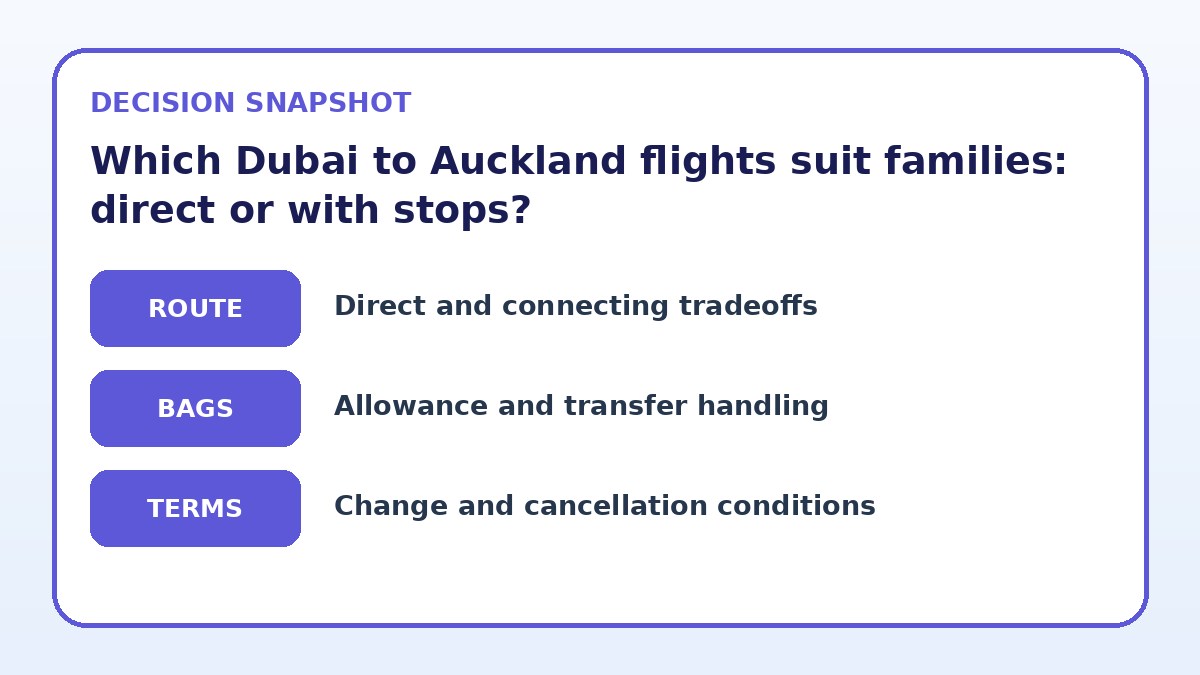
Start by mapping the total door-to-door time for each option. A direct flight (if offered) eliminates the transfer window and keeps the family in one aircraft, which simplifies naps, meals and entertainment. With children who need routine or get cranky during long waits, the fewer airports the better. For connecting options, compare the sum of flight times plus minimum recommended connection buffers. Shorter total elapsed time is not always better if it leaves no margin for minor delays—families benefit from slightly longer, reliable schedules rather than tight connections that risk a missed onward flight.
Also consider time-of-day effects: overnight legs can allow children to sleep through long stretches of flying, while daytime connections may disrupt napping. Think about whether you prefer fewer overnight hours and more daytime activity on arrival. If a multi-leg itinerary is the only option or is far cheaper, pick connections with comfortable layover lengths (not so short that you risk missing a flight, not so long that kids get bored or tired) and with airport facilities that help families, such as play areas or family restrooms.
Baggage, transfers and connection risk: handling gear and stress
Families usually travel with more luggage: checked bags, carry-on, strollers, car seats and a bag of child essentials. Direct flights minimize the number of times luggage is handled and the chances of misrouted items. For connecting itineraries, verify whether baggage is checked through to the final destination or needs to be collected and rechecked at the transfer airport. If rechecking is required, choose longer layovers and confirm whether transfers require leaving and re-entering the terminal, which adds time and complexity with kids and equipment.
When comparing options, ask the airline or check booking rules about gate-checking strollers, bringing car seats, and where to store and pick up bulky items. Also confirm the policy for infants and young children: some carriers allow checked baby equipment free of charge, others require fees. Finally, consider the chance of missed connections—if one delayed arrival could strand you overnight, weigh whether a more expensive direct versus a cheaper but riskier connection is the right insurance for peace of mind.
Compare flight-selection strategies
| Flight strategy | Best for | Risk to check |
|---|---|---|
| Book a direct flight when available | Families prioritising time savings, fewer transfers and lower connection stress | Often higher fare and fewer schedule choices; verify seat and bassinet availability before booking |
| Choose a single-connection itinerary with a long layover | Families wanting lower fares but enough buffer time to manage luggage and restroom breaks | Longer total travel time and possible extra airport fatigue for kids; check airport family facilities |
| Pick the cheapest multi-stop option | Cost-focused families with flexible timing and tolerance for multiple transfers | Greater risk of missed connections and baggage issues; requires careful timing and contingency plans |
| Mix-and-match carriers for the best routing | Families seeking optimal departure times or seat options when no single-carrier solution fits | Independent tickets increase transfer risk and baggage complexity; verify through-check baggage and recheck rules |
Recheck the complete itinerary
Confirm airports, connection handling, baggage, and change conditions before deciding.
Schedule fit and family comfort: seats, rest and onboard services
Seat selection and onboard amenities matter more for families than solo travellers. Check whether the direct or connecting options offer preferred seating types, bassinets, family rows, or complimentary meals for children. If children need a bassinet, availability is typically limited—confirm that space is reserved for your specific booking rather than assumed. For long-haul travel, consider whether airlines offer family check-in lanes, priority boarding for families, and entertainment systems suitable for different ages. A more comfortable flight experience can justify higher fares when it keeps children calmer and caregivers less stressed.
Think beyond the aircraft: airports with large, easy terminals and family facilities make connections smoother. For connecting trips, look for layovers at airports with efficient transfer flows and plenty of family-friendly lounges, play spaces or quiet rooms. Also weigh the number and length of seat changes; moving seats or cabins during a trip interrupts rest and routines. If on-board sleep is important, prioritize schedules that align with your children’s usual long rest periods so you arrive better rested and ready to settle into Auckland.
Flight details to verify
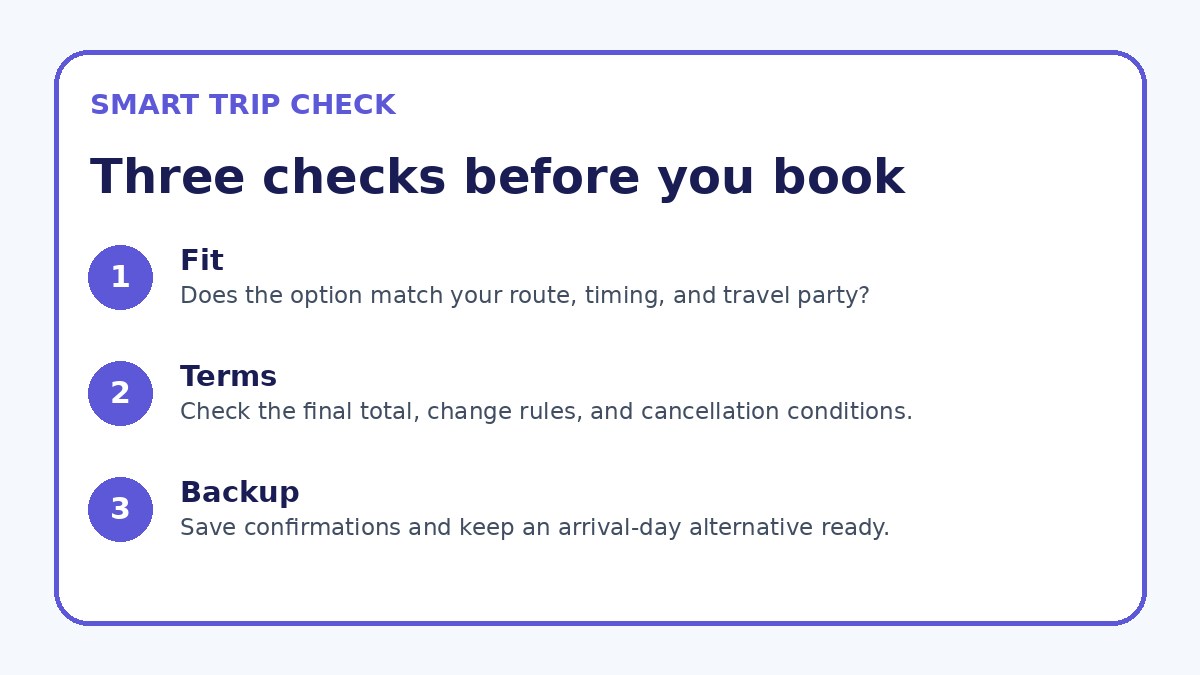
- Confirm exact travel dates, full names as on passports, and ages for each child before searching fares.
- Check whether baggage will be checked through to Auckland or must be rechecked during any connection.
- Reserve seats and any bassinets or child-specific equipment on the carrier’s site to secure availability.
- Compare total door-to-door travel time, not just flight duration, including expected transfer walks and immigration steps.
- Read fare conditions for refunds, changes, and infant/child policies on the airline’s final booking page.
- Plan a minimum buffer for connections based on airport size and whether you must clear security or immigration.
Fare conditions and booking details families must verify
Fare conditions can differ sharply between direct and connecting itineraries and will materially affect families. Before booking, verify refund and change policies, name-change allowances, whether infant fares require a separate reservation, and whether seat assignments are guaranteed or subject to change. Look for the fine print about baggage inclusions: a slightly higher fare that includes extra checked bags may be cheaper than a low headline fare plus expensive bag fees. Make sure to confirm any fees for infants, including whether they occupy a paid seat or travel as a lap infant.
When using an online agent or search site, confirm final conditions on the carrier’s own booking page before committing. If you plan to use frequent flyer benefits, check upgrade and baggage rules that might differ between codeshares or mixed-carrier itineraries. Finally, prepare exact traveler details—full legal names as shown on passports, birthdates for infants and children, and any special assistance requests—so you can properly compare real-world fare options rather than provisional quotes that could change at checkout.
Flight Guide questions travelers ask
Are direct flights from Dubai to Auckland always the better choice for families?
Not always. Direct flights reduce transfers and generally lower the number of potential disruptions, which helps families with young children. However, they can be more expensive and might offer less convenient departure times. If a direct option’s schedule or fare forces you to travel at a difficult hour or misses a needed service, a well-timed single-connection itinerary with suitable layovers might be the more practical family choice. Always weigh total travel time, cost, and your children’s routines before deciding.
What’s a safe minimum connection time when travelling with children?
A safe connection time depends on the airport layout, whether you need to change terminals, and if you must clear immigration or recheck baggage. For families, add extra buffer to standard minimums because of stroller handling, restroom visits, and slower boarding. If the transfer requires collecting and rechecking bags or passing immigration, plan significantly longer layovers. Check the specific airport transfer procedures and the airline’s minimum recommended connection time, then add an extra margin to account for child-related needs.
How can I protect checked baby equipment like strollers or car seats during connections?
First, confirm each carrier’s policy for checking strollers and car seats—some permit gate-checking, others require checked baggage handling. If your route involves multiple carriers or separate tickets, verify whether bags are checked through to the final destination or need reclaiming. Use protective covers or padded travel bags for car seats, keep small essential items in carry-on, and label equipment clearly. Consider carrying the most essential item (for example, a collapsible stroller) as a gate-checked item to keep it accessible at the next boarding.
Final decision note
Families planning Dubai to Auckland travel should balance time, convenience and fare rules rather than chasing the lowest headline price. Direct flights reduce transfer steps and often make managing luggage, sleep schedules and unpredictable delays easier for parents. Connecting itineraries widen scheduling and price options but demand careful checking of baggage-through policies, connection lengths and airport facilities to ensure transfers remain manageable. Before you book, lock in exact dates, passenger ages and equipment needs, then confirm seat, bassinet and baggage details on the airline’s booking page. If you want a quick price and schedule snapshot while you prepare details, consider checking availability on Trip.com, then verify everything on the carrier’s own site to complete the reservation.
Continue planning
Check current options and final conditions
Use the provider page to confirm live availability, the final total, cancellation terms, and every condition that matters to your trip.
This evergreen planning guide was created with AI-assisted drafting and a structured quality review. It does not display live prices, schedules, availability, visa guidance, or provider rankings. Verify current details before booking. Some links are affiliate links; we may earn a commission at no additional cost to you.