Practical answer up front: if you want the least stress door-to-door, choose a flexible rail-first plan that lets you switch times close to departure and connects easily with local transit. If budget matters more than changes, choose an advance coach or constrained rail fare but accept stricter change and refund terms and a backup plan for disruptions. For door-to-door practicality, factor terminal fit (where the service stops relative to your origin/destination), luggage ease, transfer complexity, and how each ticket handles changes. Below I walk through those tradeoffs for solo travelers, explain what to verify on provider booking pages, and give a clear disruption backup approach so you can pick the option that fits your risk tolerance and itinerary.
Choosing between rail, coach, ferry or a combination
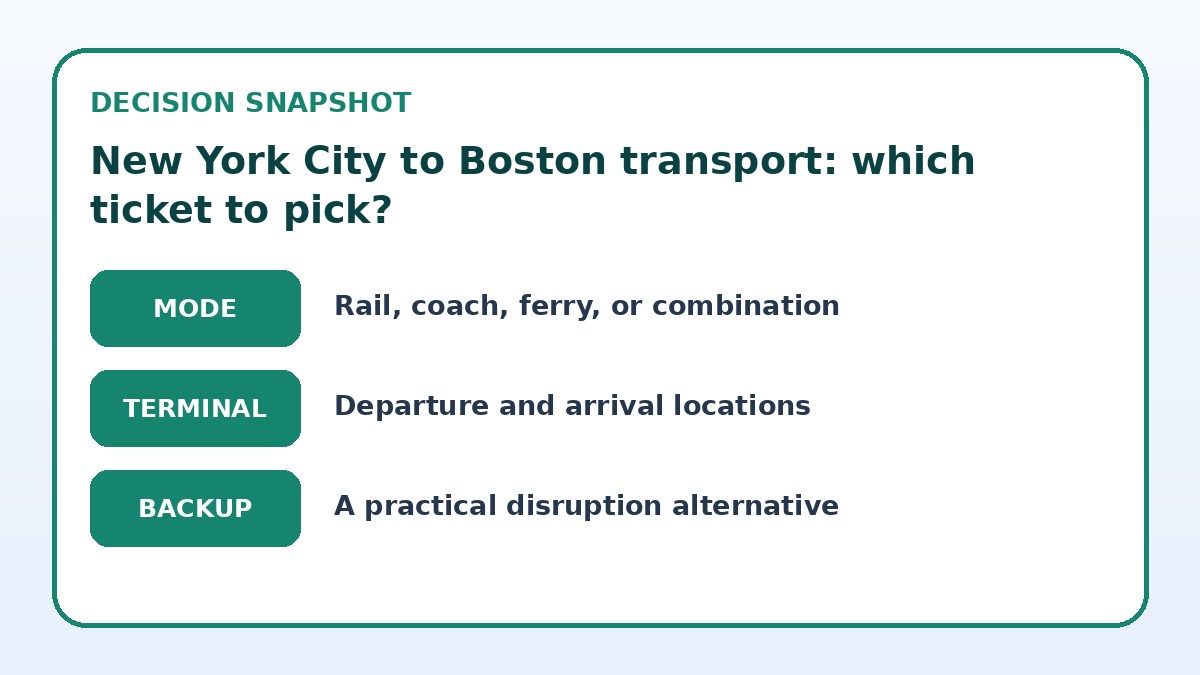
Start by matching priorities. If you value seat comfort, predictable movement and the ability to work or rest, rail-first options usually deliver the most relaxed onboard experience and easier boarding with luggage. Coaches typically compete on price and frequency, with simpler booking steps but sometimes less legroom or fewer onboard amenities. Ferries may be part of a mixed route if you’re connecting from coastal points, but they are rarely a single-point option for New York City to Boston door-to-door travel. For solo travelers, think about how many transfers you will accept, how much luggage you carry, and whether you need refundable or changeable terms.
Next, consider combinations. A rail-to-coach or coach-to-rail mix can exploit schedule windows or station convenience: for example, taking a short local transfer into a major rail terminal might save time compared with a long coach detour. Mixed routing increases the number of tickets, so you must accept separate rules for each leg—check each provider’s change and disruption policies. Also evaluate how each connection works in real-world terms: is it a single terminal walk, a shuttle, or a separate station requiring local transit or a taxi? Those details drive door-to-door practicality far more than headline speed or fare.
Choose the end-to-end journey plan
| Journey approach | Best for | Friction to check |
|---|---|---|
| Flexible rail-first plan (flexible fare + easy transfers) | Solo travelers who prefer minimal transfer friction and the ability to change times with short notice. | Generally higher base fares and you must verify seat-change windows and refund rules on the operator booking page. |
| Budget coach-first plan (advance coach ticket with simpler routing) | Solo travelers prioritizing lower upfront cost and willing to accept stricter change and refund terms. | Longer door-to-door times and possible remote terminals; check baggage limits and boarding procedures before booking. |
| Mixed-mode plan (combine rail and coach or ferry where convenient) | Solo travelers wanting to balance time and cost by using each mode for its strengths and best terminal fit. | More tickets mean multiple rule sets—verify each provider’s change and disruption policy and allow transfer buffer time. |
| Value-advance plan (non-flexible advance fares with minimal transfer planning) | Solo travelers with fixed plans who can accept strict no-refund/no-change terms in exchange for lower fare options. | High risk if plans change or disruptions occur; confirm cancellation and rebooking policies and keep a paid backup option ready. |
Check live intercity options
Look beyond the ride itself and compare terminals, transfers, luggage, and arrival fit.
Terminal fit and luggage/transfer friction
Terminal fit means whether the service stops at a station or terminal that limits additional travel once you arrive. A centrally located rail station or bus terminal that connects directly to subway lines or local buses reduces last-mile hassle; remote bus depots or terminals requiring a taxi add time and cost. For solo travelers carrying luggage, factor the physical move between modes. Long walks, stairs without elevators, or crowded station transfers increase friction and stress. Check whether terminals have staffed help desks where solo travelers can ask quick questions if schedules change.
Luggage rules vary by mode and operator. Trains often allow larger carry-on items with easy access to storage racks; coaches usually have underfloor bays and limits on quantity or weight per piece. When you're combining providers, plan for how luggage moves between vehicles—will you retrieve bags from a coach bay to re-check on a train, or is there through-checked capability? Those small actions create time costs and potential missed connections, so leave buffer time between legs and verify baggage allowances and transfer procedures on each booking page.
Timing flexibility and what to verify before booking
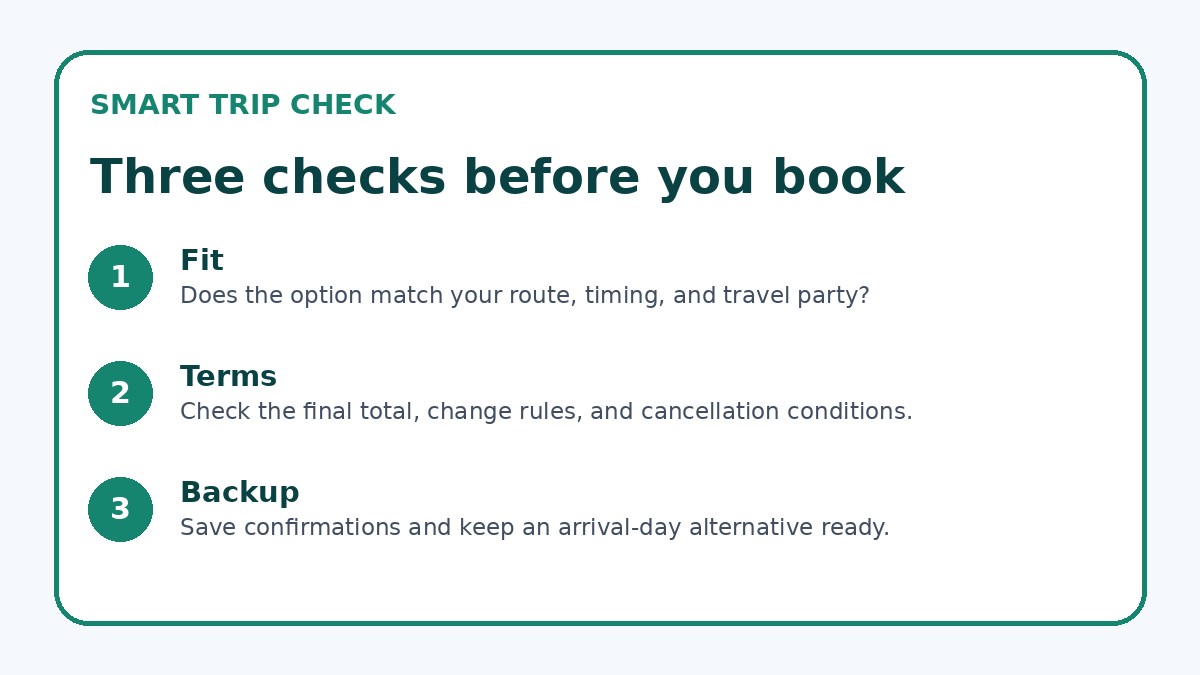
Ticket flexibility falls into a few practical categories: day-of changes allowed, free or low-cost exchanges, credit-only refunds, or fully non-refundable advance fares. Before booking, check the fine print on the provider’s purchase page to confirm how long before departure you can change or cancel, whether changes are allowed same-day, and what fees apply. Pay attention to whether flexibility is a fare class upgrade or a separate refundable ticket option, and whether seat reservations are transferrable. For solo travelers who might need to rearrange plans, a mid-tier flexible option often balances cost and peace of mind.
Also verify what constitutes an official disruption under the provider’s policy. Some providers permit free changes if they cancel or significantly delay service; others define disruption narrowly. Read how refunds or rebooking are processed and whether rebooking must be made through customer service, an app, or at a ticket counter. If you use a third-party booking site, confirm whether it handles changes or if you must contact the operator directly. Trip.com can be used to check availability and site-specific rules, but always confirm critical change and refund terms on the operator’s own booking page before committing.
Compare the practical alternatives
Use the final page to confirm what is actually offered on your dates and save a workable fallback.
Intercity travel checklist
- Confirm the exact pickup and drop-off terminals in both cities and plot door-to-door time to your origin and destination.
- Read the fare rules on the provider’s booking page: allowed change window, fees, same-day exchange policy, and refund type.
- Check luggage allowances and transfer procedures for each leg when mixing operators; note if baggage must be rechecked.
- Identify at least one realistic fallback (later service, alternative terminal, or paid final-mile option) before you travel.
- Screenshot or save confirmation emails that show ticket numbers, change/refund policies, and contact details for customer service.
- Leave a time buffer for transfers and unexpected delays—solo travelers should allow extra minutes for luggage and ticketing issues.
Disruption backup and day-of tips for solo travelers
Build a simple disruption plan before you travel: choose a primary flexible option and a secondary fallback you can reach within a reasonable window. That fallback could be a later train or coach with available seats, a different terminal with frequent departures, or a rideshare/taxi for the final mile if public options fail. Keep contact details and basic ticket info handy on your phone and a screenshot of key refund or change policy excerpts. For overnight or early-morning travel, identify a staffed station or public transit link at both ends where you can get in-person help if automated services fail.
On the day, leave generous buffer time for transfers—solo travelers need margin for arranging luggage, buying last-minute tickets, and accessing station facilities. If weather, traffic, or a delayed connecting service threatens your itinerary, act quickly: contact the operator to enquire about standby options or rebooking and, if needed, buy a refundable or flexible seat on a later leg to preserve mobility. Keep payment methods ready and consider travel insurance that covers missed connections where appropriate. These practical steps reduce stress and keep you moving even when plans change.
Rail & Intercity Transport questions travelers ask
How do I decide whether to buy a flexible ticket or an advance savings fare for New York City to Boston transport?
Start by evaluating how likely your plans are to change. If you have firm commitments at either end and minimal risk of late changes, an advance savings fare may suit you, but be ready for strict change or cancellation terms. If your schedule is uncertain or you value being able to switch trains or coaches close to departure, a flexible ticket reduces stress and can save time and extra expense when plans shift. Check the operator’s exact change and refund rules on their booking page—the devil is in the timing and fees, not the marketing label.
What should solo travelers check about transfers when mixing rail and coach legs?
Verify where each leg arrives and departs, how far terminals are from one another, and whether a single station walk or a transit ride is required. Check baggage transfer rules: some companies require you to reclaim and re-check baggage, which adds time. Confirm real-world transfer time by mapping routes and considering luggage handling, security lines, and potential traffic if a shuttle or taxi is needed. Always plan a buffer between scheduled arrivals and departures to reduce the chance of missing a connection.
If my train or coach is disrupted, what immediate steps should I take as a solo traveler?
First, check the operator’s official communications channels (app, text alerts, or station announcements) to learn your options for rebooking or refunds. If the operator allows same-day exchanges, request rebooking immediately—some options fill fast. If staff assistance is available, ask in person for guidance and written confirmation of any rebooking. If you must change to a different provider for a timely trip, keep receipts and confirmation screenshots; these help with potential reimbursements. Finally, secure a short-term fallback for the final mile, such as a local transit or rideshare, if public connections are affected.
Final decision note
For solo travelers on the New York City to Boston route, pick the ticket approach that matches how much flexibility you need against how much transfer friction you can tolerate. Flexible rail-first plans usually give the most practical door-to-door experience with easier changes, while budget coach or advance fares save money at the cost of stricter rules and sometimes more awkward terminals. Mixed-mode itineraries can be smart if you carefully verify each provider’s policies and allow transfer buffers. Before you book, read the operator’s change and refund terms on the official booking page, note baggage rules, and arrange a simple disruption backup so you can stay mobile and calm if plans shift.
Continue planning
Check current options and final conditions
Use the provider page to confirm live availability, the final total, cancellation terms, and every condition that matters to your trip.
This evergreen planning guide was created with AI-assisted drafting and a structured quality review. It does not display live prices, schedules, availability, visa guidance, or provider rankings. Verify current details before booking. Some links are affiliate links; we may earn a commission at no additional cost to you.