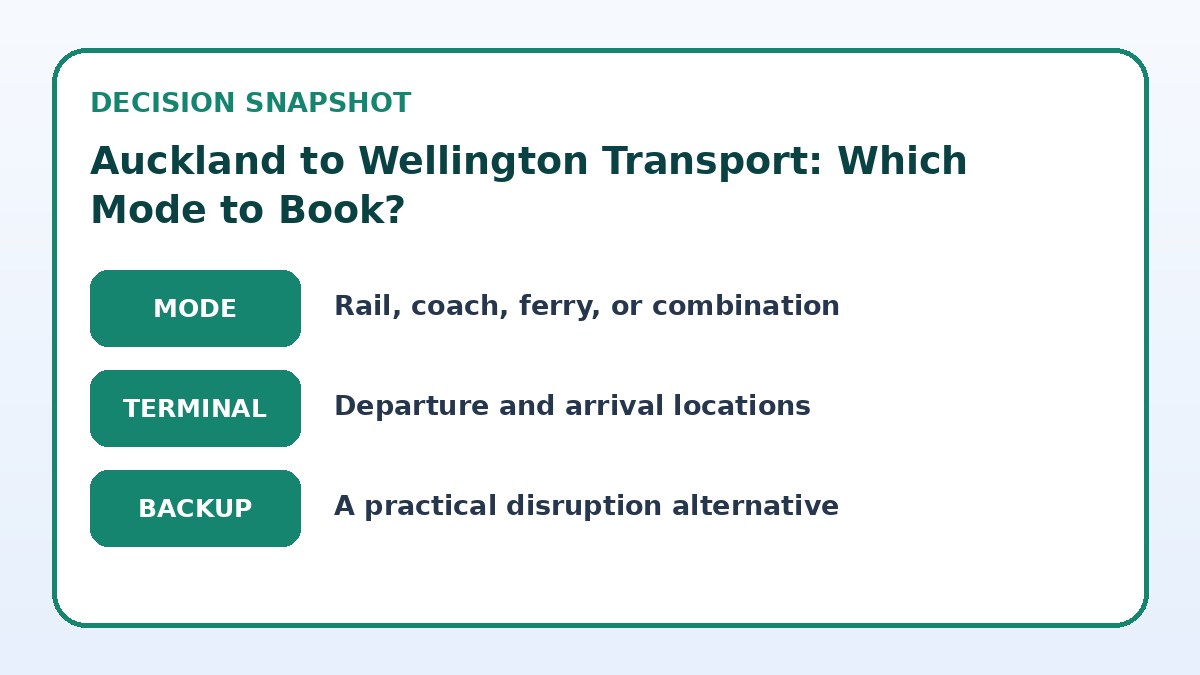
Quick answer: choose the mode that minimizes door-to-door friction for your itinerary and priorities. For a relaxed shared experience with scenic stretches and room to move, rail or a combined ferry-plus-coach approach can feel most civilised; if you value strict schedule control or a faster single-seat transfer, a private drive or coach may suit better. Couples should weigh terminal locations, how easy transfers are with luggage, whether you want flexible departure times, and a practical disruption backup—especially on long intercity routes where weather, strikes, or road incidents can affect services. Read on for clear tradeoffs and a simple decision method to pick the one that fits your rhythm, budget priorities, and how you like to travel together.
Terminal fit and door-to-door practicality
Where each service starts and ends matters more than the advertised journey time. Train stations and coach terminals are usually central, which can be good for walking to hotels but may require time-consuming luggage handling. Ferry terminals may sit outside city centres, adding a taxi or shuttle leg that changes the door-to-door calculation. Couples should map exact door-to-door routes before booking: include time to transfer luggage, average taxi or rideshare availability at arrival times, and whether your accommodation offers easy drop-off.
Also consider comfort arriving together. If one partner prefers to sit and relax while the other handles check-in, choose a service that eases that division of labour: a single-seat coach or private car keeps logistics simple, while multi-leg journeys require coordination at each transfer. Think about arrival times too—late-night arrivals limit shared transport choices. A realistic door-to-door plan should list the likely last-mile options so you can compare overall convenience, not just in-vehicle travel time.
Choose the end-to-end journey plan
| Journey approach | Best for | Friction to check |
|---|---|---|
| Whole trip by train (where available) and short transfers | Couples who prioritise comfort, space, and scenic time together. | Less frequent departures and potential last-mile transfers may reduce scheduling flexibility. |
| Coach-only point-to-point travel | Couples who need multiple departure options and straightforward single-ticket journeys. | Less onboard space and luggage handling can feel crowded on longer runs. |
| Ferry combined with coach or train segments | Couples who want a scenic crossing and are happy to break the journey into stages. | Extra transfers and terminal locations can increase total door-to-door time and complexity. |
| Private car or rental for the entire door-to-door trip | Couples seeking complete schedule control and direct hotel-to-hotel travel. | Driving responsibility, parking logistics, and unfamiliar roads add effort and potential stress. |
Check live intercity options
Look beyond the ride itself and compare terminals, transfers, luggage, and arrival fit.
Luggage, transfers and on-the-move comfort
Luggage handling and the number of transfers define how pleasant a trip feels for couples. Trains typically offer more room to spread out and walk, which helps on longer journeys; coaches can be efficient but often need baggage to be stowed under the coach and retrieved at stops. Ferries vary widely in cabin space and access; factor in how much you want to move during the trip, whether you need reclining seats or a private area, and whether you’re carrying bulky items like surfboards or large suitcases.
Transfers add friction—each change introduces the risk of missed connections and extra waiting. If both partners want a relaxed trip, prioritize options with a single handover or none at all. If you don’t mind short breaks to stretch, segmented routes let you combine scenery (for example, a ferry crossing plus a coastal coach) and create more varied memories. Always allow generous transfer margins when booking separate legs so a small delay doesn’t cascade into a missed connection.
Timing flexibility and how couples trade convenience
Flexibility matters differently depending on whether you value structure or spontaneity. Coaches often run many departures, which helps if your schedule is fluid. Trains can be less frequent but more predictable in comfort; ferries are subject to tides and weather windows, which reduces last-minute flexibility. Couples who prefer to keep plans flexible should target services with multiple daily departures or a straightforward fallback—this prevents stress if you decide to linger at a stop or rearrange plans on the fly.
If one partner favors a strict schedule and the other wants leisure time, pick the service that best balances those priorities: an express coach might satisfy punctuality, while a scenic train or mixed-mode option suits those wanting to enjoy the travel itself. Consider how easy it is to change bookings or buy later departures at short notice; this administrative flexibility can be as important as the timetable when one partner’s plans shift during the trip.
Compare the practical alternatives
Use the final page to confirm what is actually offered on your dates and save a workable fallback.
Intercity travel checklist
- Map exact door-to-door routes for each mode including taxi or rideshare time from terminals to your accommodation.
- List luggage needs and count transfers—prefer single-leg options for heavy or multiple bags.
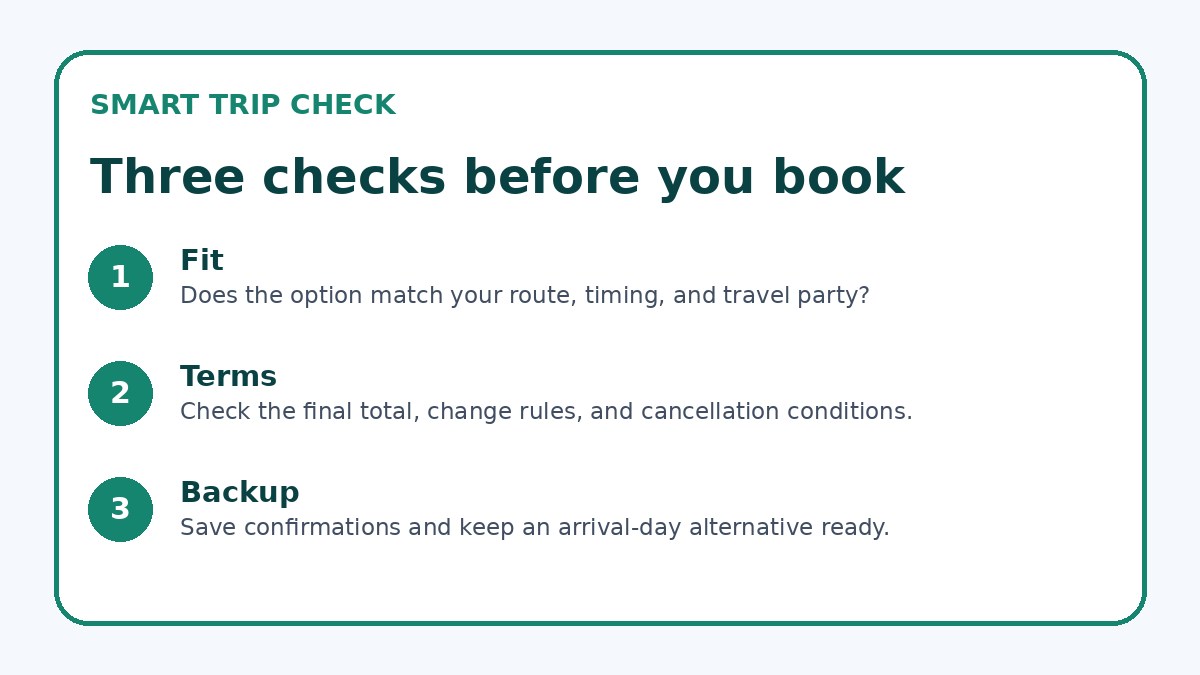
- Check the provider’s change and cancellation rules on the final booking page before you commit.
- Identify at least one realistic plan B (alternate coach/train/driver) and note contact numbers or booking pages.
- Pick departure times that avoid late-night arrivals if public transport or taxis are limited then.
- Save local weather and traffic alert sources and set a reminder to verify conditions on travel day.
Disruption planning and practical backups
No matter which mode you prefer, plan a simple backup. For trains and ferries, identify the next available coach option or a rental car supplier with flexible pickup and drop-off; for driving, know which public transport links run if you choose not to proceed. Couples should agree on a threshold for switching plans—decide how long you’ll wait for a delayed service before moving to plan B. This avoids arguing under stress and keeps decision-making quick if disruptions happen.
Also confirm refund and change policies before booking so you aren’t surprised by penalties. If a provider’s final booking page doesn’t clearly state change rules, contact them directly. Finally, make an on-the-day checklist that includes local traffic alerts, expected weather impacts on ferries, and a phone number for emergency roadside assistance or the alternative carrier; having those details saved reduces friction when you need to act together quickly.
Rail & Intercity Transport questions travelers ask
Should couples prioritise speed or comfort between Auckland and Wellington?
That depends on what you want from the journey. If you value relaxed time together, space, and the chance to enjoy scenery, choose options that emphasise comfort—trains or mixed-mode ferry routes often deliver a more pleasant shared experience. If arriving quickly and on a strict schedule is the priority, coaches or a private car offer more direct point-to-point control. Discuss what would make the trip enjoyable for both of you and then compare door-to-door times rather than just advertised travel durations.
How do I compare total travel time when services require transfers?
Add up every segment from your door of departure to your final destination door: walking, waiting, transfer transit time, and likely taxi or rideshare at each end. Include reasonable buffer time for baggage retrieval and possible delays. Consider the quality of those buffers—a scenic café break during a transfer feels different than a rushed platform sprint. Doing this mental addition lets you compare true practical travel time and decide which tradeoffs—more stops for scenery or a single-seat journey—suit your couple’s style.
What should we verify about providers before booking?
On the provider’s final booking page, confirm exact terminal addresses, allowed luggage dimensions and quantities, any transfer or connection guarantees, and the change/refund policy. If you choose a mixed itinerary, make sure each leg’s booking allows enough transfer time and that operators acknowledge connections if delays happen. Trip.com can be used to compare current availability and conditions, but always verify critical details on the service provider’s site or contact them directly if something is unclear.
Final decision note
For couples planning Auckland to Wellington travel, the practical winner is the mode that matches your shared priorities: comfort and shared time, strict schedule control, or scenic variety. Evaluate door-to-door logistics, luggage handling, number of transfers, and how often services run rather than focusing only on advertised in-vehicle time. Agree on a disruption backup and verify provider rules on the final booking pages. With those steps you’ll make a choice that reduces last-minute stress and leaves you both free to enjoy the journey together.
Continue planning
Check current options and final conditions
Use the provider page to confirm live availability, the final total, cancellation terms, and every condition that matters to your trip.
This evergreen planning guide was created with AI-assisted drafting and a structured quality review. It does not display live prices, schedules, availability, visa guidance, or provider rankings. Verify current details before booking. Some links are affiliate links; we may earn a commission at no additional cost to you.