Practical choice first: for most solo travelers the decision comes down to tradeoffs between convenience and control. If you prioritise predictability and minimal transfers, a private taxi or ride-hail door-to-door will minimize friction; if you want a lower-stress budget option and can handle scheduled pick-ups, intercity coaches give a reliable balance; if rail services are an option for part of the route, they can be comfortable and fast but require transfers at terminals; and a ferry can be pleasant only if it fits your start and end points without extra long transfers. Read on to weigh terminal fit, luggage and transfer friction, timing flexibility, and what to do if something goes wrong. This will help you pick the right combination of modes for a single-day trip or a planned multi-stop transfer between Dubai and Abu Dhabi.
Terminal fit and door-to-door practicality
Start by mapping where you actually need to be in each city, not just the city centre. Some transport modes serve terminals or bus stations that are convenient if your hotel or meeting is nearby, but costly or slow if you need an extra taxi or metro ride to reach your final address. Solo travelers should plot door-to-door time: estimate walk, wait, and transfer time as well as the ride itself. If a coach drops you at a transport hub with fast onward links, it can save money and time; if it lands you far from your endpoint you may lose any savings to last-mile transfers.
Consider baggage and mobility. A taxi or ride-hail will usually drop you at the building entrance with luggage help if requested; scheduled public modes may require lifting or storing bags, walking between terminals, or waiting for local feeder services. If you have a lot of luggage, limited mobility, or timed meetings, prioritise modes that reduce terminal-to-door transfers. Before booking, check the exact drop-off/pick-up points and whether the provider offers assistance, station elevators, or luggage storage — verify these details on the booking provider’s final page because station facilities and pick-up points change.
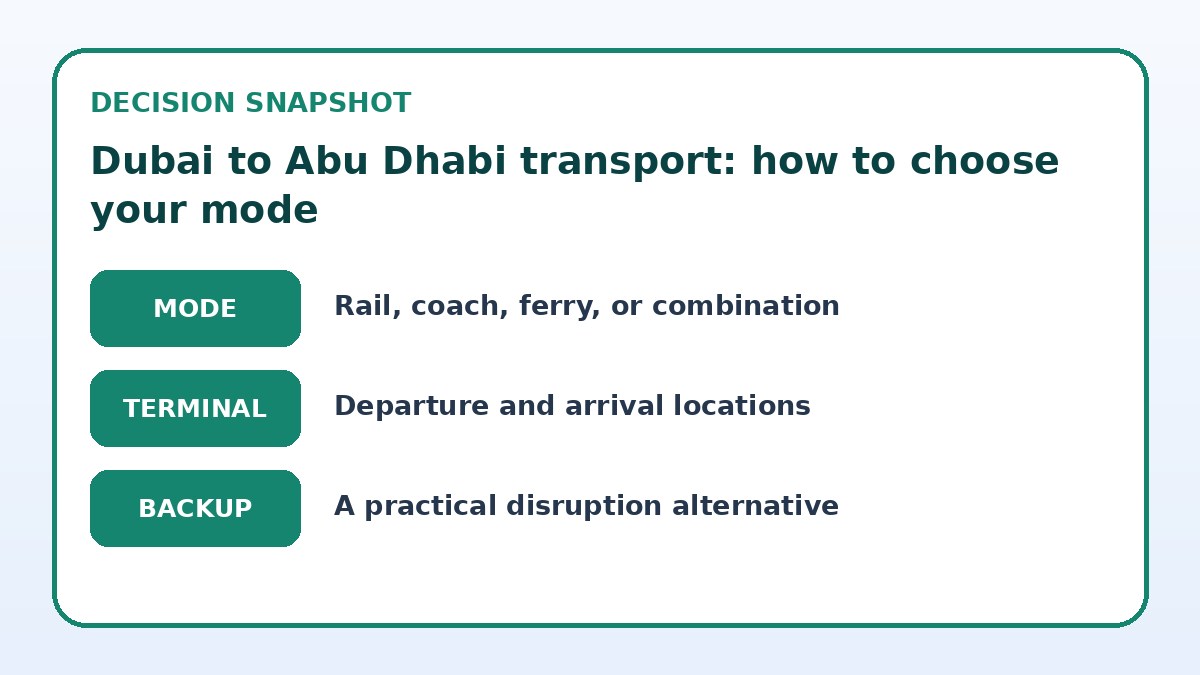
Choose the end-to-end journey plan
| Journey approach | Best for | Friction to check |
|---|---|---|
| Private taxi or ride-hail door-to-door | Solo travellers needing minimal transfers and direct pick-up/drop-off convenience. | Higher outlay and potential traffic variability versus simpler door-to-door service. |
| Intercity coach with central terminals | Budget-conscious solo travellers who can align schedules and manage short last-mile transfers. | Fixed departure times and possible extra transfer time to final destination. |
| Train segment plus local transfer | Those wanting faster, comfortable on-vehicle time and predictable running unaffected by road traffic. | Requires station transfers and reliable first/last-mile planning to avoid delays. |
| Ferry combined with land transport | Journeys where water routes reduce overall travel time and start/finish points are close to piers. | Less flexible schedules and potential extra transfers to reach inland destinations. |
Check live intercity options
Look beyond the ride itself and compare terminals, transfers, luggage, and arrival fit.
Luggage, transfers and friction
Assess transfer friction in three parts: number of transfers, sidewalk distance between modes, and luggage handling. A single taxi eliminates transfers at the cost of higher fares, while mixing a short train leg with a taxi can be efficient if stations are near your origin and destination. For solo travellers carrying only a backpack, walking between a station and a nearby hotel may be easy; for larger suitcases, each transfer adds effort and time. Think through each connection: will you need to cross roads, wait for a shuttle, or carry bags up stairs?
Also account for unpredictable delays at peak hours. Coaches can be delayed by traffic entering or leaving urban centres; rail segments may be less affected but require waiting for connections. If you rely on a tight schedule — for example, a meeting on arrival or an onward flight — build buffer time into any itinerary that includes transfers. If a provider lists luggage limits or requirements, review them on their booking page. For safety and comfort, keep valuables and travel documents on you during transfers.
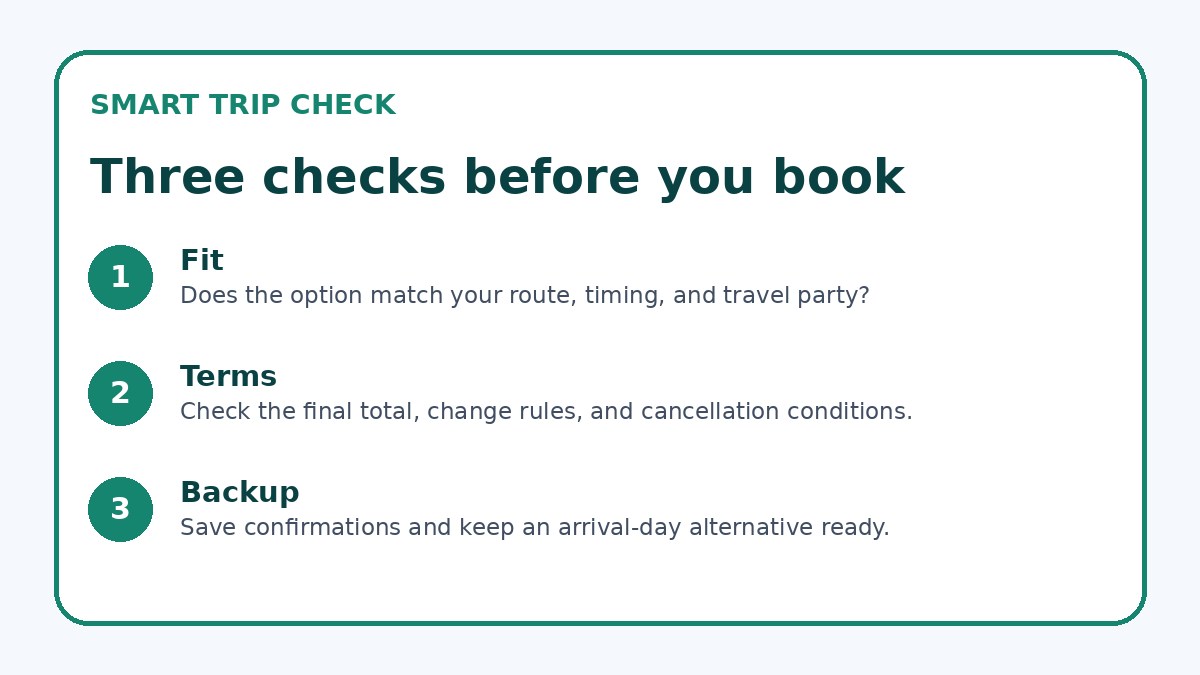
Timing flexibility and solo-traveller considerations
Solo travellers often value flexibility: the ability to depart when suits you and to switch plans if something changes. Taxis and ride-hail services offer maximum departure flexibility and unpredictable journey time depending on traffic. Coaches run on fixed timetables which can help you plan but require aligning your schedule; trains, where they exist for the route or part of it, provide predictable on-track times but you must allow time for station access. Pick the mode that matches how fixed or flexible your schedule is.
Safety and comfort matter: travelling solo at night or early morning raises different priorities. Well-lit, staffed terminals and obvious drop-off points are reassuring. If using shared transport, choose services that provide real-time tracking, clear contact details, and easy support in case of missed connections. Always note the exact terminal names and address for pick-ups and drop-offs, and have a local contact or hotel front desk number handy. Check real-time availability and current conditions — Trip.com can be used to compare options, but confirm final booking details on the provider’s page.
Compare the practical alternatives
Use the final page to confirm what is actually offered on your dates and save a workable fallback.
Intercity travel checklist
- Confirm exact pick-up and drop-off addresses for any taxi, coach or train, and save them offline in your phone.
- Check luggage allowances and handling rules on the provider’s booking page before you reserve any coach or train ticket.
- Allow an extra 30–60 minutes buffer for road traffic when planning coach or taxi travel during peak hours.
- Pre-install at least one local ride-hail app and top up payment method accepted by both taxi and coach operators.
- Note terminal facilities: elevator/escalator access and staffed customer counters if you have heavy bags or need assistance.
- Have a backup budgeted option (taxi, later coach, or hotel desk call) in case your planned service is delayed or full.
Disruption backup and realistic planning
Plan a backup before you travel. For any chosen mode, identify at least one faster and one slower alternative in case of delays — for example, if you planned a coach, note the nearest taxi rank and a ride-hail app; if you planned a taxi, know the nearest coach terminal and next departures. For multi-leg journeys, leave buffer time between connections equal to the typical variability of the most accident-prone segment, such as peak-road traffic or a busy terminal transfer.
Have contingency tools ready: a charged phone with local mobile data, a payment method accepted by taxi and coach operators, and key addresses saved offline. If a delay looks unavoidable, contact your next provider sooner rather than later to rebook or confirm options. Keep documentation of bookings and receipts accessible in case refunds or adjustments are needed. This reduces stress and helps you make quick choices that preserve most of your schedule while avoiding last-minute costly decisions.
Rail & Intercity Transport questions travelers ask
Is there a direct train between Dubai and Abu Dhabi I can rely on?
Train availability and routing can change; don’t assume a direct train unless you confirm on the train operator’s current site. If a direct intercity rail service exists for part or all of the route, verify departure and arrival stations, transfer requirements, luggage rules, and any seat reservations needed. If the service requires an intermediate transfer, treat it like any multi-leg trip: allow buffer time and plan first/last-mile connections. For real-time options and schedules, check the operator’s booking page or a comparison site such as Trip.com, then finalise your booking on the provider’s official confirmation page.
Should I pre-book a coach or taxi as a solo traveller?
Pre-booking removes uncertainty and can help you secure a specific departure time or vehicle size for luggage. Coaches are often best reserved when you must meet a schedule; taxis or ride-hail bookings can be made on-demand but pre-booked airport or long-distance transfers may offer fixed pricing and guaranteed pickup times. If you expect to travel at busy times or need a specialized vehicle for luggage or accessibility, book ahead and reconfirm pickup details on the provider’s final booking page. Keep contact information for the operator handy in case of changes.
What’s the quickest way to recover if my booked mode is unexpectedly delayed?
First, assess whether the delay affects your onward commitment; if it does, contact the next provider to explain the situation and explore rebooking options. For immediate recovery, use a ride-hail app or local taxi rank to switch to door-to-door transport. If you’re at a staffed terminal, ask staff for alternative services or the next available departure. Keep flexible money and time buffers in your plan so you can upgrade to a faster option if needed. Document confirmations and receipts if you later request adjustments or refunds.
Final decision note
Choosing the best Dubai to Abu Dhabi transport option as a solo traveller is a practical exercise: match your priorities to the mode. If convenience and minimal transfers top your list, a direct taxi or ride-hail trip reduces door-to-door friction. If cost and scheduled predictability are important, coaches provide clear departure times and central drop points — just plan your first and last mile. Trains can improve on-vehicle comfort and time when they fit terminal locations, while ferries make sense only when they shorten overall travel time without adding complex transfers. Always verify terminal locations, luggage rules and real-time availability on the provider’s booking page before you commit, and keep a simple backup plan ready to handle delays with the least stress.
Continue planning
Check current options and final conditions
Use the provider page to confirm live availability, the final total, cancellation terms, and every condition that matters to your trip.
This evergreen planning guide was created with AI-assisted drafting and a structured quality review. It does not display live prices, schedules, availability, visa guidance, or provider rankings. Verify current details before booking. Some links are affiliate links; we may earn a commission at no additional cost to you.