Practical answer up front: for most couples who value comfort, fewer transfer hassles, and a stress-minimizing experience, the train-focused option will usually make the most sense; coach is the budget-friendly, direct alternative; ferry combinations can be romantic and scenic but add transfers; driving or a private transfer gives ultimate door-to-door control. Choose by matching terminal fit, luggage and transfer friction, timing flexibility, and what you’ll do if something goes wrong. This article walks through how to weigh those tradeoffs, what to check on booking pages, and realistic backup plans. We’ll also show how to compare direct and connecting options where they exist, and point out the critical details to verify on the provider’s final booking page or with Trip.com as a quick availability comparison.
Terminal fit and door-to-door practicality
Start by thinking about where you begin and end in each city. Stations and coach terminals sit in different neighborhoods: some are centrally located with easy subway or taxi access, others require more time to reach. For couples, the most important question is which terminal leaves you closest to your hotel or evening plans. If one partner is due to join later or you plan a late arrival, pick the option that minimizes late-night transfers or long walks between terminals and accommodation.
Evaluate the pick-up and drop-off logistics for each mode. Trains typically use main stations with multiple ground transportation choices; coaches use dedicated terminals that may be less well connected by local transit; ferries often dock at specific piers needing a short taxi or transit link. Whatever you choose, map the final-mile route and pre-book a reliable taxi or rideshare if public transit looks inconvenient—this keeps your arrival smooth and reduces stress after a long trip.
Choose the end-to-end journey plan
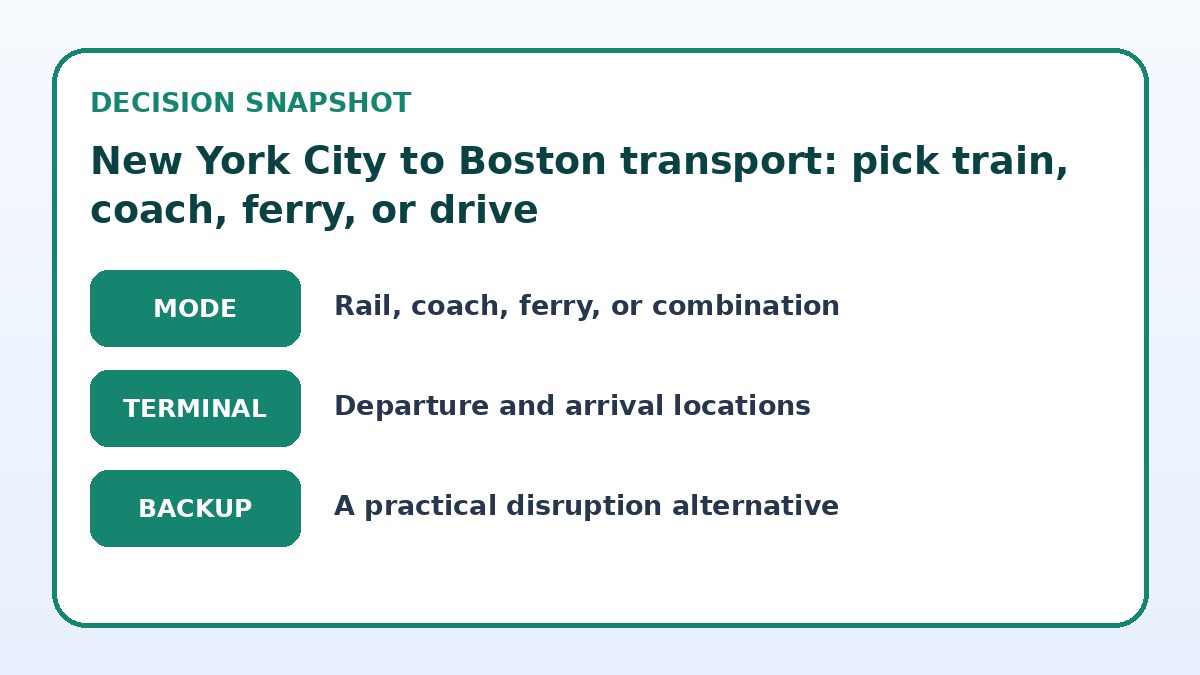
| Journey approach | Best for | Friction to check |
|---|---|---|
| Train-focused planning | Couples prioritizing comfort, legroom, scenic conversation time, and simple transfers at major stations. | May be pricier than coach and requires checking seat types and possible peak-time crowds before booking. |
| Coach-focused planning | Budget-aware couples who want frequent departures and straightforward point-to-point travel without intermediate stops. | Less personal space, limited luggage flexibility, and variable onboard amenities compared with trains. |
| Ferry-combination planning | Couples seeking a scenic, different-mode experience or who want water time as part of their travel narrative. | Usually involves extra transfers, schedule constraints, and higher sensitivity to weather or seasonal timetables. |
| Door-to-door driving or private transfer | Couples who value total control over timing, privacy, and direct drop-off at accommodation or a specific venue. | Cost, parking and traffic unpredictability can erode convenience; plan for tolls, parking, and arrival timing. |
Check live intercity options
Look beyond the ride itself and compare terminals, transfers, luggage, and arrival fit.
Luggage, transfers and couple-friendly comfort
Luggage rules and transfer friction change the real experience. Trains usually allow more room to spread out and store bags in racks or overhead space, so sharing a weekender and a backpack is easy. Coaches can be fine for light packing but have tighter storage procedures that require lifting bags into hold compartments. Ferries may have limited cabin space or outdoor decks that aren’t ideal with bulky luggage; multiple transfers multiply handling. For couples who prefer to relax rather than lift and carry, favor modes and schedules with fewer handoffs.
Think about seating and privacy too. Trains offer a range of seat types—choose a pair of forward-facing seats or a table for cards and conversation. Coaches are more regimented: two seats side-by-side are standard but legroom varies. Ferries give open decks and cabin seating, which can feel more romantic but less private. If you want quiet time or a chance to work on the move, verify seat options and consider upgrading only after checking the provider’s booking page for exact seat layouts and reservation rules.
Timing flexibility and day planning for couples
Match departure choices to your itinerary. If you want a leisurely morning in New York and an evening arrival in Boston with options to pop straight into dinner, check which modes offer midday or late departures that align with your plans. Trains and coaches often run frequently; ferries are more schedule-dependent. Couples who value a flexible day should pick a mode with multiple daily departures or a simple rebooking policy so you can adjust plans without major penalties—always verify ticket change rules on the carrier’s booking page.
Also consider how travel time interacts with your Boston activities. If your goal is to maximize time in the city, choose the option with the smallest total door-to-door time rather than shortest in-motion time. That total includes transfer walks, security lines, luggage handling, and getting from the arrival point to your hotel or restaurant. Prioritize options that let you step off and head straight to your reservation, theater, or evening stroll along Boston’s neighborhoods.
Compare the practical alternatives
Use the final page to confirm what is actually offered on your dates and save a workable fallback.
Intercity travel checklist
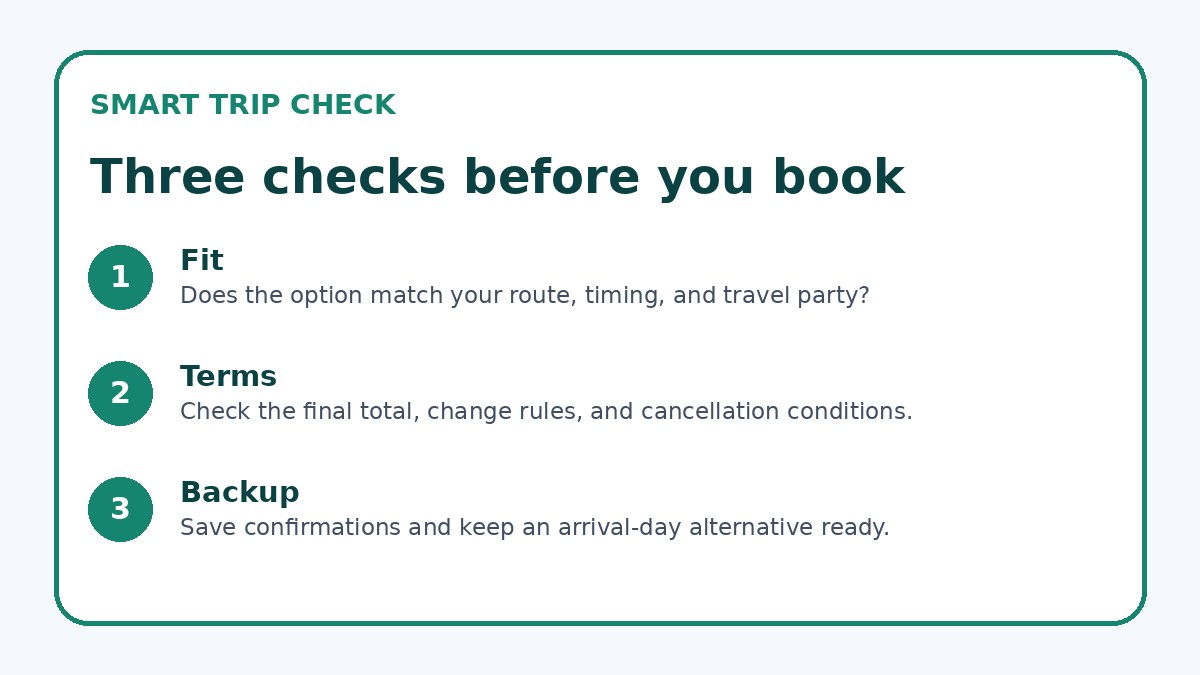
- Map the exact pick-up and drop-off addresses for your chosen option and estimate transit time to your hotel or restaurant.
- Confirm baggage allowances and how luggage is stored or handled on your chosen carrier’s final booking page.
- Check change and cancellation rules, then buy flexible or refundable tickets if your schedule could shift.
- Reserve or verify seat type (pair, table, or single) so you get the privacy and comfort you want as a couple.
- Plan a simple backup—an alternative late-evening coach or train and a pre-saved rideshare contact in case of disruption.
- If choosing a ferry or mixed mode, time transfers with a comfortable buffer and pre-book last-mile transit when possible.
Disruption backups and what to check before booking
Couples should plan a simple disruption back-up: a second-day return ticket, knowledge of alternate carriers, and a standby plan to switch to coach or rideshare if the primary mode is delayed. For train or ferry travel, find nearby terminals for alternative departures and note the customer service options for same-day changes. If weather could affect ferries or roads, tighten the buffer before any timed event—don’t book a critical reservation for immediately after a weather-sensitive crossing.
Before you buy, verify four things on the provider’s final booking page: baggage allowances and fees, seat selection or upgrade options, ticket flexibility and refund rules, and exact terminal names and addresses. If you want a quick availability snapshot, Trip.com can show current options but always confirm terms on the carrier’s site. Also check last-mile transit schedules for the arrival neighborhood and pre-book a taxi or rideshare if necessary to avoid long waits.
Rail & Intercity Transport questions travelers ask
Should couples always choose the train between New York City and Boston?
Not always. Trains often offer the best blend of comfort, space, and simple station connections for couples, but they aren’t the automatic right choice for every trip. If you’re traveling with minimal luggage on a strict budget, coach services may be a better financial fit. If you want a scenic or romantic itinerary and don’t mind added transfers, a ferry-inclusive route can be appealing. Evaluate total door-to-door time, cost, luggage needs, and your tolerance for transfers; then pick the option that supports your day’s plans and evening activities.
How much buffer time should couples build for transfers and arrivals?
Build a comfortable buffer that accounts for walking between terminals, potential security or boarding queues, and local traffic after arrival. For scheduled events or dinner reservations, allow extra time beyond in-vehicle travel—think of a buffer that covers luggage retrieval, transit from the terminal to your hotel, and a short rest. If weather or peak travel periods could affect ferries or road crossings, add a larger cushion. Always verify exact terminal locations and local transit schedules on the provider’s booking page before finalizing plans.
What’s the easiest way to compare current schedules and availability?
Start with the carriers’ official booking pages to confirm ticket rules, seat options, and precise terminal names. Use an aggregator such as Trip.com for a quick snapshot of available times and capacities, but treat it as a convenience tool rather than a final authority. After finding promising options, double-check terms—baggage allowances, change fees, and arrival terminal addresses—on the actual carrier page before purchasing. For couples, prioritize routes with simple change processes and clear customer-service contact methods.
Final decision note
Picking the right way to travel from New York City to Boston as a couple comes down to matching your priorities: comfort and fewer transfers point toward trains, strict budgets push toward coaches, ferries add a scenic element but more transfers, and driving gives precise door-to-door control at the cost of traffic and parking concerns. Focus less on headline ride times and more on total door-to-door practicality—terminal location, luggage handling, scheduling flexibility, and disruption backups. Verify all critical details on the carrier’s booking page before buying, and consider a simple backup plan so your trip together stays relaxed and enjoyable no matter what happens.
Continue planning
Check current options and final conditions
Use the provider page to confirm live availability, the final total, cancellation terms, and every condition that matters to your trip.
This evergreen planning guide was created with AI-assisted drafting and a structured quality review. It does not display live prices, schedules, availability, visa guidance, or provider rankings. Verify current details before booking. Some links are affiliate links; we may earn a commission at no additional cost to you.