Practical answer first: set price alerts as research tools, not order triggers, and always compare a package against separately booked flights, hotels, and transfers for the same travelers and dates. For couples planning Seoul, that means establishing a short list of non-negotiables—arrival and departure dates, preferred neighborhoods, luggage needs, and cancellation flexibility—before any alert pings. Treat a price alert like a notification to re-run a controlled comparison, not a signal to buy immediately. Use alerts to identify fare patterns and windows, then pause to check the exact inclusions, change and cancellation terms, baggage allowances, and whether ground transfers or breakfast are truly included. Finally, keep at least one rule that prevents impulse purchase: a 24–48 hour deliberation or a change-in-plans checklist you must run before clicking buy.

Test package value fairly
| Booking approach | Best for | Tradeoff to check |
|---|---|---|
| All-in-one package (flight + hotel + transfer) | Couples who value a single booking and consolidated customer service. | May restrict flexibility and hide separate fees; verify specific inclusions and cancellation rules before buying. |
| Separate flight and hotel bookings | Couples who need maximum flexibility or want to mix airlines and boutique hotels. | Requires more research and coordination; savings can vanish if you overlook baggage or transfer costs. |
| Flight bundled with hotel but no transfers | Couples seeking some convenience while keeping local transport options flexible. | Can look cheaper but may omit checked bags or seat selection; compare against fully separate bookings for same dates. |
| Package with refundable components | Couples who prioritize change protection and peace of mind over headline price. | Refundable options typically cost more; confirm who processes refunds and any time limits for claims. |
Check current package and separate options
Use identical dates, travelers, room needs, baggage, and flexibility so the comparison stays meaningful.
What to compare before judging a package
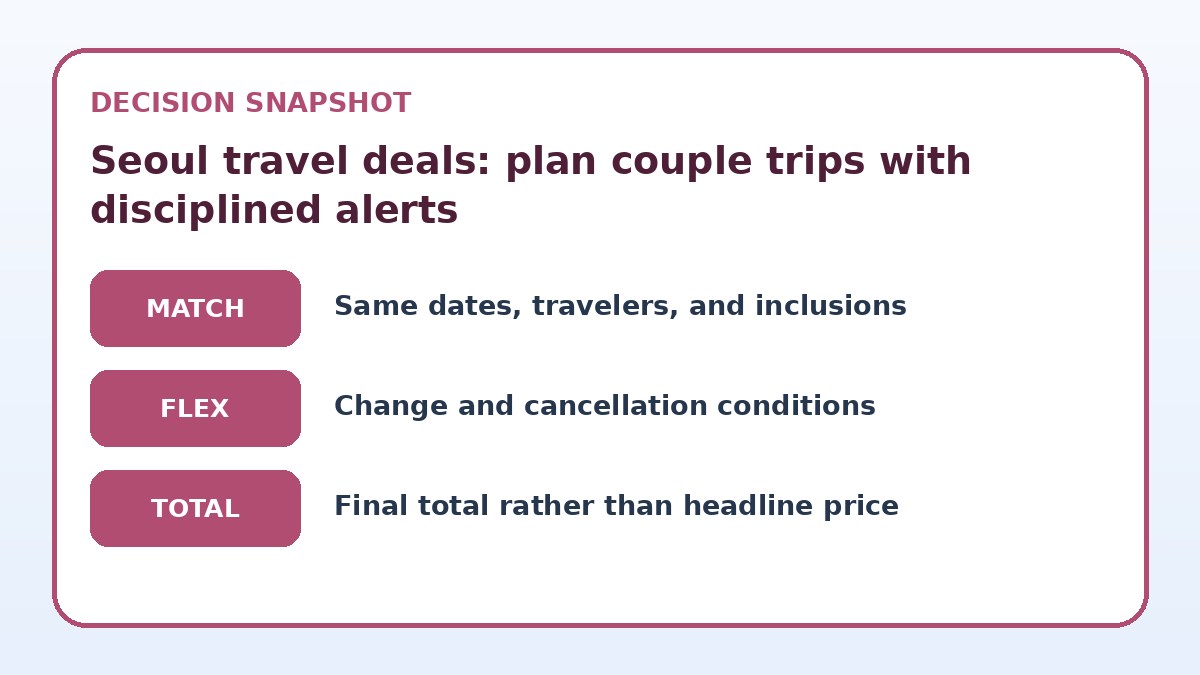
Before you decide whether a bundled package is useful for a couple, compare the same dates, the same two travelers, and the same simple inclusions. That means matching flight times and seat-type, hotel room category and board basis (room-only versus breakfast), airport transfer versus public transport options, and any checked baggage or seat selection fees. Packages sometimes show an attractive headline price but omit extras that couples commonly need, like two checked bags or a double bed room rather than twin beds. By lining up identical elements, you’ll reveal where a bundle truly saves money or convenience.
Also verify cancellation and change policies on every option. A package might restrict changes more than separately booked components, or it might offer consolidated protection that’s actually useful for couples who want a single customer-service contact. On the other hand, separate bookings can allow swapping a partner’s flight independently or moving a hotel stay without touching airfare. Compare final terms directly on providers’ booking pages—don’t rely on the summary shown in alerts or aggregators—and note which party (airline, tour operator, or hotel) handles refunds and changes.
Using price alerts without impulse booking
Treat alerts as signals for action, not action themselves. When you set an alert for Seoul travel deals, specify the exact search parameters you care about: dates, number of travelers (two adults), cabin class, and whether baggage is included. Set a realistic target price range based on a quick manual search. When a notification arrives, run a controlled comparison between the package or fare in the alert and separate options for the same itinerary. This structured approach prevents a one-click panic buy and helps couples keep decisions aligned with shared priorities such as early arrival, late departure, or hotel location.
Add behavioral guardrails to your process: require a minimum deliberation time (24–48 hours), a partner confirmation step, or a checklist of must-verify items before payment. For couples, these steps reduce buyer’s remorse by ensuring both partners agree and practical details are checked. If you want to act faster, create a shortlist of pre-approved conditions—acceptable layovers, minimum hotel star level, or refundable fare—and only permit purchase when an alert meets those conditions. This converts alerts into disciplined opportunities instead of impulsive traps.
Look past the headline total
Compare inclusions and change conditions before deciding whether a package is genuinely useful for this trip.
Deal comparison checklist
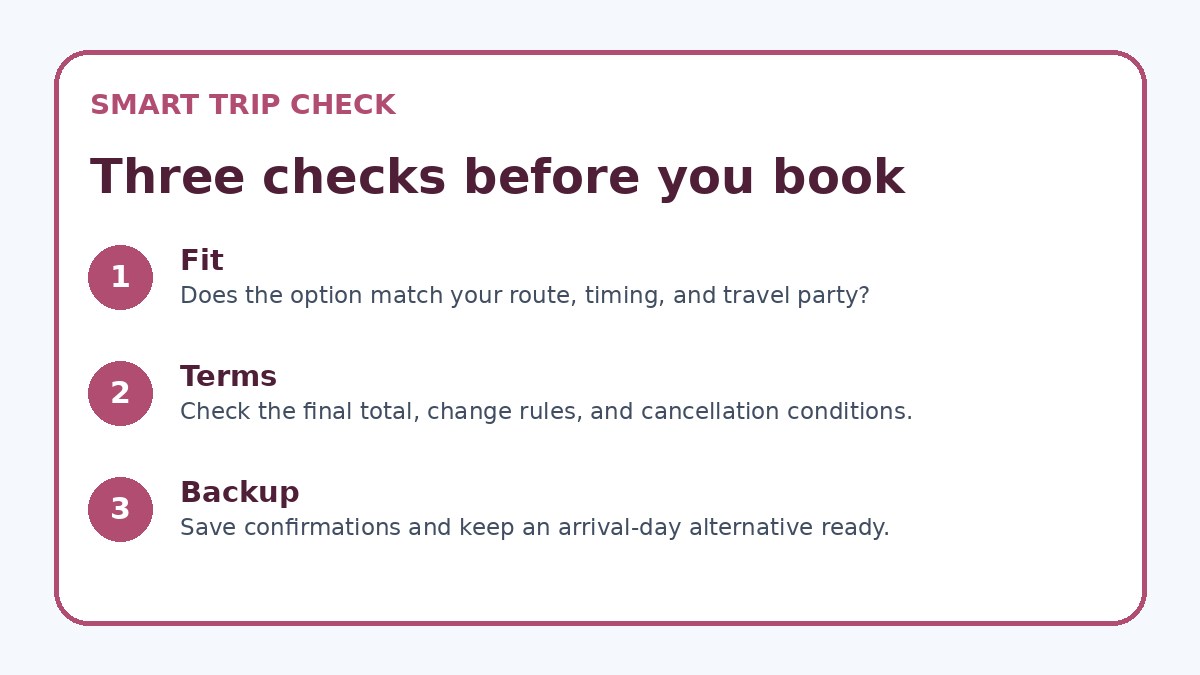
- Set alerts using exact travel dates, two travelers, and your preferred cabin class to ensure notifications reflect true couple pricing.
- When an alert triggers, compare the same dates, room type, baggage allowance, and total price across package and separate-booking options.
- Verify cancellation, change, and refund policies on the provider’s final booking page before proceeding to payment.
- Confirm whether transfers, breakfast, and seat or room guarantees are actually included in the total price advertised.
- Agree on a pre-purchase rule—24–48 hour deliberation or partner confirmation—to prevent impulse booking from alerts.
- If using an aggregator alert, cross-check the itinerary directly with airline and hotel pages and save screenshots of final terms.
Inclusions, flexibility, and traveler-specific value
For couples, inclusions and flexibility often determine the real value of a deal. Items like breakfast, airport transfers, lounge access, or free cancellation can matter more than a lower headline price. Evaluate whether included meals suit your plans—are you happy eating out each morning or do you value daily breakfast? Check whether the room type guarantees a double bed rather than two singles, and whether the package lists any age-based restrictions or occupancy limits that may affect pricing. Small differences in inclusions can erase any apparent savings on a bundled price.
Flexibility matters if plans may change. Look for refundable hotel rates and airline options that allow free date changes or minimal charges. If a package consolidates these protections, it may be worth the convenience of a single booking and a single customer-service contact. If separate bookings give each traveler the option to change independently, that can be preferable for couples with different work or health risks. Always weigh the convenience of a one-stop package against the potential cost of losing flexibility at the component level.
Final terms to verify on provider pages
Never finalize a purchase based solely on an alert screenshot or a summary page. Before paying, open the provider’s final booking page and verify specific facts: the fare/class code, baggage allowance, seat selection fees, exact hotel room type and cancellation window, whether transfers are pre-paid or merely offered at an extra charge, and who issues refunds. Also check whether taxes and local fees are included in the displayed total, and whether the package requires immediate full payment or allows a deposit. If a third party handles bookings, confirm which company handles customer service for cancellations and refunds.
If you use an aggregator or alert tool, cross-check the same itinerary directly with the airline and hotel, and read the full terms and conditions on both booking pages. Look for change-fee tables and the provider’s stated refund process. If the alert references travel insurance or waiver coverage, verify what is actually covered and whether it must be added separately. Trip.com can be one place to compare current availability and conditions, but always confirm final terms on the provider’s own booking screen before committing.
Travel Deals & Booking Strategy questions travelers ask
How do I set price alerts that reflect the true cost for two travelers?
Create alerts using an exact search for two adults on the dates you plan to travel and specify cabin class and luggage needs. Avoid generic flexible-date alerts that cite single-passenger fares or weekday-only pricing. If the tool allows, select the hotel room type (double bed versus twin) and include breakfast preferences. When an alert arrives, re-run the identical search on the provider’s site to confirm the total, because some aggregators show per-person or approximate totals that exclude fees.
If an alert shows a great bundle, what checks should we run before buying?
First, verify the exact inclusions: baggage, seat selection, room type, transfers, and whether taxes are in the total. Next, read cancellation and change policies on the final booking page and confirm who handles refunds. Compare the bundle to separate flight and hotel options for the same dates and traveler count to make sure the bundle isn’t masking fees. Finally, apply your couple rule—either a 24–48 hour waiting period or partner confirmation—so both travelers agree before purchase.
When might a bundled package be better than separate bookings for a couple?
A bundle can be advantageous when it consolidates customer service, offers genuinely included items you value (like transfers or breakfast), and provides meaningful flexibility or protection that separate bookings would lack. It’s also useful if you prefer a single point of contact for changes or cancellations. However, always confirm the full terms and compare the identical itinerary separately, since bundles sometimes appear cheaper on a headline basis but exclude essentials that couples need.
Final decision note
Price alerts are powerful planning tools for couples heading to Seoul when used with clear rules and careful comparisons. Start with exact search parameters—two travelers, firm dates, and the inclusions you care about—so alerts reflect realistic totals. When an alert pings, pause: re-run the same search, verify baggage and room details, and read cancellation and refund terms on the provider’s booking page. Use a pre-agreed delay or partner confirmation step to avoid impulse buys. By treating alerts as prompts for disciplined comparison, couples can discover useful Seoul travel deals without sacrificing flexibility or falling for misleading headline prices.
Continue planning
Check current options and final conditions
Use the provider page to confirm live availability, the final total, cancellation terms, and every condition that matters to your trip.
This evergreen planning guide was created with AI-assisted drafting and a structured quality review. It does not display live prices, schedules, availability, visa guidance, or provider rankings. Verify current details before booking. Some links are affiliate links; we may earn a commission at no additional cost to you.