Practical answer up front: if you need the least friction with luggage and a predictable, comfortable workday, choose the direct train where possible and book a seat with extra space or a dedicated luggage area. If you must travel on a tight budget or from a location with limited rail links, a coach can be lighter on planning but will require stricter packing discipline and a realistic buffer for transfers. For door-to-door planning, factor in how you’ll get to and from terminals, luggage handling between modes, and whether you can avoid multiple handoffs. This article focuses on the Prague–Vienna corridor and helps you weigh terminal fit, luggage friction, timing flexibility, and disruption backups so you can pick the approach that keeps business time productive and stress low.
Choose between train or coach by terminal fit and luggage needs
Terminal fit matters: Prague and Vienna are city-centre oriented, so trains typically arrive and depart from central stations that offer shorter transfers to hotels and business centres. For business travellers, this reduces time spent handling luggage after the main journey. Coaches may use central coach terminals but sometimes stop at locations that need an extra tram, metro, or taxi ride. If your schedule depends on minimizing transfers, a central rail station usually wins because you can often step from platform to taxi rank or public transport with a single luggage move.
Luggage rules and storage on each mode affect which to choose. Trains commonly have visible racks, overhead shelves, or luggage rooms where a suitcase can stay beside you, letting you access a laptop or documents without retrieving a checked bag. Coaches store baggage in underfloor bays; you won’t access that luggage until the end of the trip, which is fine for a single-day pack but limiting if you need items during transit. Compare how easy it is to bring a carry-on and a compact laptop bag on board when making your decision.
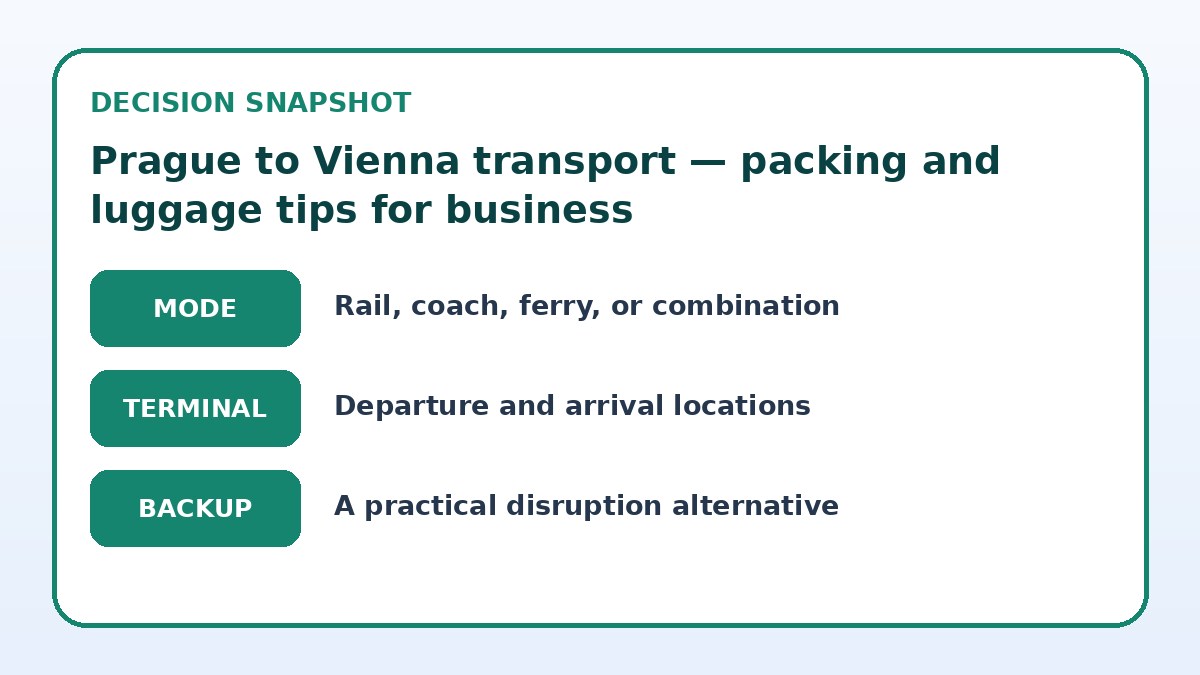
Choose the end-to-end journey plan
| Journey approach | Best for | Friction to check |
|---|---|---|
| Direct train with reserved seat | Business travellers needing predictable travel time and onboard workspace | May cost more and requires early booking for specific seats and luggage placement. |
| Coach with underfloor luggage | Budget-conscious travellers with compact carry-ons | Longer or variable journey times and no access to checked luggage during the trip. |
| Mixed: short private transfer to rail hub | Door-to-door speed when starting outside city centre | Higher coordination complexity and extra cost for the transfer leg. |
| Flexible ticketing or open-return routing | Trips where meetings may run late or schedules change | Potentially higher fare and need to verify change rules before booking. |
Check live intercity options
Look beyond the ride itself and compare terminals, transfers, luggage, and arrival fit.
Manage luggage and transfers for smooth door-to-door trips
Treat the journey as door-to-door: plan the first- and last-mile movements and aim to minimize the number of times you lift or unlock a suitcase. If you’re using public transport at either end, pick a station with escalators or elevators, check the distance from platform to exit, and confirm whether your hotel or meeting point offers quick luggage drop-off. For heavier bags or tight schedules, book a hotel that accepts early luggage drop or arrange a short private transfer that can load and unload directly at the door.
Consider luggage composition: pack a slim carry-on with essentials you’ll need during the day, and stow bulkier items in the main suitcase. Use a compact, organized briefcase or tech pouch that can fit under a seat for easy access to powerbanks, chargers, and documents. If moving between modes, consolidate items you will need en route (chargers, notebooks, toiletries) into the one bag you keep with you to avoid repeated searches through checked luggage during short transfers.
Timing flexibility and productivity while you travel
Business trips often require protecting productive time. Trains offer more consistent onboard conditions for work: stable tables, power outlets on many services, and the freedom to leave a small bag beside you while you use a laptop. When comparing schedules, prioritize departures that align with your peak work windows and allow buffer time for city transfers at each end. If your meetings run long, choose tickets that permit flexible changes or select ample connection time instead of the cheapest, tightest itinerary.
Coaches can be competitive but expect variable journey times depending on traffic and border processing. Use coach time for less task-sensitive work like reading or phone calls rather than detailed spreadsheet sessions. If you must take a coach for cost or origin reasons, pick a departure that gives generous margins before appointments and consider reserving a front-row seat if that improves legroom and luggage access; verify seating and power availability on the booking page before you commit.
Compare the practical alternatives
Use the final page to confirm what is actually offered on your dates and save a workable fallback.
Intercity travel checklist
- Confirm which station or terminal the service uses in both Prague and Vienna and map the shortest transfer route to your meeting or hotel.
- Verify luggage allowances, carry-on sizes, and whether priority luggage storage is possible on the operator’s official booking page.
- Pack a carry-on with essentials: charger, powerbank, documents, a fresh shirt, and a compact toiletry kit for quick touch-ups.
- Reserve seats or coach positions that offer extra luggage space or easier exit if your itinerary has tight connections.
- Save and print (or download) e-tickets and ID copies, and register a payment method for taxis or app-based rides in both cities.
- Identify one later alternative departure and a local taxi/ride-hail fallback before travel; add extra buffer time for city transfers.
Disruption backups and what to verify before booking
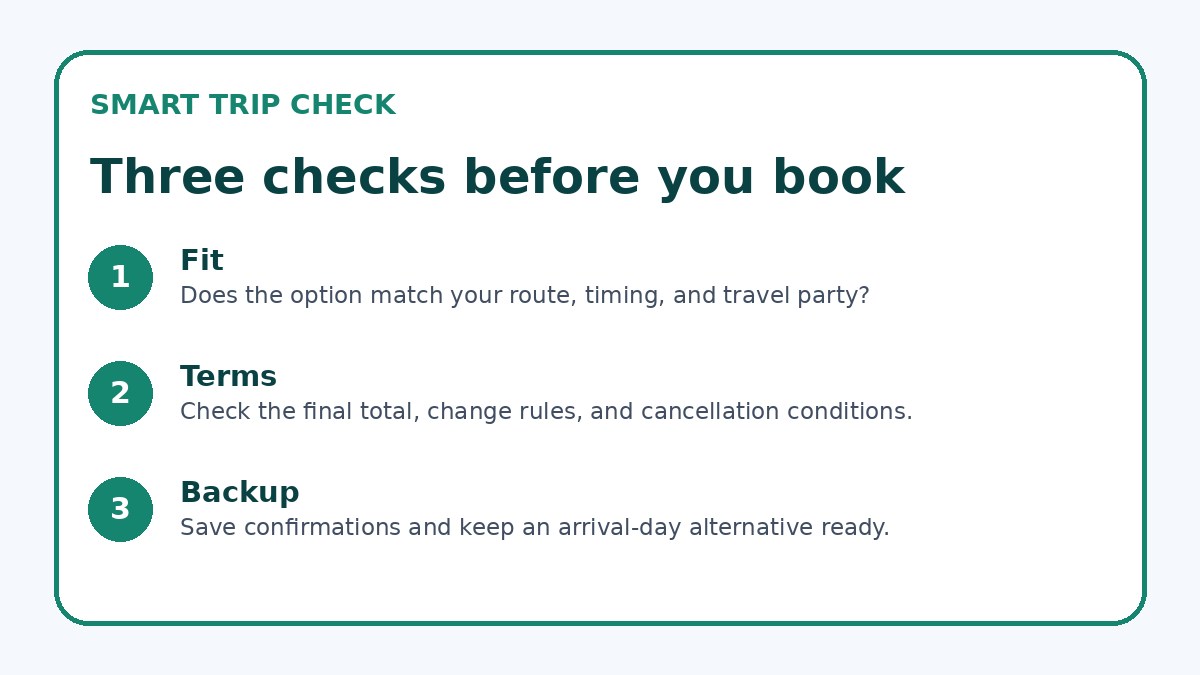
Even short international travel can be disrupted. Before booking, check refund and change policies, arrival and departure terminal details, and luggage allowances on the provider’s official page; where specifics may change, verify on the operator’s final booking screen. Have a Plan B: identify an alternative later train or coach, note taxi ranks and ride-hail apps operational in both cities, and keep a list of hotels near your arrival terminal if you need an unexpected overnight stay.
Carry digital and physical copies of essential documents, and distribute them between bags where practical so one lost item doesn’t derail the trip. For longer or very important trips, consider travel insurance that covers missed connections and lost luggage; read the policy limits carefully and keep emergency contact numbers handy. For real-time availability and conditions, you can check Trip.com as one of several comparison tools, but always confirm final terms on the transport operator’s official booking page.
Rail & Intercity Transport questions travelers ask
Can I carry large suitcases on trains between Prague and Vienna?
Most intercity trains accept large suitcases, with space in dedicated racks or at the end of carriages. However, the amount of luggage space and placement rules can vary between services. Before you book, check the operator’s luggage guidance on the booking or information page so you know whether you need to place your suitcase in an end-of-carriage area or on an overhead rack, and whether staff assistance is available. If you rely on a specific accessible storage arrangement, confirm it directly with the operator to avoid surprises at boarding.
What’s the fastest door-to-door option from central Prague to a downtown Vienna hotel with luggage?
A direct intercity train typically offers the simplest door-to-door outcome when both your origin and destination are near central stations because it minimizes transfers and luggage handoffs. To determine the fastest overall route for your exact addresses, time each step: local transfer to the departure station, the intercity segment, and onward travel from the arrival station to your hotel. Factor in check-in or luggage drop policies at your hotel. For true door-to-door speed from noncentral addresses, a private transfer combined with a short rail leg or a full private drive may be faster but generally costs more.
How should I pack for a business day trip versus an overnight on this route?
For a business day trip, prioritize a compact carry-on and a slim laptop bag: pack a charger, portable battery, meeting materials, a toiletry wipe, and a spare shirt. Keep items you’ll need during travel in the small bag you keep with you. For an overnight trip, add a checked suitcase or larger wheeled bag but consolidate urgent items into your carry-on so you can access them regardless of whether checked luggage is stowed in an underfloor bay. Always test that your luggage wheels and locks function smoothly for rapid transfers between modes.
Final decision note
For business travellers, the practical choice between Prague and Vienna comes down to how many times you’re willing to handle luggage and how much buffer you want for schedule changes. Direct trains usually simplify door-to-door logistics and support onboard productivity, while coaches and mixed options may save money or serve noncentral origins but introduce more handoffs and timing variability. Decide first on the terminal fit for your start and end points, then match luggage strategy — carry-on for flexibility or a checked case if unavoidable. Finally, verify luggage rules and change policies on the operator’s booking page, plan a disruption backup, and travel with a compact work kit so you stay productive regardless of the mode.
Continue planning
Check current options and final conditions
Use the provider page to confirm live availability, the final total, cancellation terms, and every condition that matters to your trip.
This evergreen planning guide was created with AI-assisted drafting and a structured quality review. It does not display live prices, schedules, availability, visa guidance, or provider rankings. Verify current details before booking. Some links are affiliate links; we may earn a commission at no additional cost to you.