Practical travelers answer this first: do you need a rigid schedule or the convenience of fewer connections? Solo travelers from Seoul to Da Nang often trade lower fares and flexible date options for simpler itineraries with fewer transfers and smoother baggage handling. Start by deciding if your trip hinges on fixed dates—work, events, or a one-off tour—or whether shifting a day or two is possible to reduce cost or connection stress. Once you know that, you can compare direct versus connecting options (if direct exists), shortest-duration routings, and fare rules that allow free date changes or limited refunds. This article walks you through the routing considerations, baggage and connection risk, schedule fit, and fare conditions so you can make the booking choice that matches how much flexibility you actually need.
See live routes for your exact travel day
Compare direct and connecting choices with the same baggage and traveler details.
Routing choices: direct, single-connection, or multi-stop
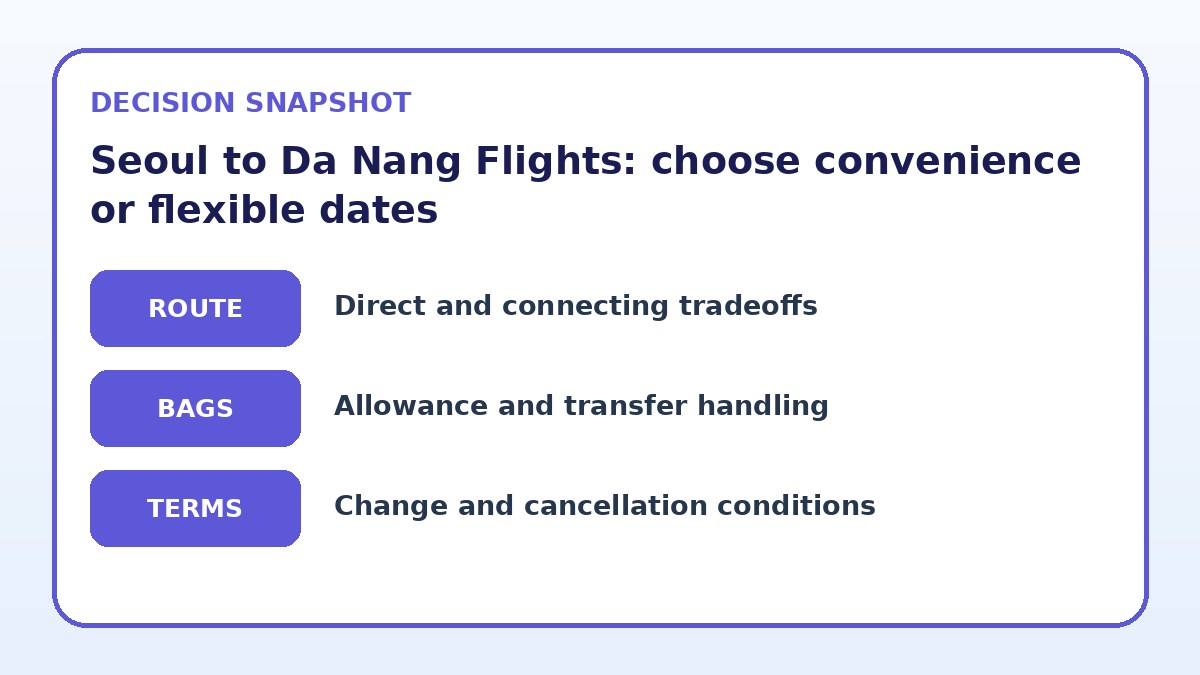
Route selection is the first tradeoff: a direct flight (if available on your dates) delivers the most convenience by eliminating transfer risk and reducing time in airports. But direct options can come with restricted schedules and higher base fares. For solo travelers who value simplicity—especially if you arrive at a new destination in the dark or near midnight—directs minimize the mental load of changing terminals, locating baggage belts, and re-clearing security in transit airports.
Single-connection itineraries tend to expand your schedule options and may reduce fare or open better departure times from Seoul. They introduce a single junction where baggage transfer and missed-connection scenarios matter. Multi-stop routings widen price and timing flexibility but increase exposure to delays, luggage misrouting, and the cumulative fatigue of travel. When comparing options, list total travel time, number and length of layovers, and whether the connection is within one airport or requires a terminal transfer.
Baggage and connection risk: what solo travelers should verify
For independent travelers, checked baggage rules and transfer protections are practical dealmakers. Before booking, confirm whether the itinerary is sold on one ticket (through-checked baggage) or separate tickets that require you to re-check luggage at the transit airport. Through-checked baggage reduces the chance you’ll need to carry heavy bags through immigration or between terminals; separate tickets increase that risk and demand extra time margins for collecting and rechecking baggage.
Also verify minimum connection times listed by the carriers and whether the airlines or alliance offer protection for missed connections due to delays. If a tight transfer is the only option, consider purchasing a longer layover or selecting a carrier with clearer rebooking policies. For independent bookings with multiple carriers, build at least two extra hours into your schedule to cover immigration, transfer shuttles, and unforeseen delays, and check baggage reclaim procedures at each transit point.
Compare flight-selection strategies
| Flight strategy | Best for | Risk to check |
|---|---|---|
| Prioritize convenience (direct or single-transfer) | Travelers who want minimal hassle, straightforward transfers, and faster door-to-door travel. | Typically higher base fares and fewer date options; may pay more for the same date flexibility. |
| Prioritize flexibility (flexible fares, open date windows) | Travelers whose dates might change or who need refundable/changeable tickets for peace of mind. | Higher upfront cost; potential savings if used, but wasted premium if dates remain fixed. |
| Prioritize lowest fare (multiple carriers, connecting savings) | Budget-conscious solo travelers willing to accept longer travel time and more transfer complexity. | Higher risk of missed connections, separate-ticket baggage headaches, and limited recovery options. |
| Hybrid approach (convenience for outbound, flexibility inbound) | Travelers wanting a stress-free arrival but open return dates or contingency plans. | Requires juggling two different fare rules and possibly managing separate airline policies on baggage and changes. |
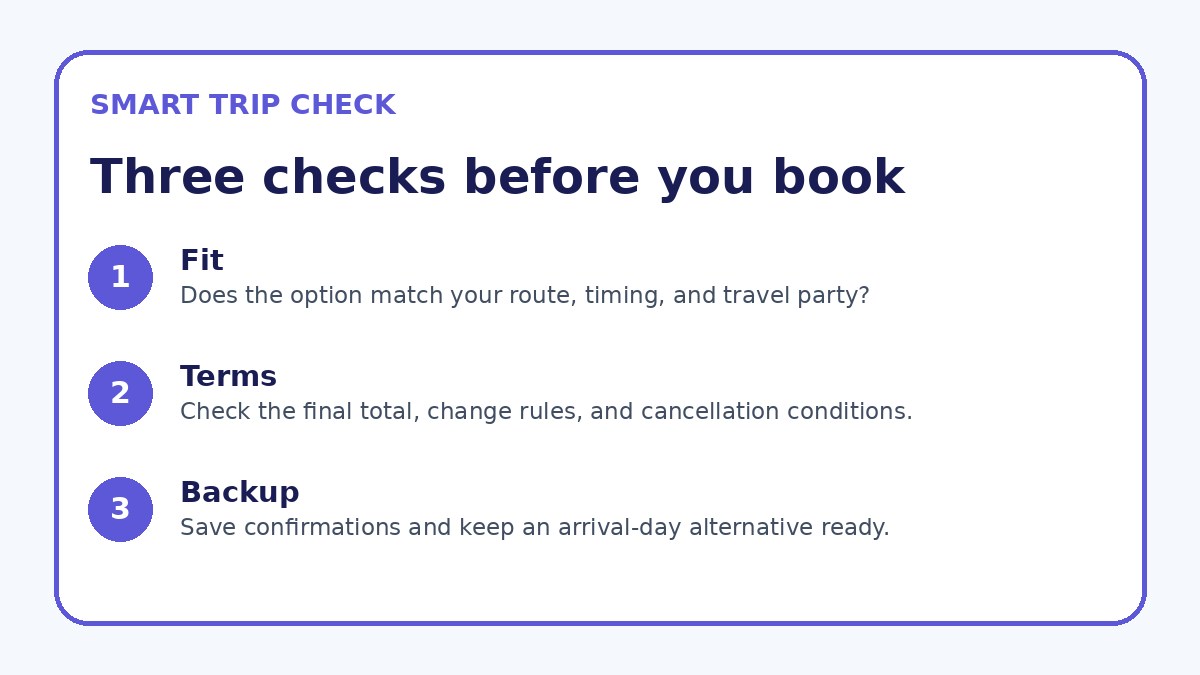
Recheck the complete itinerary
Confirm airports, connection handling, baggage, and change conditions before deciding.
Schedule fit: aligning departure windows with your itinerary
Balance convenience with your on-ground plan by matching departures and arrivals to local logistics. Solo travelers should think about arrival time in Da Nang: daytime arrivals make using public transport, finding accommodations, and staying safe easier. If your trip includes immediate activities like tours or meetings, prioritize arrival slots that leave buffer time to recover from jet lag and handle unforeseen delays.
If your schedule is flexible, search +/- one or two days around your preferred travel dates to find better connection patterns or shorter total travel time. Evening departures from Seoul may reduce daytime stress but can arrive late; early-morning options may be cheaper or shorter but require an earlier start in Seoul. Make a list of up to three acceptable departure windows and use them as filters to avoid time-consuming comparisons among unsuitable itineraries.
Flight details to verify
- Confirm your exact travel dates, full passport name, and traveler type (adult, senior, youth) before searching live fares.
- Filter results by total travel time, number of connections, and layover length; remove itineraries that require terminal transfers you can’t manage.
- On the airline booking page, verify baggage allowance, seat selection fees, and whether baggage is through-checked on connecting itineraries.
- Read the fare rules line-by-line for change fees, reissue windows, and conditions that allow refunds or free rebooking.
- If using separate tickets or low-cost carriers, add at least two hours for international-to-international transfers and plan for baggage recheck.
- Before final payment, screenshot the full booking terms and confirm the listed contact method for rebooking or irregular operations assistance.
Fare conditions: changeability, refunds, and ancillary costs
Fare rules determine how much flexibility you actually get after booking. Low-fare tickets often restrict changes and refunds or only allow them for a fee; flexible fares let you change dates with minimal penalty but usually cost more upfront. For solo travelers who expect possible date changes, weigh the added cost of a flexible fare against the potential fees and stress of rebooking a restricted ticket mid-trip.
Also review ancillary costs like seat selection fees, checked-bag prices, and airport transfer fees that can erode a seemingly good fare. On the airline’s final booking page, verify exactly what is included in your fare family and what triggers additional charges. If you use a third-party site such as Trip.com to compare options, always click through to the airline’s booking page to verify the final terms before confirming.
Flight Guide questions travelers ask
Should I book a refundable or changeable ticket from Seoul to Da Nang if I travel alone?
If your dates are uncertain, a refundable or changeable ticket reduces stress and financial risk. Flexible fares let you alter dates or recover funds with fewer penalties, which can be practical for work-travel or uncertain plans. If you are confident about fixed dates and the itinerary is short, a restricted ticket plus a low-cost change add-on might be cheaper. Whatever you choose, verify the precise change and refund steps on the airline’s final booking page and weigh that cost against the likelihood and consequences of needing a change.
How much layover time should I allow when connecting through another airport?
Aim to allow at least the carrier’s published minimum connection time plus a safety margin for immigration, security, and terminal transfers—particularly if you must collect and recheck baggage. For single connections on one ticket, two hours can be reasonable in many airports but may be tight in large or unfamiliar hubs. For separate tickets, add substantially more time because you may need to pass immigration and check bags again. Check the transit airport map and verify transfer time recommendations on the airline pages before booking.
What are the top things to verify on the airline’s booking page before paying?
Check these elements: exact baggage allowance and fees for checked/oversized items; whether baggage is checked through on linked flights; detailed change and refund rules; seat selection costs; and the carrier’s instructions for irregular operations and rebooking. Also confirm the fare code or family name, which indicates what ancillary services are bundled. Finally, note the contact details and the process for making changes—screenshots of this page can help you resolve disputes later.
Final decision note
Choosing Seoul to Da Nang flights as a solo traveler means balancing the mental convenience of fewer connections against the financial and date flexibility of cheaper or more changeable fares. Start by locking your acceptable departure windows, then decide whether a stress-free arrival or lower upfront cost matters more. Compare itineraries by routing, baggage handling, connection risk, and precise fare rules before you click pay. Use the airline’s final booking page to verify every included service and rule. With clear priorities and a short checklist, you can book a flight that fits both your schedule and your comfort level.
Continue planning
Check current options and final conditions
Use the provider page to confirm live availability, the final total, cancellation terms, and every condition that matters to your trip.
This evergreen planning guide was created with AI-assisted drafting and a structured quality review. It does not display live prices, schedules, availability, visa guidance, or provider rankings. Verify current details before booking. Some links are affiliate links; we may earn a commission at no additional cost to you.