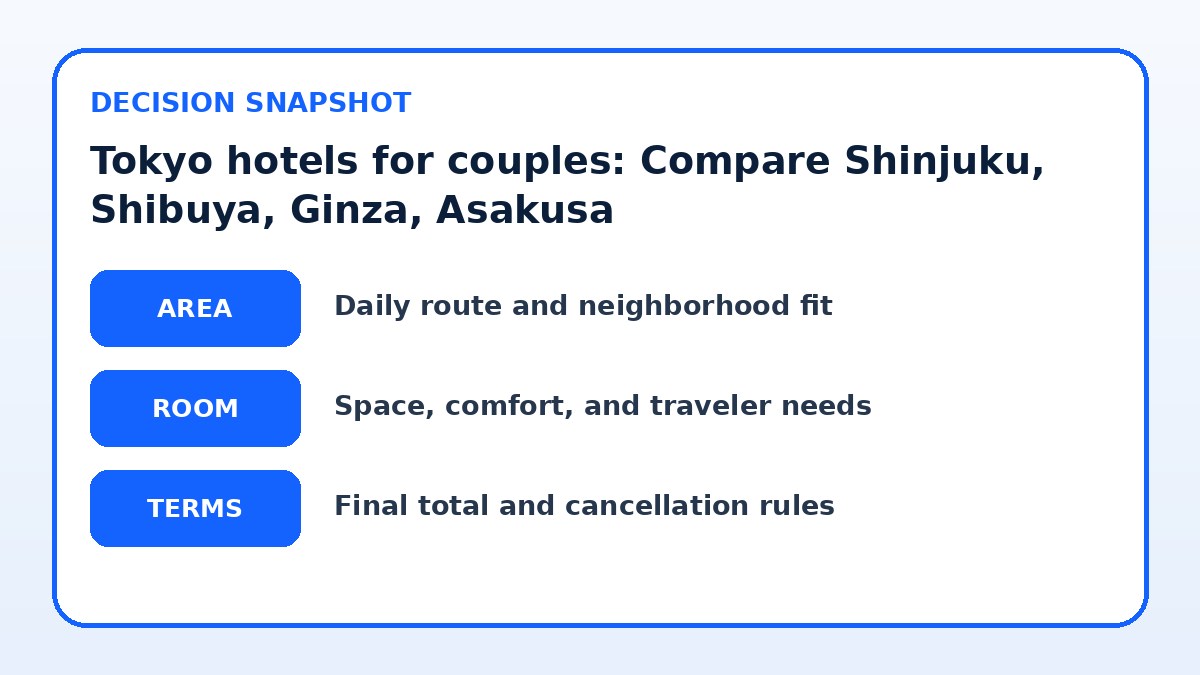
Decide where to stay in Tokyo based on how you plan to spend your time together, not just on hotel ratings. If you want late-night bars, central transit, and nonstop energy, Shinjuku often fits; for fashion-led wandering and youthful cafes, Shibuya is more your scene. If you prefer polished restaurants, luxury shopping, and quieter nights close to upscale transit, Ginza works best; and for slower mornings, riverside temples, and traditional charm, Asakusa makes a relaxed base. Practical choices hinge on your daily friction tolerance: how far you’ll travel between breakfast, sightseeing, and dinner; whether late returns matter; and what kind of room—quiet, scenic, or compact—you need. Read on to compare neighborhood fits, how routes and transfers shape each day, room and party considerations, and the final checks to make on hotel booking pages so you can shortlist an area confidently before opening live inventory.
Check live stays in the areas that fit
Use your dates and party size to compare current rooms after you narrow the neighborhood fit.
Neighborhood fit: who each area suits
Shinjuku: Best for couples who want nonstop energy, a huge range of dining options, and excellent late-night transit. The neighborhood has a dense cluster of train and subway lines, plus nightlife pockets that stay active after midnight. Couples who enjoy spontaneous plans—late ramen, karaoke, or bar-hopping—will appreciate being able to return easily on foot or by short taxi rides. However, the immediate surroundings can be busy and bright; if you need quiet for long morning sleeps, look for hotels set back from the main station and check noise reviews and room placement options.
Shibuya: Ideal for younger or style-focused couples who enjoy people-watching, boutique shopping, and cafés with local design flair. It’s lively in the evenings and visually exciting during the day, with easy walking routes between trendy neighborhoods like Daikanyama and Harajuku. If your itinerary includes frequent short strolls, art stops, and fashion discoveries, Shibuya’s compact layout reduces travel friction. For couples wanting calmer nights, choose hotels on quieter side streets or near green pockets, and confirm room-facing directions and blackout curtain details on the hotel’s booking page.
Choose an area-selection strategy
| Area approach | Best for | Tradeoff to check |
|---|---|---|
| Choose by nightlife and late trains (Shinjuku or Shibuya) | Couples who plan late dinners, bars, or entertainment and want quick returns to base. | More street noise and busier surroundings; quieter hotel rooms may cost more or be set away from the center. |
| Choose by upscale dining and quieter nights (Ginza) | Couples prioritizing fine dining, theater nights, and elegant, walkable streets. | Typically higher-cost neighborhood and less of the youthful, eclectic vibe found elsewhere. |
| Choose by traditional ambiance and relaxed mornings (Asakusa) | Couples seeking cultural sights, riverside walks, and a slower pace. | Longer transfers to nightlife hubs and potentially fewer late-night dining options near your hotel. |
| Choose by transit hub convenience (near major stations) | Couples planning frequent day trips across Tokyo and beyond who value minimal transfer friction. | Might sacrifice neighborhood character for practicality; stations bring crowds and sometimes noise. |
Daily-route friction: how transit shapes your days
Ginza: Low-friction for city-center days that focus on dining, galleries, and theaters, because Ginza sits on major lines and offers straightforward transfers to central museums and business districts. For couples who prefer to walk between a museum morning, a long lunch, and an elegant dinner, Ginza’s wide streets and pedestrian-friendly blocks make it pleasant. When planning cross-city day trips to places like Asakusa or Ueno, check train line connections and number of transfers; for every itinerary, compare door-to-station walk times and whether your hotel offers luggage storage or a late check-out option to reduce transit pressure.
Asakusa: Best for low-key mornings and easy cultural outings but can add transfer time for evening plans in Shinjuku or Ginza. Its slower pace and picturesque streets invite leisure strolls to temples and river cruises, which is perfect when you don’t want to pack a full day with movement. If you plan many nighttime activities elsewhere, factor in late-train schedules and taxi availability. Always compare station access—some hotels advertise “near station” but mean a 10–15 minute walk—so measure walking distances and consider mobility needs before deciding.
Now compare like with like
Keep the same dates, guests, room needs, and cancellation preferences while you compare the final choices.
Room and party needs: sizes, views, and privacy
Tokyo’s hotels vary: central areas tend toward smaller room footprints, while Ginza and some boutique properties can offer larger suites or rooms with better city views. Couples who prioritize in-room intimacy—space to relax, room service, or a bathtub—should filter searches by room size, bed configuration, and on-site amenities like private dining options. Verify whether the listed “double” or “twin” arrangement suits your bed preference, and if you need an extra rollaway or connecting room for a child, confirm availability directly on the booking page.
Noise and privacy differ widely between neighborhoods. In Shinjuku and Shibuya, request a room away from the main road or higher-floor placement to reduce street noise; ask if soundproofing is available. If a romantic view matters, look for rooms listed with river, garden, or skyline views and confirm the exact view orientation. For special occasions, contact the hotel to check whether they can accommodate surprises like in-room flowers or late check-in; verify any stated policies on the hotel’s official booking page to avoid surprises.

Hotel booking check before payment
- Confirm the exact hotel address and the nearest train/subway lines before finalizing your booking.
- Compare room sizes, bed type, and whether the room faces a street or a quieter courtyard.
- Verify cancellation, change, and late-check-in policies on the hotel’s official booking page.
- Check whether breakfast is included, the serving times, and if special-diet options are available.
- Ask the hotel about luggage storage, early check-in or late check-out options if arrival times vary.
- Confirm noise control measures (soundproofing, high-floor rooms) if you need quiet overnight for sleep.
Final booking terms: what to verify before you book
Check cancellation and change policies, but do so on the hotel’s final booking page rather than relying on aggregators; policies can differ by rate code and room type. Confirm whether breakfast is included and whether it’s served at a particular time or in a buffet versus plated format, since arrival schedules may make early or late breakfasts important. Look for explicit statements about taxes or service charges because some pages show pre-tax estimates while the final payment step includes mandatory fees.
Verify arrival logistics: exact address, recommended entry point, luggage storage availability and fees, and the best route from your usual arrival point (airport or station). If you expect late arrival, confirm late-check-in procedures and whether a front desk closes overnight. For any shuttle, pick-up, or third-party transfer service, read the provider details carefully and confirm meeting points and contact numbers on the provider’s page. Consider using Trip.com as one of several places to compare current availability and conditions, but always verify critical terms on the hotel’s direct page before confirming.
Hotel Guide questions travelers ask
Which Tokyo area is most central for sightseeing as a couple?
Central convenience depends on your priorities: Ginza sits near many central museums and high-end dining, making it easy for cultured daytime plans and theater nights. Shinjuku connects to many lines so it’s ideal for cross-city itineraries and late-night plans. If your couple trip is heavy on fashion and cafés, Shibuya lets you walk to trendy neighborhoods. Think about which attractions you’ll visit most often and measure door-to-station walking times from potential hotels to estimate daily travel burden before choosing.
How can couples reduce noise and ensure privacy in busy Tokyo neighborhoods?
Request a higher-floor room and specify a courtyard or rear-facing room when available; many hotels can note noise sensitivity at booking. Look for hotels that explicitly mention soundproof windows or quiet floors, and read recent guest comments on noise levels. Consider choosing a smaller boutique hotel tucked on a side street rather than a major road. For maximum privacy, ask the hotel about private dining or in-room dining options and verify any curfew or front-desk hours that could affect late arrivals.
Should couples prioritize hotel location or room size when booking in Tokyo?
Balance matters: prioritize location if your days are packed with cross-city sightseeing to save time on transfers; prioritize room size when you expect to spend many hours in the hotel or value in-room relaxation. If both matter, target neighborhoods like Ginza that have larger-room options or search for boutique hotels offering suites. Use filters for room area and bed type, and confirm dimensions and amenities on the hotel’s booking page so the selected room meets your comfort and privacy needs.
Final decision note
Shortlisting an area for a couple’s stay in Tokyo starts with how you plan to spend your days and evenings: energetic nights and multiple cross-city trips point toward Shinjuku or transit-hub locations, while fashion-led wandering favors Shibuya, and leisurely cultural mornings suit Asakusa or riverfront neighborhoods. Once you pick the right neighborhood profile, narrow choices by room size, noise control, and precise arrival logistics. Before you book, verify cancellation terms, bed configuration, view orientation, and check-in procedures on the hotel’s final booking page. With those checks done, you’ll be ready to open live inventory and choose a hotel that fits both your itinerary and the kind of time together you want in Tokyo.
Continue planning
Check current options and final conditions
Use the provider page to confirm live availability, the final total, cancellation terms, and every condition that matters to your trip.
This evergreen planning guide was created with AI-assisted drafting and a structured quality review. It does not display live prices, schedules, availability, visa guidance, or provider rankings. Verify current details before booking. Some links are affiliate links; we may earn a commission at no additional cost to you.