The practical answer up front: if you’re visiting Abu Dhabi for the first time, use flexible dates to compare identical trip elements—same travelers, room type, flight routing, and cancellation terms—before deciding whether a package bundle or separate bookings are better value. Flexible dates let you see how flight and hotel combinations shift together and reveal nights or connections that change flexibility or refundability. Start by locking the traveler details and room category, then scan three to five nearby departure dates and two different return windows. That side-by-side comparison highlights true savings versus apparent discounts caused by different cancellation rules or fewer included services. This guide explains what to compare, how to read inclusions and final terms, and how to pick the booking approach that matches your priorities—cost, flexibility, or convenience—so you leave Abu Dhabi trip planning confident rather than surprised.

Test package value fairly
| Booking approach | Best for | Tradeoff to check |
|---|---|---|
| All-in-one package (flight+hotel+transfer) | Travelers who value a single reservation and simplified logistics for arrivals and support. | May limit flexibility and require changing the whole package to alter one component. |
| Flight and hotel bundled, transfers separate | Visitors who want core convenience but prefer to choose local transfer options themselves. | Still ties airfare and hotel conditions together; transfer changes won’t affect bundle terms. |
| Book flights and hotels separately | Travelers who need modular control, loyalty benefits, or the ability to change one item without touching others. | Requires more coordination and separate customer-service interactions if problems arise. |
| Search flexible dates for each component, then assemble | Planners aiming for optimized dates and the best component-level terms before committing. | Time-consuming and requires careful matching of traveler details and final terms to avoid false savings. |
Check current package and separate options
Use identical dates, travelers, room needs, baggage, and flexibility so the comparison stays meaningful.
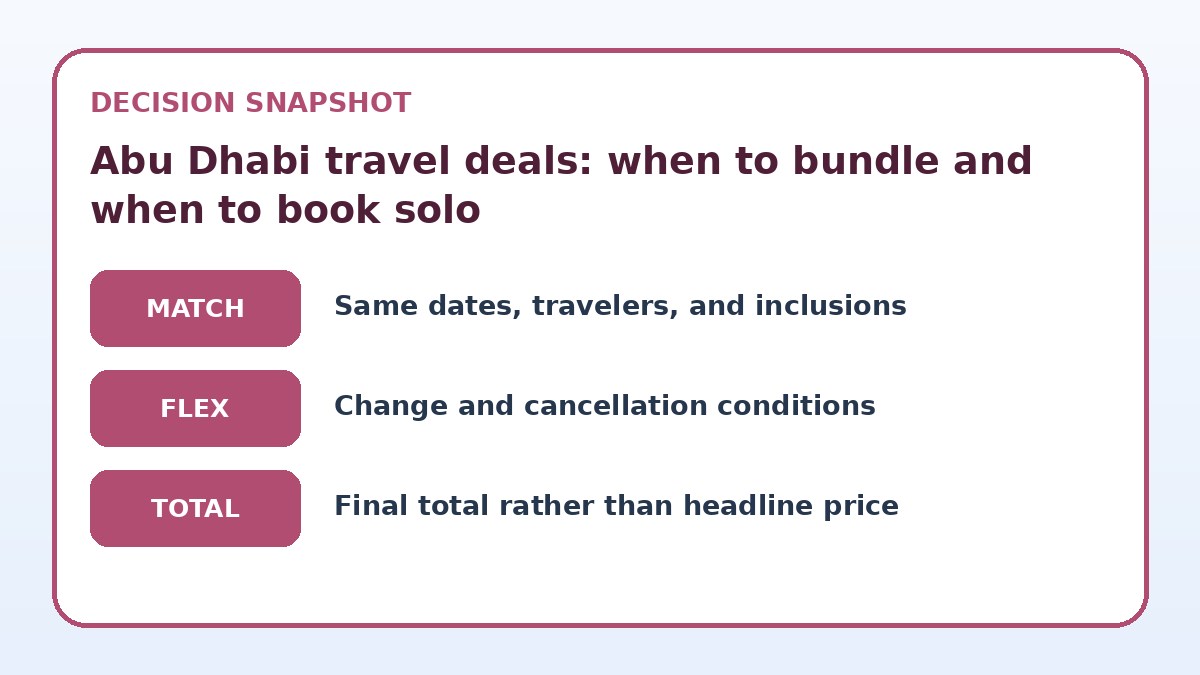
What to match before you judge a package
Before comparing bundle options, create a baseline: the exact traveler list, passport nationalities if relevant for seat assignment or check-in, the room type and occupancy, and any seat or baggage preferences. Match these elements across package and separate-booking quotes. Differences in a quoted room type (standard versus deluxe), “economy” versus “economy plus” seats, or included checked baggage can make a bundled total appear cheaper when it actually excludes items you would buy separately. Also verify whether transfers, taxes, and service fees are included in each quote; suppliers sometimes show base fares before mandatory add-ons, so the headline bundle total and the separate components are not always apples-to-apples.
Once your baseline is fixed, run flexible-date comparisons for at least three outbound and three inbound date pairs. Keep the exact baseline constant while you vary dates; this isolates date-driven price movement. If you test bundles, make sure their listed inclusions are identical to the components you would book separately. When a bundle promises extras—city tours, meals, or lounge access—note whether those extras are transferable, refundable, or usable only on specific dates. On the provider’s final booking page, confirm the ticket class codes, the hotel room code, luggage allowance, and the cancellation policy to be sure the bundle truly mirrors the separately assembled itinerary.
How flexible dates reveal real versus false savings
Flexible-date searches show price patterns: lower weekday hotel rates, midweek flight savings, and cheaper shoulder-season windows outside major Abu Dhabi events. But savings can be illusory if lower fares use restrictive conditions—nonrefundable tickets, higher change fees, or rooms without breakfast. When comparing results across dates, highlight refundable versus nonrefundable options with color-coding or a simple notes column. If a bundled price looks substantially lower, check whether the bundle’s fare class allows date changes and whether the package holds inventory that prevents easy changes; bundles sometimes tie you to a single departure date unless you pay to alter the whole package.
Another source of false savings is different traveler composition. A family fare with child discounts may look cheaper than two adult tickets, but if your party differs, the sample quote is misleading. Also watch connection times: a low-price date might route through multiple connections with tight layovers, increasing risk and potential rebooking costs. Finally, account for incidental costs: airport transfers, visa facilitation services, and tourism taxes may be included in one option but not another. Confirm every line item on the final provider page so you can reconcile the flexible-date findings with the total out-the-door cost.
Look past the headline total
Compare inclusions and change conditions before deciding whether a package is genuinely useful for this trip.
Deal comparison checklist
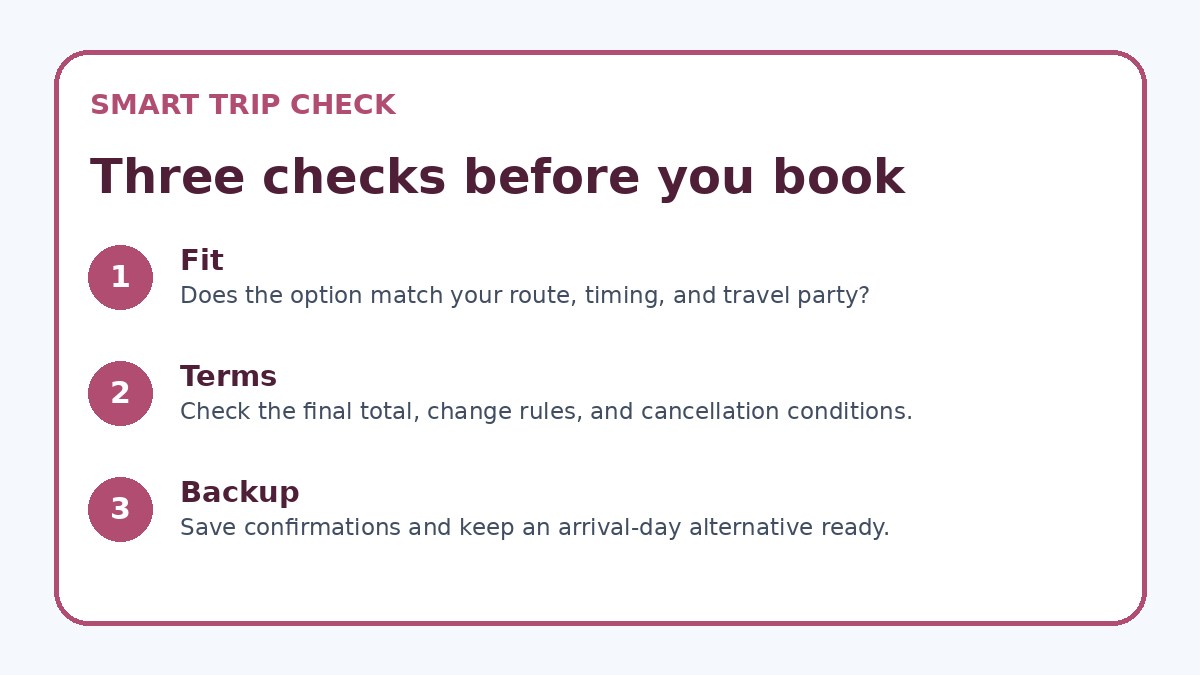
- Fix the traveler count, passport nationalities, and room occupancy before running flexible-date searches.
- Compare identical room codes, fare classes, and baggage allowances when evaluating bundle versus separate quotes.
- Scan at least three outbound and three inbound dates to reveal weekday and shoulder-season pricing patterns.
- Confirm cancellation, change fees, and refund method on the provider’s final booking page for every item.
- Verify whether transfers, taxes, and service fees are included or listed as separate mandatory charges.
- Save screenshots or PDF confirmations of quoted inclusions and terms so you can compare them at purchase time.
Bundle versus separate booking: inclusions, flexibility, and traveler value
Packages can simplify logistics by combining flights, hotels, and transfers in one reservation and often provide a single customer-service path for changes. For first-time visitors who prefer having everything under one booking reference, a bundle can reduce administrative friction. However, simplicity has tradeoffs: bundled bookings sometimes restrict changes to one element without affecting the whole package, or they may require you to use supplier-specific refund processes. Evaluate whether the package’s cancellation and change terms match what you need—especially if your travel dates are tentative.
Separate bookings offer modular flexibility: change or cancel a flight without touching the hotel, or switch your accommodation without altering your airfare. That modularity is useful when you want precise control over upgrade options, loyalty program benefits, or specific seat selection. But separate bookings increase the responsibility to coordinate timings—especially arrivals, transfers, and check-in windows—and you may need to arrange transfers independently. For first-time visitors balancing convenience and control, weigh whether time savings from a bundle outweigh the flexibility costs if plans could shift.
Final terms to verify before you click purchase
On the provider’s final booking page always verify the refund and change conditions for each component: ticket fare class, hotel cancellation window, and transfer refundability. Look for explicit language on penalties, the process for name corrections, and how refunds are handled (credit vs. original payment). Confirm the exact room description and the flight routing shown on the confirmation screen—providers sometimes display intermediate routing options that were not clear in the initial search results. If extras like meals, seats, or transfers are promised, ensure they appear in the final itinerary lines and not only in a marketing summary.
Also confirm payment and post-booking support details: which company issues the ticket or voucher, how to contact support in Abu Dhabi if you need changes locally, and whether your payment is eligible for chargeback or travel insurance claims. If you plan to compare offers on marketplaces, remember to verify the supplier code and booking terms on the supplier’s own page before relying on the marketplace description. Trip.com can be used as one comparison tool to check availability and final terms, but always inspect the actual supplier confirmation and printed itinerary for the binding conditions.
Travel Deals & Booking Strategy questions travelers ask
Can flexible dates really save money for a first-time Abu Dhabi trip?
Yes—flexible dates often reveal cheaper hotel nights or flight combinations, especially on weekdays and outside major events. However, the real saving depends on matching the same trip elements: if the lower price uses a nonrefundable fare or a different room type, the apparent saving may disappear once you add change fees or required extras. Use flexible-date tools to shortlist dates, then compare full terms including baggage, seat class, and hotel cancellation policies before deciding.
Should I always choose a package to simplify my first trip to Abu Dhabi?
Not always. Packages simplify logistics by combining components under one booking reference, which appeals to travelers who want minimal planning fuss. But that simplicity can come with less modularity—changing a flight might affect the whole package or incur higher fees. If you expect date changes or want loyalty benefits from a specific airline or hotel, separate bookings might be preferable. Weigh your tolerance for change against the convenience you value when deciding.
What final provider details must I verify before completing a booking?
On the booking confirmation page verify fare class and ticket rules, exact room code and included amenities, baggage allowance, transfer inclusions, cancellation and change penalties, and who issues the ticket or voucher. Also check payment terms, the refund method, and local contact or support instructions for use in Abu Dhabi. If a marketplace lists an offer, open the supplier’s final booking page to confirm that the displayed inclusions and terms match what the marketplace showed.
Final decision note
For first-time visitors to Abu Dhabi, flexible dates are a practical lever to find better-fitting travel deals—but only if you compare like with like. Start by fixing traveler details and room or seat types, then run multiple date pairings to reveal genuine cost patterns while watching for restrictive fare rules or missing inclusions. Decide whether you prefer the convenience of a bundle or the modular control of separate bookings based on how likely your plans are to change. Verify every inclusion and the final cancellation and change terms on the supplier’s booking page before you pay. Doing so turns flexible-date searching from guesswork into a reliable planning tool.
Continue planning
Check current options and final conditions
Use the provider page to confirm live availability, the final total, cancellation terms, and every condition that matters to your trip.
This evergreen planning guide was created with AI-assisted drafting and a structured quality review. It does not display live prices, schedules, availability, visa guidance, or provider rankings. Verify current details before booking. Some links are affiliate links; we may earn a commission at no additional cost to you.