Practical answer up front: driving in Vancouver can add flexibility for couples—especially for day trips to the Sea-to-Sky corridor or nearby parks—but the decision often hinges on insurance wording. Before you click confirm, read the fine print about liability limits, collision damage waivers, deductibles, named drivers, and who is authorized to drive. That wording changes whether a partner can drive without extra fees, whether damage to parts like tires or windshields is excluded, and whether third-party liability meets provincial minimums. If these items are unclear or costly, you may be better off combining transit, rideshares, and a single short-term rental for excursions. Below I explain how wording affects cost and risk, how to compare options, what to check at pickup and return, and a realistic non-driving fallback for couples who prefer to avoid insurance headaches.
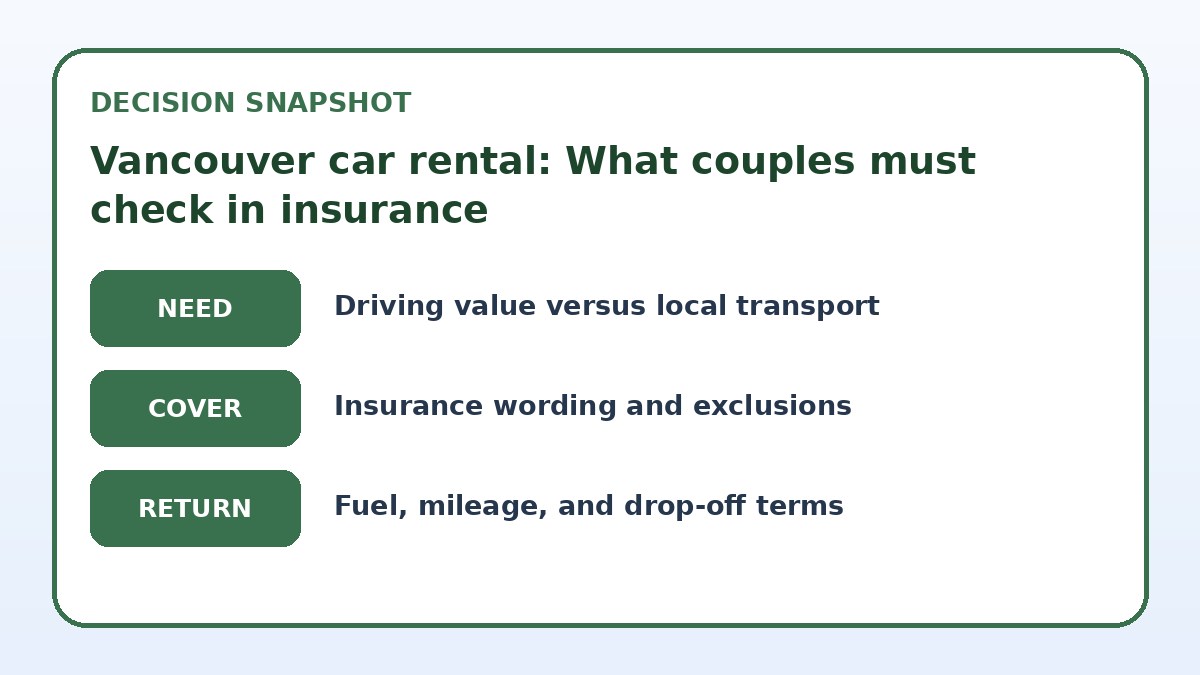
Does driving add real value to your Vancouver trip?
Start by mapping what you want to do together. If your itinerary centers on downtown Vancouver, the North Shore, Granville Island, and local neighborhoods, city transit, biking, and short rideshares usually cover most needs without the cost and paperwork of a rental. Parking fees, congestion, and one-way drop charges can offset the freedom of a car. Conversely, if your plan includes Whistler day trips, the Sunshine Coast, or exploring Bowen Island and provincial parks at your own pace, a car lets you control timing and reach viewpoints that are poorly served by public transport.
For couples, route value should weigh convenience against friction: how much driving will you actually do, where will you park, and how comfortable are you with winter or mountain roads? If both partners want to share driving, insurance wording about named drivers and spouse coverage becomes central. Assess the number and length of drives; a single weekend day trip often favors a short-term rental, while a week of daily trips might justify a longer rental despite higher insurance costs.
Decide whether driving earns its place
| Mobility strategy | Best for | Cost or friction to check |
|---|---|---|
| Full rental with both drivers named | Couples planning frequent out-of-town driving | Higher daily costs but clearer coverage; must verify named-driver fees and exact liability limits |
| Single-driver rental with occasional hired driver | Couples who prefer one person to handle driving | Lower insurance paperwork but potential conflict and limited flexibility if the driver is unavailable |
| No rental: transit, rideshares, and tours | City-focused couples avoiding insurance complexity | Less flexibility for remote destinations and timed scenic drives; plan schedules carefully |
| Short-term day rental for specific excursions | Couples who want occasional self-drive without weeklong insurance | Can be cost-effective for a day but requires careful pickup/return timing and inspection documentation |
Check live rental choices only after the route test
Use the exact driver, dates, pickup point, and return plan to compare current conditions.
How insurance wording determines who can drive and what’s covered
Insurance language answers three practical questions: who is authorized to drive, what damages the company will pay for, and what costs you remain responsible for. Key phrases to spot are “additional driver,” “named driver,” “loss of use,” “deductible,” and “exclusions.” If the contract says only the renter is authorized unless a second driver is added, the partner risks voiding coverage by driving. Also look for whether the insurer limits coverage for unmarried partners, common-law spouses, or international drivers—wording varies and impacts whether you need to buy extra cover or add your partner explicitly.
Coverage terms also list exclusions like “tire and glass,” “off-road use,” or “driving on unpaved roads.” The collision damage waiver (CDW) often reduces your liability but rarely eliminates it; read the deductible amount and whether it applies per incident or per day. Finally, confirm whether the quoted liability meets British Columbia minimums and whether third-party claims are handled by the rental company or an insurer—these are the details that determine your out-of-pocket exposure after an accident.
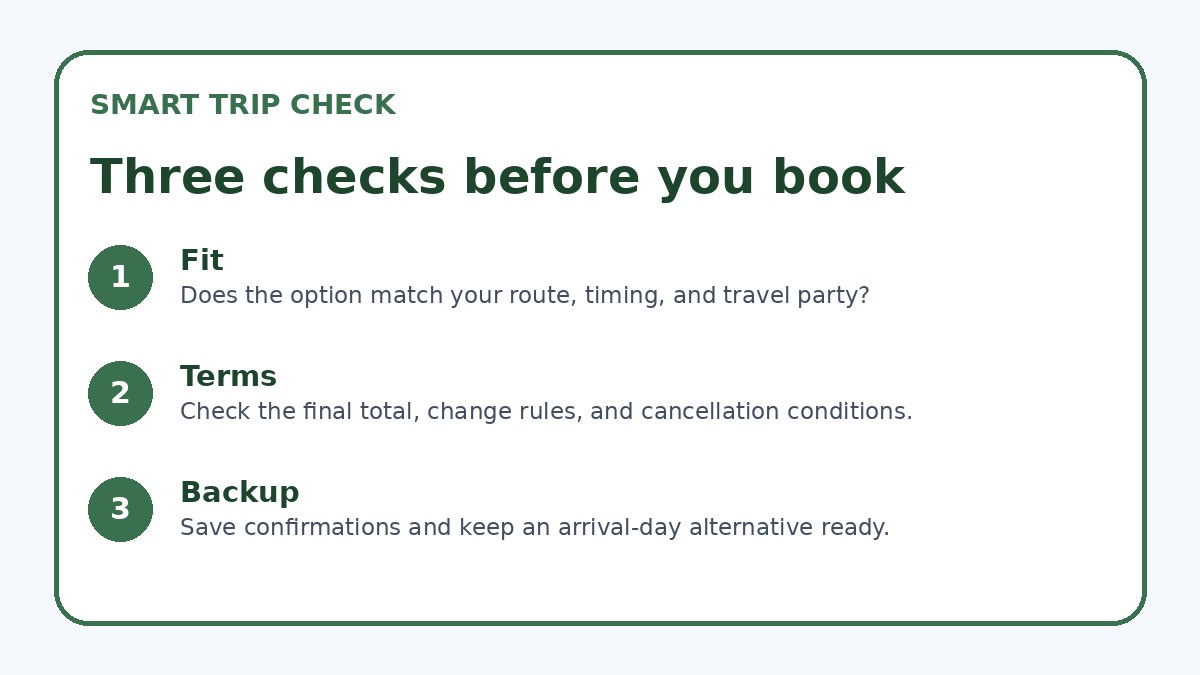
Compare the full rental conditions
Confirm insurance wording, exclusions, deposit, fuel, mileage, and return terms on the final page.
Pickup and return: avoid surprises by checking wording in person
At pickup, compare the online quote to the paperwork the agent hands over. Inspect the vehicle with your partner, document existing scratches and dents with photos or video timestamped on both phones, and ensure any damage noted by staff is recorded. Ask the agent to point out items specifically excluded in the contract—glass, tires, undercarriage—and get a written acknowledgement of what is and isn’t covered. If an agent suggests you can rely on your credit card or travel insurance, request the exact wording or policy reference so you can verify coverage after booking.
On return, follow the contract’s inspection process to avoid disputes about post-rental damage. Keep your inspection photos and return paperwork. If the company charges for damage, request an itemized invoice and a description of how the charge was calculated (repair estimate, parts, labor). Many disagreements stem from vague wording about “wear and tear” versus reportable damage; ask for clarification of those terms before you leave the lot and document everything if you must contest a charge later.
Car rental terms to verify
- Read the rental agreement’s driver clause and confirm whether both partners are covered or need to be added as named drivers.
- Document vehicle condition with timestamped photos and walk the car with staff to note preexisting damage on the contract.
- Ask specifically about exclusions for tires, glass, undercarriage, and interior damage and get those exclusions in writing.
- Verify deductible amounts, whether they apply per incident, and whether a refundable security hold will be placed on your card.
- Check whether your credit card or travel insurance provides primary or secondary CDW and request the exact policy wording to compare.
- On return, obtain a signed inspection sheet or final receipt showing the vehicle was returned without new damage or fees.
If you opt not to drive: a practical non-driving fallback for couples
Couples can assemble a reliable non-driving plan by combining transit, ferries, scheduled shuttles, and rideshares. Within Vancouver, the SkyTrain, buses, SeaBus, and bike lanes connect most attractions efficiently. For key day trips, consider a single-point car rental for the day or a guided shuttle to destinations like Whistler; this avoids weekly rental insurance costs but preserves the option to drive where needed. Plan transfers and timing in advance so you’re not forced into last-minute rentals because a desired bus or ferry is sparse.
Also consider splitting responsibilities: one partner manages logistics—tickets, ferry schedules, shuttle bookings—while the other scouts accessible pickup points and parking alternatives should a short rental become necessary. Keep digital copies of schedules and shuttle cancellation policies. If you anticipate scenic drives on gravel or mountain roads, plan a guided excursion instead; it removes insurance ambiguity and lets both of you enjoy the route without worrying about contract fine print.
Car Rental & Road Trip questions travelers ask
Can my partner drive under my name on a Vancouver rental without being listed?
That depends on the rental contract wording. Many companies require every driver to be listed as an additional or named driver; if the partner drives without being listed, the insurer may void coverage for any resulting damage. Some agreements allow spouses or common-law partners to drive without extra fees, but you must confirm that language in the rental paperwork. Always ask the agent at pickup to point out the clause that permits or forbids unlisted drivers so you aren’t surprised later by an uninsured claim.
Will my credit card’s collision coverage work for a Vancouver rental?
Some credit cards offer collision damage coverage, but terms differ: coverage can be primary or secondary, exclude certain vehicle types, or require you to decline the rental company’s CDW to activate. You must read your card’s benefits guide and verify any geographic or driver restrictions, then compare that wording with the rental agreement. At pickup, keep the card used for booking handy and ask the agent to note on the contract that you declined the CDW if you intend to rely on card coverage—documenting this avoids disputes if damage occurs.
What wording matters most to avoid surprise charges on return?
Look for definitions of “normal wear and tear” versus chargeable damage, exact descriptions of excluded parts (glass, tires, rims), how loss of use is calculated, and whether cleaning fees have thresholds. Also check the timeline and process for post-return damage claims—some companies charge your card days later. Ensure the contract specifies inspection procedures at return and get a signed receipt showing no new damage. If any clause is vague, ask for clarification in writing before you accept the car.
Final decision note
For couples, the decision to rent a car in Vancouver comes down to honest assessment of routes and careful reading of insurance wording. If you’ll mostly stay in the city, transit and rideshares remove insurance complexity and often save money. If you need flexibility for multiple day trips or scenic drives, a rental with both partners explicitly named and clear deductible terms is sensible. Always verify driver permissions, exclusions, and deductible language on the booking and pickup paperwork, document vehicle condition, and keep copies of any insurance or card benefit wording. If uncertain, choose a short-term rental for a specific excursion or use guided transport to avoid contract ambiguity while still enjoying Vancouver’s region together.
Continue planning
Check current options and final conditions
Use the provider page to confirm live availability, the final total, cancellation terms, and every condition that matters to your trip.
This evergreen planning guide was created with AI-assisted drafting and a structured quality review. It does not display live prices, schedules, availability, visa guidance, or provider rankings. Verify current details before booking. Some links are affiliate links; we may earn a commission at no additional cost to you.