If you travel between Seoul and Hong Kong for work, the core decision is whether to prioritize flexibility or the lowest fare on your ticket. Business travelers often need easy date changes, protection against cancellations, and clear baggage rules that won't complicate connecting itineraries. This article gives the practical steps to compare fare classes and the booking conditions that matter most: change fees and reissue rules, refundable versus non‑refundable tickets, how airlines handle missed connections, and how baggage allowances interact with multi‑carrier itineraries. Read this before you pull dates into a live search so you arrive at the booking page with the exact traveler details and schedule constraints you need. I outline routing tradeoffs, connection and baggage risks, schedule-fit questions, and what to verify on the airline or travel agent final page — including where to look for exceptions and how to prepare for last‑minute corporate travel needs.
See live routes for your exact travel day
Compare direct and connecting choices with the same baggage and traveler details.
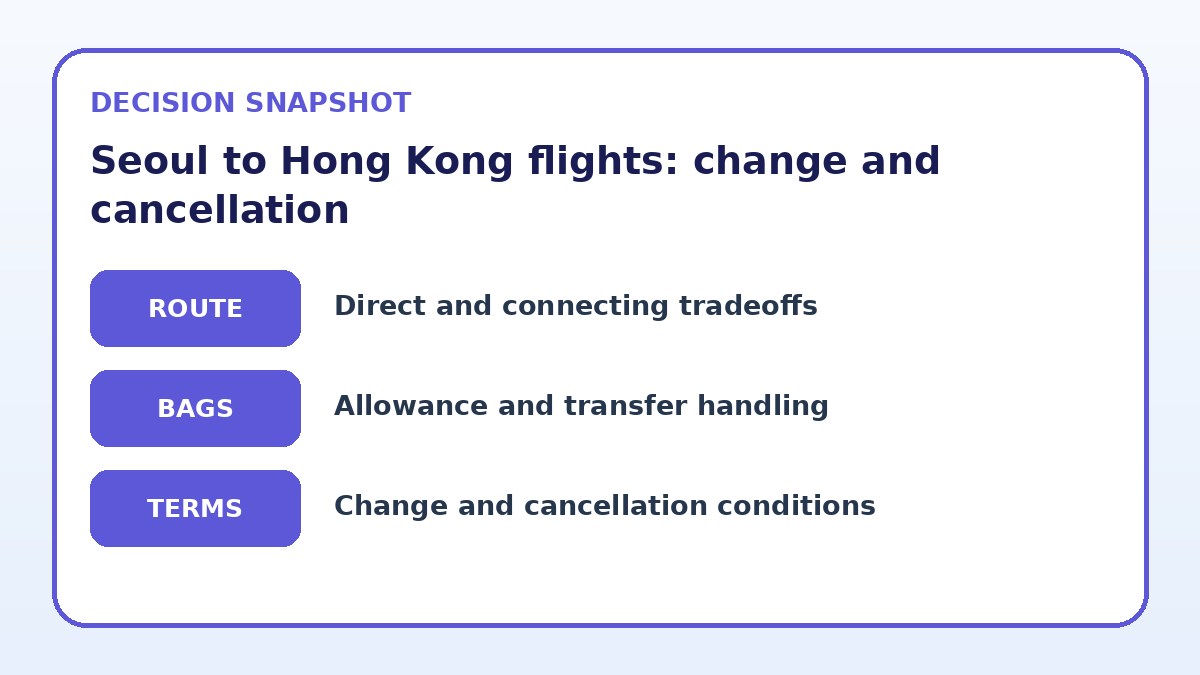
Routing: direct versus connecting itineraries
On a Seoul to Hong Kong trip, routing choices influence both time on the ground and your exposure to disruption. A nonstop option cuts the number of touchpoints and makes a same‑day return easier for tight schedules; connecting itineraries introduce transfer time and the possibility of missed connections. When comparing options, look at total door‑to‑door travel time, minimum connection times at the transit airport, and whether the connecting carrier issues a through‑ticket that protects you in case of delay. Also note airport layouts and transfer procedures—some connections require immigration and recheck of luggage, which increases risk.
For corporate travelers, consider whether your company prefers published direct routings for schedule certainty or allows connections to save cost. If you anticipate same‑day meetings, a direct flight reduces chance of missing critical appointments. If a connection is acceptable, use at least a comfortable buffer between flights and prefer itineraries on a single ticket to ensure missed‑connection protection and smoother rebooking handling. When an itinerary mixes carriers on separate tickets, plan for extra time and be ready to manage baggage reclaim and recheck.
Baggage and connection risk: who is responsible?
Baggage rules interact with fare conditions and the routing you choose. For flights on a single ticket, the operating carrier usually manages through‑checked baggage and is responsible if you miss a connection because of a delay. But when segments are booked separately or combine low‑cost carriers, through‑check may not be offered and you will need to collect and recheck bags, exposing you to immigration and queue delays. Verify each carrier's free baggage allowance for your fare class and whether the allowance applies to all legs on the ticket; differences in measured or piece limits can affect fees at the airport.
If an airline changes or cancels a flight, responsibility for rebooking and transferring checked bags typically falls to the carrier that issued the ticket. For corporate travelers, confirm with your travel manager or agency what the contingency plan is for reissue and hotel accommodation when connections are missed due to airline operations. Before booking, check whether the fare includes priority handling or expedited transfer options; those services can reduce transfer risk but are not universal and must be verified on the carrier's booking page.
Compare flight-selection strategies
| Flight strategy | Best for | Risk to check |
|---|---|---|
| Book the cheapest non‑refundable fare | Travelers on a fixed date who want the lowest upfront fare | Lowest price but high change/cancellation costs and limited reissue protections |
| Buy a flexible or refundable business fare | Frequent last‑minute schedule changes or high disruption risk | Higher base cost but easier rebooking and simpler refund handling |
| Choose a connecting itinerary on a single ticket | Cost savings with some through‑ticket protections | Longer travel time and moderate connection risk, but airline responsibility for missed connections |
| Mix carriers on separate tickets to save or expand options | Travelers needing specific carriers or unusual timing | Lowest protection for missed connections and separate baggage handling responsibilities |
Recheck the complete itinerary
Confirm airports, connection handling, baggage, and change conditions before deciding.
Schedule fit: matching flights to meetings and buffer needs
Business itineraries are shaped by meeting windows and airport transit times. Start by identifying the earliest meeting time in Hong Kong and the latest possible return the same day or night. Work backward to find flights that leave Seoul with enough margin for commuting to the airport, check‑in, security, and potential delays. For return legs, prioritize flights that minimize overnight layovers unless the schedule calls for an extended stay. If you have critical morning commitments, choose arrivals the evening before rather than gamble on last‑minute flights.
Also account for ground transit on both ends: travel time between Hong Kong airport and your meeting locations can vary significantly depending on the district and traffic. Select flights with arrival times that allow you to reach central business areas without additional stress. When your schedule is tight, prefer tickets with confirmed seat selection and priority boarding to speed through the airport. Before booking, compile your precise travel dates, preferred airports, and any nonnegotiable meeting times so you can compare only itineraries that actually fit your agenda.
Flight details to verify
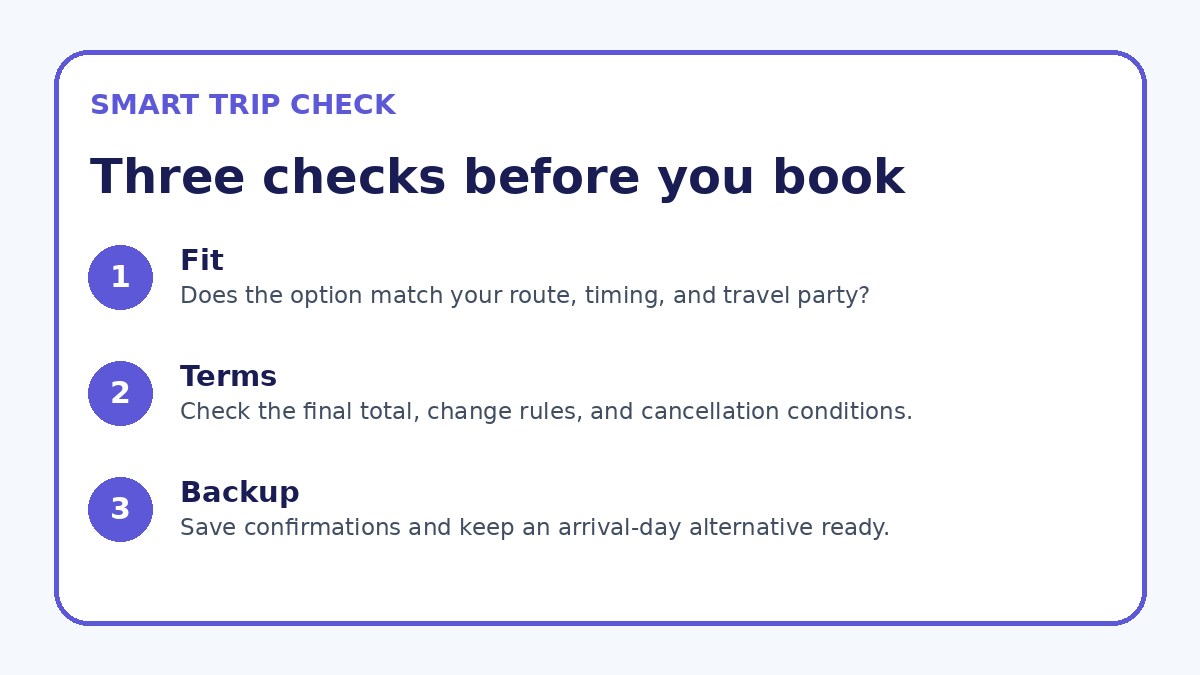
- Confirm exact traveler full name, date of birth, and passport details before searching so tickets can be issued without name‑change penalties.
- Decide whether you need refundable or change‑fee‑waived fares and limit search results to those fare classes during booking.
- Verify baggage allowance and whether through‑check is provided for every segment on your potential itinerary.
- Check the carrier or agency final booking page for the full fare rule text: change fees, reissue windows, refund process, and voucher policies.
- If booking through a travel agency or corporate portal, confirm how changes are processed and which contact handles urgent rebooking.
- Save booking confirmation and fare‑rule screenshots and forward them to your travel manager so reissues and refunds are faster if needed.
Fare conditions: change fees, refunds and corporate policy checks
The most consequential booking details are in the fare rules: change fees, reissue windows, refundability, and the application of fare differences. Some business fares allow unlimited free changes but still require payment of the fare difference if the new date is more expensive. Other discounted fares permit changes only for a fee or are non‑refundable. Carefully read the carrier's change and cancellation section on the final booking page; look for phrases describing whether taxes and fees are refundable and whether vouchers are offered instead of cash refunds. If you rely on corporate reimbursement, ensure the ticket type is eligible under your company policy.
When using an online travel agency or corporate booking tool, confirm how changes are processed: will the airline handle reissues directly, or must you work through the agency? If your trip may be canceled or rebooked frequently, consider a fare class that explicitly waives change fees, even if the base fare is higher. For last‑minute travel, check whether the carrier offers flexible or business flexible fares and what documentation or authorization your employer requires for rebooking or refund claims. Always save the full fare rule text from the provider's final booking page for reference in disputes.
Flight Guide questions travelers ask
Can I change my Seoul to Hong Kong flight the same day without a fee?
Whether same‑day changes are permitted without a fee depends on the fare class and the airline's policies. Some flexible business fares include same‑day standby or confirmed same‑day rebook options; many discounted economy tickets do not. Corporate accounts and loyalty program elites sometimes receive better same‑day change privileges. Always check the precise language on the carrier’s final booking page and ask your corporate travel agency to confirm any service fees that might apply before assuming a free same‑day change.
If my connecting flight is canceled, who covers rebooking and accommodation?
If your itinerary is on a single ticket, the operating carrier for that ticket generally handles rebooking and any required accommodation when the disruption is their fault. If your legs are on separate tickets, each carrier treats its own segment independently, and you may be responsible for the missed connection and any extra costs. For corporate travelers, ensure your agency or travel desk knows your booking structure so they can escalate quickly. Verify the airline’s disruption policy and whether hotel or meal vouchers are mentioned in the fare rules before travel.
What exactly should I check on the carrier or agent booking page before I pay?
Before completing payment, read the full fare rule text and the change/cancellation section on the provider’s final booking page. Confirm whether changes require a fee plus fare difference or only a fare difference, whether refunds are cash or voucher‑only, and what time frame applies for reissues. Check baggage allowance for each leg, whether transfers are through‑checked, and contact information for urgent assistance. If you're booking with a corporate code, verify that the discount and the company’s preferred rules are applied and documented on the confirmation.
Final decision note
For business travelers between Seoul and Hong Kong, the right ticket balances schedule certainty, baggage handling, and change/cancellation protections. Start by fixing the exact travel dates, traveler details and non‑negotiable meeting times. Prioritize single‑ticket itineraries when you value protection against missed connections, and select flexible fare classes when schedule volatility is likely. Read and save the full fare rules on the final booking page and confirm how your travel agency or corporate portal will handle reissues and refunds. Preparing these details in advance shortens call times with customer service and keeps your trip resilient to changes.
Continue planning
Check current options and final conditions
Use the provider page to confirm live availability, the final total, cancellation terms, and every condition that matters to your trip.
This evergreen planning guide was created with AI-assisted drafting and a structured quality review. It does not display live prices, schedules, availability, visa guidance, or provider rankings. Verify current details before booking. Some links are affiliate links; we may earn a commission at no additional cost to you.