Practical answer up front: most families find the KTX or an express coach the simplest door-to-door options between Seoul and Busan, but choosing depends on terminal access, luggage needs, timing flexibility, and how you handle disruptions. If you need the fastest single-seat ride from central Seoul to central Busan with easy station connections for taxis and local transit, prioritize high-speed rail. If you have strollers, oversized bags, or want lower boarding hassle, a direct coach that uses shuttle-friendly terminals can be better. Driving or a mixed itinerary (train to a nearby city plus local transfer) can give more control of stops and luggage but raises transfer friction. Read the rest to weigh tradeoffs, prepare a disruption backup, and assemble a practical, family-focused travel-day plan.
How to choose: rail, coach, car, or a mix
Start by matching your family’s priorities to the travel modes. If minimizing transfers and travel time is the main goal, high-speed rail typically offers the best single-seat solution between central city terminals. Coaches can be more forgiving for bulky baggage and sleeping children because boarding is often level and luggage goes under the bus rather than up steps. Driving or renting gives full route control and room for stops, which many families value for comfort and sightseeing, but it introduces parking, tolls, and more in-vehicle management. A mixed plan—rail to a nearby city then a short private transfer—lets you combine speed with door-to-door convenience, useful when accommodation isn't close to main stations.
Beyond ride comfort, think about how you’ll get to and from terminals. Station access matters: central stations usually have multiple transit links and plentiful taxis, simplifying the first and last mile. Terminal fit includes stair-free routes, elevator availability for strollers, and space to stage luggage. For each option, list how many transfers are required, whether you’ll need to lift bags into overhead racks or hold them on laps, and how easy it will be to board with young children. Those practical details often define how stressful the travel day feels for parents.
Choose the end-to-end journey plan
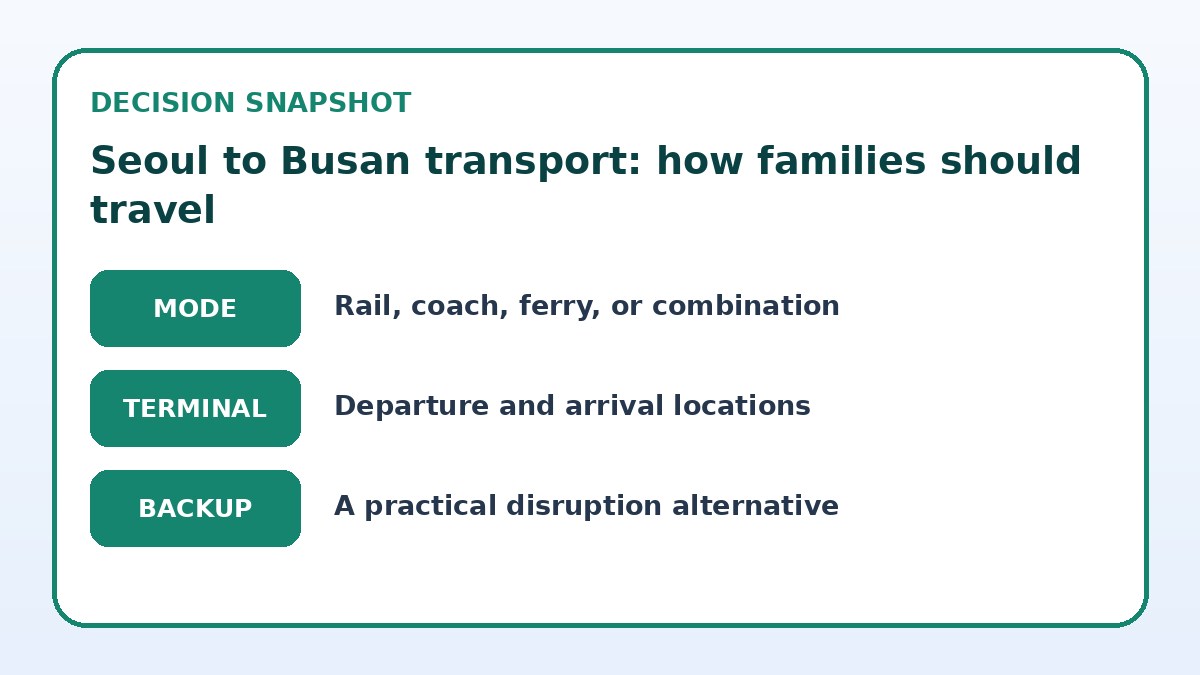
| Journey approach | Best for | Friction to check |
|---|---|---|
| High-speed rail (single-seat KTX-style) | Families prioritizing fastest central-to-central travel with straightforward station transfers | May have tighter luggage space and limited stroller storage compared with coaches |
| Direct intercity coach | Groups needing easier luggage handling and step-free boarding at terminals | Longer total travel time and variable terminal distances from neighborhoods |
| Driving or private car | Families wanting full control over stops, schedules, and door-to-door convenience | Adds parking, tolls, traffic uncertainty, and managing children during longer road time |
| Mixed plan (train plus short private transfer) | When station choices don’t align with accommodation location but speed is still desired | Introduces an extra handoff and requires careful timing to avoid missed connections |
Check live intercity options
Look beyond the ride itself and compare terminals, transfers, luggage, and arrival fit.
Terminal fit and luggage/transfer friction
Assess each terminal’s layout and local transport connections before you commit. Major rail stations generally have elevators, stroller-friendly corridors, and taxi ranks next to exits; smaller coach terminals can vary in accessibility and distance to urban neighborhoods. If you’re carrying multiple suitcases, a stroller, or special equipment like a car seat, double-check whether the terminal has luggage trolleys, staffed porters, or step-free access from platform to street. These small conveniences save minutes and reduce the hassle of juggling kids and bags during tight connections.
Plan transfers by timing realistic walk and queue times, not just scheduled departure windows. Allow extra minutes for restroom stops, last-minute food runs, and securing carriage or bus seats together. If you need to change between modes—say from a train to a local bus—identify the transfer route on a map and note where to meet in case someone in your group arrives first. Pre-booked private transfers or taxis for the last mile can be worth the cost when avoiding a crowded station or ensuring a stroller folds and unfolds in a sheltered spot.
Timing flexibility and child-centered pacing
Families travel at a different pace than solo adults. Build in buffer time for bathroom breaks, snack transitions, and brief play stops; these small pauses prevent stress and keep the travel day moving. When comparing services, look beyond scheduled travel time to how often departures run—higher-frequency options give you flexibility if a child wakes up late or a stroller needs repacking. If you must be at a specific time on arrival, choose an earlier departure and plan an engaging onboard routine to make the extra time manageable.
Consider how seat assignments, boarding order, and platform arrangements affect young children. For longer rides, coach and rail both offer seats that can accommodate a family row; check seating maps before you buy so you’re not split between aisles. If you’re traveling with infants, confirm where pram/stroller storage is allowed and whether you can keep it until boarding. Night travel can help children sleep through part of the trip, but weigh that against late arrivals at unfamiliar terminals.
Compare the practical alternatives
Use the final page to confirm what is actually offered on your dates and save a workable fallback.
Intercity travel checklist
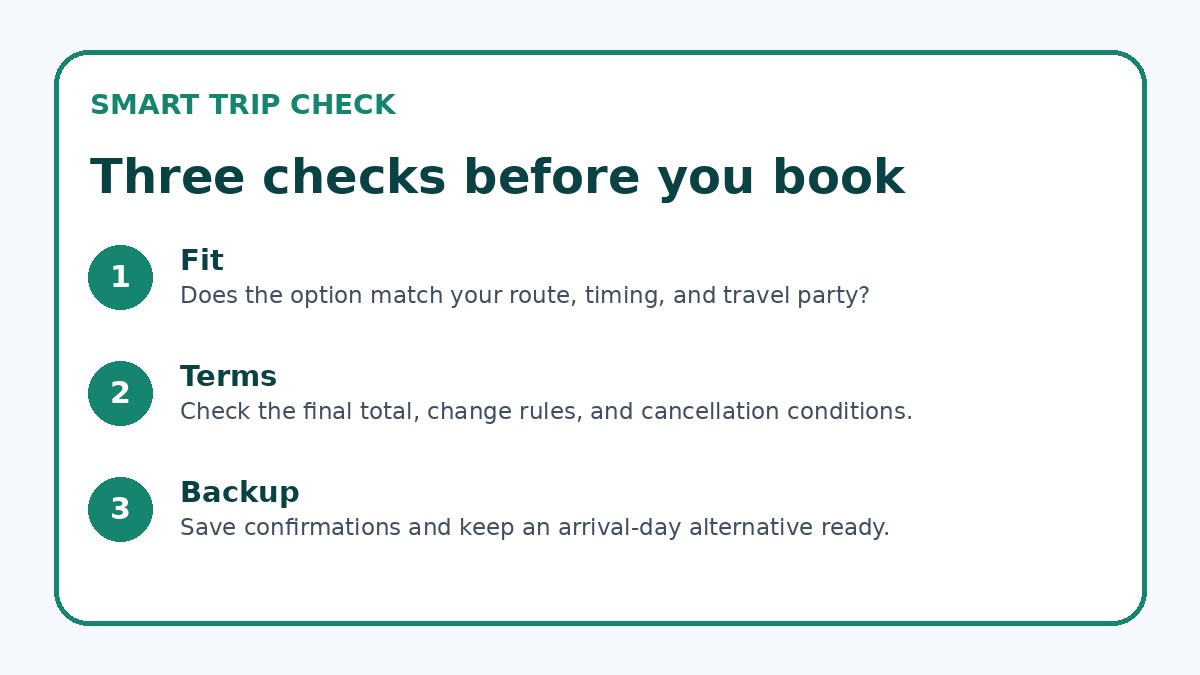
- Confirm station and terminal names for both origin and destination and save maps showing the shortest taxi and transit routes.
- Reserve seats together when possible and verify stroller, car-seat, and baggage policies on the provider’s official booking page.
- Pack a small day bag with charger, snacks, wet wipes, spare clothes, and quiet activities for children.
- Plan at least one later alternative departure and note local taxi apps or private-transfer contacts for last-mile flexibility.
- Time your arrival at the terminal to include restroom and snack breaks, allowing 30–45 minutes extra for family boarding needs.
- Download or screenshot tickets, booking confirmations, and transport maps for offline access in case mobile data is unreliable.
Disruption backups and day-of contingencies
Prepare for delays and cancellations with a compact contingency plan that keeps things simple when stress rises. Pack a small kit with spare diapers, a phone charger, offline entertainment, wet wipes, and a portable snack stash. Have contact numbers and screenshots of your bookings available offline in case network access is poor. Identify one alternative departure later the same day and a realistic taxi or private transfer option from both your origin and destination so you can switch quickly if your primary plan breaks down.
Also make soft-service decisions ahead of time: decide how long you’ll wait for a delayed connection before switching modes, who in your group handles ticket changes, and what landmarks you'll use to reorient if you split briefly to fetch luggage or food. If you booked refundable or changeable tickets, know the process and any cut-off times on the provider’s final booking page. Consider Trip.com as one place to compare current availability and options, but always verify seat and baggage rules on the provider’s official site before relying on those details.
Rail & Intercity Transport questions travelers ask
What’s the simplest door-to-door option for families traveling from Seoul to Busan?
The simplest door-to-door option balances central terminal access, number of transfers, and luggage handling. High-speed rail often wins for central stations because it moves you quickly between city cores with easy taxi and public-transit connections at both ends. Direct coaches reduce lifting and can be more stroller-friendly at boarding, though the drop-off location may be further from your hotel. Driving gives full door-to-door control but adds parking and traffic management. Verify exact station addresses and ticket policies on the provider’s final booking page before choosing.
How early should a family arrive at a station or terminal for departure?
Aim to arrive earlier than you would when traveling alone: 30–45 minutes before departure is a practical window for families, accounting for restroom visits, stroller folding, and padding for queues. If you need to collect printed tickets, check luggage, or handle special assistance requests, add more time. For terminals unfamiliar to you, add an extra 15 minutes to navigate signage and locate the correct platform or boarding gate. Confirm check-in and baggage procedures on the operator’s booking page so you don’t miss any required cut-offs.
What should I do if my scheduled service is delayed or canceled on travel day?
Begin by checking official real-time updates from the operator and your booking confirmation. If the provider allows changes online, switch to a later service that fits your family’s schedule; keep a fallback private-transfer or taxi option for immediate door-to-door movement. Use pre-saved contact numbers and have screenshots of bookings to speed up help from station staff. Keep kids comfortable with snacks, a small activity kit, and familiar items. Before travel day, note any refund or change rules on the provider’s final booking page so you understand deadlines and options.
Final decision note
For families traveling between Seoul and Busan, focus on practical door-to-door choices: central stations plus high-speed rail for speed, coaches for luggage ease, driving for control, or a mixed approach for the best of both. Match your travel-day plan to how many transfers you can realistically manage with children, how much luggage and stroller space you need, and how flexible your schedule is. Pack a concise disruption kit, pre-book or reserve seats where possible, and identify a clear backup departure and local transfer option. With a short checklist and a timing cushion, you’ll turn what can be a stressful logistics day into a manageable family travel experience.
Continue planning
Check current options and final conditions
Use the provider page to confirm live availability, the final total, cancellation terms, and every condition that matters to your trip.
This evergreen planning guide was created with AI-assisted drafting and a structured quality review. It does not display live prices, schedules, availability, visa guidance, or provider rankings. Verify current details before booking. Some links are affiliate links; we may earn a commission at no additional cost to you.