For couples planning travel between Dubai and Sydney, the core tradeoff is simple: direct flights save time and reduce coordination stress, while connecting itineraries often offer lower fares or better schedule choices. Decide first whether time together in transit or total trip cost matters more — that choice narrows your search immediately. When you compare options, weigh routing (number and length of stops), baggage transfer risk, schedule fit for your preferred arrival time and activities, and the fine print of fare conditions like changes, cancellations, and seat assignment. Gather exact travel dates, passport details, and any loyalty numbers before you shop. With that prepared, you can make focused comparisons that reflect your couple’s priorities: comfort and simplicity, or price and route flexibility.
See live routes for your exact travel day
Compare direct and connecting choices with the same baggage and traveler details.
Routing: direct versus connecting patterns
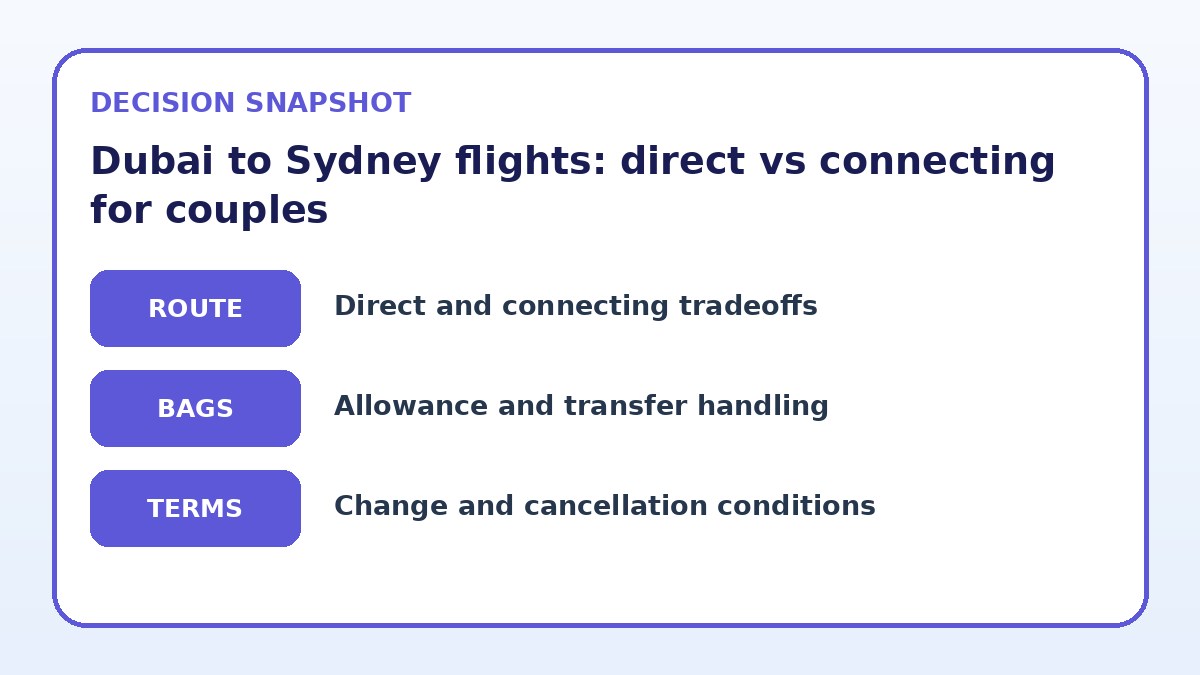
Direct flights (nonstop) are the clearest routing choice: one takeoff, one landing, and no transfer between aircraft. For couples, that means fewer chances for missed connections, less anxiety juggling boarding passes, and a simpler plan for arriving together at immigration and baggage claim. If a nonstop option exists on your dates, it’s the straightforward baseline to compare against. Some direct flights may be overnight or daytime; consider how arrival time affects your first day together and whether you prefer to sleep en route or land ready to explore.
Connecting itineraries open many routing variations: one long hub stop, two short stops, or single-stop routes with a long layover that becomes a mini-break. These can reduce cost or allow departure/arrival times that match personal schedules. But they also introduce dependency on separate operating carriers and airport transfer logistics. When assessing connections, pay attention to transfer airports’ layout, minimum connection times quoted by the carrier, and whether the entire journey is sold on one ticket — that affects rebooking and luggage transfer responsibility if a flight is delayed.
Baggage and connection risk for couples
Baggage handling is a practical concern that affects how much you can relax as a couple. On a single-ticket itinerary, checked bags are usually tagged to the final destination, so you won’t need to recheck them during a connection. On the other hand, if you book two separate tickets, you may be required to collect luggage at a layover and recheck it, increasing time pressure and the chance of missed onward flights. Even with through-checked baggage, short connections or tight schedules at busy hubs raise the risk of delayed baggage arrival in Sydney.
If either traveler has mobility needs, a lot of carry-on items, or fragile gear, choose longer minimum connection times or direct flights. Consider investing in priority baggage or checked-through services if available. For connections involving different carriers, confirm on each carrier’s booking page who is responsible for baggage in case of delay. Also check whether the airline offers re-accommodation protections on a single-ticket itinerary — that is typically the safest option for couples who want to avoid separating at a foreign airport to sort luggage.
Compare flight-selection strategies
| Flight strategy | Best for | Risk to check |
|---|---|---|
| Nonstop direct flights | Couples prioritizing simplicity, minimal transfers, and predictable travel time. | Usually fewer scheduling alternatives and sometimes higher fares compared with connections. |
| Single-stop through-ticket connections | Couples balancing lower fares with moderate convenience and baggage protection. | Still exposed to delay risk at the transfer airport though the carrier typically handles rebooking. |
| Multi-stop or separate-ticket savings itineraries | Couples focused on maximizing savings and flexible routing options. | Higher risk of baggage recheck and no guaranteed protection if flights are on separate tickets. |
| Long-layover or overnight hub stop (planned break) | Couples who want to split the journey and add an overnight stop for rest or brief sightseeing. | Adds trip time and complexity; may require extra hotel or visa considerations at the layover point. |
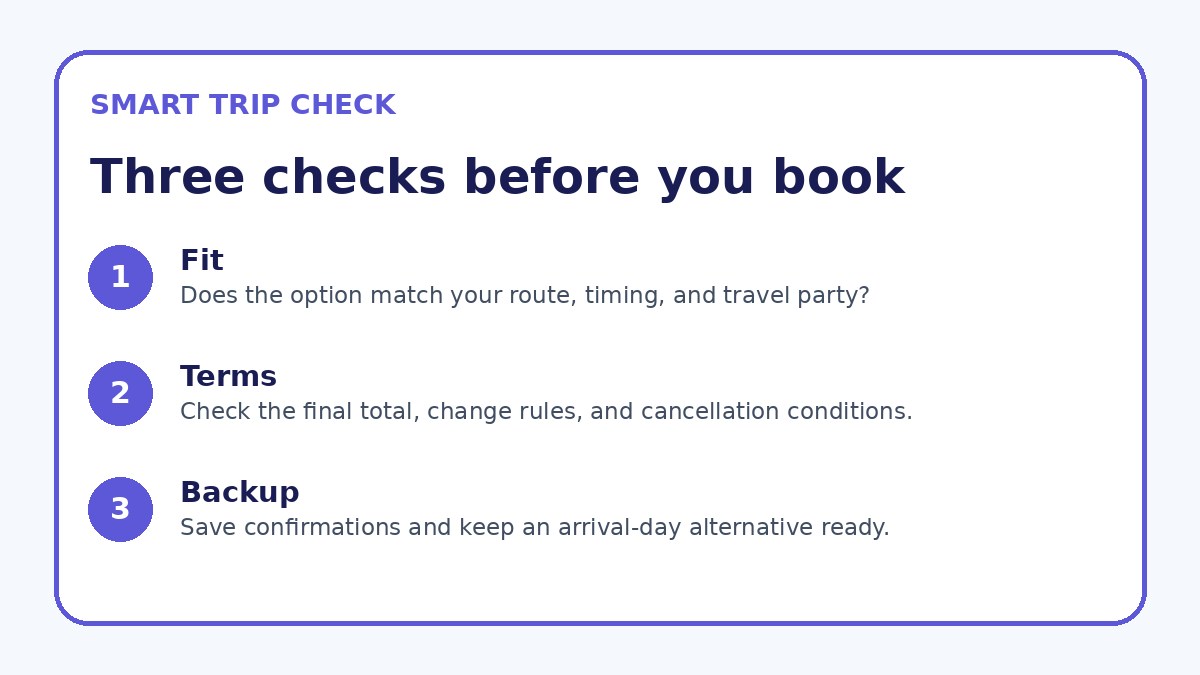
Recheck the complete itinerary
Confirm airports, connection handling, baggage, and change conditions before deciding.
Schedule fit and how it affects your trip together
Couples often plan around a key event — honeymoon activities, a family gathering, or a fixed check-in time for accommodation. Choose flights that give you usable arrival time in Sydney: too late in the evening can mean limited transport and tired first impressions; too early might require paying for early check-in or leaving luggage at the hotel. Direct flights usually provide predictable block times; connecting flights can offer arrival windows that better match your plans but with the tradeoff of potential delay exposure.
Also think about joint sleep schedules and travel fatigue. An overnight direct flight can double as a travel night, preserving daytime hours, while daytime connections might let you arrive refreshed but add fragmentation to the day. Couples should be candid about transit tolerance: if one partner prioritizes rest, prefer schedules that minimize night-time transfers and long waits. Use realistic transfer buffer times in your plan and consider booking the same fare class for both travelers to keep seating and upgrade options synchronized.
Flight details to verify
- Confirm exact travel dates and both passengers’ names as they appear on passports before searching fares.
- Decide whether you need checked baggage and verify which fare classes include it on the carrier’s booking page.
- Compare total door-to-door travel time, including minimum safe connection buffers of at least 90 minutes for international transfers.
- Review change and cancellation rules on the final booking page and note any fees or credit conditions.
- If considering separate tickets, confirm baggage transfer rules and whether re-accommodation is guaranteed for missed connections.
- Check arrival time in Sydney against hotel check-in and transport options; plan backup transfers for late arrivals.
Fare conditions and what to verify before booking
Fare rules determine your flexibility: change fees, refundability, included baggage, and no-show penalties. Couples who might need to alter plans — say, due to event schedule changes — should prioritize fares that allow free or low-cost date changes or refundable options for peace of mind. Carefully read the carrier’s final booking page for the exact change and cancellation terms, what is covered under travel credit, and whether taxes or service fees apply to adjustments. If the itinerary mixes carriers, check each segment’s rules because one restrictive leg can complicate rebooking for the whole journey.
Also confirm seat assignment policies, upgrade eligibility, and loyalty accrual on the tickets you’re considering. If you plan to combine a low-fare connecting ticket with a separate onward ticket, verify baggage transfer and missed-connection protections; many airlines will not protect passengers on separate tickets. Before you hit purchase, have both travelers’ passport names entered correctly and verify visa or entry guidance for transit through any layover country on the carrier’s final booking page or official government sites.
Flight Guide questions travelers ask
Are direct Dubai to Sydney flights always the faster choice for couples?
Direct flights are generally the fastest in elapsed flying time because they remove layovers, which reduces opportunities for delay or missed connections. However, total door-to-door time also depends on outbound airport choice, time to reach Dubai airport, and ground transfer times at each end. A single well-timed connecting itinerary might deliver a similar arrival window if direct options depart at inconvenient times. For couples, consider whether a shorter in-air time or a more convenient departure and arrival schedule is the priority, and compare total travel time rather than just flight duration.
How much connection time should couples allow when booking Dubai to Sydney itineraries?
For international connections, plan for at least 90–120 minutes between flights to allow for deplaning, transfer between gates or terminals, and any security or immigration checks in the hub. If your connection involves switching terminals, collecting and rechecking luggage, or passing through immigration, build more buffer. If either partner has mobility needs or you’re traveling with bulky items, add extra time. Also check the airline’s published minimum connection time and local airport layouts on the carrier’s final booking page to make an informed buffer choice.
What should couples verify about fares and baggage before booking?
Confirm whether your chosen fare includes checked baggage, seat assignments, and earned frequent-flyer miles on the carrier’s final booking screen. Look for explicit language about change and cancellation fees, what happens if a flight is delayed or canceled, and whether the fare is refundable or convertible to credit. If mixing carriers or buying separate tickets, verify baggage transfer responsibility and the absence of through-checking — you may need to collect and recheck bags, which affects transfer time and risk. Keep screenshots of final fare rules or save the booking terms for later reference.
Final decision note
Choosing between direct and connecting Dubai to Sydney flights as a couple comes down to clear priorities: minimize hassle and risk with direct or single-ticket itineraries, or stretch your budget and schedule with connections while accepting added complexity. Start by defining whether time together, arrival timing, or price is most important, then gather exact travel dates, passport details, and baggage needs before you compare options. Read the carrier’s final booking page for baggage rules and change conditions, and allow generous connection buffers if you opt for stops. For quick live comparisons of availability and rules, you can check Trip.com as one of several search tools, but always verify fare terms on the airline’s booking confirmation before you pay.
Continue planning
Check current options and final conditions
Use the provider page to confirm live availability, the final total, cancellation terms, and every condition that matters to your trip.
This evergreen planning guide was created with AI-assisted drafting and a structured quality review. It does not display live prices, schedules, availability, visa guidance, or provider rankings. Verify current details before booking. Some links are affiliate links; we may earn a commission at no additional cost to you.