Practical answer first: pick a neighborhood that matches the majority of the activities on your itinerary and offers at least one reliable transport option—either Metro rail, frequent bus routes, or consistent ride-hail access. For most first-time visitors this means choosing between central options like Downtown or Hollywood for rail access, the Westside for beach and museum access with frequent buses and shuttles, or longer-stay options near LAX if you need airport convenience. Once you have a neighborhood, narrow hotels by walk score to transit stops, review last-mile options (walk, bike, short rides), and check the hotel's guidance on airport transfers and luggage handling. That lets you shortlist an area, then compare room layouts, cancellation flexibility, and transit walking distances on booking pages. Use the rest of this guide to weigh tradeoffs, plan daily routes, match room choices to your group, and confirm the booking terms you should verify before paying.

Check live stays in the areas that fit
Use your dates and party size to compare current rooms after you narrow the neighborhood fit.
Neighborhood fit: choose where most days will happen
Think of Los Angeles as many small cities stitched together. Start by mapping your must-dos—museums and beaches, a concert in Hollywood, or business in Century City—and then select a neighborhood that minimizes cross-town trips. Downtown and surrounding Arts District give you rail links and a compact evening scene; Hollywood places you close to visitor attractions and night activity, while Santa Monica and Venice give excellent beach access but can mean longer travel to inland museums. If your plans mix coast and inland, pick the side you’ll visit most often and accept one longer round trip rather than daily long commutes.
Also consider time-of-day travel. Traffic can add 30–90 minutes across L.A. during peak hours. If your itinerary has early starts or late returns, a neighborhood with rail access or frequent buses reduces the unpredictability of driving. For families or travelers who prefer fewer transfers, neighborhoods with several transit choices—rail, rapid bus, and good rideshare coverage—offer redundancy if one option is delayed or unavailable. Finally, visualize where you’ll eat and relax each evening; neighborhoods that are lively after dark let you skip extra transport at night.
Choose an area-selection strategy
| Area approach | Best for | Tradeoff to check |
|---|---|---|
| Stay near Metro rail (Downtown/Hollywood) | Visitors who want predictable, car-free access across central LA. | Rail covers many corridors but may require a final short walk or rideshare to some attractions. |
| Stay on the Westside (Santa Monica, Venice) | Beach-focused stays and museums with dense local services and frequent buses. | Fewer direct rail options to inland attractions; expect longer bus rides or transfers. |
| Stay near LAX or airport hotels | Travelers with early/late flights or short overnight layovers. | Good airport access but longer travel times to core tourist neighborhoods during traffic. |
| Stay in quieter residential neighborhoods | Visitors prioritizing local vibe, lower noise, and potentially lower hotel density. | Less frequent transit and fewer dining options within walking distance; more reliance on rideshares. |
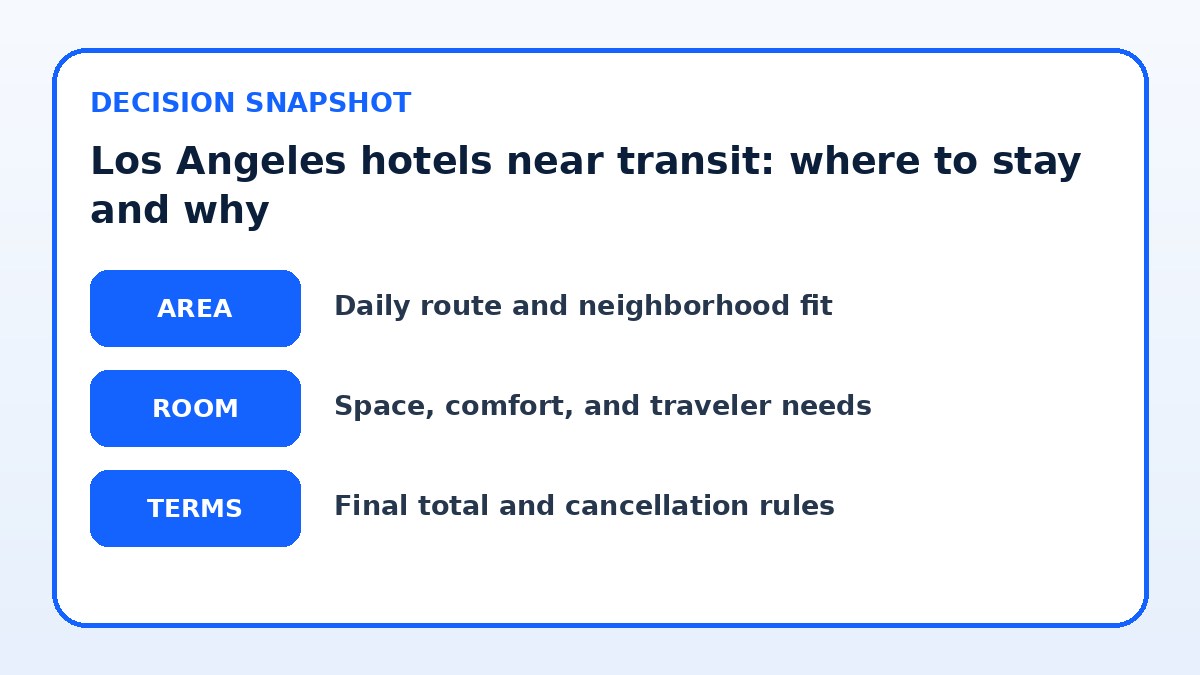
Daily-route friction: how to reduce wasted time
Quantify friction by counting transfers and walking distance, not just miles. A hotel 15 minutes from a Metro station with a simple, level walk and few street crossings will usually beat a closer hotel that requires steep hills, long staircases, or an infrequent shuttle. Use mapping tools to simulate at least two typical days—morning to a museum, evening to a restaurant—and note how many transfers, stairs, or last-mile walks each route requires. If your group includes older travelers or small children, favor fewer transfers and smoother sidewalks.
Factor in last-mile choices. In many parts of Los Angeles the first/last mile is a walk, scooter, bike, or short rideshare. Check whether sidewalks are continuous and well-lit, whether bike lanes exist, and whether the hotel offers bike storage or partnerships with scooter companies. If you anticipate many short rideshares, compare likely pickup spots—some dense neighborhoods have more reliable surge-free pickups than isolated residential pockets. Reducing friction can save a surprising amount of time and money over a multi-day stay.
Now compare like with like
Keep the same dates, guests, room needs, and cancellation preferences while you compare the final choices.
Room and party needs: pick a layout that lowers daily stress
The right room reduces friction inside your stay. Families often need connecting rooms or suites with kitchenettes to handle snacks and laundry; solo travelers may prefer compact rooms near elevators for quick in-and-out. Consider where you’ll store cameras, beach gear, or souvenirs—hotels with extra closet space, accessible luggage storage, or in-room refrigerators cut down the urge to return to the room mid-day. Check the hotel’s public information for bed options and whether rollaway beds or cribs are available, and confirm any special requests on the provider’s final booking page.
Also think about shared needs: does your group value free breakfast and late checkout so you can make a red-eye without paying for an extra night? Is fast Wi‑Fi essential for remote work days? For multi-stop sightseeing, a ground-floor room or a room near the elevator saves minutes on each departure and return. If mobility is a concern, verify accessibility features—step-free entry, roll-in showers, and elevator access—and ask the hotel directly for documentation rather than relying solely on generic property descriptions.
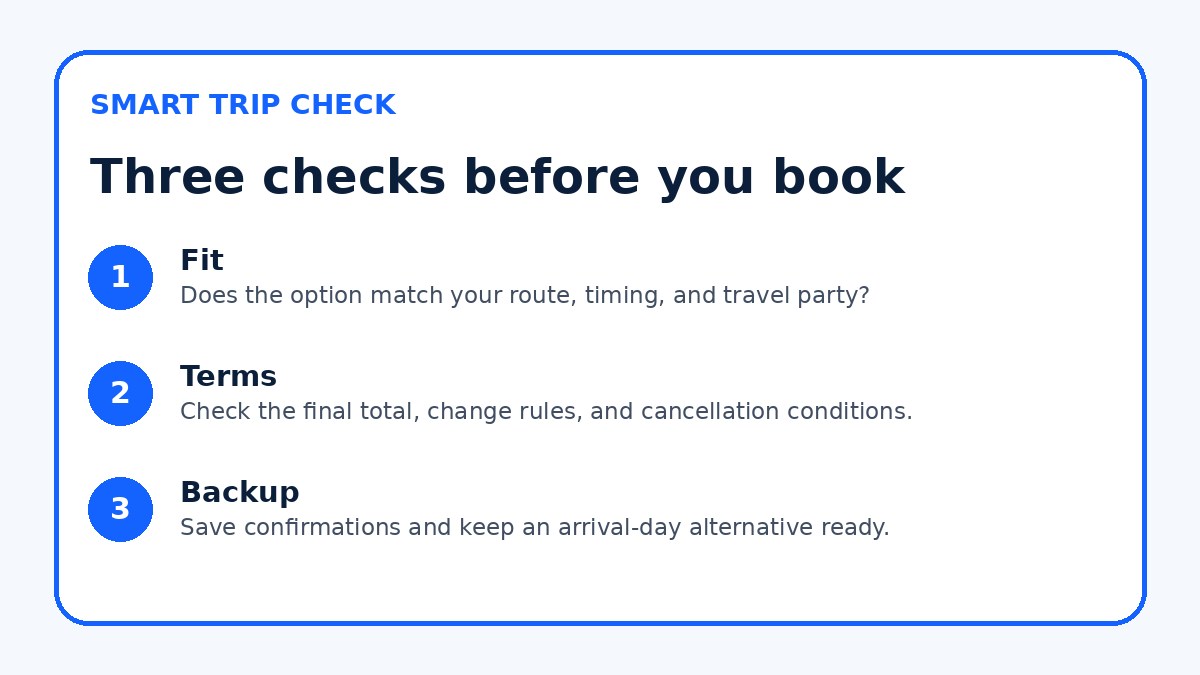
Hotel booking check before payment
- Map your top five activities and pick the neighborhood that minimizes the total travel time between them.
- Measure walk time from shortlisted hotels to the nearest rail station or high-frequency bus stop using a pedestrian route tool.
- Confirm the hotel’s luggage storage and late-arrival policy on the booking page or by email before booking.
- Verify room layout and bed configuration for your party and request rollaway or crib options in writing if needed.
- Ask the hotel about airport transfers, parking type, and any extra fees listed on the provider’s final booking page.
- Compare cancellation and modification windows across your top three hotel choices and pick the most flexible option you’re comfortable with.
Final booking terms: what to check before you pay
Before you book, compare flexible cancellation and change policies against your plans; Los Angeles travel can shift with event schedules or weather. Read the hotel’s cancellation window, any fees for modifying dates, and the specifics for extra guests or children. Confirm how and when the property collects payment and whether any deposit is refundable. If you plan to arrive late or need luggage storage before check-in, verify the hotel’s policy and the process for late arrivals on the provider’s booking page so you avoid surprises at reception.
Also confirm transport-related details the hotel controls: whether they provide airport shuttles, charge for parking, or have partnerships with local transfer companies. When a property mentions a shuttle, ask for pickup points and frequency on the booking page or by email; when parking is mentioned, check whether it’s valet, self-park, and if rates apply. For rail-access claims, use public transit maps to validate walking times to the nearest station and check municipal transit websites for current schedules. If you want a consolidated place to compare availability, Trip.com can be used once to view live options, but always verify details on the hotel’s official booking page.
Hotel Guide questions travelers ask
Is it better to stay near a Metro rail station or close to attractions in Los Angeles?
It depends on your itinerary. Staying near a Metro rail station gives predictable travel times across several neighborhoods and can reduce dependence on rideshares during peak traffic. If most of your experiences are concentrated—say all on the Westside or all in downtown—staying near those attractions will cut last-mile time and let you walk or use local buses. Evaluate whether your days will span across the city (favor rail) or remain localized (favor attractions). Always check walking conditions to the station and the transit schedule before booking.
How should I handle airport transfers when choosing a hotel in Los Angeles?
If you have early arrivals or late departures, prioritize hotels that clearly describe airport transfer options or shuttle schedules on their booking page. Some hotels coordinate shuttle pickups; others expect you to use rideshare or taxis. For LAX, also consider hotels near official airport shuttles and verify pickup points. If minimizing transfer time is critical, choose hotels closer to the airport even if it means a longer daytime commute. Before finalizing, confirm any shuttle fees, pickup procedures, and whether the hotel stores luggage for early arrivals.
What room features matter most for first-time visitors relying on public transport?
Key features include easy access (lower floors or near elevators), secure luggage storage, and space to dry or store gear like wet swimsuits or sunscreen. Fast, reliable Wi‑Fi helps if you rely on transit apps; an in-room refrigerator and coffee maker reduce the need to return out of convenience. For groups, connecting rooms or a suite with a small kitchen can cut lunch or snack trips. If mobility is a concern, confirm accessibility features and elevator reliability directly with the hotel before booking.
Final decision note
Shortlisting an area before you open live hotel inventory is the fastest way to make a confident booking in Los Angeles. Start with the neighborhood that covers most of your must-sees, then test a couple of typical daily routes to reveal hidden transfers or long last-mile walks. Match room features to your party’s needs—space for luggage, nearby elevators, or kitchen facilities will reduce friction across each day. Before you pay, verify cancellation rules, arrival procedures, and any transport services on the hotel’s official booking page. With area, route, room, and terms aligned, you’ll turn an overwhelming set of options into a manageable shortlist ready for final comparison and booking.
Continue planning
Check current options and final conditions
Use the provider page to confirm live availability, the final total, cancellation terms, and every condition that matters to your trip.
This evergreen planning guide was created with AI-assisted drafting and a structured quality review. It does not display live prices, schedules, availability, visa guidance, or provider rankings. Verify current details before booking. Some links are affiliate links; we may earn a commission at no additional cost to you.