If you’re traveling from Barcelona to Madrid for work, the most practical decision is to pick the option that minimizes luggage handling from door to meeting room. For most business trips this means choosing rail for city-center to city-center ease when schedules and comfort suit, or a direct flight when airport transfers, security time and speed still beat rail for your specific start and end points. Coaches can be cheapest for oversized cases but add transfer friction; mixed door-to-door options (ride-hail + train or flight) can save time if you plan transfers carefully. Decide by weighing terminal proximity to your start/end, how many luggage pieces you’ll manage, whether you need on-board workspace, and how tolerant your schedule is to delays. Below I explain tradeoffs, packing and transfer tactics, and a simple disruption backup so you can book with confidence.

Compare modes by terminal fit and door-to-door practicality
Start by mapping where your meetings are in both cities. High-speed rail typically arrives and departs from city-center stations close to hotels and business districts, so you reduce the number of transfer legs and the hands-on luggage moves. Flights route through airports that may be further from the center and require security queues and possible checked baggage; add the time and hassle of airport transfers to your evaluation. Coaches usually stop at bus terminals that can be convenient but sometimes lie outside compact business neighborhoods, adding last-mile time. For any option, identify exact access points, whether a single ride-hail or metro trip gets you to the final address, and how many times you must lift or store your luggage.
When comparing terminal fit, also consider luggage handling on the journey itself: trains provide larger luggage areas and space to work at your seat, while flights impose cabin and checked-bag limits and coaches may stow large suitcases under the carriage. Count each transfer as a friction point: every move between modes or vehicles means lifting luggage, waiting for a driver, and potential delays. For business travelers with tight schedules, the fewer handoffs the better. Sketch a simple door-to-door timeline for each mode—hotel to departure point, ride time, wait buffers, arrival to meeting point—and use it to choose the route with the least luggage transfers.
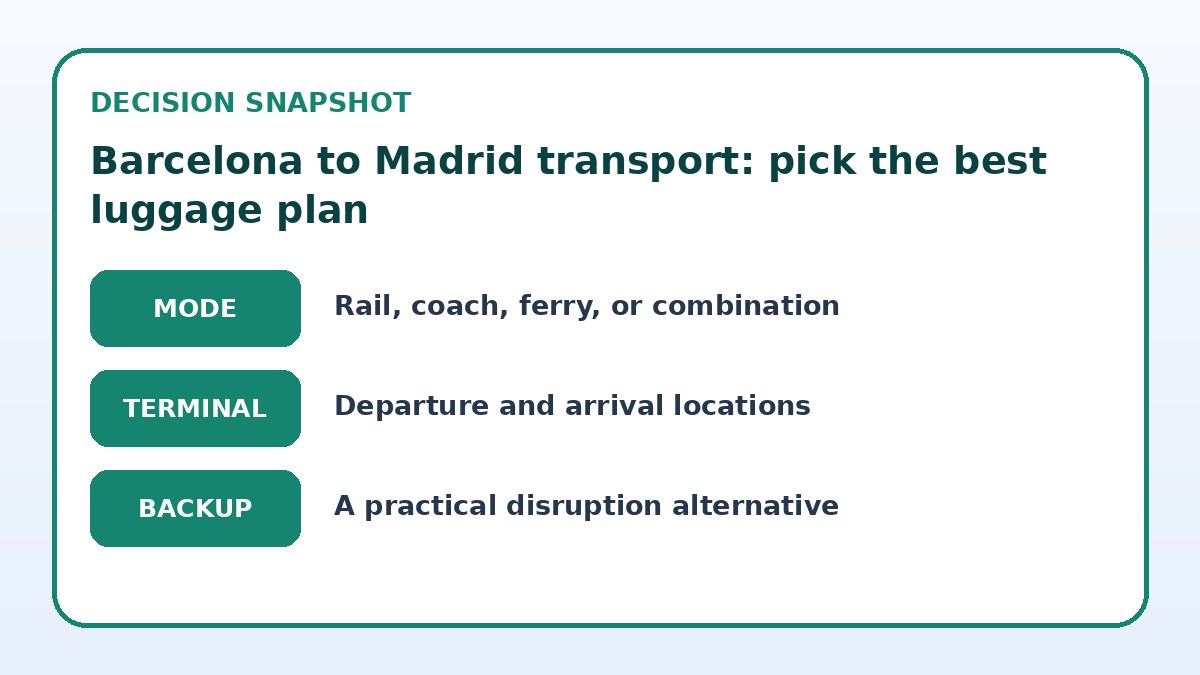
Choose the end-to-end journey plan
| Journey approach | Best for | Friction to check |
|---|---|---|
| City-center rail (high-speed train) | Minimizing transfers and working onboard with carry-on luggage. | May require advanced seat selection and handling at busy stations; verify luggage policies on booking. |
| Flight (airport to airport) | When flight plus short airport transfers beats door-to-door rail time. | Adds security, check-in and potential checked-bag waits; check transfer time and baggage rules. |
| Coach or express bus | Large or oversized luggage when rail/air cabin space is limited. | Longer road-time and possible terminal distance from business locations; check luggage stowage rules. |
| Mixed door-to-door (ride-hail + rail/flight) | Customized timing and fewer total handoffs when origin/destination aren’t near terminals. | More moving parts to manage—book flexibility and confirm pickup/drop-off points ahead of time. |
Check live intercity options
Look beyond the ride itself and compare terminals, transfers, luggage, and arrival fit.
Luggage and transfer friction: packing and handling tactics
Adopt the mindset that every kilogram and extra bag adds transfer time. Aim for a single wheeled carry-on if possible, sized to meet both train and airline cabin rules, to avoid checking bags and the wait at arrival. If you must travel with a larger case or special equipment, check the luggage allowances and on-board storage policies for each mode and prepare protective covers or straps for easier handling. Consider using a professional-looking rolling briefcase or backpack with good wheels and a shoulder strap; transferring a single wheeled bag through stations and taxis is reliably faster than juggling two bags. Bring a luggage tag with clear contact details in case of misplacement during a transfer.
Plan transfers to minimize re-packing. If you need to change from train to taxi at a large station, choose stations with elevators or level boarding where possible and book a ride-hail that can meet you curbside to avoid stairs. Reserve assistance in advance if you have exceptionally heavy or delicate items—rail providers and airports offer meet-and-assist services but verify availability on the booking page. For multi-leg itineraries, place frequently used items (chargers, documents, a change of clothes) in an easy-access smaller bag so you can access essentials without opening checked luggage en route.
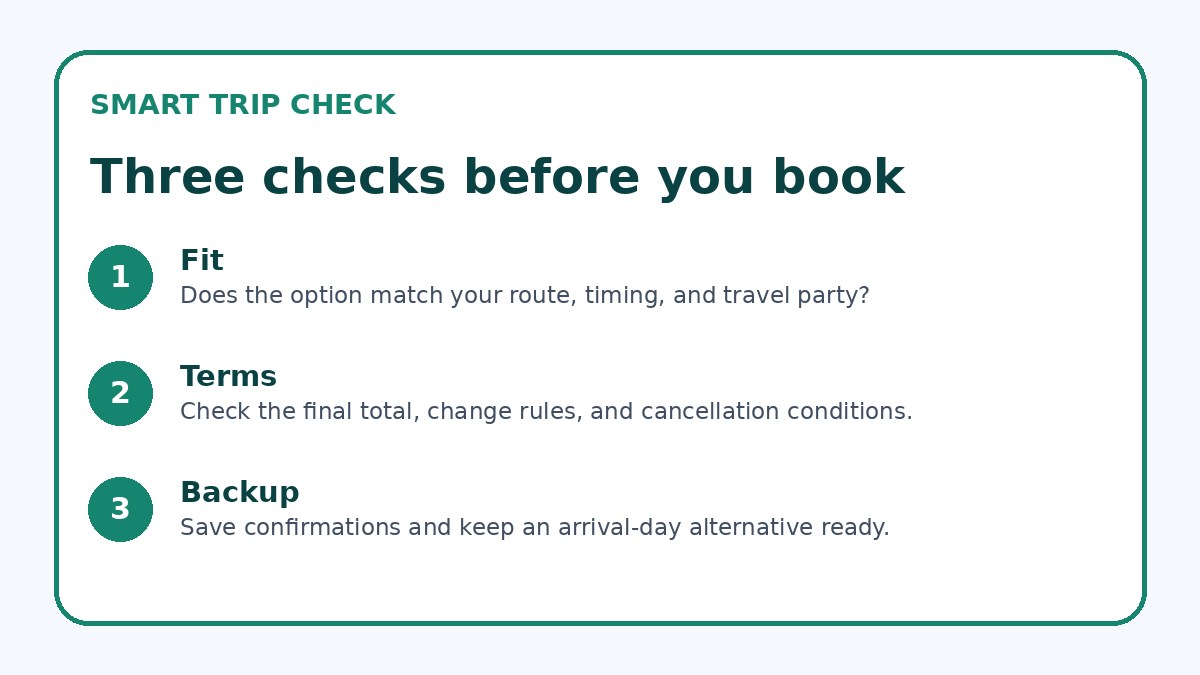
Timing flexibility and realistic buffers for business schedules
Business travelers should plan conservative buffers around departure and arrival times rather than tight just-in-time schedules. For rail, build in extra time for city traffic, luggage retrieval at stations, and boarding; although trains generally have fewer security procedures than flights, late arrivals can still miss reserved seats or popular services. For flights, factor in check-in and security time, potential checked-bag waits at arrival, and transit between airport terminals and city center. If your meetings are time-sensitive, prioritize options with frequent departures so you can pick the next available service without a long wait.
Also weigh the predictability of each mode. Trains on dedicated tracks are often less affected by air-traffic control or road congestion, but strikes, track works or engineering works can alter schedules—check provider notices before you travel. Flights depend on air conditions and airport operations and coaches are subject to road congestion. When reliability matters more than a small time saving, choose the option that leaves you fewer critical single points of failure and gives you spare departures within your day to absorb unexpected delays.
Compare the practical alternatives
Use the final page to confirm what is actually offered on your dates and save a workable fallback.
Intercity travel checklist
- Map exact departure and arrival addresses and measure time from stations/airports to your meeting locations by ride-hail or public transit.
- Decide on single carry-on versus checked baggage; verify size and weight rules on the provider’s booking page before finalizing.
- Reserve assistance or priority lanes if you have bulky or delicate equipment; confirm availability and pickup procedures in advance.
- Book flexible or frequent services so you can take a later option with minimal rebooking if a disruption occurs.
- Pack meeting essentials (charger, documents, change of clothes) in an easy-access small bag you keep with you at all times.
- Save screenshots of confirmations and an alternate contact number for your carrier; note local luggage-transfer or courier services as backups.
A simple disruption backup and last-mile contingencies
Prepare a disruption plan that keeps luggage handling minimal even if a connection fails. Identify a later direct train or an alternative airport-service combination before you travel and save screenshots or confirmation numbers—don’t rely solely on mobile connectivity when you’re on the move. Pre-bookable services like meet-and-assist, expedited security lanes, or flexible ride-hail options that allow larger luggage can be worth the cost if they reduce the number of times you must move bags between vehicles. If you must rebook, prioritize options that preserve a single, continuous luggage piece rather than splitting items between carriers.
On the ground, know which hotels offer early check-in or secure luggage hold so you can drop bags and attend daytime meetings without hauling suitcases. If you’re carrying fragile business equipment, consider a small rolling case sized for checked carriage on flights and secured with a TSA-style lock or cable; keep essentials and fragile items in a carry-on you keep with you. Finally, make a shortlist of local courier or luggage-transfer services as a fallback if you need to send a bulky case ahead to your destination—verify these services’ hours and pickup procedures before booking them as emergency options.
Rail & Intercity Transport questions travelers ask
Is it faster overall to fly or take the train between Barcelona and Madrid with business luggage?
Which is faster depends on door-to-door timing and luggage. If both your origin and destination are close to central stations, high-speed rail often wins because you avoid airport transfers and security time—your luggage stays with you and you can work en route. If an airport is much closer to your start or finish point, or flight times and total transfer time are shorter for your schedule, flying can be faster despite check-in and security. Compare total door-to-door itineraries (hotel to meeting) rather than just in-air or in-vehicle durations, and verify baggage rules on the carrier booking pages.
How should I pack for a one-day business trip to minimize luggage friction?
Aim to travel with a single wheeled carry-on and a compact personal bag for essentials. Put presentation materials, chargers, toiletries, and a spare shirt in the carry-on so you avoid checking a suitcase. Use packing cubes to keep items organized and accessible at security or station checks. If you must bring extra equipment, place fragile items in a smaller carry bag and verify that your chosen transport allows the item onboard or how it must be checked. Confirm luggage limits on the booking page and leave time for any required checks or declarations.
What immediate steps should I take if my booked train or flight is disrupted and I’m carrying business luggage?
First, check the provider’s rebooking rules and next available departures; prioritize options that preserve a single luggage piece without extra pickups. Contact customer service or the station/airport desk to arrange assistance with luggage if you must move between terminals or services. If rebooking to a different mode, arrange a ride-hail that can accommodate your bags and confirm curbside pickup. If time allows, store non-essential baggage at a secure left-luggage facility or your hotel—confirm opening hours—so you can attend urgent meetings unencumbered.
Final decision note
For business travel between Barcelona and Madrid, make your choice by working backward from door-to-door practicality: where you start and finish, how many bags you must handle, and how sensitive your schedule is to delays. High-speed rail often offers the smoothest single-luggage experience for city-center itineraries, while flights can win when airport proximity and overall transfer time are favorable. Coaches and mixed itineraries have roles when luggage size or origin/destination geography changes the calculation. Before booking, verify luggage allowances, assistance options and transfer points on the provider’s final booking page, and save an alternate departure or service as a disruption backup so your luggage moves as few times as possible.
Continue planning
Check current options and final conditions
Use the provider page to confirm live availability, the final total, cancellation terms, and every condition that matters to your trip.
This evergreen planning guide was created with AI-assisted drafting and a structured quality review. It does not display live prices, schedules, availability, visa guidance, or provider rankings. Verify current details before booking. Some links are affiliate links; we may earn a commission at no additional cost to you.