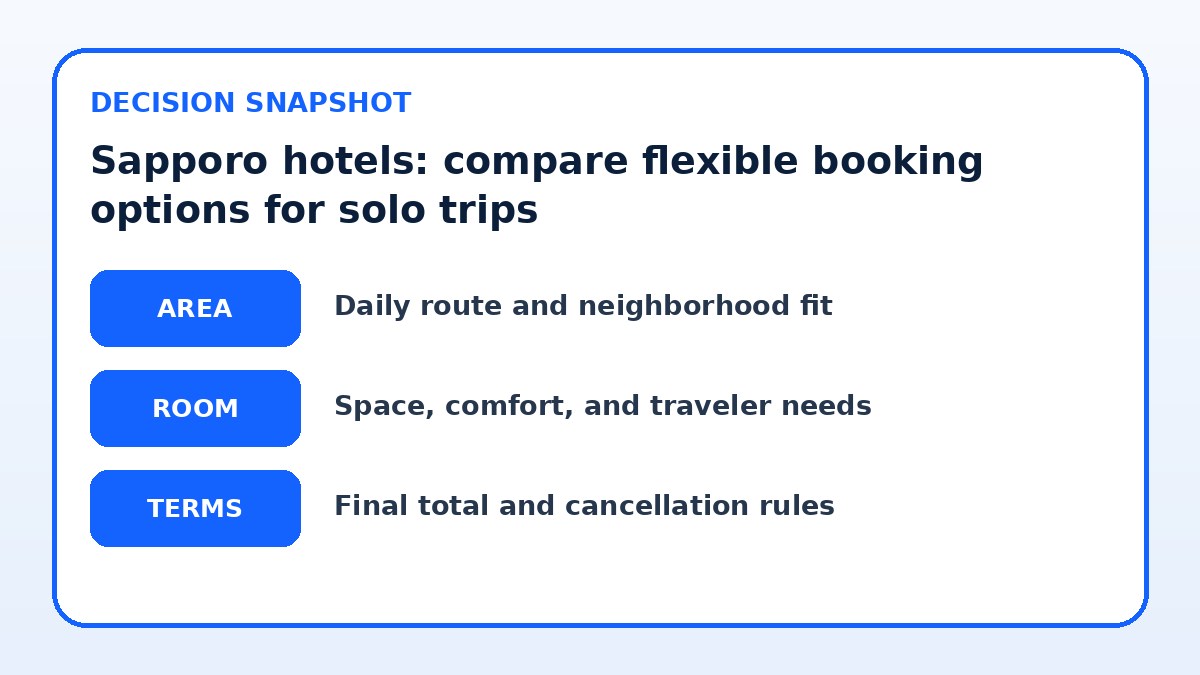
Pick the neighborhood first, then lock in flexible booking terms that match your solo plans. For a short stay focused on dining and nightlife, Odori and Susukino keep the commute minimal. If you plan day trips, consider staying near Sapporo Station for better rail and bus connections. For quieter evenings and lower foot traffic, the Nakajima Park or Maruyama areas suit solo travelers who value walking routes and green space. Once you’ve chosen an area, focus on rooms that match your privacy and workspace needs, and compare refundable rates, free cancellation windows, and change policies. Read the provider’s final booking page to confirm exactly what is covered—refund timing, modification fees, and whether identification or a deposit is required. This guide helps you shortlist an area and pick the flexible terms that reduce stress on arrival and if plans change.

Check live stays in the areas that fit
Use your dates and party size to compare current rooms after you narrow the neighborhood fit.
Neighborhood fit: match the area to how you’ll spend your days
Make a practical decision about where to stay by mapping your primary activities: dining and nightlife, sightseeing, rail connections, or quiet recovery time. Odori and Susukino put restaurants, bars, and evening conveniences within walking distance; you’ll end each night with minimal transit and more spontaneity. Sapporo Station is best if your itinerary includes multiple day trips or arriving by long-distance rail and you need straightforward luggage logistics. Nakajima Park and Maruyama areas suit solo travelers who prioritize walking routes, morning runs, and a quieter hotel environment for reading or remote work.
When evaluating fit, think about safety and convenience after dark—well-lit streets and frequent pedestrian flow help if you return late. Also consider grocery or convenience store access for solo meals and small essentials, and whether you prefer a neighborhood where you can strike up casual conversations. If you expect to change your schedule, choose an area where multiple transit lines or bus routes intersect; that reduces friction when plans shift. Finally, look at where taxis congregate at night; some quieter wards have fewer cabs available after certain hours.
Choose an area-selection strategy
| Area approach | Best for | Tradeoff to check |
|---|---|---|
| Stay in Odori/Susukino | Evening activity-focused solo travelers | Higher foot traffic and noise but minimal transit time between nightlife spots |
| Stay near Sapporo Station | Day-trip planners and rail-connected itineraries | More transit convenience, possibly less atmospheric charm at night |
| Stay by Nakajima Park/Maruyama | Quiet, nature-access stays and morning runs | Fewer late-night transport options and longer trips to central nightlife |
| Choose a peripheral residential area | Budget-conscious solo travelers seeking longer, quieter stays | Lower nightly rates but increased daily transit and fewer late-night conveniences |
Daily-route friction: minimize time wasted between places
Estimate your typical daily route before booking: from hotel to breakfast spot, midday activity, and back for a rest before evening plans. Staying centrally in Odori or near Sapporo Station reduces back-and-forth time and is useful if you want to break the day into many short excursions. If most of your days are spent in a single zone—museums, a conference, or marathon restaurant hopping—pick the hotel closest to that hub. For safety and comfort, choose streets with sidewalks and crossings that feel easy to navigate at night.
Check how each neighborhood connects to airports, long-distance buses, and train stations. If airport transfers or early departures are part of your plan, factor in how late public transport runs and whether taxis are readily available. When comparing rooms, think about where entrances and elevators sit relative to the street—long hotel corridors or multiple stairways add small inconveniences that compound on short trips. Small daily frictions matter more when you’re traveling solo and carrying everything yourself.
Now compare like with like
Keep the same dates, guests, room needs, and cancellation preferences while you compare the final choices.
Room and party needs: what solo travelers should prioritize
As a solo traveler, room size can be about comfort rather than cost: a slightly larger single room or a twin used as a single gives space to unpack and work. Look for a clear desk area, reliable lighting, and electrical outlets near the bed for charging devices and working comfortably. If you plan to cook light meals, confirm whether rooms include a kettle, mini-fridge, or kitchenette, and whether the property permits food delivery and has a late-night lobby or lounge. Also check the bed setup and whether housekeeping frequency is an opt-in choice.
Privacy and noise control matter: request a room away from vending machines, elevators, or karaoke bars if you need quiet mornings. If you expect to meet people or have flexible plans, an on-site communal area or a hotel café offers a neutral, safe place to spend time outside your room. For longer stays, ask about laundry access and whether the hotel helps store luggage between check-out and late departures. Verify these facilities on the booking page rather than assuming availability.
Hotel booking check before payment
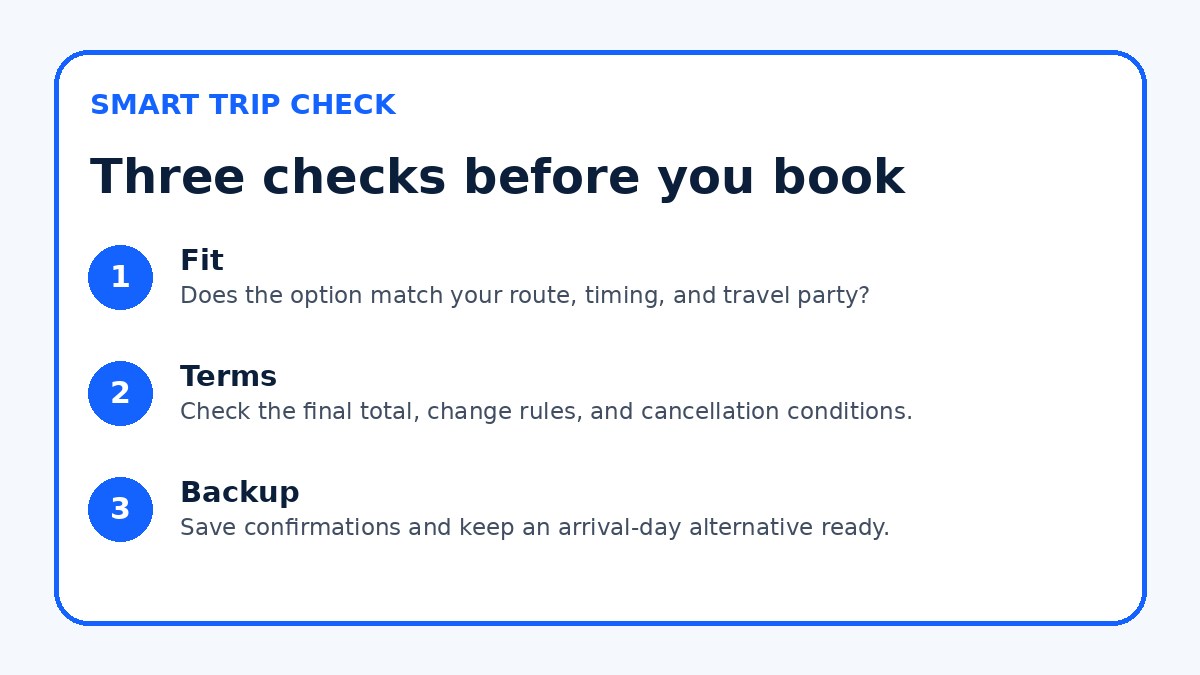
- Pick your primary activity hub (nightlife, sightseeing base, train access, or park access) and shortlist two neighborhoods near that hub.
- On each hotel page, read the full cancellation and modification policy; note the last free-cancellation time and any listed fees for changes.
- Confirm room amenities that matter to you—desk, quiet-facing window, laundry access, and in-room fridge—by checking the property’s official description and photos.
- Verify identity, deposit, and pre-authorization requirements on the hotel’s final booking page before completing payment.
- Compare refundable and nonrefundable rates across at least two booking channels and reconcile the exact refund timing and recipient account.
- If arrival or departure is late, check public transport schedules and taxi availability from your shortlist neighborhood; choose a hotel with straightforward late-check-in procedures.
Final booking terms: compare flexibility, fees, and verification
When you’re ready to book, focus on three things: cancellation windows, modification fees, and what triggers a nonrefundable charge. Look for fares that explicitly state free cancellation up to a specific time and clear rules for how changes are processed. Confirm whether refunds are processed to the original payment method, how long refunds take, and whether a third-party booking site imposes separate restrictions. If a refundable rate requires a phone call for changes, treat that as a friction point that can be problematic if you’re traveling across time zones.
Also verify identity and deposit rules on the provider’s final booking page: some hotels request a credit-card pre-authorization, cash deposit, or require passport presentation at check-in—these are details that affect how flexible the booking truly is. When cancellation is allowed, check whether cleaning or service fees are refunded. If you’re comparing rates across platforms, note each provider’s cancellation policy language and what constitutes an eligible modification; small wording differences determine whether you can change dates without penalty.
Hotel Guide questions travelers ask
How do I decide if a refundable rate is worth the extra cost for a solo trip to Sapporo?
Decide based on how likely your plans are to change: refundable rates are worth it if your travel dates, arrivals, or activities are uncertain. Consider the difference in flexibility—does the refundable option allow date changes without penalty, or only full cancellations? Factor in the non-financial cost of stress: a refundable booking removes the need to coordinate last-minute changes from a foreign phone or deal with time-zone delays. Finally, check the provider’s final booking page for exact refund timing and whether a processing fee applies; slow refunds can affect subsequent bookings.
What details on the booking page should I verify to avoid surprises at check-in?
On the booking page, confirm mandatory ID requirements, any credit-card pre-authorizations or deposits, stated check-in and check-out times, and whether late check-in needs pre-notification. Also read whether the rate covers taxes and service fees, and whether cleaning or resort fees are refundable if you cancel. Note policies about early departures and no-show penalties. If the hotel requires a passport at check-in or asks for a local contact, prepare those documents ahead of arrival to avoid delays.
If I plan multiple day trips from Sapporo, which neighborhood gives the best balance of flexibility and comfort?
Staying near Sapporo Station generally offers the best balance when you have multiple day trips: it concentrates rail and bus options and makes luggage transfers simpler. That convenience reduces transit time so you can fit more activities into each day without returning to a distant base. However, weigh that against nighttime preferences—if you want quieter evenings, pick a hotel a short tram or subway stop away and verify cancellation flexibility in case you change your base mid-trip. Always confirm connections and transfer options on the provider’s site before booking.
Final decision note
Start by choosing the neighborhood that matches how you’ll spend most of your time—Odori or Susukino for nightlife, Sapporo Station for day trips, or Nakajima Park for quieter stays. Once the area feels right, prioritize room features that matter to a solo traveler: a quiet-facing room, a desk, and easy luggage handling. For the booking itself, compare cancellation windows, modification fees, and any deposit or ID requirements listed on the final booking page. Don’t rely on summary labels—read the policy text to know what is refundable, when refunds return to your card, and what triggers penalties. If you want a single comparison site, Trip.com can show current availability and terms, but always verify the final terms on the hotel’s own booking page before you pay.
Continue planning
Check current options and final conditions
Use the provider page to confirm live availability, the final total, cancellation terms, and every condition that matters to your trip.
This evergreen planning guide was created with AI-assisted drafting and a structured quality review. It does not display live prices, schedules, availability, visa guidance, or provider rankings. Verify current details before booking. Some links are affiliate links; we may earn a commission at no additional cost to you.