If you’re traveling to Phuket on business, deciding whether to rent a car often hinges less on comfort than on contract details — especially fuel and mileage rules. The practical answer: rent only if the journeys you plan require flexible departure times, direct door-to-door access across Phuket’s spread-out sites, or repeated journeys that public transit won't serve conveniently. Before you book, confirm the rental company’s fuel policy (full-to-full vs. prepaid), per-kilometer or unlimited mileage limits, and whether extra kilometers are billed at a flat rate or tiered scale. Also check insurance wording for who pays for fuel loss or fines, and whether airport pickup/return times incur extra charges. If these checks raise red flags, choose a non-driving option such as private transfers, local taxis, app-based ride services, or hiring a car with a driver.
Decide if driving adds real business value
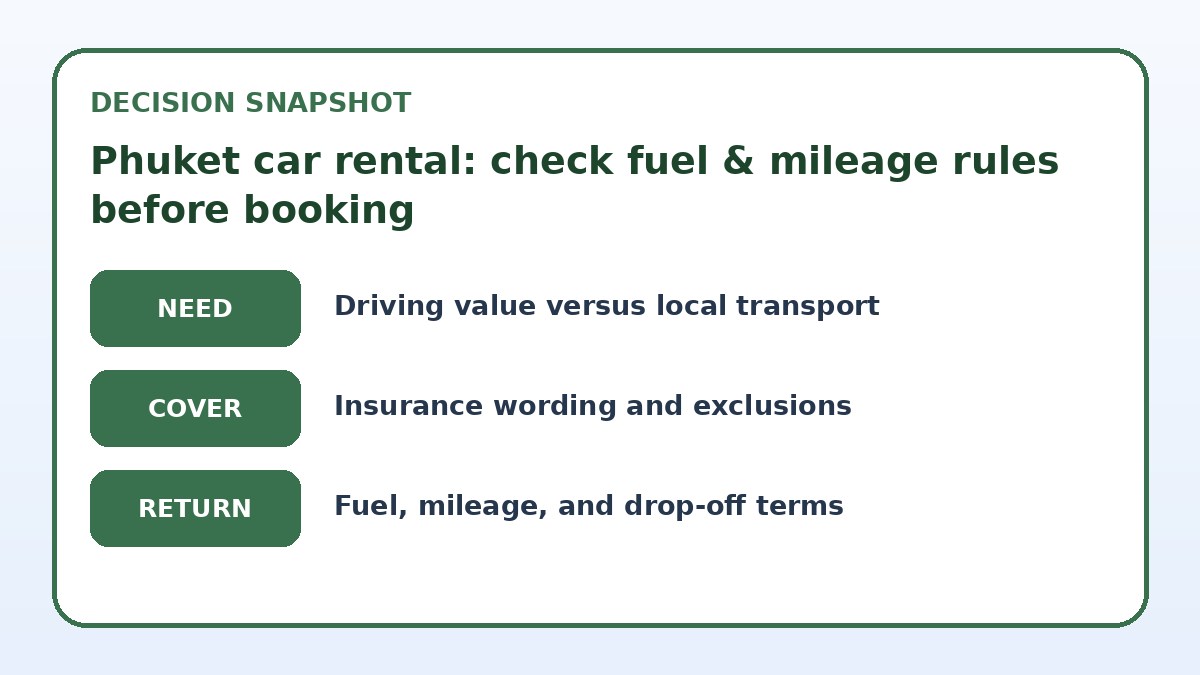
Ask how many site visits, off-hour meetings, or airport transfers you truly need while in Phuket. Driving often helps when your schedule includes multiple meetings in different parts of the island on the same day, when you must carry equipment, or when you need flexible start and end times that public transport cannot meet reliably. If your itinerary is compact—centered in one hotel area with sidewalks, shuttle services, or a single client site—the administrative friction and contractual scrutiny required for a rental may not be worth the incremental convenience.
Factor in travel time uncertainty from traffic, unfamiliar roads, and parking availability at client locations. For short back-to-back meetings in central Phuket or when local hosts provide pickup, you might save time by relying on taxis or arranged transfers. Conversely, if you plan early-morning site inspections, evening client dinners across town, or multi-stop field visits, a rental can shorten transfer time and give you control of your schedule—provided fuel and mileage rules align with your planned distances.
Decide whether driving earns its place
| Mobility strategy | Best for | Cost or friction to check |
|---|---|---|
| Rent a car (self-drive) | Full schedule control, multiple distant meetings, and equipment transport. | You must verify fuel policy, mileage caps, insurance exclusions, and pickup/return fees before booking. |
| Hire car with driver | Local knowledge, no fuel/mileage responsibility, and door-to-door service for busy itineraries. | Higher per-trip cost and less control over vehicle choice; verify whether waiting time is charged. |
| Prebooked private transfer | Direct airport-to-hotel or single client transfers with fixed cost and no fuel/mileage concerns. | Less flexibility for multiple stops; check cancellation, waiting time, and route-change fees. |
| Taxis or ride apps | Short hops, unpredictable timing, and no contract exposure to fuel/mileage rules. | Can become expensive for many long trips; surge pricing and availability vary by time and location. |
Check live rental choices only after the route test
Use the exact driver, dates, pickup point, and return plan to compare current conditions.
What to verify in fuel and mileage clauses
Fuel policies are written in a few common ways; the two you will encounter most are full-to-full (preferred) and prepaid/refill charges. Full-to-full means you return the car with the same fuel level you received, and only what you used is billed when necessary; prepaid or refill systems often result in a higher effective fuel cost and sometimes a service fee. Always read the provider’s exact wording on whether the company measures by gauge or by odometer and whether any administrative or environmental fees are added for refueling.
Mileage rules determine whether long-day site visits become costly. Some contracts offer unlimited kilometers; others set a daily or total trip cap and charge a per-kilometer rate for overages. Look for details about whether local traffic detours, worksite deviations, or roundtrip transfers to the mainland count toward your allowance. Importantly, the booking page should state how overage charges are calculated and listed on the final invoice—verify the currency, the rounding policy, and whether any grace allowances apply.
Compare the full rental conditions
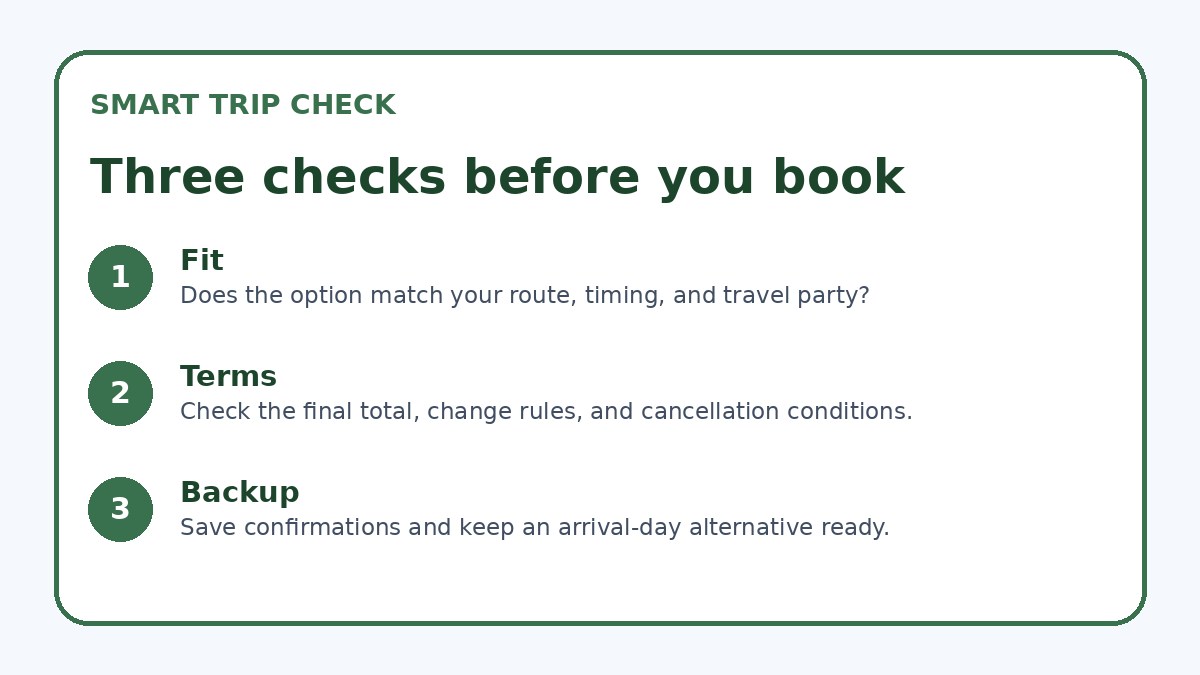
Confirm insurance wording, exclusions, deposit, fuel, mileage, and return terms on the final page.
Insurance wording, fines, and pickup/return friction
Insurance and damage waiver language can shift financial responsibility for incidents related to fuel and mileage. Some policies exclude damage or fines that result from running out of fuel, using the wrong fuel type, or unauthorized drivers operating the vehicle. Check whether the collision damage waiver (CDW) or third-party liability covers fuel-related incidents or if you’ll face a separate administrative fee for refueling services arranged by the company. Always confirm which documents you must show at pickup to validate coverage—credit card, passport, local driving permit, and company authorization letter if using a corporate card.
Pickup and return logistics create hidden costs if you don’t verify them. Airport counters may close after certain hours; out-of-hours drop-offs can trigger fees or require a fuel top-up to avoid refueling penalties. Note where the nearest approved fuel station is relative to your return location and whether the rental company requires photos of the tank level on return. Verify the provider’s late-return policy and how they assess fuel discrepancies so you can time refueling stops or choose an alternative handover process without surprises.
Car rental terms to verify
- Read the exact fuel policy clause on the provider’s final booking page and confirm whether it is full-to-full, prepaid, or billed on return.
- Check mileage allowance—daily or total kilometers—and the per-kilometer overage rate and currency used for billing.
- Verify the insurance/CDW text for exclusions related to fuel, unauthorized drivers, and fines, and note required documents to validate coverage.
- Confirm airport pickup and return hours, any out-of-hours fees, and the required fuel level or return photos to avoid penalties.
- Locate approved fuel stations near your typical pickup and return points and plan refueling stops into meeting schedules.
- Compare non-driving options (driver, private transfer, ride app) with total trip time and contract risk if fuel or mileage terms look restrictive.
Non-driving fallbacks and when to use them
If contract terms for fuel or mileage look restrictive or expensive, choose a non-driving option that still preserves schedule flexibility. For airport transfers and one-off client trips, private chauffeur services or prebooked taxis remove fuel and mileage risk while offering direct routing. App-based ride services are useful for unpredictable short hops, and hiring a local driver-for-hire with a company car can give the perks of a rental without being responsible for fuel or mileage rules. These choices are especially sensible when you anticipate many short trips rather than long-distance driving.
Reserve a fallback if your schedule changes mid-trip. Bookable options that allow easy cancellation—such as a refundable private transfer or an on-demand car app—help you avoid prepaid fuel penalties or unused mileage bundles. When you anticipate irregular hours or last-minute client site changes, favor services where the operator assumes fuel responsibility. Trip.com can be a place to compare current availability for vehicles and transfer services, but always verify the supplier’s final terms and the specific fuel/mileage wording on their booking confirmation page.
Car Rental & Road Trip questions travelers ask
What is the safest fuel policy to accept for business trips in Phuket?
For business travelers the most straightforward option is a full-to-full policy because you only pay for the fuel you use. With full-to-full, you receive the car with a specified tank level and return it at the same level; discrepancies can be billed but are usually transparent. Avoid prepaid fuel packages unless you fully understand the per-liter equivalence and any service charges. Always photograph the fuel gauge at pickup and return and keep fuel receipts if you refuel independently—confirm the rental firm’s stated evidence requirements on their booking page.
How do mileage limits affect day-long site visits around Phuket?
Mileage limits can turn a productive day of client visits into an unexpected expense if you exceed the stated allowance. If your itinerary includes multiple cross-island trips, check whether the contract provides unlimited kilometers or a generous daily cap; if not, calculate estimated kilometers for each day and compare against the allowance. If overages are charged per kilometer, multiply the distance you expect to exceed by that fee to see if a different mobility option is cheaper. The supplier’s booking page should list how overages appear on the invoice and whether detours or traffic-related diversions are counted.
Will insurance usually cover fuel-related incidents or fines in Phuket?
Insurance and CDW policies vary and often exclude certain fuel-related issues—such as damage caused by using the wrong fuel type, running out of fuel, or penalties for traffic violations. Some providers also levy administrative fees when they need to refill the tank on your behalf. Always read the insurance exclusions listed on the final booking confirmation and ask the supplier to clarify unclear terms in writing. Keep copies of rental documents, refueling receipts, and any incident reports; if you use a corporate card, verify whether your company’s travel policy covers those exclusions.
Final decision note
When traveling to Phuket for business, the decisive factor is whether control over timing and routing outweighs the contract risk tied to fuel and mileage clauses. If your itinerary needs multiple distant stops, equipment transport, or early starts, a rental may save time—if and only if you confirm full-to-full fuel terms, adequate mileage allowance, and clear insurance wording before booking. If those terms are restrictive or ambiguous, choose a driver, private transfer, or taxi service to avoid unexpected fees and administrative hassle. Always read and save the final booking page details, photograph the fuel level at handover, and plan refueling into your schedule to keep the trip running smoothly.
Continue planning
Check current options and final conditions
Use the provider page to confirm live availability, the final total, cancellation terms, and every condition that matters to your trip.
This evergreen planning guide was created with AI-assisted drafting and a structured quality review. It does not display live prices, schedules, availability, visa guidance, or provider rankings. Verify current details before booking. Some links are affiliate links; we may earn a commission at no additional cost to you.