If you need a straightforward, low-fuss way to travel solo between Vancouver and Seattle, choose a scheduled coach or a through train service that offers simple door-to-door transfers and minimal station juggling. Coaches usually win for single-seat simplicity and fewer transfers, while the train can be a calmer, more spacious option if you value onboard comfort and can manage any transfers to downtown terminals. Ferry combinations exist but usually add transfers and time that matter more to solo travelers who prioritize predictability. Start your decision by asking: where will your trip begin and end, how much luggage do you have, and how much buffer do you want for border processing or delays? Below I explain the practical tradeoffs, how to judge terminal fit and luggage friction, ways to keep timing flexible, and the best disruption backup plans so you leave home confident.

Terminal fit: start and end points matter
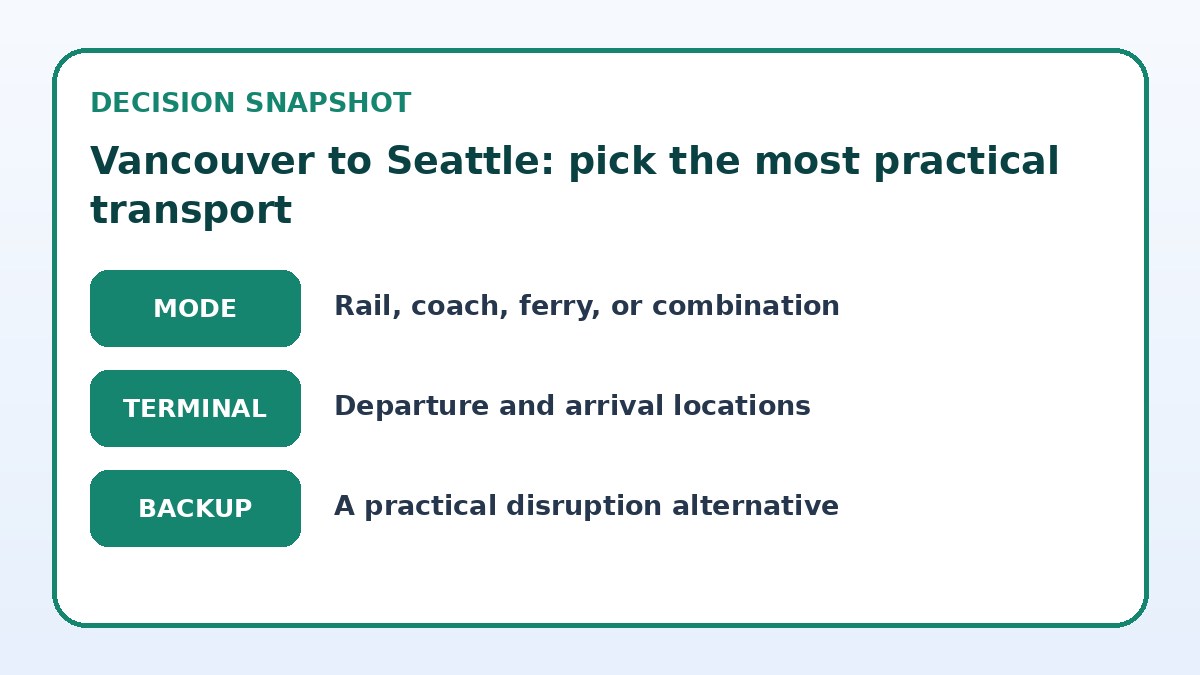
Look first at where your trip begins in Vancouver and where you want to arrive in Seattle. Terminal fit is about how close stations or bus stops are to your accommodations or final destination. A coach that stops at central hubs or at points close to public transit will usually reduce the need for an extra taxi or rideshare; that lowers cost and mental load for a solo traveler. For the train, check whether the rail station is downtown or requires a shuttle, since an otherwise comfortable ride can become inconvenient if it forces a long, unpaid transfer.
Map the last-mile walk or transit connections before you book. If your arrival point is near frequent public transport, trains or buses become more practical even with a short transfer. If you have heavy luggage, prefer stops with lift access, short walkways, or consistent shuttle options. When comparing options, verify the exact address of pick-up and drop-off points on the providers’ booking pages so you can plan transfers and estimate walking times rather than assuming central locations.
Choose the end-to-end journey plan
| Journey approach | Best for | Friction to check |
|---|---|---|
| Book a single coach from central Vancouver to central Seattle | Solo travelers who want a one-seat journey with minimal transfers and straightforward luggage handling. | May follow road routes more affected by traffic; check pick-up/drop-off addresses and luggage policies before booking. |
| Choose a through train with downtown stations | Travelers who prioritize onboard comfort, space to work or rest, and easy access to downtown stations. | Fewer daily departures can reduce flexibility; verify station transfer needs and luggage space on the booking page. |
| Combine coach or train with a ferry segment for scenic or coastal routing | Those who value scenery or need coastal connections and accept extra transfers for the experience. | Adds transfer points and potential timing complications; build larger margins and confirm each segment’s boarding rules. |
| Drive or rideshare the cross-border route yourself | Travelers seeking maximum schedule control and private door-to-door convenience. | You absorb parking, border wait management, and driving stress; plan parking or drop-off logistics at both ends. |
Check live intercity options
Look beyond the ride itself and compare terminals, transfers, luggage, and arrival fit.
Luggage and transfer friction for solo travelers
Luggage friction is a silent trip killer for solo travelers. Coaches typically have checked luggage bays and room for carry-ons, but loading and unloading means you’ll handle your own bag at each end unless staff explicitly assist. Trains often offer more onboard storage and the ability to keep a small bag at your seat, making them easier if you want to keep valuables with you. Evaluate whether you can manage stairs, brief curbside pick-ups, or longer walks with bags; if not, choose an option with simpler door-to-door transfers or pre-booked assistance where available.
Think beyond just the size of luggage: number of items, awkward shapes, and how quickly you’ll need access after arrival matter. If you’re carrying a single backpack, most options are equally practical. If you have multiple bags or equipment, prioritize services that advertise easy curbside drop-offs, station staff assistance, or shuttle links. On the provider’s final booking page confirm luggage allowances, carry-on rules, and any assistance options so there are no surprises at departure.
Timing flexibility: departure windows and same-day options
Timing flexibility is about how many workable departures are available and whether you can shift plans without a major penalty. Coaches often run several times a day and can be more forgiving if you decide to travel earlier or later the same day, which is useful when border wait times vary. Trains may have fewer departures, so if your schedule is tight, verify how many realistic connections exist that day. When you need a guaranteed arrival window—for meetings or check-ins—factor in buffer time for border processing and possible road delays.
For both modes, look for providers that allow easy changes or rebooking and check what forms of confirmation they issue so you can show travel intent at the border if needed. If you’re choosing a combo (for example coach to a ferry), staggered departures increase risk of missed connections, so build larger margins. Always plan backwards from your appointment time in Seattle to set a departure window that leaves room for delays and a contingency plan for same-day changes.
Compare the practical alternatives
Use the final page to confirm what is actually offered on your dates and save a workable fallback.
Intercity travel checklist
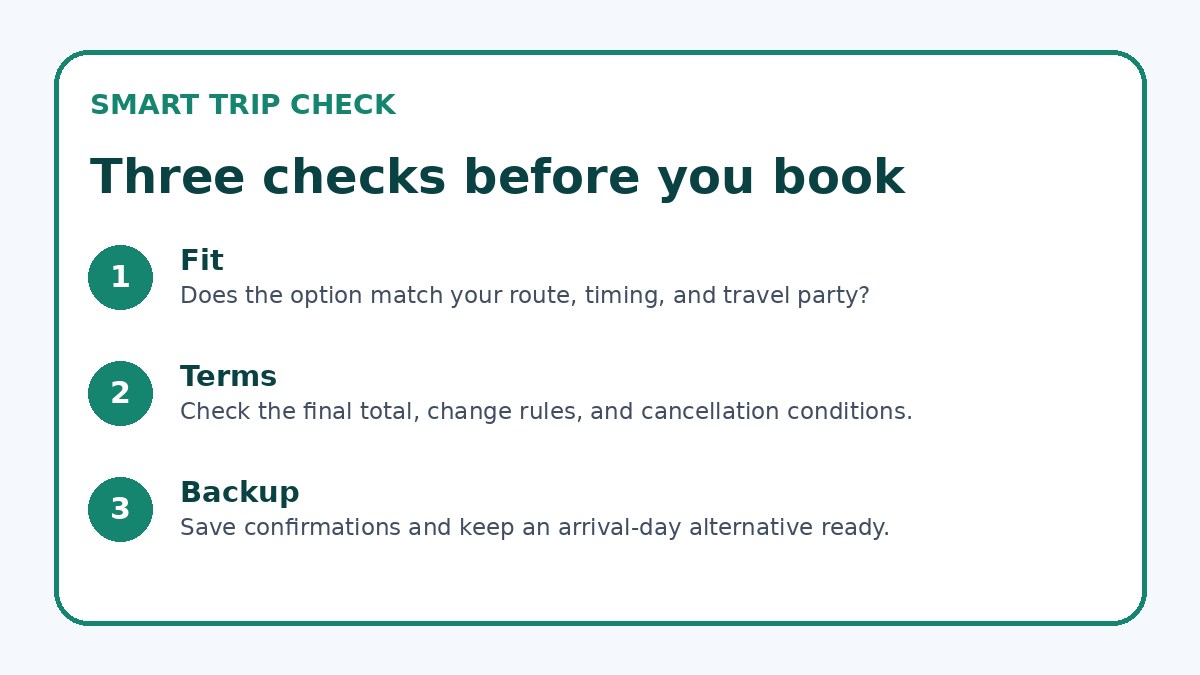
- Confirm exact pick-up and drop-off addresses on the provider’s final booking page and map the last-mile transfer before you book.
- Check luggage allowances, carry-on rules, and whether staff assistance is offered for loading or unloading your bags.
- Build at least a 60–90 minute buffer for border processing into your schedule, and choose an earlier departure where feasible.
- Save digital and paper copies of your travel documents and the booking reference in case you need to show proof at the border.
- Plan a simple disruption backup: an earlier service you could catch or a rideshare option for the final mile with cost saved aside.
- Compare current schedules and availability on the operator’s official pages and optionally on Trip.com before finalizing your ticket.
Disruption backup: practical fallback strategies
A realistic backup minimizes the chance you’ll be stuck if your planned service is cancelled or delayed. For solo travelers, the best backups are simple: an earlier scheduled coach you could still catch, a rideshare budget for the last mile, or a standby train option. Avoid complicated multi-step backups that require multiple ticket changes. Keep the contact details and booking references handy for your operator so you can request rebooking or refunds quickly if needed, and confirm rebooking policies on the provider’s booking page before you commit.
Also consider domestic alternatives: if cross-border services are disrupted, check whether a short domestic bus or train can take you to a nearby town with more frequent international departures. Carrying digital copies of identification and travel documents reduces delay at the border. Finally, set aside a small emergency fund and a flexible mobile plan so you can book rideshare or last-minute accommodation should your backup plan require it.
Rail & Intercity Transport questions travelers ask
Is coach or train more reliable for solo travelers between Vancouver and Seattle?
Reliability depends on what you mean by reliable. Coaches typically offer more departure choices each day, which helps if you want flexibility and fewer transfers; they often provide a simple, single-seat journey that minimizes navigation at stations. Trains can feel more reliable from a comfort and luggage-security perspective because you can often keep your bag close and move around during the trip. Before booking, check how many departures match your schedule and confirm the provider’s policies on delays and rebooking on their official booking page.
How should I plan luggage if I’m traveling alone across the border?
Aim to travel light with a single backpack or a soft-sided bag you can lift yourself to avoid needing assistance. Verify the specific luggage allowances on the booking page: some services have strict carry-on dimensions or limits for checked items. If you have bulky or multiple bags, look for services that advertise curbside loading or explicit staff assistance. Also plan how you’ll transport luggage from the arrival stop to your accommodation—check for elevators, shuttle options, or nearby transit to avoid carrying heavy items long distances.
What is the simplest disruption backup if my planned cross-border option is delayed?
The simplest backup is a single, quick-to-execute plan: either an earlier coach or train you could reasonably catch, or a rideshare budget reserved for the final mile into the city. If you prefer redundancy, identify one alternative departure later in the day and a rideshare option for last-mile transport. Before traveling, confirm change and refund policies on the provider’s booking page so you understand how to rebook if needed and keep contact details handy to request help quickly.
Final decision note
For most solo travelers focused on door-to-door practicality between Vancouver and Seattle, a scheduled coach or a through train will be the most sensible choices: coaches for single-seat simplicity and multiple daily departures, trains for comfort and onboard space. Choose by mapping your exact start and end points, checking luggage handling and last-mile transfers, and building sensible buffer time for border processing. Whatever you book, verify pick-up/drop-off locations, luggage rules, and rebooking policies on the provider’s final booking page before paying. If you want a quick cross-check of schedules and availability, Trip.com can show current options, but use the operator’s official site as your primary source for final terms.
Continue planning
Check current options and final conditions
Use the provider page to confirm live availability, the final total, cancellation terms, and every condition that matters to your trip.
This evergreen planning guide was created with AI-assisted drafting and a structured quality review. It does not display live prices, schedules, availability, visa guidance, or provider rankings. Verify current details before booking. Some links are affiliate links; we may earn a commission at no additional cost to you.