Pick your Fukuoka neighborhood first, then fine-tune the booking terms. For a solo traveler, the difference between a refundable rate with free cancellation and a non‑refundable advance purchase can be the difference between stress and freedom if plans shift. Start by matching neighborhood strengths to what you want each day—museums and temples, nightlife, convenience to Hakata Station, or easy access to beaches and parks. Once you have a short list of two or three areas, compare room size, single‑occupancy rules, and the exact cancellation and change fees. Look at whether the rate bundles breakfast or charges per night for housekeeping, and always verify late‑check‑in, ID, and card authorization policies on the booking page before confirming.
Check live stays in the areas that fit
Use your dates and party size to compare current rooms after you narrow the neighborhood fit.
Neighborhood fit: pick from Hakata, Tenjin, Nakasu, or Momochi
Begin by deciding the part of Fukuoka that will reduce your daily travel friction. Hakata around the station is the logical choice if most of your plans start or end with long‑distance trains or bus connections; it concentrates transport links, convenience stores, and business‑style hotels with compact rooms. Tenjin offers the best mix for daytime shopping and evening dining; you’ll trade a slightly longer trip to Hakata Station for more nightlife and boutique cafés. Nakasu is where nightlife and riverside walks meet convenience for late arrivals; some hotels here emphasize late check‑out or flexible arrival, but streets can be livelier at night.
If your priorities include waterfront paths, museums, or a quieter stay, Momochi and the seaside area near Fukuoka Tower give calmer mornings and parks for slow exploration. This area suits solo travelers who want longer daytime walks and a more residential hotel atmosphere—often meaning slightly larger rooms and resorts that advertise flexible cancellation for direct bookings. Whatever you choose, map one or two anchor points—your arrival transport hub and the primary evening neighborhood—so you can judge how much transit time you’re willing to accept between lodging and activities each day.
Choose an area-selection strategy
| Area approach | Best for | Tradeoff to check |
|---|---|---|
| Stay in Hakata near the station | Arrivals and departures, short transfer days | Busier business area with smaller rooms and fewer boutique cafes |
| Book in Tenjin for shopping and nightlife | Evening dining and daytime stores | Slightly farther from regional train connections, more nightlife noise at night |
| Choose Nakasu for riverside nightlife | Late returns and entertainment on foot | Street noise and fewer quiet green spaces nearby |
| Pick Momochi/seaside for calm mornings | Leisurely days, parks, and longer walks | Longer transfers to main stations and fewer late‑night options |
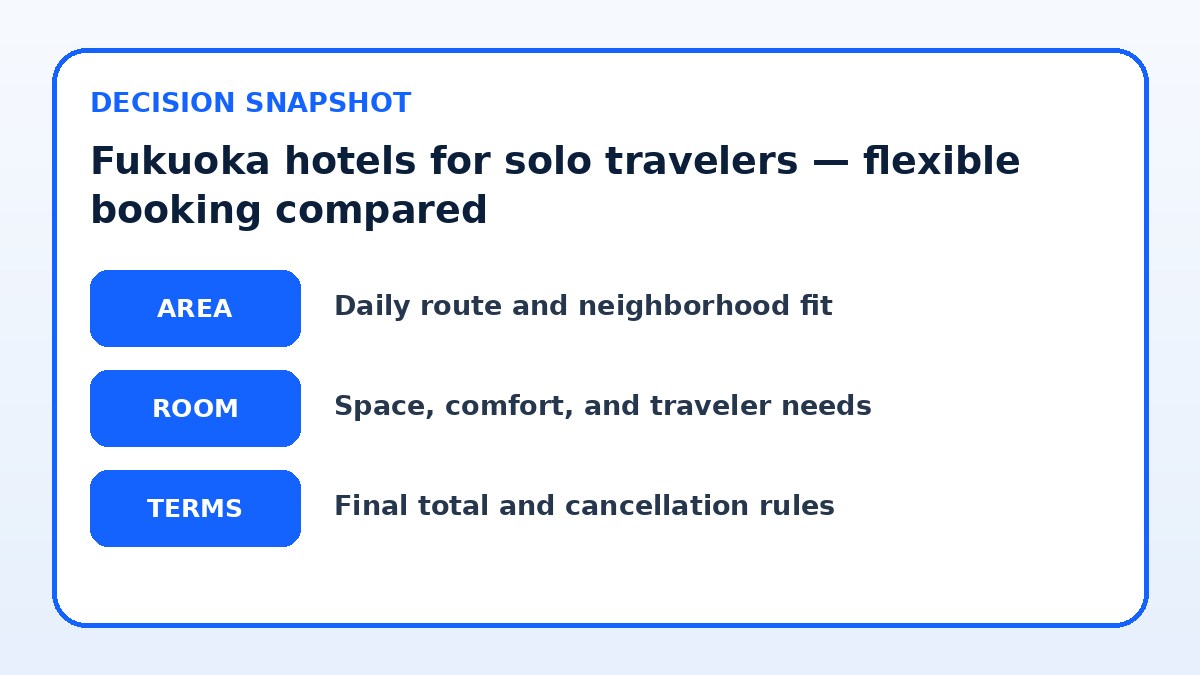
Daily‑route friction: measure walking, transfers, and late returns
Quantify how much walking and transferring you’re comfortable with each day. For a schedule with multiple museums and neighborhoods, staying in Tenjin cuts intra‑city transfer time; Hakata saves you bulk transfer time to regional trains. Nakasu and Tenjin are walkable clusters for evening plans, reducing the need for late taxis. If you anticipate late‑night returns after festivals or dining out, choose a hotel close to subway lines or well‑lit streets to avoid long, isolated walks. Look at station exits and the distance from a well‑known landmark on maps, and then cross‑check that distance against the hotel’s description and photos.
Also plan for luggage movement on arrival and departure days—solo travelers often have to balance an overnight bag and daypack while navigating station stairs or busy sidewalks. If you have a morning train or flight, staying within a short walk of Hakata Station or a subway stop that connects directly to the airport bus can reduce stress. When reviewing booking pages, verify whether the property offers luggage storage on arrival or late check‑out for a fee, and whether they note any stairs, narrow entrances, or elevator limitations that could make moving your luggage harder.
Now compare like with like
Keep the same dates, guests, room needs, and cancellation preferences while you compare the final choices.
Room and party needs: single rooms, privacy, and extras
Decide what matters in the room beyond price: single occupancy comfort, a desk for laptop work, privacy for calls, and bathroom size. Business hotels in Fukuoka often specialize in efficient single rooms with desks and reliable Wi‑Fi, which suits short city stays. Boutique or upscale properties may offer larger rooms, in‑room kettles, and quieter corridors—helpful if you value a calm evening after a full day of walking. For solo travelers who plan remote work or long evenings, prioritize rooms that explicitly list a workspace and strong internet in the room details and policies.
Check whether the booking conditions restrict the number of guests, require ID at check‑in, or list specific rules about late arrivals. If you want breakfast flexibility, see whether breakfast is included and whether it’s refundable if you decide not to take it. Also look for explicit statements on housekeeping frequency and whether you can opt‑out or schedule cleaning—this is useful if you prefer minimal intrusion or hope to keep a fixed sleep schedule during your stay.
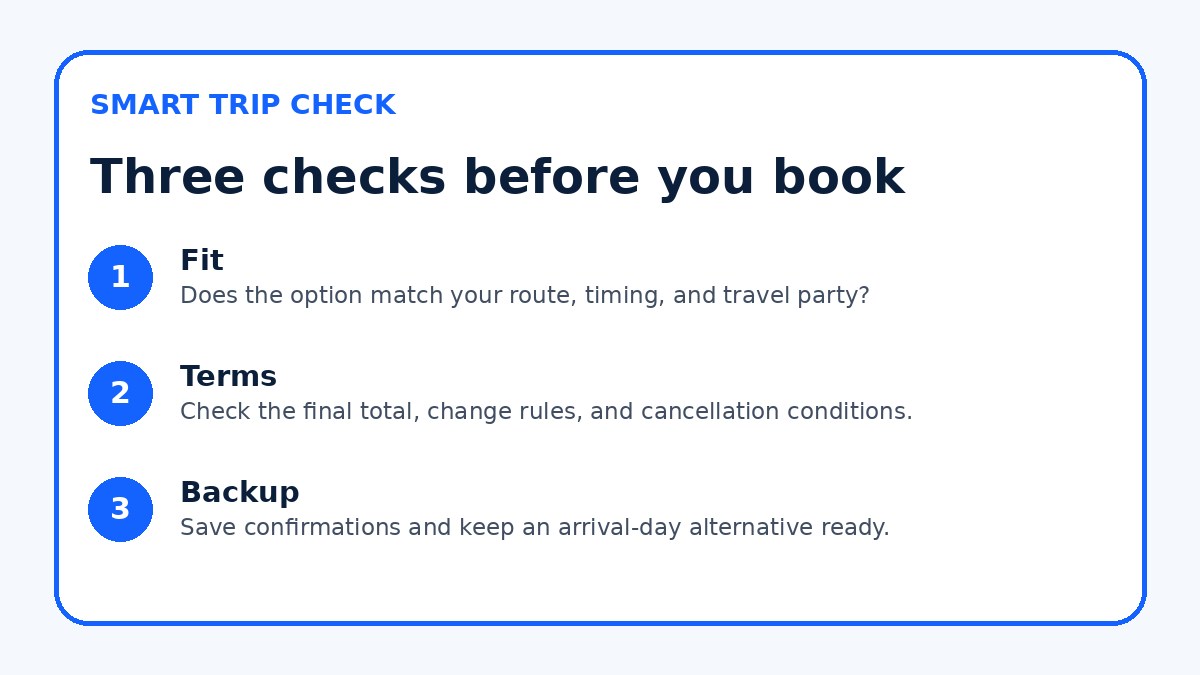
Hotel booking check before payment
- Map your anchors: mark your arrival station, planned evening neighborhood, and hotel location on a single map before searching rates.
- Filter search results for free cancellation and read the exact cut‑off time shown on the property’s booking page.
- Confirm whether the rate is prepaid, card‑guarantee-only, or refundable, and save any booking‑page screenshots that show the terms.
- Check the property’s stated check‑in/out window and whether they mark reservations as no‑shows after a specific hour.
- If you’ll arrive late, message the hotel to confirm late check‑in policies and any self‑check‑in procedures.
- Review the hotel notes for luggage storage, housekeeping frequency, and any charges for date changes or administrative processing.
Final booking terms: the exact fine print to verify before you confirm
Always read the fine print on the booking page before clicking confirm. Look for the exact cancellation deadline (date and local time), the refund calculation method (full, partial, or administrative deductions), and whether changes to dates are permitted without penalty. Some flexible rates permit free cancellation up to 24–72 hours before arrival, while others require contact with the property to reschedule. When policies sound vague, use the booking interface to simulate a date change or cancellation and note the messages it shows, then capture screenshots or save confirmation pages.
Verify payment and hold policies: does the hotel require a credit card guarantee only, or a prepayment charged immediately? Does the property authorize or charge a deposit for incidental expenses? If late check‑in is likely, check whether the property marks the reservation as a no‑show after a set time. Where provider specifics could change, confirm the cancellation window, refund timing, any non‑refundable components (breakfast, extras), and whether third‑party bookings need to be changed through the original seller. Trip.com may be a useful place to compare current options, but always verify critical terms on the hotel’s own booking page.
Hotel Guide questions travelers ask
How do I compare refundable rates vs non‑refundable advance purchases for Fukuoka hotels?
Refundable rates usually allow cancellation up to a stated time before check‑in with a full or partial refund; non‑refundable advance purchases require payment up front and typically do not permit refunds. To compare, open each rate’s detailed policy on the booking page and note the exact local deadline for free cancellation, what portion (if any) is withheld, and whether date changes are permitted. Also check whether breakfast or extras are refundable separately. If your plans are uncertain, a slightly higher refundable rate can avoid losing the entire payment in case of a schedule change.
What booking terms should solo travelers prioritize when staying in Fukuoka late at night?
Prioritize flexible cancellation, clear late‑check‑in policies, and proximity to reliable public transport or well‑lit streets. Confirm whether the hotel treats late arrivals as no‑shows after a specified hour, and whether they offer 24‑hour reception or self‑check‑in instructions. Also verify any card preauthorization or deposit requirements, because a blocked sum on your card can complicate mobility if you need funds immediately after arrival. If you expect to return late, search for hotels that explicitly welcome late arrivals in their policies or recent guest notes on the booking page.
Should I book directly with the hotel or through an online travel agent when I want flexible terms?
Both options can offer flexible terms, but the wording and change process differ. Direct bookings sometimes allow you to negotiate minor changes by contacting the hotel, while third‑party platforms may centralize refund processing and require you to request changes through their system. Always compare the exact policy language and cancellation deadlines on the hotel’s own page and the OTA listing. If you book through an agent, keep all confirmation emails and check the agent’s stated refund timeline, because the agent may need to process the refund before the hotel releases funds.
Final decision note
For solo travelers in Fukuoka, the practical decision is neighborhood first, then fine print. Decide whether you want the convenience of Hakata, the nightlife of Tenjin or Nakasu, or the calmer mornings by the seaside, and shortlist two areas so you can compare concrete hotel terms. When you look at rates, verify cancellation cut‑offs, whether a prepayment will be charged, and how the provider handles late arrivals or date changes. Save screenshots of booking pages and confirm any verbal changes by email. These steps let you book with confidence while keeping options open in case your itinerary shifts.
Continue planning
Check current options and final conditions
Use the provider page to confirm live availability, the final total, cancellation terms, and every condition that matters to your trip.
This evergreen planning guide was created with AI-assisted drafting and a structured quality review. It does not display live prices, schedules, availability, visa guidance, or provider rankings. Verify current details before booking. Some links are affiliate links; we may earn a commission at no additional cost to you.