Decide your stay area first: choose a CBD, riverside, inner-suburb, or airport-adjacent neighbourhood based on how you’ll move every day. For first-time visitors, that single decision determines walking convenience to trams and trains, ease of airport transfers, and how compact or spread-out your sightseeing will feel. This guide gives the practical answer up front—which area type fits common trip styles—then walks through daily-route friction, room and party needs, and the final booking terms to verify before you pay. You’ll finish able to shortlist one or two neighbourhood types and a few concrete tradeoffs to check on booking pages. Where provider details could change, I’ll tell you exactly what to confirm on the hotel or booking platform before you complete your reservation.
Check live stays in the areas that fit
Use your dates and party size to compare current rooms after you narrow the neighborhood fit.
Neighborhood fit: match area type to your daily plan
Start by listing the activities you want to do most mornings and evenings—museums, laneways, sporting venues, beach time, or neighbourhood cafés. If most priorities sit inside the grid of Melbourne’s central business district, a CBD hotel keeps walking and short tram trips practical. If your main interest is live music, street art or a relaxed seaside vibe, inner suburbs such as Fitzroy or St Kilda are better matches. Think in terms of daily clusters of places rather than single attractions; choosing an area that contains or sits adjacent to a cluster drastically reduces wasted travel time.
Also weigh rhythm and atmosphere: staying in Southbank or along the Yarra favours riverside walks and theatre nights but can be quieter after hours. Inner-suburbs offer more local character and late-night bars but may require a tram or short taxi to reach the central museums and galleries. For visitors planning a mix of day trips beyond the city—out to the Yarra Valley, the Great Ocean Road, or coastal towns—prioritise straightforward train or coach access from Southern Cross or Flinders Street when you shortlist neighbourhoods.
Choose an area-selection strategy
| Area approach | Best for | Tradeoff to check |
|---|---|---|
| Stay in the CBD (central grid) | Sightseeing within walking distance and short tram rides | Smaller rooms and busier streets; potentially higher noise levels at night |
| Riverside/Southbank | Evening theatre, galleries and riverside dining | A bit further from laneway cafés and some museums; more walking to inner laneways |
| Inner-suburbs (Fitzroy, St Kilda) | Neighbourhood character, cafés, nightlife and relaxed pace | Requires tram or short train into the city for major attractions |
| Airport-adjacent or Docklands | Early or late flights and business travellers with tight schedules | Fewer nightlife options and longer trips to central tourist clusters |
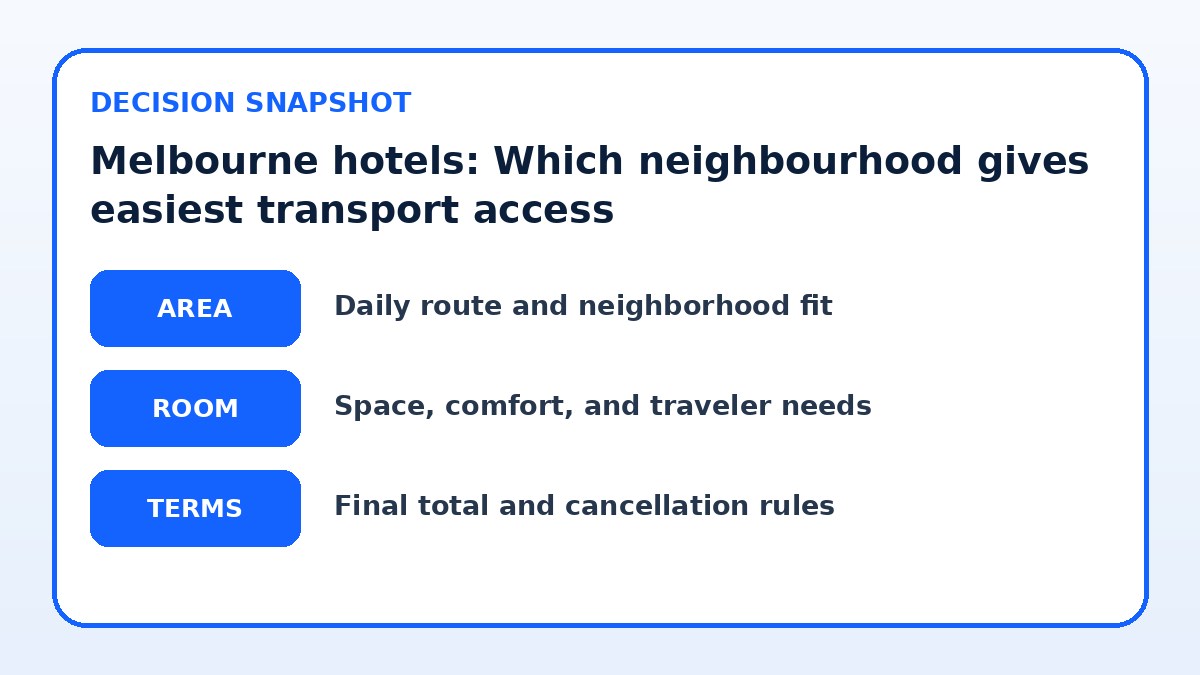
Daily-route friction: how transport links shape each day
Break each typical day into segments: morning transit to sights, midday hops between areas, evening return to base. Measure friction by the number of transfers, likely walking between hotel and stop, and how much time you are comfortable spending in transit. Hotels adjacent to tram stops or within a short walk of Flinders Street or Southern Cross stations cut friction for sightseeing and day trips. If you rely mainly on trams, prioritise a spot along a major tram corridor; if you expect to use trains for longer excursions, check proximity to a train station and direct services versus transfers.
Also account for the first and last mile: an excellent hotel two kilometres from a major station can feel inconvenient if sidewalks, lighting, or luggage-handling make the walk awkward. Verify whether the hotel lists a closest tram stop or train station and confirm the walking time on a map. When provider pages might not show reliable transfer details, check city transport maps and local apps, and compare possible taxi or rideshare costs and availability for evenings or late arrivals.
Now compare like with like
Keep the same dates, guests, room needs, and cancellation preferences while you compare the final choices.
Room and party needs: choose a layout that reduces extra trips
Think about who you’re travelling with and how that affects the hotel choice. Families or groups often value suites, interconnecting rooms, or a kitchenette to reduce dining logistics; staying somewhere with easy tram access to supermarkets and playgrounds reduces the need for taxis. Couples or solo travellers who plan many short outings benefit more from compact rooms in a central location to reduce travel time between activities. If you have mobility needs, prioritise hotels that clearly state elevator access, step-free routes to public transport, and accessible room options on their booking pages.
Also consider check-in and luggage: hotels near major stations let you drop bags early or collect them before an evening flight, but confirm the hotel’s stated luggage-hold policy on their booking page. If you plan daytime returns to the room between activities, a slightly larger room in a quieter neighbourhood might be better than a tiny central room. When multiple people share one room, list the bed types you need and verify bedding configurations on the hotel page rather than relying on generic room descriptions.
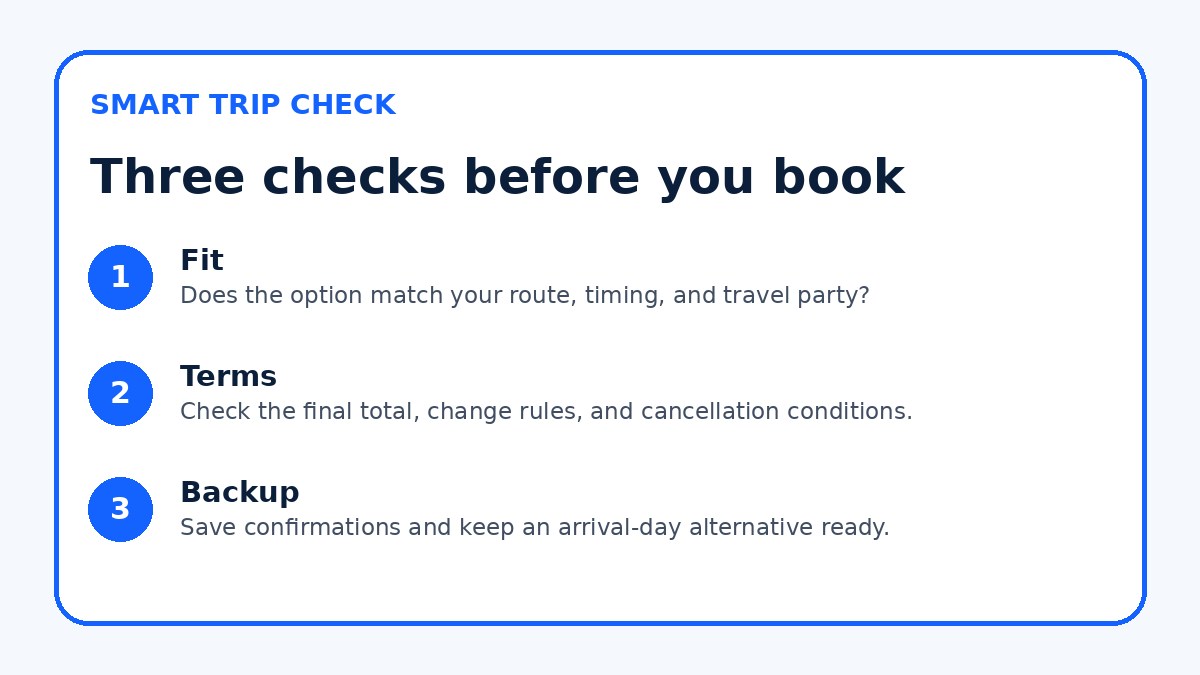
Hotel booking check before payment
- Map your top five daily destinations and see which neighbourhood contains most of them within a 20–30 minute transit or walk.
- On the hotel page, confirm the named nearest tram stop or train station and check the walking route and time on a map app.
- Read the cancellation and change policy on the final booking page before entering payment details.
- Verify bed types, accessibility options, and luggage storage policy in the room description or by contacting the hotel directly.
- Compare listed transfer options with public transport and rideshare estimates for your expected arrival and departure times.
- If breakfast matters, confirm whether it is included or a paid add-on and whether opening times fit your schedule.
Final booking terms: what to verify before you pay
Before you confirm, check four practical items on the hotel or booking platform: cancellation and change policies, the stated distance to nearest tram or train stop, whether the hotel charges for early check-in or late checkout, and any additional fees such as resort or service charges. Because these details can change, read the hotel’s final booking page and policies carefully—don’t rely solely on summary lines in search listings. If you need airport transfers, compare what the hotel offers with public transport and rideshare options to decide whether a transfer package is worth it.
Also verify the room details you care about: bed size, accessibility features, included amenities, and whether breakfast is included or available as an add-on. If public transport is central to your plan, confirm the closest tram or train stop name and map the walking route yourself to ensure it’s practical with luggage or at night. You can compare live availability and conditions on a platform like Trip.com, but always use the hotel’s final booking page to verify refund terms, extra charges, and check-in instructions.
Hotel Guide questions travelers ask
Which Melbourne neighbourhood is best for a first-time visitor who wants to see laneways and museums?
For first-time visitors focused on laneways, galleries and museum clusters, a hotel in the CBD or very near Flinders Street gives the shortest walking distances. This places you within easy reach of the National Gallery, Melbourne Museum and the famous laneways for cafés and street art. If you prefer a quieter evening, consider Southbank and map the tram or bridge walk back to the CBD. Before booking, verify the hotel’s stated walking time to the nearest tram stop and Flinders Street to ensure it matches your mobility and luggage needs.
Is it better to stay in an inner suburb like Fitzroy or in the central business district?
Inner suburbs such as Fitzroy and Collingwood offer a lively local scene, more independent cafés and street art, and a neighbourhood atmosphere that many travellers enjoy. The CBD gives superior proximity to major museums, theatres and most tram lines, making it the more compact option for a short visit. Decide by your daily plan: if you expect to spend long periods exploring local bars or markets, an inner-suburb hotel reduces back-and-forth trips; if you want to cram many city sights into a short stay, the CBD reduces transit times.
How do I handle late-night arrivals or early flights when choosing a Melbourne hotel?
If you arrive late or depart very early, prioritise the ease of your airport transfer. Airport-adjacent hotels reduce transfer stress, but also compare the frequency and duration of public transport services at your arrival time. Many central hotels can be reached quickly by taxi or rideshare from the airport; verify typical transfer options and estimated travel times on the provider’s page. Always confirm the hotel’s late-check-in policy and whether luggage storage is available if you arrive before standard check-in hours.
Final decision note
For first-time visitors to Melbourne, the most impactful booking decision is choosing the neighbourhood type before browsing inventory. Match your daily priorities—sightseeing cluster, nightlife, beach time, or flight convenience—to one of the four area types outlined here, then use the checklist to verify practical transport details and booking terms on the hotel’s final page. That approach reduces daily friction and streamlines your trip rhythm: fewer long transfers, clearer evening plans, and rooms that suit your party’s needs. Once you shortlist one or two neighbourhood types, open live listings to compare rooms and cancellation terms, and use provider pages to confirm the final details.
Continue planning
Check current options and final conditions
Use the provider page to confirm live availability, the final total, cancellation terms, and every condition that matters to your trip.
This evergreen planning guide was created with AI-assisted drafting and a structured quality review. It does not display live prices, schedules, availability, visa guidance, or provider rankings. Verify current details before booking. Some links are affiliate links; we may earn a commission at no additional cost to you.