For most solo travelers, the core decision on Sydney to Melbourne flights comes down to route versus fare: direct flights save time and reduce connection risk, while connecting itineraries can open more schedule choices or lower fares if you accept extra complexity. Before you start hunting for tickets, decide how much risk and time you're willing to trade for potential savings or specific departure times. Think about how important a single-seat journey is to you versus stretching to a cheaper, longer itinerary that includes a connection. This guide compares the practical impacts—routing, baggage and connection risk, schedule fit, and fare conditions—to help you choose. It ends with a short checklist of exact details to prepare before checking live availability on airline sites or a comparison tool like Trip.com.
See live routes for your exact travel day
Compare direct and connecting choices with the same baggage and traveler details.
Routing: how direct and connecting itineraries differ
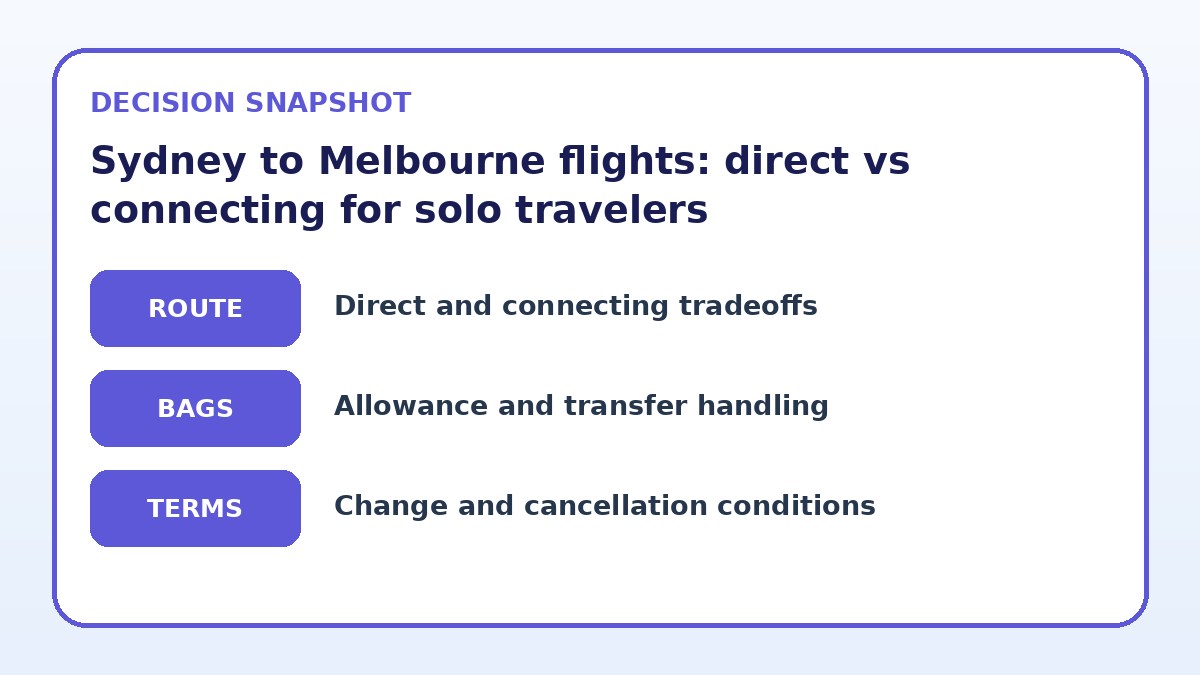
Direct flights travel straight between Sydney and Melbourne with no intermediate stops, so you remain on the same aircraft or within a single flight number for the trip. For solo travelers this generally means fewer moving parts: you book one itinerary, show up at the airport, check your bag if needed and proceed to the gate. If you prefer to keep plans simple—arrive quickly, avoid transfers and reduce the chance of being separated from luggage in transit—direct routing often fits that preference. That said, direct options sometimes depart at less convenient times or have limited seat availability, which is why many travelers look at connecting itineraries.
Connecting itineraries link two flights and require a change at an intermediate airport. Connecting options can appear because of lower fares, a required routing by an airline alliance, or to match a specific departure or arrival time not offered by direct services. For solo travelers, the important differences are transfer logistics and potential complications: you may need to collect and re-check bags, navigate a new terminal or airport, and allow enough buffer for delays. The upside is greater flexibility: connections can let you fly earlier or later than direct schedules, or give you access to seat inventory that would otherwise be sold out.
Baggage and connection risk: what to plan for
When you book a through ticket with a single airline or alliance, checked baggage is commonly checked to your final destination and transferred by the carrier, so you don’t need to collect it at the connection. However, when you mix separate tickets or low-cost carriers, you may be required to pick up baggage, clear security or immigration, and re-check it, which increases the risk of missing the next flight. As a solo traveler, consider the time you need to move between gates, the layout of the transfer airport and whether you’re comfortable managing any re-check procedures without assistance.
Small delays amplify connection risk. A short buffer between flights increases the chance of making the connection; a tight connection raises stress and the real possibility of missing the onward flight and needing to rebook at your own cost. If you have baggage, mobility needs, or simply prefer predictability, favor direct routes or connecting itineraries with generous connection times and through-checked baggage. Always verify on the final booking page whether your baggage is through-checked and what happens if a missed connection occurs under the fare rules.
Compare flight-selection strategies
| Flight strategy | Best for | Risk to check |
|---|---|---|
| Book the fastest direct flight | Solo travelers prioritizing time, simplicity, and low connection risk. | Often higher fares and less flexibility on departure times or seat inventory. |
| Choose a cheaper connecting itinerary | Price-sensitive solo travelers willing to trade time and accept transfer complexity. | Higher connection risk, possible separate baggage handling, and stricter fare rules. |
| Select a single-ticket connection with one carrier | Travelers who want a middle ground: some savings with through-checked baggage and rebooking protection. | May still take longer than direct flights and depends on carrier schedules. |
| Mix-and-match separate tickets for max schedule options | Independent solo travelers seeking specific times or combining loyalty benefits across carriers. | You assume responsibility for missed connections and baggage transfers; rebooking costs may apply. |
Recheck the complete itinerary
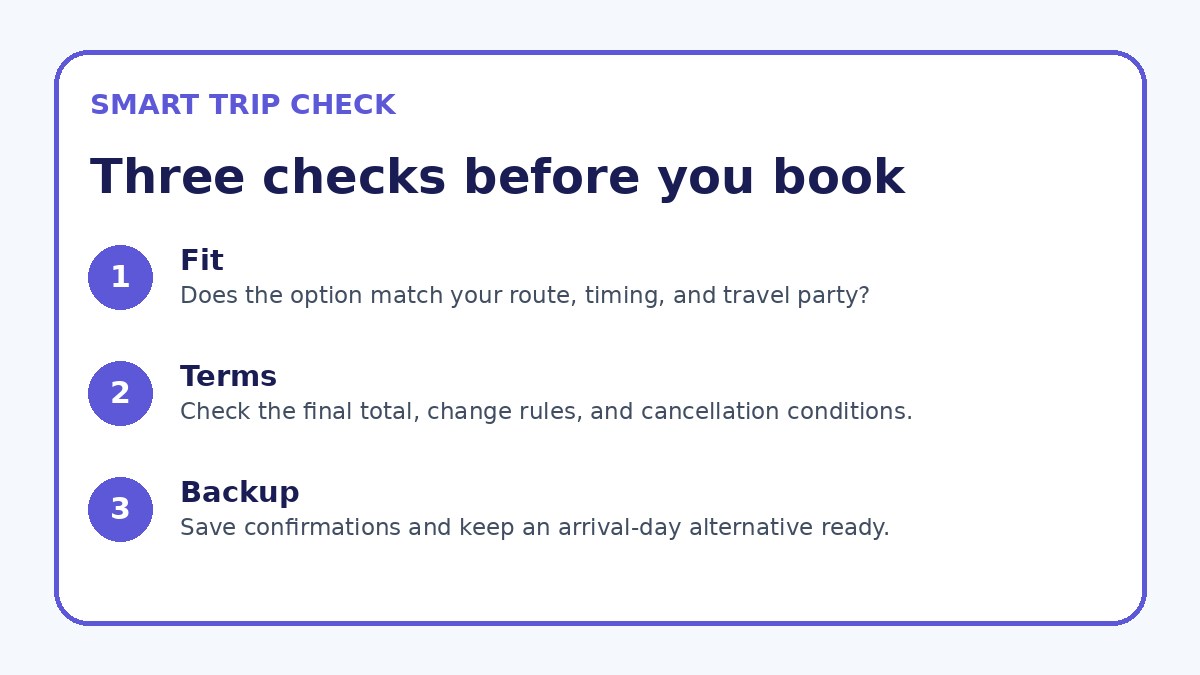
Confirm airports, connection handling, baggage, and change conditions before deciding.
Schedule fit and personal priorities
Think about what you value most: arriving earlier, minimizing time at airports, or saving money. Direct flights typically cut travel time and reduce the number of moving parts, making them a stronger fit for travelers with tight schedules, limited spare time in Melbourne or those who dislike airport transfers. If you’re traveling for a single-day meeting or tight itinerary, the predictability of a non-stop service is valuable. Also consider how the timing of early morning or late evening departures fits with your plans and how comfortable you are navigating unfamiliar airports alone.
Connecting flights may let you depart at a more convenient time from Sydney or arrive at a preferred hour in Melbourne, but they usually lengthen the total door-to-door time. For some solo travelers, that extra time can be an opportunity: a relaxed transfer, a chance to stretch legs between flights, or a short stopover in a different city. Weigh personal priorities such as cost, comfort, schedule flexibility and mental load when choosing. If you need assistance—wheelchair service, for example—confirm availability and transfer procedures with the airline before booking.
Flight details to verify
- Confirm exact travel dates and preferred departure/arrival time windows before searching fares.
- Note whether you need checked baggage, carry-on only, seat selection or special assistance and filter fares accordingly.
- Verify on the airline’s final booking page whether baggage is through-checked to Melbourne for any connecting itinerary.
- Check minimum connection times and terminal transfer details at the connecting airport; allow extra buffer for delays.
- Compare fare rules for changes and cancellations and calculate potential rebooking costs if you miss a connection.
- Save the booking confirmation, airline contact numbers and any transfer instructions to your phone before departure.
Fare conditions and what to verify before booking
Fare conditions govern cancellation, changes, seat selection, and baggage allowances; these often differ between direct and connecting tickets. Low-fare connecting itineraries can carry strict change or cancellation limits, while a higher-priced direct fare may include more flexible change rules and one checked bag. Always read the fare rules shown on the airline’s final booking page: check change fees, refundability, included baggage, and whether seats are assigned at booking. For multi-carrier itineraries, verify whether the fare is issued as a single ticket or separate tickets—single-ticket itineraries usually simplify rebooking if problems occur during travel.
Before clicking pay, confirm which carrier is operating each segment and whether codeshare arrangements affect boarding or baggage handling. Also verify the transfer airport layout, minimum connection time recommended by the carrier, and the remedy offered if the airline delays one segment and you miss the next. If you rely on lounge access, frequent flyer benefits, or need special assistance, check those entitlements against the exact operating carrier and booking class on the final confirmation page rather than the initial search results.
Flight Guide questions travelers ask
How much connection time should a solo traveler allow on Sydney to Melbourne itineraries?
Allowing enough connection time depends on whether your baggage is through-checked and whether the transfer is within the same terminal. For single-ticket itineraries with through-checked baggage and same-terminal transfers, a moderate buffer reduces stress; for separate tickets, international transfers, or if baggage must be rechecked, plan substantially more time. Also consider peak-hour crowds and the need to clear security. Before finalising a booking, check the airline’s recommended minimum connection time and add extra minutes for comfort, then verify transfer logistics on the carrier’s booking page.
If I book a connecting itinerary and miss my second flight, who is responsible for rebooking?
Responsibility depends on whether your itinerary is issued as a single ticket or separate tickets. If it’s a single-ticket booking under one carrier or alliance, the operating carrier typically handles rebooking or re-routing under its policies when delays cause missed connections. If you booked separate tickets with different providers, you generally bear the risk and cost of rebooking missed segments unless you purchased protected connection add-ons. Always read the booking terms and confirm the carrier’s missed-connection policy before purchasing.
Can I rely on seat availability and baggage allowance shown during search when booking?
Search results are indicative; the final booking page is the authoritative source for seat availability, baggage allowance, fare conditions and included services. Carriers may display different seat maps, luggage inclusions or booking-class restrictions at checkout. For solo travelers, verify the exact baggage allowance, fee structure for extra bags, and whether seat selection is included. If these factors affect your choice between direct and connecting options, confirm them on the airline’s confirmation page and save a copy of those details.
Final decision note
For solo travelers on the Sydney to Melbourne route, start by deciding whether you value time and simplicity or are willing to trade those for lower fares or specific schedules. Direct flights reduce connection points and baggage handling, making them the lowest-stress choice for most solo trips. Connecting itineraries can unlock useful departure windows or savings but introduce transfer logistics and added risk that you should plan for explicitly by checking baggage policies, minimum connection times and fare rules on the carrier’s final booking page. Prepare exact dates, passenger details and service needs before searching, and carry the booking confirmations and airline contact numbers with you. If you want a quick comparison of live options and conditions, you can check airline sites or a comparison tool such as Trip.com, then confirm everything on the provider’s official booking page.
Continue planning
Check current options and final conditions
Use the provider page to confirm live availability, the final total, cancellation terms, and every condition that matters to your trip.
This evergreen planning guide was created with AI-assisted drafting and a structured quality review. It does not display live prices, schedules, availability, visa guidance, or provider rankings. Verify current details before booking. Some links are affiliate links; we may earn a commission at no additional cost to you.