Practical answer up front: for first-time visitors to Milan, prioritize bookings that let you change or cancel with minimal penalty for at least the first 24–72 hours, and always compare the same dates, number of travelers, and included items before calling a bundle a better deal. Many packages look attractive because they bundle flights, hotels, and sometimes activities, but their cancellation windows and who refunds you (airline, hotel, or package operator) can differ. Evaluate whether the bundle’s single point of contact for changes outweighs potential inflexibility. Before you pay, confirm final cancellation fees, the refund timeline, and which provider issues refunds. If anything on the provider’s final booking page is unclear, contact customer service and get confirmation in writing.

Test package value fairly
| Booking approach | Best for | Tradeoff to check |
|---|---|---|
| Book a fully bundled package (flight+hotel+extras) | Travelers wanting single-point support for changes | Convenience may come with stricter or mixed cancellation rules across components |
| Book flight and hotel separately but use flexible hotel rates | Travelers who prioritize refundable accommodation with low maintenance | You must manage airline changes and refunds directly, which can be cumbersome |
| Mix refundable hotel nights with a changeable airfare ticket | Flexible travelers who want best-of-both control and protection | Flexible airfares may cost more and reduce perceived savings |
| Assemble everything separately and add independent travel insurance | Experienced planners seeking maximum control and insurance-covered reasons | More administration and multiple refunds to chase if plans change |
Check current package and separate options
Use identical dates, travelers, room needs, baggage, and flexibility so the comparison stays meaningful.
What to compare before treating a bundle as flexible
Start by listing every inclusion in the offer: roundtrip airfare, checked baggage, seat selection, accommodation type and breakfast, airport transfers, guided activities, and travel insurance. For each item, pull the specific cancellation rule—window (e.g., free until X hours before departure), flat fee, percentage penalty, or non-refundable. Bundles sometimes advertise free cancellation but actually apply different rules per component; for example, a hotel may be refundable while the flight is not. Comparing the same dates, traveler names, room types, and ticket classes across options is essential so you aren’t comparing a refundable hotel with a basic non-refundable flight and calling the package “flexible.”
When checking cancellation rules, note who is the contract holder for each part. If the bundle is sold by a tour operator, the operator’s policy may override supplier rules or add handling fees. For separate bookings you deal directly with airlines and hotels; with bundles you may need the operator to negotiate refunds on your behalf. Also check the timeline for refunds and whether credits, vouchers, or original-payment refunds apply. The speed and form of refund can affect your decision if you’ll need access to the funds quickly.
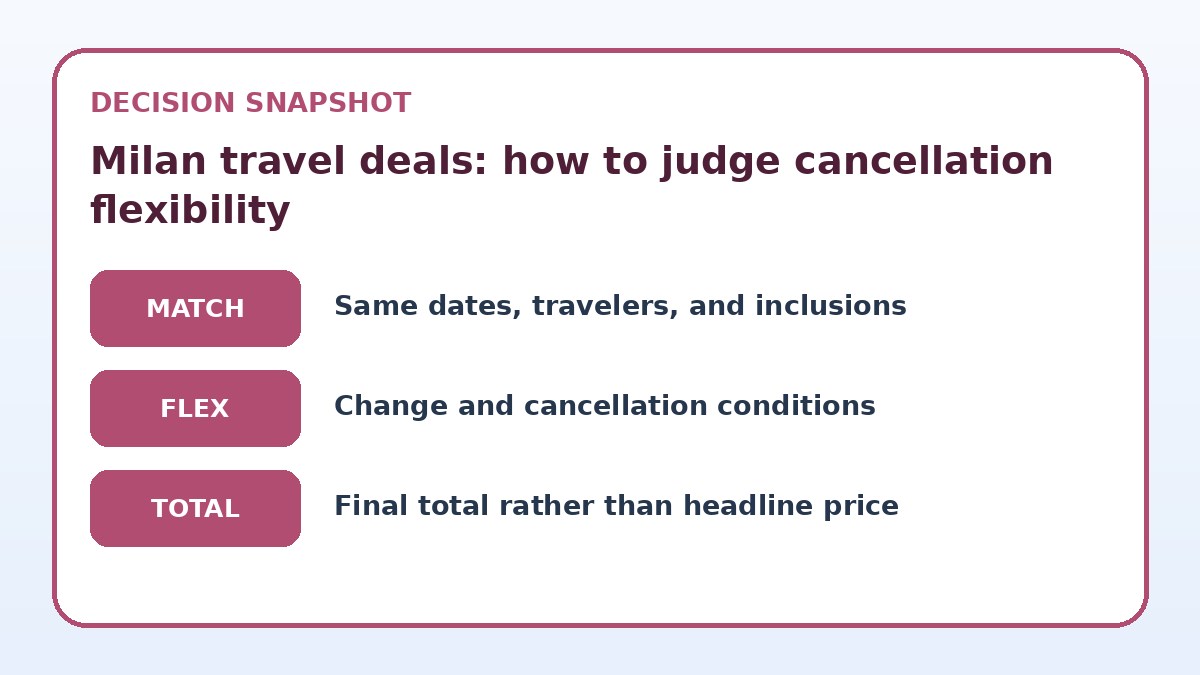
Inclusions and how they affect flexibility
Not all inclusions are created equal when it comes to cancellation. Flights often have the strictest rules—basic economy fares may be non-refundable with steep change fees—whereas many hotels offer refundable rates up to a set date. Transfers and prebooked experiences (museums, Last Supper slots, guided tours) frequently have their own policies and sometimes are strictly non-refundable. Travel insurance can cover some cancellations, but policy terms vary by reason (illness, travel advisory, airline insolvency), so check the insurer’s covered causes and claim process before assuming you’re protected.
When a package bundles a low-priced flight with flexible hotel nights, the overall flexibility tends to be limited by the least flexible component. Ask whether the bundle allows swapping suppliers within the package (for example, moving to a different hotel category with a smaller penalty) and whether the package provider will process a partial refund if only one component is canceled. Also verify whether modifications—changing traveler names, dates, or room type—incur fixed handling fees from the package seller, because these can turn a seemingly flexible package into an expensive commitment.
Look past the headline total
Compare inclusions and change conditions before deciding whether a package is genuinely useful for this trip.
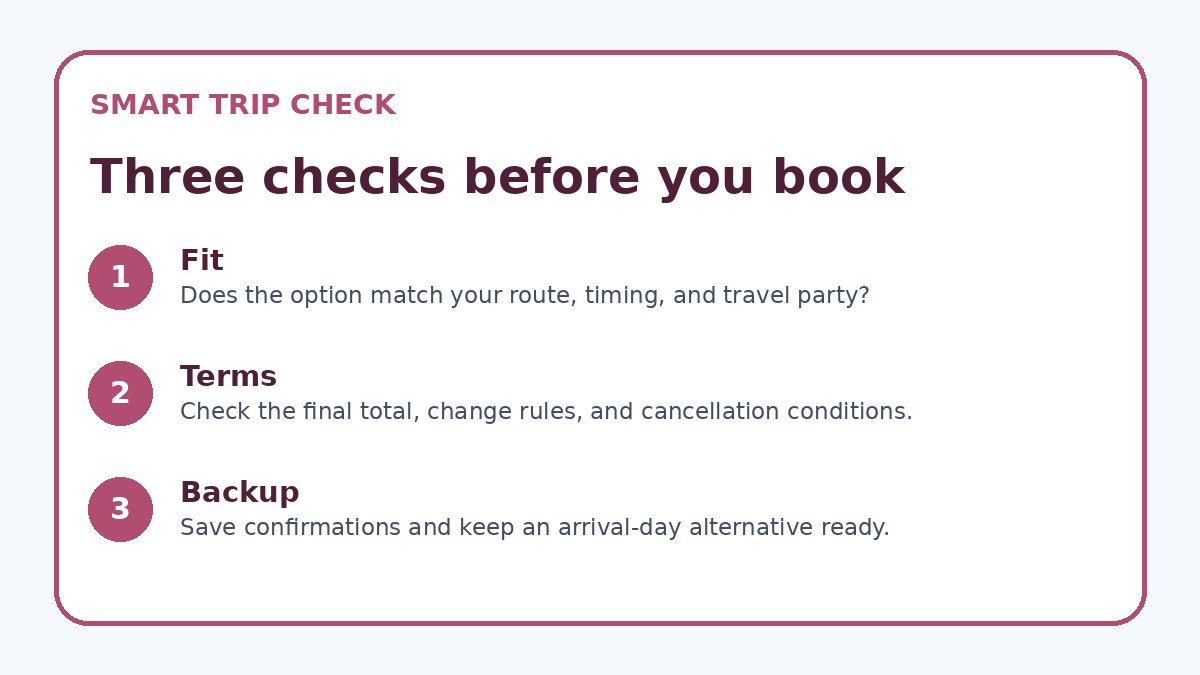
Deal comparison checklist
- Confirm the exact cancellation window and penalty for each component listed on the final booking page before you pay.
- Compare the same travel dates, number of travelers, and room/ticket classes across package and separate options to avoid false savings.
- Ask the seller who will process refunds and how long refunds typically take; get this confirmation in writing if possible.
- Check whether included tours or event tickets are non-refundable and whether substitutions or credits are permitted.
- If buying travel insurance, read exclusions carefully and check claim evidence required for cancellation reasons.
- Save screenshots or copies of all booking confirmation and cancellation-policy pages in case you need to dispute a charge.
Traveler-specific value: which option suits you
Different first-time visitors have different priorities. If you value convenience and minimal logistical work, a package with a responsive customer-service policy and reasonable change terms may be worth paying a little more. Families with school schedules or travelers with uncertain plans should prioritize bookings with lenient change windows or fully refundable hotel nights to avoid large penalties. Solo travelers comfortable managing multiple suppliers may prefer separate bookings to cherry-pick refundable accommodations and budget flights with changeable fares.
Business-first visitors or those with tight transit connections should check substitution rules and whether the package operator guarantees rapid rebooking support. If you require travel insurance, compare whether the package includes an adequate policy or if you need to buy it separately; sometimes independent policies are more comprehensive and easier to claim on. For visitors who want guided experiences, prioritize suppliers that clearly state their refund policy for canceled tours—some tour components may be non-refundable even when other parts of the package are refundable.
Final terms to verify on the provider’s booking page
Before you confirm, scroll to the provider’s final booking page and locate the cancellation policy text for each component. Verify exact deadlines for free cancellation, the amount retained as a penalty for cancellations inside the window, and whether the refund is credited back to the original payment method or issued as travel credit or voucher. If the package uses a third-party supplier for flights or tours, verify the supplier’s policy as well because the package seller may be unable to override it. If the policy mentions force majeure, read how it’s applied and whether it covers government travel advisories and airline insolvency.
Also check how modifications are handled: who charges change fees, whether name corrections are allowed, and whether the operator charges administrative fees on top of supplier penalties. Confirm the expected refund timeline—some providers warn that refunds can take weeks—and whether you’ll get email confirmation of the cancellation and refund. If anything is ambiguous, take a screenshot and ask customer service for written clarification before paying. Trip.com can be a useful place to compare availability and policies, but always verify the final terms on the vendor’s own booking page.
Travel Deals & Booking Strategy questions travelers ask
How do I tell if a Milan package’s cancellation policy is genuinely flexible?
Look for component-level details on the booking page: exact deadlines (dates/hours) for free cancellation, the penalty formula (flat fee or percentage), and refund method. A package is genuinely flexible when the flight, hotel, and tours each show refundable terms that align with your needs, or when the operator states a clear, single refund policy covering all parts. If the page uses vague phrases like “flexible options” without specifics, ask the seller to provide the exact cancellation table and confirm who issues refunds.
Should I prefer refundable hotels and cheap non-refundable flights for a first trip to Milan?
That mix can work if you prioritize accommodation flexibility and are confident about flight dates. Refundable hotel nights reduce the stress of changing your stay, but non-refundable flights can carry high change or cancellation costs. Compare potential airline penalties to a slightly higher airfare with changeable terms. Also factor in how easy it will be to rebook or get a refund from the airline versus the hotel; sometimes paying a small premium for a flexible flight is worth the reduced administrative hassle.
Can travel insurance replace the need to buy refundable bookings for Milan?
Travel insurance can cover many cancellation reasons—such as illness or emergency—depending on the policy, but policies differ in covered causes, claim evidence, and whether they reimburse non-refundable deposits. Insurance might not cover changes for a change of plans or some supplier insolvencies unless specifically included. Read the policy exclusions and claims process carefully and compare the sum insured to your potential losses. For comprehensive protection, combine reasonable flexibility in key bookings with an appropriate insurance policy.
Final decision note
For first-time visitors weighing Milan travel deals, the key decision is whether convenience from bundling outweighs the risk that one non-refundable component will lock in your trip. Start every comparison by matching the same dates, travelers, and inclusions across package and separate options. Prioritize a clear cancellation table, who processes refunds, and expected refund timelines on the provider’s final booking page. If you expect changes—or can’t afford to lose money—lean toward refundable hotel nights and either flexible airfares or insurance that covers your likely cancellation reasons. Take screenshots and secure written confirmation of any ambiguous policy before paying; that small extra step often saves more money and stress than chasing refunds later.
Continue planning
Check current options and final conditions
Use the provider page to confirm live availability, the final total, cancellation terms, and every condition that matters to your trip.
This evergreen planning guide was created with AI-assisted drafting and a structured quality review. It does not display live prices, schedules, availability, visa guidance, or provider rankings. Verify current details before booking. Some links are affiliate links; we may earn a commission at no additional cost to you.