If you're traveling from Seoul to Gyeongju with luggage, the practical question is not only which mode is fastest but which minimizes transfers, handling, and stress. For most first-time visitors, the primary choices are high-speed rail to nearby cities plus a local connection, direct intercity coach, or a blended door-to-door plan that includes station transfers or courier services. Decide first whether you prefer fewer handoffs (fewer times you lift or watch your bags) or more schedule flexibility. Consider where you'll start in Seoul and where you'll end in Gyeongju: terminals, hotel locations, and how you’ll reach them determine which option is truly door-to-door. Below you'll find tradeoffs, what to check on booking pages, and a simple comparison to match your luggage tolerance, timing flexibility, and disruption backup needs.

Choosing rail, coach, or a hybrid plan
Start by mapping your door-to-door path: where in Seoul you begin, which terminal or station is nearest, and where exactly in Gyeongju you'll stay. Rail often offers comfortable seating and generous luggage areas, but many high-speed services stop outside central Gyeongju or require a transfer at a regional hub. Coaches can be direct to central bus terminals and eliminate an extra transfer. A hybrid plan—fast train partway then taxi or local bus—can combine speed with simpler last-mile logistics.
When deciding, prioritize the number of times you'll need to handle your bags. Fewer handoffs reduce the chance of misplacement and lower physical strain. Also factor in whether you prefer scheduled certainty (timetabled trains) or more departure options (coaches often have many daily departures). Finally, check terminal access: a coach terminal in the city center may save a taxi ride on arrival, while a station outside town may require onward travel that offsets rail speed advantages.
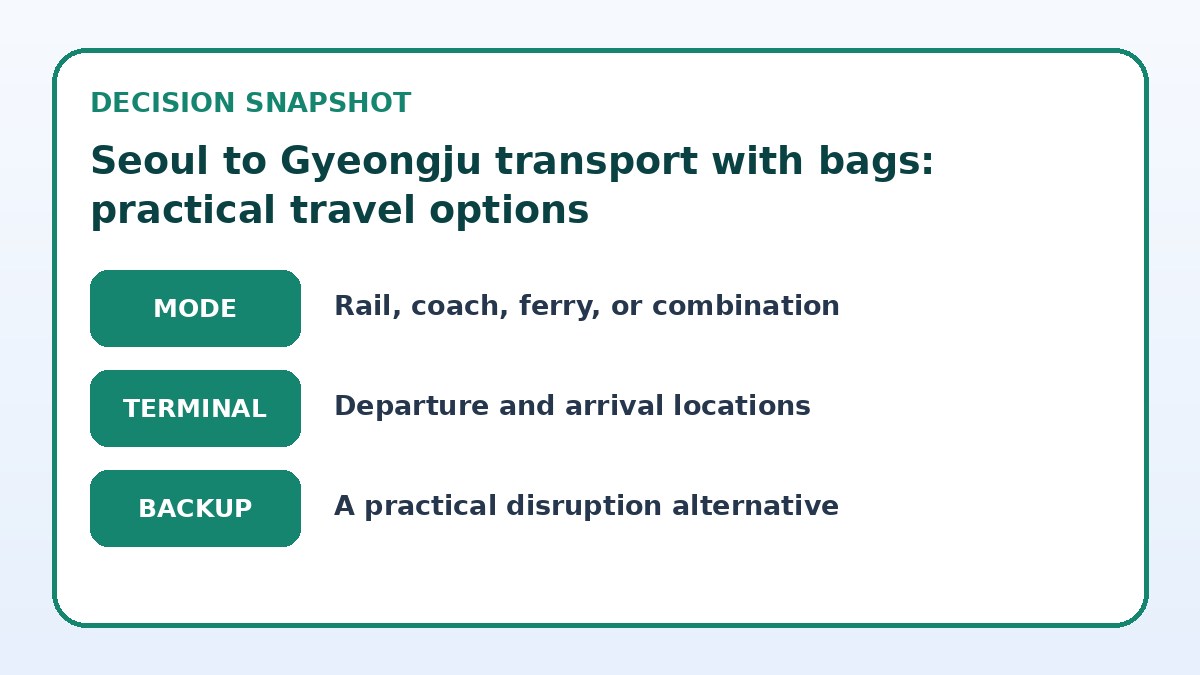
Choose the end-to-end journey plan
| Journey approach | Best for | Friction to check |
|---|---|---|
| Direct coach to central Gyeongju | Travelers wanting fewer handoffs and simpler arrival near central hotels | Less scheduling speed and variable onboard luggage rules compared with rail |
| High-speed rail + taxi last mile | Passengers who value faster travel time and smooth onboard luggage areas | May require transfer from the rail stop to central Gyeongju, adding a taxi cost |
| Regional train connections (more transfers) | Budget-conscious travelers who don’t mind handling bags between legs | Multiple handoffs increase disruption risk and physical effort with luggage |
| Hybrid with luggage-forwarding service | Travelers who want to sightseeing without carrying bags or need hands-free travel | Extra coordination and reliance on third-party pickup/delivery schedules |
Check live intercity options
Look beyond the ride itself and compare terminals, transfers, luggage, and arrival fit.
Terminal fit and luggage handling at origin and destination
Assess the terminals in Seoul you might use—major train stations and intercity coach terminals have different layouts and luggage facilities. Large stations typically offer elevators, escalators, and staffed storage lockers, which are useful if you want to leave a bag for a few hours. Coach terminals may require passengers to load luggage into a cargo hold, which is convenient but means you must be present at loading; verify how early to arrive for loading procedures.
At Gyeongju, look into where each service drops you off relative to your accommodation. A drop in the city center is often easiest with luggage because shorter taxi or walking distances reduce transfers. If a rail service ends outside central Gyeongju, plan a replacement taxi or local bus and check whether the receiving station has left-luggage options or porters. Always confirm station access features—elevators, ramps, or staff assistance—on the booking page or station website before you travel.
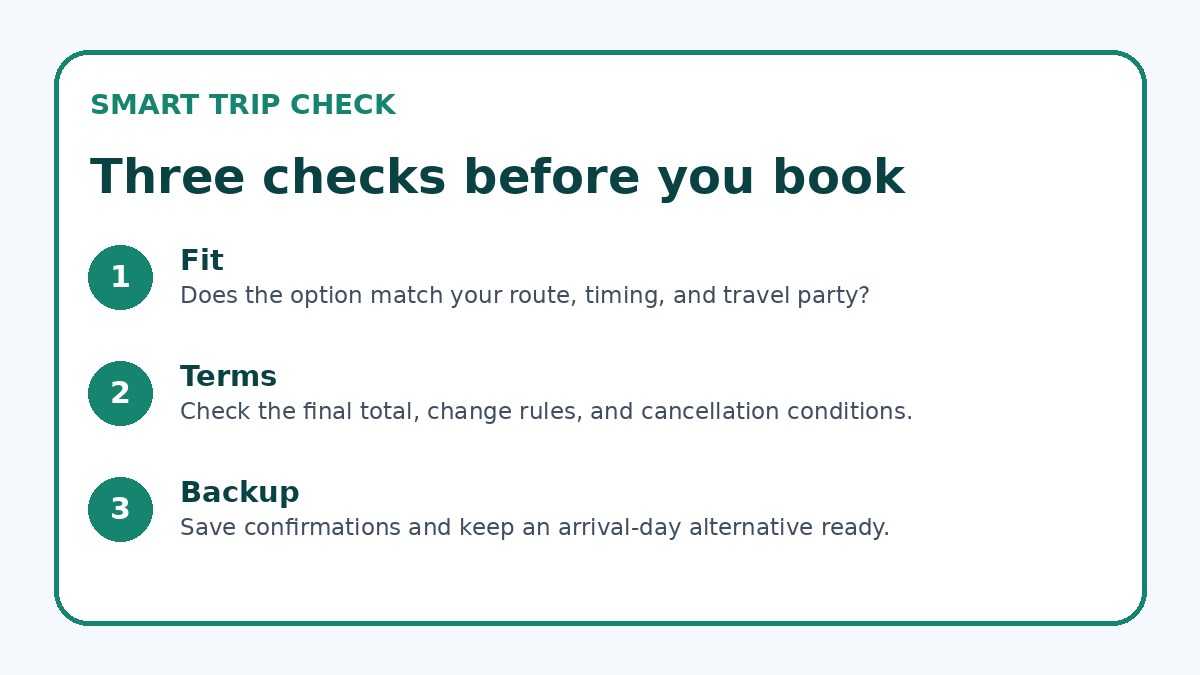
Timing flexibility, transfers, and disruption planning
Decide how much schedule flexibility you need. If you must arrive at a fixed time, prioritize services with frequent departures or earlier arrival buffer. If you value flexibility, coaches often run multiple times daily and can absorb minor itinerary changes. For train journeys, note that even when services are fast, a missed connection can mean a longer wait; plan at least one practical backup per leg, such as a later train or a coach alternative.
Build a disruption plan: identify the next few departures from your origin, station help desks, and local taxi numbers. Consider using a luggage courier service for worry-free transfers if you anticipate many connections or mobility constraints. Also check whether your ticket allows easy rebooking or has flexible change policies—verify these details directly on the provider’s booking page before finalizing to avoid surprises.
Compare the practical alternatives
Use the final page to confirm what is actually offered on your dates and save a workable fallback.
Intercity travel checklist
- Confirm exact drop-off and pick-up locations for your chosen service and map the taxi or walking distance to your hotel.
- Verify luggage size/weight rules and whether you need to check bags into a cargo hold for coach or train services.
- Check on-station facilities: elevators, lockers, and staff assistance availability at both origin and destination.
- Plan at least one realistic backup departure and note how to rebook or change tickets on the provider’s official booking page.
- Arrange last-mile transport in advance (taxi, shuttle, or courier) when arriving offsite from central Gyeongju.
- Label bags clearly and keep essential items and documents in a carry-on you will keep with you during transfers.
End-to-end door-to-door practicality and last-mile solutions
Think beyond the seat: door-to-door practicality includes getting from your lodging in Seoul to the departure terminal and from the arrival point in Gyeongju to your final address. If you're staying near a subway or major road, a short taxi to the terminal may simplify the trip. On arrival, pre-booking a taxi, hotel shuttle, or local transfer can save time and physical effort, especially if you have heavy or bulky luggage.
If you want to avoid carrying bags at all, research luggage-forwarding services that pick up in Seoul and deliver to your Gyeongju hotel. These services are useful if you plan to sightsee en route or want a hands-free final leg. Whatever you choose, confirm pickup/drop-off windows, coverage areas, and liability terms on the provider’s booking page or with your accommodation, and include a little extra time in your itinerary for any last-mile hiccups.
Rail & Intercity Transport questions travelers ask
What is the simplest way to travel from Seoul to Gyeongju with large suitcases?
The simplest approach usually minimizes transfers: choose a direct coach that stops at Gyeongju’s main bus terminal or a rail option that requires only one short taxi on arrival. Direct coaches reduce bag handling by stowing luggage in a dedicated cargo hold at departure and arriving in the city center, which keeps your walking and taxi distance short. If you take a train that stops outside central Gyeongju, plan for a pre-booked taxi or shuttle to avoid carrying heavy suitcases through stations and platforms.
Can I send my luggage ahead so I can travel hands-free?
Yes—luggage-forwarding or courier services operate in South Korea and can pick up bags from your Seoul accommodation and deliver to hotels or addresses in Gyeongju. These services reduce the physical burden and make multi-leg sightseeing easier, but require coordination: book pickup and delivery windows, confirm coverage of your exact addresses, and review liability or loss policies. Always verify pickup confirmation and delivery timing on the provider’s booking page before relying on this as your only luggage plan.
How should I prepare for disruptions or missed connections when carrying luggage?
Expect the unexpected by building buffers into your schedule and knowing alternatives. Identify the next few departures for both trains and coaches, keep station customer-service numbers, and note local taxi ranks or ride apps. Pack a small overnight kit in your carry-on in case luggage is delayed, and check refund/change rules on your ticket before you travel. If you must switch modes, choose options that minimize extra lifts—pre-book a taxi for the last mile rather than walking transfers if you have heavy bags.
Final decision note
For first-time visitors traveling Seoul to Gyeongju with luggage, the right choice balances the number of handoffs against timing flexibility and end-to-end convenience. Direct coaches often win on fewer transfers and central arrival, while trains offer speed and onboard comfort but sometimes require a short onward transfer. Hybrid solutions—combining fast segments with a taxi or using luggage-forwarding services—solve last-mile friction for heavier bags. Before booking, confirm terminal locations, luggage rules, station facilities, and rebooking policies on the provider’s official page; consider Trip.com as one place to view current availability but verify details with the operator. With a clear door-to-door plan and a disruption backup, you can travel with less stress and more focus on enjoying Gyeongju.
Continue planning
Check current options and final conditions
Use the provider page to confirm live availability, the final total, cancellation terms, and every condition that matters to your trip.
This evergreen planning guide was created with AI-assisted drafting and a structured quality review. It does not display live prices, schedules, availability, visa guidance, or provider rankings. Verify current details before booking. Some links are affiliate links; we may earn a commission at no additional cost to you.