If you need a single clear answer: take the Eurostar-style rail option if your priority is door-to-door simplicity and easy exchange options at the station; choose coach or a mixed ferry/coach route if cost flexibility and last-minute rebooking with long lead times matter more than transfer convenience. Solo travelers should weigh terminal access, how much luggage they’ll manage alone, and whether a missed connection will wreck the whole day. This article compares ticket flexibility across rail, coach, ferry and combined approaches and focuses on end-to-end practicality — transfers, luggage handling, typical disruption workarounds, and what to check on the provider’s final booking page before committing. Use these comparisons to pick an approach that aligns with your tolerance for transfer friction, how fixed your schedule is, and how much backup you want if plans change.
Terminal fit and door-to-door practicality
Start planning with where each mode lands in the city. Rail services usually arrive at central terminals with relatively simple onward connections to hotels or short transfers to suburban addresses. For a solo traveler, fewer transfers means less time hauling luggage and lower chance of getting lost or missing a connection. Consider how easy it is to reach your accommodation from the arrival terminal on foot or by a single taxi or transit ride, and whether the terminal has visible, staffed ticket desks to help if you need to change plans.
Coaches and ferries often use terminals outside the immediate city center, which adds a last-mile decision: can you carry your luggage up stairs, wait for a shuttle, or afford a taxi? If you have mobility limitations or oversized bags, that extra transfer may negate any savings from a flexible fare. Also think about arrival time — late-night coach or ferry arrivals sometimes have reduced transit options. When booking, verify on the provider’s final booking page the exact terminal address, transfer connections, and any recommended onward transport so you know the total journey, not just the scheduled ride.
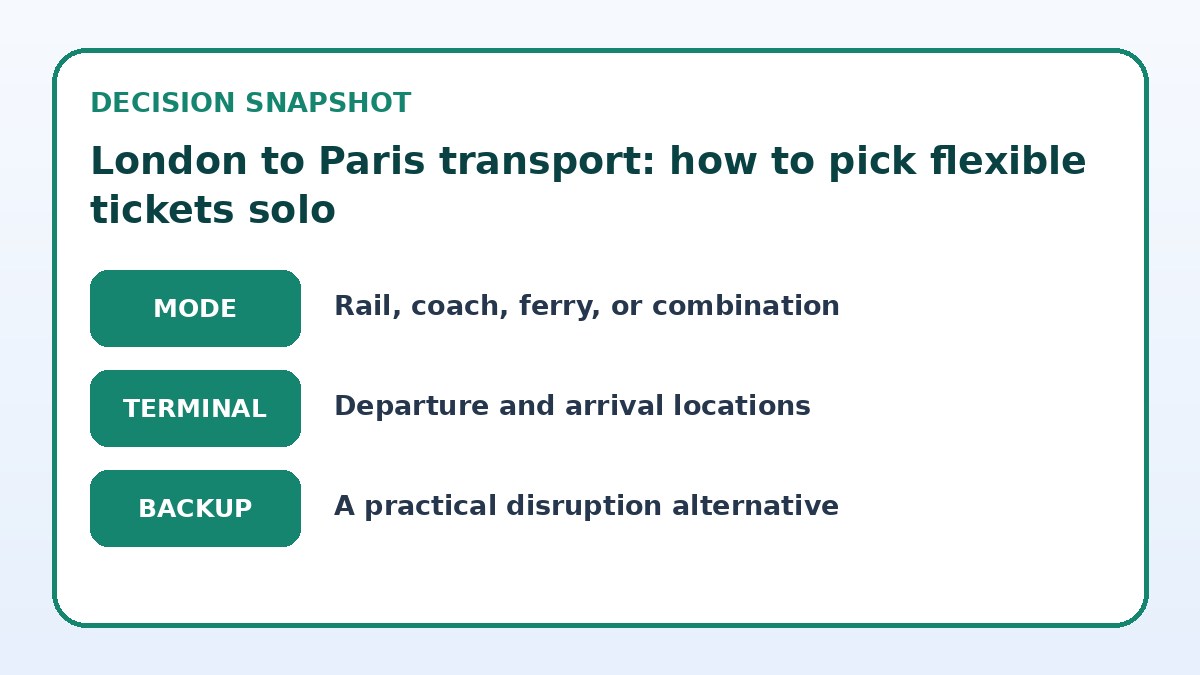
Choose the end-to-end journey plan
| Journey approach | Best for | Friction to check |
|---|---|---|
| Rail-focused single-ticket approach | Solo travelers prioritizing straightforward station transfers and faster city-center access. | Potentially higher base fare and stricter advance-purchase rules; verify change fees and seat-reservation transferability. |
| Budget coach or flexible coach fares | Travelers who want looser change rules and lower-cost flexible tickets despite longer transfer legs. | Longer travel time and more luggage handling; terminals often farther from central hotels and transit. |
| Ferry-plus-coach or ferry-plus-rail mixed route | Those who value open-ended schedules and don’t mind extra transfer steps for potentially easier rebooking. | More check-ins and cross-terminal transfers raise disruption risk; check baggage rules and connection protection. |
| Combination of separate single-mode tickets (staggered booking) | Travelers seeking maximum flexibility to change individual legs independently without a single-ticket constraint. | If any leg is delayed, you may need to buy a new ticket for the next leg; this increases unpredictability and potential cost. |
Check live intercity options
Look beyond the ride itself and compare terminals, transfers, luggage, and arrival fit.
Luggage and transfer friction for solo travelers
Solo travelers must assess how much lifting, carrying, and short-term storage they can manage alone. Trains often allow more generous carry-on rules and simpler platform-to-street movement; staff presence at major stations can help with directions. Coaches and ferries can require you to load and retrieve luggage from under-vehicle bays or separate locker areas, sometimes with limited staff assistance. That means tight connection windows become riskier when you’re moving bags alone, and you should allow extra transfer time in your schedule to compensate.
If you plan to mix modes, factor in the need to move luggage between different vehicle types and terminals. Transfers between a ferry port and a rail station typically involve shuttle buses or local transit and may have sheltered waiting areas, but they still increase the physical and timing complexity of the trip. On the provider’s booking page, check baggage allowances, maximum dimensions, and any additional fees that apply to oversized items. If you rely on minimal hands-free packing, choose an option with shorter, simpler transfers and visible staff at each handover point.
Timing flexibility and change/cancellation policies
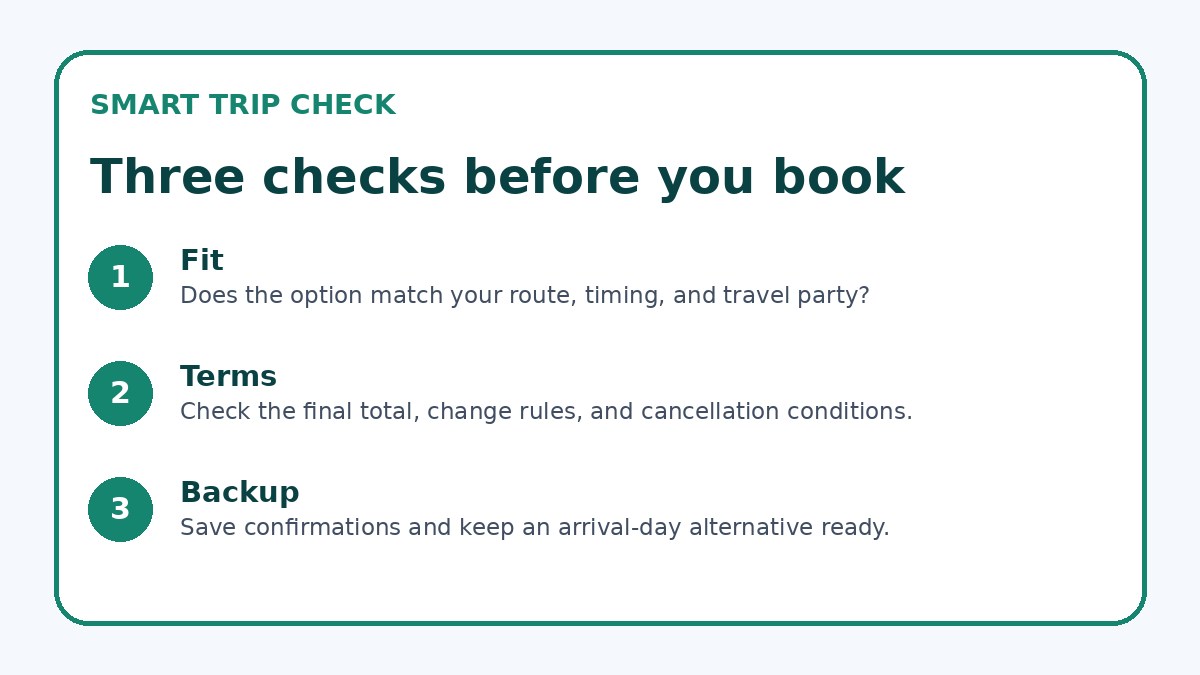
Ticket flexibility comes in many forms: refundable fares, exchangeable tickets, open returns, and the option to change to a different service on short notice. For solo travelers with uncertain schedules, prioritize tickets that allow changes with minimal penalty or hold open-date reservations where possible. Rail providers commonly offer clearly defined fares and change windows; coach operators sometimes sell looser, more flexible tickets but may require a different route or longer travel time to use those options. Read the fare rules on the final booking page to confirm whether changes require a fee, whether seat reservations are transferable, and how far in advance changes must be made.
Also consider the impact of timetable frequency: more frequent services reduce the cost of being flexible because you can switch to another service the same day. If operators list both direct and connecting options, compare whether changes apply to the whole ticket or only to individual legs. For mixed bookings, a change to one leg could invalidate the rest of your itinerary, so check if rebooking is handled as a single combined ticket or separate reservations. Where possible, pick a single-ticket solution to simplify changes and to ensure any disruption assistance covers the entire door-to-door route.
Compare the practical alternatives
Use the final page to confirm what is actually offered on your dates and save a workable fallback.
Intercity travel checklist
- Confirm exact arrival and departure terminal names and addresses on the provider’s final booking page before buying.
- Allow extra transfer time between modes based on how much luggage you’ll carry and whether assistance is available.
- Read the change and cancellation rules for your specific fare subclass to know when fees apply and how to rebook.
- Check baggage allowances and any oversized-item fees on the carrier’s booking page to avoid surprises at check-in.
- Identify at least two alternate services or routes you could use if your original connection is missed.
- Save screenshots of confirmations and key contact numbers; carry a charged phone and a backup power bank for contingencies.
Disruption backups and realistic contingency plans
Build a simple backup plan before you travel. For rail, know the next few departures and whether the provider will allow you to join a later service on the same ticket or offer refunds. For coach or ferry legs, identify alternate operators that run the same corridor and how easy it would be to purchase a last-minute seat. Carry the contact details you’ll need to ask for assistance and take screenshots of your booking confirmation, because solo travelers often have less margin to wait in queues or to find help when connections are missed.
If you rely on mixed routes, plan an extra buffer between legs — even one extra hour can save you from a missed connection when delays happen. Keep your phone charged, consider a small portable battery, and have payment options ready if you need an emergency taxi. On the booking page, verify the provider’s disruption policy, whether they offer rebooking assistance, and whether insurers or credit-card protections apply to your fare type. Trip.com can be useful to compare current availability and conditions, but always confirm final change and refund terms on the carrier’s official booking page.
Rail & Intercity Transport questions travelers ask
How do I compare flexible ticket options without seeing current prices?
Focus on fare conditions rather than price tags: does the ticket allow exchanges, refunds, or open-date travel? Look for explicit wording about change fees, refundable status, and whether seat reservations are included or separate. Check whether a single ticket covers multiple legs or if you must buy separate tickets — a single combined ticket often simplifies rebooking in disruptions. Finally, verify these rules on the provider’s final booking page and note any time limits for making changes.
If I’m traveling with only carry-on luggage, which option gives the best flexibility?
With carry-on only, you can tolerate more transfers, so coaches or mixed ferry/coach options become more practical because you won’t need to load luggage into separate bays. However, rail still offers simpler city-center access and often clearer rebooking policies. Compare the frequency of services and how changes are handled: frequent services reduce the cost of flexibility because getting on a later vehicle is easier. Always check baggage size policies on the booking page to confirm your items meet the rules.
What should I verify on the booking page to prepare for disruptions?
On the booking page, confirm the exact exchange and refund terms, the process for rebooking after a delay, and whether the ticket is part of a protected interline journey or separate reservations. Note any deadlines for making change requests and whether staff assistance is guaranteed at the terminal. Look for information about alternate connections and whether customers are entitled to transfers or refunds in case of missed connections, and save the contact options for emergency rebooking.
Final decision note
Choosing the right ticket flexibility for London to Paris travel as a solo traveler comes down to three tradeoffs: terminal convenience, how much transfer luggage handling you can manage, and how much risk you accept for disruptions. Rail-focused single tickets usually simplify transfers and help preserve time in both city centers; coach and ferry options can offer looser change rules but add transfer friction and longer travel times. Mixed or staggered bookings allow customization but increase the chance of needing a last-minute purchase if one leg is delayed. Before you buy, read the carrier’s final booking page for exact change and refund rules, baggage limits, and terminal details so your door-to-door plan will match the flexibility you expect.
Continue planning
Check current options and final conditions
Use the provider page to confirm live availability, the final total, cancellation terms, and every condition that matters to your trip.
This evergreen planning guide was created with AI-assisted drafting and a structured quality review. It does not display live prices, schedules, availability, visa guidance, or provider rankings. Verify current details before booking. Some links are affiliate links; we may earn a commission at no additional cost to you.