For couples traveling from Seoul to Bangkok, the first decision usually comes down to direct or connecting flights. Direct services simplify the journey: fewer moving parts, less time in transit, and a lower chance of baggage or missed-connection stress. Connecting options often lower fares or open departures at different times, but they add layovers and an element of schedule risk that matters more when two people travel together and coordinate activities at the destination. Start by deciding whether convenience or savings—and flexibility in departure times—matters most to you both. Before you pull the trigger, gather exact travel dates, full traveler names as on passports, seat preferences, and any baggage needs so you can compare real fares and rules on the carriers’ final booking pages or a meta-search like Trip.com.

See live routes for your exact travel day
Compare direct and connecting choices with the same baggage and traveler details.
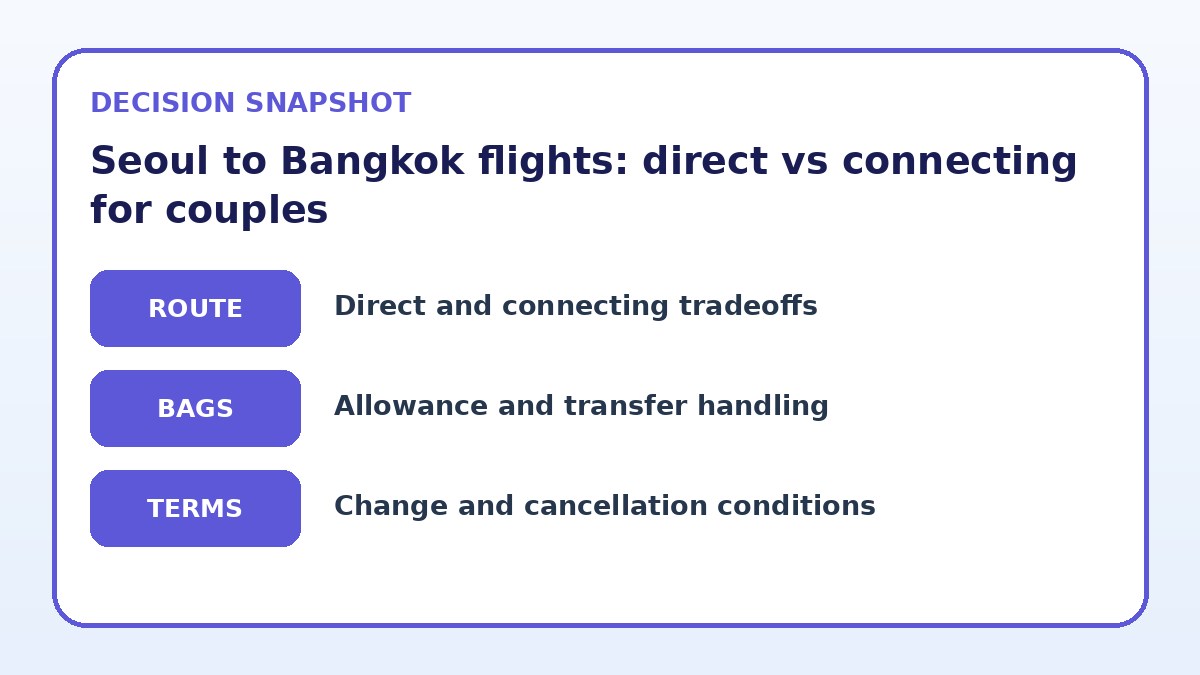
Routing: how to compare direct and connecting itineraries
Start by comparing total door-to-door time, not just flight hours. A direct flight clearly removes the need to change aircraft, but a connecting itinerary might offer a departure that better fits your schedule or an arrival time that aligns with hotel check-in. For couples, think beyond the flight: transfer time from Bangkok’s airport to your hotel, desire for an evening arrival versus morning, and whether you want a buffer day to recover from travel or jump straight into your plans.
When looking at connecting routes, check whether the connection is domestic, regional, or long-haul; that affects the transfer logistics. A single-ticket connection where one airline issues both legs usually includes minimum connection handling and through-checked baggage, whereas separate tickets may require you to claim and recheck bags and proceed through security and immigration. Verify transfer airport terminals and whether an inter-terminal shuttle is needed, and make sure both travelers are comfortable with the resulting transit arrangements.
Baggage and connection risk for two travelers
Baggage policy differences can be a decisive factor. Direct flights typically follow a single carrier’s baggage rules for the whole journey, making it simpler to predict allowances and fees. For couples traveling with shared items—camera gear, souvenirs, or a single checked bag between you—confirm whether the fare includes checked luggage and whether both carry-on sizes are allowed. If you’re packing for islands or outdoor activities, factor extra bag weight or sports equipment into your routing decision.
Connection risk concentrates the possibility of delays and lost luggage. On a protected single-ticket itinerary the airline usually handles rebookings and baggage transfer if the inbound leg runs late. On separate tickets, you face the added burden of rechecking luggage and needing longer layovers, which erodes any savings. Couples should weigh the emotional cost of a missed connection—worrying about nights, transfers, and rescheduling—against any fare savings, and decide whether to build buffer time into the schedule.
Compare flight-selection strategies
| Flight strategy | Best for | Risk to check |
|---|---|---|
| Book a nonstop ticket for both travelers on one carrier | Couples prioritizing minimal hassle, predictable arrival, and shorter total travel time | Usually higher cash fare or fewer departure time choices compared with connections |
| Book a single-ticket connection on one airline or alliance | Couples seeking lower fares with protected connections and through-checked baggage | Longer travel time and potential for missed connections, though rebooking is handled by the carrier |
| Buy separate tickets for each leg with different carriers | Couples chasing the lowest possible fare or specific carrier timing not available on single tickets | Higher connection risk, baggage recheck, and responsibility to rebook if you miss a flight |
| Mix a direct outbound with a connecting return (or vice versa) | Couples balancing convenience on arrival with lower-cost flexibility on the return or outgoing leg | Adds itinerary complexity and requires attention to separate fare rules for each direction |
Recheck the complete itinerary
Confirm airports, connection handling, baggage, and change conditions before deciding.
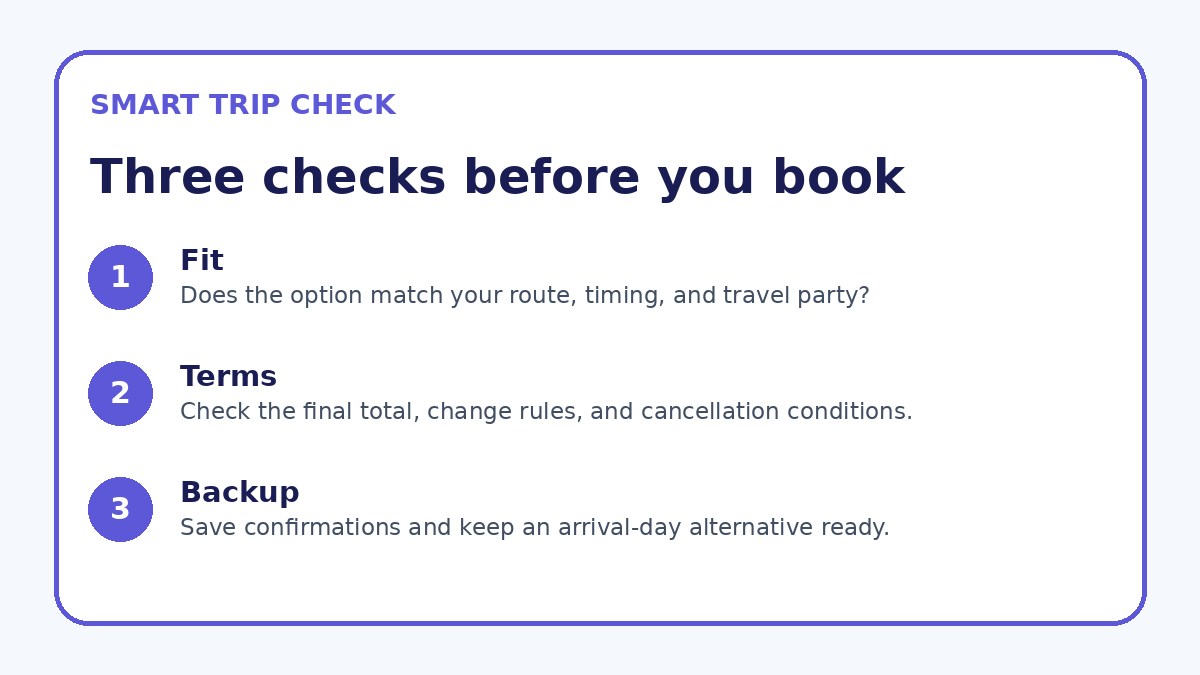
Schedule fit: timing, layovers, and daily rhythm
Consider how flight times affect your plans together. A morning arrival in Bangkok gives you daylight to get oriented and adjust, while late-night arrivals can be tiring and limit first-night options. Direct flights reduce the number of wake-ups and logistical steps; connecting flights can open departures at times that suit work or local commitments in Seoul. For couples with different sleep patterns or mobility needs, prioritize itineraries that minimize overnight transfers and long overnight layovers.
For connecting options, scrutinize the layover length and airport facilities. A short, well-timed layover may be fine for able-bodied travelers who move quickly, while longer layovers give breathing room but lengthen travel day fatigue. If you enjoy airport lounges or meals together, check lounge access and whether both travelers can use it based on fare class or credit cards. Ultimately, the best schedule fit balances travel fatigue, cost, and the activities you plan to do together on arrival.
Flight details to verify
- Choose exact departure and return dates and populate both travelers’ full passport names before searching fares.
- Decide whether you require checked baggage, seat selection, or extra legroom and filter fares accordingly.
- If considering connections, set a minimum acceptable layover time and avoid back-to-back short connections.
- Check whether the itinerary is on a single ticket (protected) or multiple separate tickets and confirm baggage transfer rules.
- Review change and cancellation policies on the airline’s final booking page for both travelers before paying.
- Confirm airport terminals, lounge access, and pre-departure testing or document requirements if applicable, directly with the carrier.
Fare conditions and what to confirm before booking
Fare rules matter more than the headline price. Look beyond the ticket amount to baggage inclusion, change and cancellation fees, seat selection charges, and whether meals are included. For couples who may need to adjust plans, flexible or refundable options reduce stress; for fixed itineraries, non-refundable fares can be acceptable but require confidence. On connecting itineraries involving different carriers or separate tickets, check each leg’s fare conditions and whether the price difference justifies any added risk.
Always verify provider-specific details on the airline or booking site’s final page before paying. Confirm baggage allowance, exact change and cancellation penalties, minimum connection times, and whether connections are protected on a single ticket. If you use a third-party aggregator or travel agent, inspect the airline confirmation numbers and the exact fare conditions sent by the carrier. Using Trip.com or another comparison tool is fine to gather options, but rely on the operating carrier’s booking page for final rules and check-in requirements.
Flight Guide questions travelers ask
Is a direct Seoul to Bangkok flight always the more comfortable choice for couples?
Direct flights are usually more comfortable because they remove the stress of making connections and minimize total travel time, which helps if you want to start enjoying Bangkok quickly. However, comfort also depends on cabin class, seat selection, and individual preferences—some couples may prefer a daytime connection that aligns with their schedules or a cheaper fare that lets them upgrade accommodation instead. Compare total transit time, in-flight comfort options, and how each option affects your arrival plans before deciding.
How much layover time should two travelers plan for when connecting through another airport?
Aim for a layover that balances safety and efficiency: allow enough time to clear arrival procedures, transfer between terminals if necessary, and account for minor delays. For protected single-ticket connections, an airline’s published minimum is a baseline, but many travelers add extra buffer—especially if the arrival or transfer involves immigration. On separate tickets or unfamiliar airports, plan significantly more time and factor in baggage reclaims and recheck if needed. Choose a layover length that both travelers feel comfortable with given the airport layout and mobility.
What should couples look for in fare rules when comparing direct and connecting options?
Inspect what the fare includes: checked baggage allowance, seat assignments, change and cancellation fees, and whether the fare is refundable or requires penalties for modifications. On connecting itineraries, check if both legs are on one ticket—this affects whether the airline will protect you for missed connections and transfer your baggage. Also verify whether ancillary fees apply per passenger; doubling small fees for two travelers can add up. Always confirm these details on the carrier’s official booking confirmation before finalizing payment.
Final decision note
For couples flying Seoul to Bangkok, the right choice hinges on whether you value convenience and predictability or lower fares and schedule flexibility. Direct flights reduce the number of moving parts and typically make for a smoother arrival together, while connecting itineraries can open better departure times or savings if you accept more complexity. Gather exact dates, traveler passport names, baggage needs, and seat preferences, then compare total travel time, fare conditions, and connection protection on the airline’s final booking page. If you use an aggregator like Trip.com to view options, follow up with the operating carrier before confirming so you both know exactly what is included and how changes would be handled.
Continue planning
Check current options and final conditions
Use the provider page to confirm live availability, the final total, cancellation terms, and every condition that matters to your trip.
This evergreen planning guide was created with AI-assisted drafting and a structured quality review. It does not display live prices, schedules, availability, visa guidance, or provider rankings. Verify current details before booking. Some links are affiliate links; we may earn a commission at no additional cost to you.