If you have one core decision before searching Taipei hotels for a family trip, make it the neighborhood. The right area shrinks daily friction — shorter transfers from the airport or train station, simpler routes to parks and kid-friendly museums, and fewer late-night walks after a long day. Start by matching your family’s priorities (easy transit, quiet streets, playground access, or food options for picky eaters) to four practical neighborhood types: central transit hubs, relaxed residential districts, riverside or park-side zones, and culture/market areas. This article gives a quick recommendation up front, then walks through how each neighborhood affects daily routes, room needs for different family sizes, and the final booking terms you should verify before clicking reserve. Follow these steps and you’ll be able to shortlist one or two areas confidently before opening live availability on any booking site, including Trip.com if you want to compare options.

Check live stays in the areas that fit
Use your dates and party size to compare current rooms after you narrow the neighborhood fit.
Neighborhood fit: which area suits your family’s rhythm?
Start by listing what your children need day-to-day: naps without noise, playgrounds within a ten-minute walk, a bathtub for younger kids, or quick access to afternoon snacks and convenience stores. Central transit hubs (near Taipei Main Station or Ximen) usually win if you value short transfers and lots of transport choices. Residential neighborhoods like Da’an and Zhongshan tend to offer calmer evenings and green space, which helps families who want easy outdoor time without long commutes.
Also consider meal rhythms: do you want many casual eateries steps from the hotel, or are you comfortable walking to local markets? If your family prefers stroller-friendly sidewalks and bike paths, riverside areas and Daan Forest Park are attractive. For evening entertainment tied to markets and temples, culture/market neighborhoods deliver atmosphere, but you should weigh potential nightlife noise against the convenience of late snacks and local treats.
Choose an area-selection strategy
| Area approach | Best for | Tradeoff to check |
|---|---|---|
| Default to central transit hubs | Families prioritizing short transfers and flexible transit connections | Higher daytime crowds and potentially smaller hotel rooms in busier areas |
| Choose residential districts | Families who want quiet nights and nearby parks | Longer commutes to some tourist attractions and night markets |
| Pick riverside or park-side areas | Families seeking outdoor space and bike paths | Fewer evening dining options within immediate walking distance |
| Stay near culture/market neighborhoods | Families wanting lively local food scenes and market access | Possible night noise and busier sidewalks for strollers |
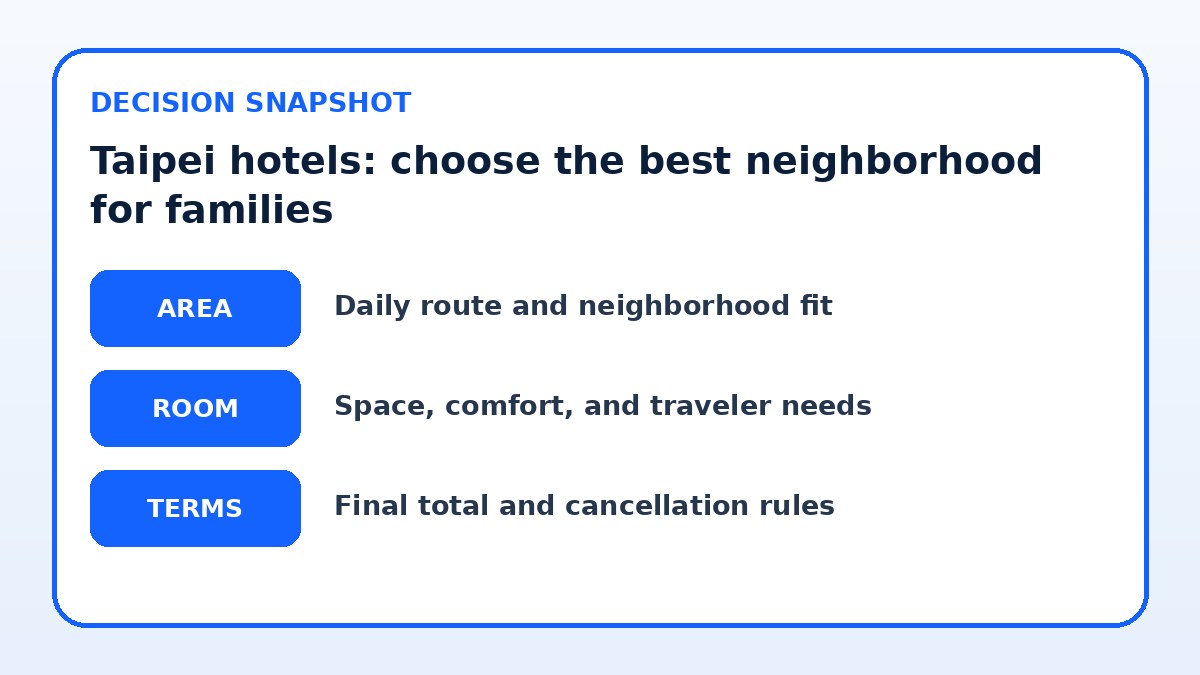
Daily-route friction: how hotel location shapes each day
Think like a daily planner: map the hotel-to-attraction trips you’ll repeat most often — a one-way ride to Taipei 101, a subway trip to the National Palace Museum, or a short taxi to a favorite restaurant. Central hubs reduce cumulative travel time and make midday hotel returns easier when you need naps or a clothing change. In residential or park-side areas, expect slightly longer commutes to tourist clusters but faster, calmer walks to nearby parks or playgrounds.
Also evaluate how the neighborhood connects to transit nodes for airport or intercity train transfers. If you’ll arrive late or depart early with tired kids, a hotel close to an express train or an MRT line with fewer transfers will cut stress. Don’t assume a direct connection exists—check the provider’s booking page or transit maps to confirm station names and elevator/escalator availability for strollers and luggage.
Now compare like with like
Keep the same dates, guests, room needs, and cancellation preferences while you compare the final choices.
Room and party needs: size, layout, and accessibility
Decide how many beds and what layout you need before filtering hotels. Small families often get by with a double room plus a rollaway or an extra cot; families of four or more should prioritize suites, interconnecting rooms, or family rooms that explicitly list sofa beds and occupancy limits. Look for clear photos and floorplans on the hotel’s official page and verify bed configurations, crib availability, and any age limits for free child stays.
Accessibility matters: request rooms on lower floors if elevators are small or slow, and check whether the hotel stores strollers on-site or leaves room for them in your room. If anyone in your party needs accessible bathrooms or grab bars, don’t rely on generic room descriptions — contact the hotel directly and save the confirmation message. Verify cancellation and modification terms on the booking page so changes in party size can be handled without penalties.

Hotel booking check before payment
- Map your top three daily activities and measure door-to-door transit routes from candidate neighborhoods before filtering hotels.
- Confirm bed configuration, crib policy, and maximum room occupancy directly with the hotel and save written confirmation.
- Check elevator width, stroller storage options, and whether rooms are on floors reachable without tiny elevators.
- Verify pool hours, kids’ club availability, and any age limits for amenities on the hotel’s current booking page.
- Compare cancellation and modification terms across at least two booking sites and the hotel’s official site before finalizing payment.
- If you need airport transfers or early check-in, request them in writing and reconfirm 48 hours before arrival.
Final booking terms: what to verify before you reserve
Before booking, confirm the exact room rate rules: cancellation window, whether breakfast is included for children, and if cribs or extra beds are free or chargeable. Look for explicit statements about resort-style extras some hotels advertise—pool hours, lifeguard presence, and kids’ club schedules can change seasonally and are best verified on the hotel’s current booking page or by calling the property.
Check arrival logistics: does the hotel offer airport shuttle service or partner with a local provider, and are there restrictions on arrival times? When booking through an online agency, cross-check the hotel’s official site to confirm identical room descriptions and to ask about special requests such as connecting rooms or early check-in. Trip.com can be used once to compare availability, but treat any provider-specific facts as needing verification on the hotel’s final booking page.
Hotel Guide questions travelers ask
How do I choose between a central hotel and a quieter residential hotel in Taipei?
Weigh daily priorities: if you plan many short outings using the MRT or will make several airport/train transfers, a central hotel near Taipei Main Station or Ximen will save cumulative time and reduce taxi costs. If your top priorities are nap-friendly quiet, nearby playgrounds and evening strolls, a residential area like Da’an or parts of Zhongshan will be calmer and more walkable. Consider splitting the stay — a night or two near a transit hub and the rest in a quieter neighborhood — and confirm luggage storage or early check-in options with both hotels before you book.
What room features should families insist on when booking Taipei hotels?
Ask for exact bed layouts, whether an extra bed or crib is available and if any fees apply, and whether rooms have bathtubs if you need one for young children. Check the photos and floorplans on the hotel’s official page and request a room on a lower floor if elevators are small. If anyone has mobility needs, ask for accessible bathroom features. Save all confirmations from the hotel about these requests — booking sites may not forward specific staff replies, and having written confirmation helps at check-in.
How important is proximity to an MRT station for family trips in Taipei?
Very important if you want predictable, fast travel across the city, because Taipei’s MRT network links major attractions, parks, and shopping areas efficiently. For families with strollers, prioritize stations with elevators and identify the exact station exit closest to your hotel. If your preferred neighborhood lacks a nearby MRT line, check local bus routes and taxi stands instead, and factor additional travel time into daily plans. Always verify elevator and escalator availability on transit maps or the station pages before relying on a specific connection.
Final decision note
Choosing where to stay in Taipei for a family trip is about reducing daily friction and matching the hotel’s strengths to your family’s routine. Start by deciding whether you want fast transit access, quiet residential streets, park-side outdoor space, or market-side evening activity. Use the neighborhood types and tradeoffs here to shortlist one or two areas, then confirm room layouts, accessibility, and key booking terms directly with the hotel before you reserve. Save confirmations of crib requests, connecting rooms, and cancellation policies so you can focus on the trip itself once the logistics are settled.
Continue planning
Check current options and final conditions
Use the provider page to confirm live availability, the final total, cancellation terms, and every condition that matters to your trip.
This evergreen planning guide was created with AI-assisted drafting and a structured quality review. It does not display live prices, schedules, availability, visa guidance, or provider rankings. Verify current details before booking. Some links are affiliate links; we may earn a commission at no additional cost to you.