If you need a clear decision now: take the regular intercity train or express coach from Busan to Gyeongju for the easiest balance of speed and value; consider a private transfer if you prioritize door-to-door convenience, and a ferry only if combining a scenic coastal route with other connections. This article helps first-time visitors compare the realistic options—conventional trains, KTX or regional trains where available, intercity coaches, car and taxi transfers, and occasional ferry legs—and explains the tradeoffs you’ll weigh: total travel time including transfers, comfort with luggage, frequency, cost flexibility, and how much walking or local transport you’re willing to add at each end. Use the quick checklist and comparison table to match the choice to your priorities, and verify final schedules, baggage allowances, and pick-up points on service provider pages (Trip.com can help compare current availability).
How to compare total journey time and door-to-door convenience
Train ride time is only part of the picture: add walking, waiting, and local transit at both ends when comparing options. Stations in Busan and Gyeongju may sit away from hotels or heritage sites, so check the distance and available last-mile options—local buses, taxis, or city shuttles. For coaches, routes sometimes stop nearer central bus terminals; that reduces local travel even if the intercity leg is slower. Private transfers remove that friction but factor in potential traffic congestion and pickup/dropoff timing when deciding if the premium is worth it.
When evaluating journey time, think about how tightly scheduled your day is. If you need to arrive early for a tour or train onward, prefer options with buffer time and higher frequency so a missed connection is less risky. For leisurely itineraries, a slightly longer coach or a scenic route that includes a ferry could be enjoyable. Always check real-time timetables and allow extra time for luggage handling, ticket collection, or busy holiday periods; provider pages show current departures, stoppages, and any required reservations.
Cost, comfort, and luggage considerations
Budget travelers often lean toward standard intercity trains or coaches because they balance fare and comfort. Trains usually provide more legroom, the ability to walk between carriages, and steady ride quality; coaches vary by operator and may offer reclining seats and onboard toilets. If you have oversized luggage, confirm baggage policies—some services restrict or charge for large items, while others have generous storage. Decide whether seat reservations matter to you: some trains and premium coaches let you reserve a seat in advance, which is useful during busy periods or when traveling as a group.
If cost is the priority, compare refundable versus non-refundable fares and the flexibility to change times without heavy penalties. Private transfers and taxis typically cost more but include door-to-door convenience and the ability to stop en route. Consider shared ride services as a middle ground if available. For families or travelers with mobility needs, assess whether platforms, vehicle interiors, and station access are suitable; contact providers directly to confirm special assistance options before booking.
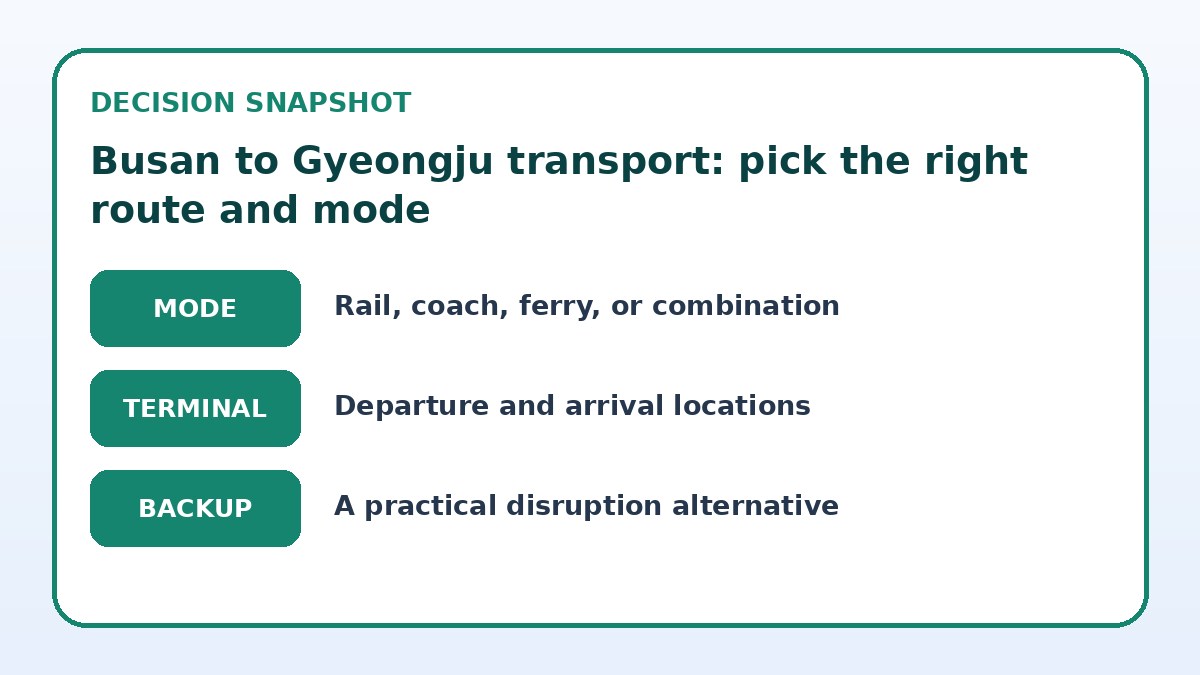
| Approach | Best for | Tradeoff to check |
|---|---|---|
| Regular intercity train | Travelers prioritizing predictable schedules and ride comfort | May require extra local transit to reach final hotel or historical sites |
| Express train or premium rail | Those needing faster rail travel and reserved seating | Higher fare and limited departure times compared with regular services |
| Intercity coach | Budget-conscious visitors wanting closer city-terminal drop-offs | Longer journey potential during peak road traffic and less onboard space |
| Private transfer or taxi | Groups, families, or heavy-luggage travelers valuing door-to-door convenience | Higher cost and exposure to road congestion delays |
Frequency, reliability, and seasonal factors
Frequency matters: stations and bus terminals with departures every 20–60 minutes reduce the need to stick to a single schedule and offer reassurance if your plans shift. Trains often run on fixed, reliable timetables; coaches are frequent on major corridors but can be affected by traffic congestion, construction, or holidays. If you travel during national holidays or weekends, expect higher demand—reserve seats where possible and check for additional services. Use official schedule pages to confirm any temporary changes or seasonal service adjustments.
Reliability also hinges on weather and road conditions. Coastal ferries or scenic road routes can be disrupted by storms, and long-distance coaches face delays from highway incidents. If punctual arrival is critical, prioritize rail where it’s available and frequent. For flexible itineraries, allow buffer time or choose options that offer easy rebooking. Remember to verify the latest conditions on provider sites and local transport advisories before departure.
Before you book
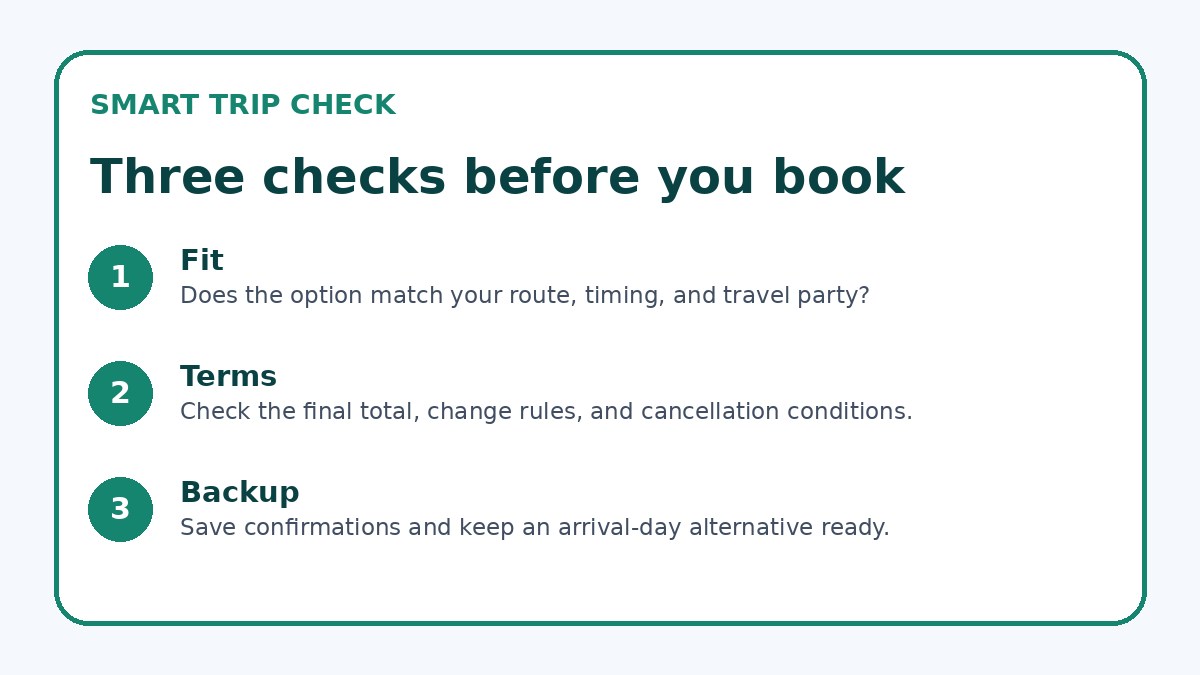
- Check live timetables and seat availability on the operator’s official booking page before you reserve.
- Measure walking distances and transfer times from arrival points to your accommodation or first attraction.
- Confirm luggage allowances and any extra-fee rules for oversized items directly with the carrier.
- Decide between refundable or flexible fares if your schedule might change and verify change/cancellation terms.
- If opting for a ferry or seasonal route, check weather advisories and service status on the provider’s site before departure.
- If mobility assistance is needed, contact the station or carrier in advance to arrange help and confirm accessible boarding points.
Choosing the best option for different traveler types
Solo travelers or couples who value speed with moderate cost usually prefer trains or express coaches, depending on the schedule and exact station locations. Backpackers and budget travelers often select standard coaches or regional trains to save money, while those with limited time may pay more for express train services or private transfers. Families with children or groups carrying lots of luggage often choose private transfers or taxis that simplify logistics; compare vehicle sizes and driver assistance before booking.
Sightseeing-minded visitors who want a scenic approach might mix modes—take a coastal ferry for part of the route then a local bus or taxi to reach Gyeongju—to add variety to the journey. If you have mobility concerns, prioritize options with straightforward platform access and minimal transfers. In every case, match your tolerance for transfers and walking with the proximity of pick-up and drop-off points to your accommodation and planned activities.
Frequently asked questions
Is taking the train from Busan to Gyeongju the fastest option?
Train speed varies by service type and whether there’s a direct high-speed option on your selected routing. To determine the fastest meaningful door-to-door choice, compare scheduled on-train time plus transfer times at both ends against coach and private transfer estimates. Remember that express rail may have fewer departures, so a slightly slower but more frequent train or a direct private transfer could be quicker overall depending on your location and timing. Always confirm current schedules with the carrier before booking.
Can I rely on coaches for frequent departures and convenience?
Coaches on popular corridors often run frequently and stop at city terminals that can be closer to central areas than some train stations. However, coaches share roads with other traffic and may be delayed during peak periods, holidays, or unexpected congestion. If regular departures and a city-center drop are important, coaches are a practical choice—just build in extra time for traffic and verify the pick-up and drop-off locations on the operator’s timetable page before you travel.
When should I consider a ferry or scenic route for this trip?
A ferry or scenic coastal routing makes sense if your itinerary includes island visits or you intentionally want a more varied travel experience and have flexible time. Ferries are not usually the default direct option between Busan and Gyeongju, so use this mode when you’re combining multiple destinations or prioritizing the journey itself. Check seasonal schedules, weather impacts, and connecting transport options carefully; provider pages and local advisories will confirm whether the ferry leg integrates smoothly with your onward plans.
Final planning note
For first-time visitors deciding how to travel from Busan to Gyeongju, match the mode to your priorities: choose trains for dependable schedules and comfort, coaches for frequent departures and nearer city drop-offs, and private transfers for hassle-free door-to-door travel with luggage or groups. Ferry routes fit only particular itineraries that combine coastal sightseeing or island stops. Before you book, verify live timetables, baggage rules, pick-up/drop-off locations, accessibility options, and fare-change terms on the provider’s official pages. Use the checklist here and compare availability on Trip.com or provider sites to confirm the final details that matter to your trip.
Continue planning
Check current options and final conditions
Use the provider page to confirm live availability, the final total, cancellation terms, and every condition that matters to your trip.
This evergreen planning guide was created with AI-assisted drafting and a structured quality review. It does not display live prices, schedules, availability, visa guidance, or provider rankings. Verify current details before booking. Some links are affiliate links; we may earn a commission at no additional cost to you.