If your main worry is whether to trade a central location for a quieter, more comfortable room, start with the neighbourhood decision rather than individual hotels. For solo travelers in Penang, that choice drives daily logistics: how easy it is to walk to food, transit or attractions, whether the area feels safe at night, and how much noise you’ll tolerate while sleeping. A practical approach is to shortlist two neighbourhood types — one very central, one quieter and residential — then compare the available rooms for private bathrooms, workspace, blackout curtains and elevator access. That narrows live searches fast and makes final booking questions clearer: what’s the specific room’s floor, bed size, window orientation and cancellation terms? Use map view on booking sites and verify the room details on the provider’s final page before paying.
Check live stays in the areas that fit
Use your dates and party size to compare current rooms after you narrow the neighborhood fit.
Which neighbourhood suits you: city centre, heritage, beach, or suburban
Choose the area by prioritizing what you’ll do most days. If you plan long days exploring George Town’s street art, heritage shophouses or food stalls, a hotel in or near George Town’s UNESCO core will save you transport time and give easy walking access to most daytime highlights. This comes with more nightlife noise and denser crowds, so check room facing and window glazing before booking. For those who want a mix of colonial architecture and cafés, this is the highest convenience option for daytime exploration.
If your idea of a low-stress solo trip includes longer beach time or quieter mornings, Batu Ferringhi and the northern coastline offer a different tempo. Expect a longer commute to George Town’s central food areas and attractions, so factor taxi or bus time into daily plans. Suburban neighbourhoods like Tanjung Bungah provide calmer streets and potentially larger rooms for similar money, but confirm transport frequency at the times you’ll travel rather than assuming a constant service level.
Choose an area-selection strategy
| Area approach | Best for | Tradeoff to check |
|---|---|---|
| Central George Town stay | Solo travellers who prioritise walking access to food, museums, and street art | Higher noise and smaller rooms; check window orientation and soundproofing |
| Batu Ferringhi or beach-front | Those focused on beach time and quieter mornings | Longer trips to central food hubs and attractions; factor transport time |
| Residential suburbs (Tanjung Bungah, Air Itam fringe) | Travellers wanting larger rooms and calmer nights at similar budgets | Less immediate access to central attractions; verify evening transport |
| Mixed-use areas near Komtar or Gurney Drive | People who want balanced nightlife, dining, and shopping options | Potentially busier streets and variable room sizes; confirm the exact room layout |
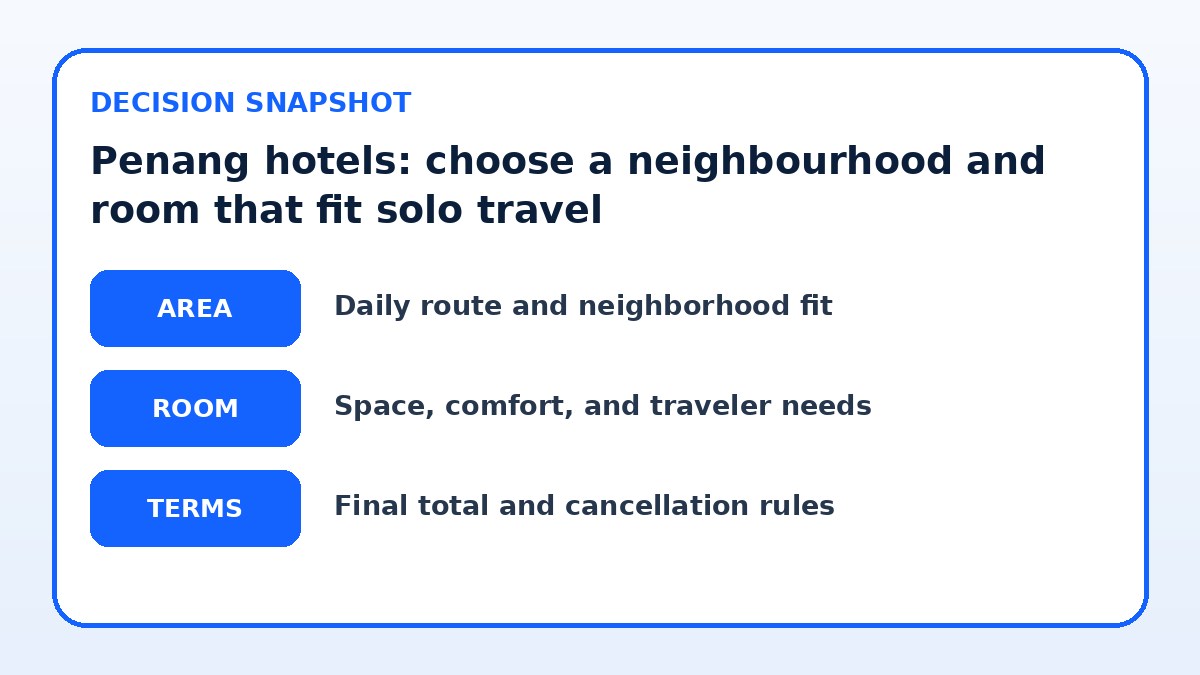
Daily-route friction: how location affects your itinerary and costs
When you pick a neighbourhood, sketch a typical day: breakfast, two activities, lunch, a late-afternoon pause, and dinner. If each leg requires a taxi instead of a short walk or affordable bus, daily travel time and cost climb fast. George Town reduces route friction for most attractions and food stalls, letting you decide on the fly. Staying near Komtar or Chulia Street is a convenience multiplier if you plan many short stops, but it often means more noise and less private space for work or downtime.
If you prefer fewer short trips and more downtime in your room, favour quieter residential areas and hotels with in-house dining or grab-and-go options. That reduces the need to travel multiple times a day but increases single-trip time to central sites. To compare friction objectively, estimate walking times from a map, check bus routes and frequency for evenings, and add a buffer for weekends or festival days. Note that local traffic patterns and service availability can change; verify transport details on local provider pages before finalising a booking.
Now compare like with like
Keep the same dates, guests, room needs, and cancellation preferences while you compare the final choices.
Room and party needs: what solo travellers should prioritise in the room
For solo travellers, some room features matter disproportionately. Prioritise a private bathroom, comfortable bed, reliable Wi‑Fi if you work or plan long research sessions, and an uncluttered workspace. Window orientation and floor level affect daylight and noise: higher floors usually cut street noise but check lift access if you have heavy luggage. If you rely on late-night snacks or early departures, an in-room kettle or mini-fridge is a small convenience that pays off repeatedly.
If you expect to socialise, look for hotels with a public lounge, rooftop bar, or communal dining where joining group activities feels natural and safe. Conversely, if resting between full days is the aim, ask about soundproofing, blackout curtains and housekeeping schedules; cleaning at midday can disturb a nap. Always confirm room photos match the actual room type on the provider’s final booking page; different room categories within one hotel can vary widely in layout and amenities.

Hotel booking check before payment
- Draw a one-day itinerary and map walking times from your shortlisted neighbourhoods to test daily friction.
- Filter live listings for private bathroom, reliable Wi‑Fi, and a desk or dedicated workspace before comparing prices.
- Confirm room floor, window orientation, and whether the room listing references sound insulation or recent renovations.
- Verify cancellation terms and whether breakfast or other essentials are included on the provider’s final booking page.
- Check hotel reception hours, secure luggage storage availability, and accepted payment methods with the property if unsure.
- Read recent guest comments for noise and safety mentions; contact the hotel directly with any unanswered practical questions.
Final booking terms and what to verify before you commit
Before you click book, read the cancellation policy, check whether breakfast is included in the listed room rate, and confirm the exact bed and bathroom configuration for the room you’re selecting. If listed features are critical—early check-in, late checkout, airport transfers, or accessible rooms—verify them directly with the property or on the provider’s final page. Booking platforms sometimes show headline features that apply to some room categories but not all, so match the room code or name exactly.
Also verify practical details that influence your solo stay: whether the hotel has 24-hour reception, secure luggage storage, and the payment methods accepted at check-in. Look for recent guest photos and recent reviews mentioning safety and noise; for specific queries, contact the property to confirm details and ask for photographic proof if necessary. If you want to compare availability quickly, you can check Trip.com as one of several booking sources, but always confirm room-level specifics on the provider’s final booking page before paying.
Hotel Guide questions travelers ask
How do I decide between staying in George Town versus a beach area like Batu Ferringhi?
Start by listing your priorities: if you want most meals, attractions and nightlife within walking distance, George Town reduces daily transport friction and suits short exploratory trips. If you value mornings on the sand, fewer crowds and larger, quieter rooms, Batu Ferringhi or nearby coastal neighbourhoods are a better match but require more travel to central sites. To decide, estimate typical travel times from map distances and check public transport or taxi access for the hours you plan to move between places.
Which room features should I not compromise on when booking as a solo traveller?
Prioritise a private bathroom, comfortable bed, reliable Wi‑Fi and an uncluttered workspace if you plan to work or research. Check for soundproofing or higher-floor options to reduce street noise and confirm blackout curtains if you sleep during daylight hours. Small conveniences like an in-room kettle or mini-fridge help with late arrivals and irregular schedules. Always verify these specifics on the booking page and, if necessary, ask the property to confirm the exact amenities in the room you’ll receive.
How can I assess safety and late-night convenience before booking?
Look for neighbourhood-level clues: presence of 24-hour food outlets, frequent evening foot traffic, street lighting and proximity to transport hubs. Read recent guest reviews for mentions of late-night noise, security and staff responsiveness. Confirm 24-hour reception or secure entry policies with the hotel and ask about luggage storage for late departures. If a neighbourhood feels unfamiliar, compare it on a map with well-trafficked streets and verify walking routes between the hotel and likely late-night destinations.
Final decision note
For solo travellers in Penang, the most effective strategy is to pick the neighbourhood that supports your daily rhythm first, then lock in the room features that protect rest and convenience. That two-step approach—neighbourhood shortlist, then room-level verification—helps you compare meaningful differences across listings and reduces surprises at check-in. Use map view and sample itineraries to quantify daily-route friction, and confirm critical room details, cancellation terms and reception hours on the provider’s final booking page. With a clear shortlist you can open live inventory armed with precise questions and choose a room that balances location and comfort for your solo trip.
Continue planning
Check current options and final conditions
Use the provider page to confirm live availability, the final total, cancellation terms, and every condition that matters to your trip.
This evergreen planning guide was created with AI-assisted drafting and a structured quality review. It does not display live prices, schedules, availability, visa guidance, or provider rankings. Verify current details before booking. Some links are affiliate links; we may earn a commission at no additional cost to you.