Practical short answer: choose your San Francisco hotel area by what you want to do most. If you want waterfront views, tourist attractions and easy boat tours, consider Fisherman’s Wharf or the Embarcadero. If you prefer central access to transit, shopping, and a wide choice of hotels, Union Square is a strong bet. For a younger, food-focused experience with nightlife and murals, the Mission District is better. Each area has tradeoffs: cost, noise, transit access, and walking hills. Below I’ll explain those tradeoffs clearly, outline decision criteria you can use when booking, and offer concrete planning steps such as where to check transit routes, how to read hotel descriptions for amenities, and what neighborhood details to verify on the hotel's final booking page.
Union Square — central, convenient, and transit-friendly
Union Square is the practical hub for first-time visitors who want broad transit access, plentiful hotels, and downtown amenities. Most major hotels are within walking distance of MUNI streetcars and the Powell Street BART station; that makes it straightforward to reach SFO via BART or to connect to other parts of the city. You’ll find department stores, theaters, and a wide range of restaurants here. If you’re balancing short sightseeing windows with shopping or business needs, Union Square minimizes transit transfers and often reduces time spent walking up steep hills.
Tradeoffs include higher daytime foot traffic and a more commercial feel—less character than neighborhoods like the Mission—and hotel rates tend to reflect the location’s convenience. Noise from traffic and late-night activity can be noticeable, especially on lower floors. Look closely at room descriptions for soundproofing notes and check guest reviews for recent comments about construction or street noise. If you plan to rely on taxis or rideshare, Union Square’s centralized drop-off and pickup points are convenient, but always confirm pickup locations with your hotel when booking.
Fisherman’s Wharf & North Beach — sightseeing on the waterfront
Fisherman’s Wharf is the obvious pick for first-timers focused on tourist attractions: Pier 39, sea lions, waterfront promenades, and Alcatraz departures are all concentrated here. North Beach, adjacent to Fisherman’s Wharf, adds cafes, bakeries, and an Italian-deli scene. These neighborhoods simplify packing sightseeing into short days because so many major draws are walking distance. Many family-friendly hotels and restaurants are clustered here, and you’ll have easy access to boat tours and waterfront photo spots without relying heavily on transit.
The main tradeoff is the tourist density: daytime crowds and souvenir shops dominate parts of the waterfront, and evenings can feel kitschy rather than authentically local. Hotels here can be more expensive relative to what you get for the room because of location premiums. Also check whether a hotel listing includes details about views, room orientation, and whether main windows face busy streets or quieter alleys. If quieter evenings are important, consider staying a little inland or choosing a hotel with guest-room reviews that mention calm nights.
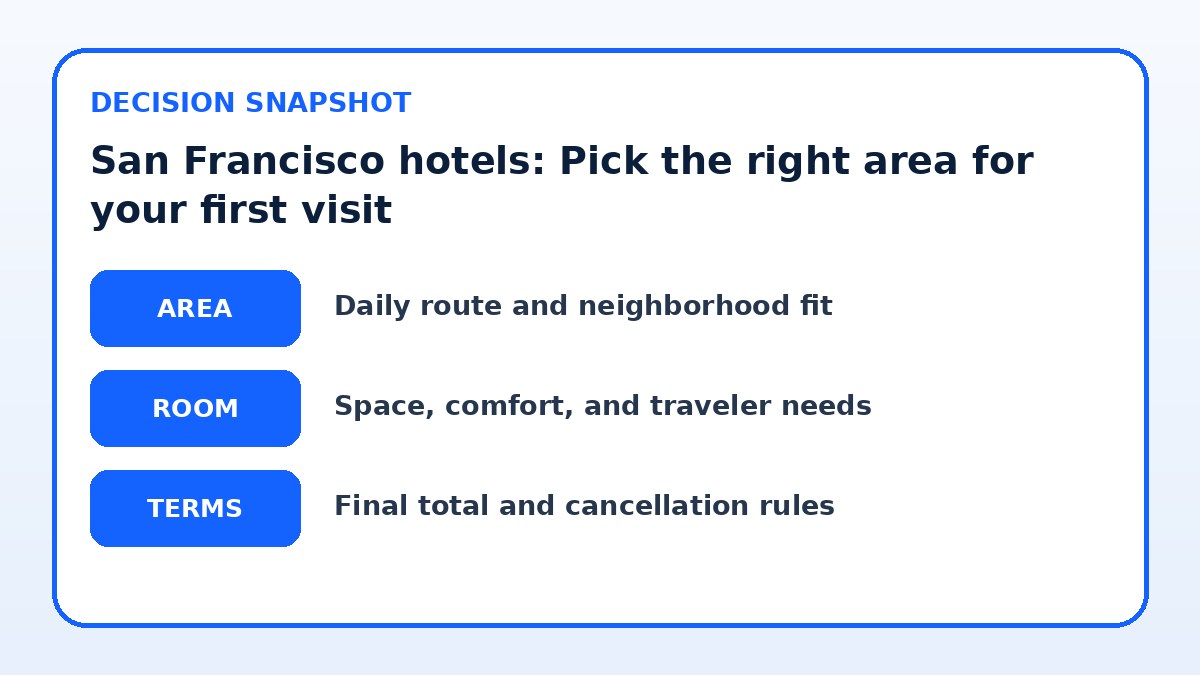
| Approach | Best for | Tradeoff to check |
|---|---|---|
| Stay near Union Square | Travelers wanting the widest transit options and downtown hotel variety | Busier commercial atmosphere and potential higher nightly rates for convenience |
| Stay at Fisherman’s Wharf / North Beach | Families and first-time visitors prioritizing waterfront attractions and Alcatraz access | High tourist density and a more commercial, less local feel |
| Stay on the Embarcadero | Walkers and ferry travellers who want scenic waterfront mornings | Linear location may increase travel time to western neighborhoods and some attractions |
| Stay in the Mission District | Food-focused travelers and nightlife seekers who prefer a neighborhood vibe | More noise at night, fewer large hotel options, and sometimes longer transit to tourist sites |

Embarcadero & Ferry Building — scenic walks and ferry options
The Embarcadero stretches along the eastern waterfront and is a great choice for travelers who want scenic mornings and convenient ferry links. The Ferry Building’s market and weekday vendors make for a relaxed breakfast scene before you head out. Staying near the Embarcadero gives you pleasant walking access to the Exploratorium, the piers, and long waterfront promenades that are ideal for running or strolling. If you plan day trips to Sausalito or the East Bay, ferry terminals nearby simplify those outings and reduce dependence on car transfers.
Consider that the Embarcadero is linear: you may be farther from attractions on the western side of the city or on the hills of Russian Hill and Nob Hill. Some hotels sit on the highway-adjacent stretch near the Bay Bridge, where traffic noise can be a factor; review photos and recent guest notes about noise and insulation. Also verify which hotels include breakfast or have on-site dining if you prefer not to walk to the Ferry Building every morning. Ferries and some attractions have seasonal schedules, so confirm times on provider pages when planning day trips.
Before you book
- Confirm exact hotel address and walk the route on a map app from your likely arrival point (BART station, airport shuttle stop, or pier).
- Read recent guest reviews for comments on noise, construction, and soundproofing, and look at photos showing the street-facing side of the building.
- Check the hotel’s cancellation and change policy on the booking page before paying to ensure flexibility if plans shift.
- Verify whether the listing includes parking, breakfast, Wi‑Fi, or other amenities you need and confirm details on the hotel’s official booking page.
- Compare transit options from your hotel to your main must-see sites by plotting typical routes and transfer counts on local transit maps.
- If you’re arriving late, message the hotel to confirm late check-in procedures and pick-up/drop-off points for taxis or rideshare.
Mission District — food, culture, and nightlife
If your priority is local food, murals, and a lively nightlife scene, the Mission District delivers an authentic San Francisco neighborhood feel. The area offers a concentration of taquerias, bakeries, and innovative restaurants, plus vibrant public art and small boutique shops. Accommodation options tend to be smaller hotels and guesthouses, giving a more intimate stay than downtown high-rises. The Mission can be a great base if you enjoy exploring neighborhoods on foot and want to experience local eateries that aren’t tourist-focused.
However, expect possible late-night noise and fewer large hotel choices with full-service amenities. Transit to some tourist sites can require transfers, and steep streets should factor into walking plans if mobility is a concern. When you book, check the hotel’s proximity to BART or major MUNI lines and verify whether the property lists soundproofing or quiet-room options. For travelers prioritizing a calm, family-friendly environment, compare the Mission’s energy level with quieter neighborhoods like Hayes Valley or the Marina before deciding.
Frequently asked questions
Is Union Square the best area for first-time visitors to stay in San Francisco?
Union Square is a convenient default because it offers the broadest hotel choice and excellent transit access (BART and many MUNI lines). For travelers prioritizing short walks to shops, theaters, and organized tours, it simplifies logistics. However, “best” depends on priorities: if you want waterfront mornings, Fisherman’s Wharf or the Embarcadero may suit you better; if you want local food and nightlife, the Mission might be preferable. Consider your daily itinerary, how much walking you’ll tolerate, and whether you prefer a commercial or neighborhood atmosphere before choosing.
How do I compare hotels across different San Francisco neighborhoods?
Start by listing your non-negotiables: proximity to specific attractions, transit, parking, and noise level. On hotel pages, check exact addresses, transit stop names, and room details (orientation, windows). Use map view to measure walking distances to your top three sites and count transit transfers. Read recent guest reviews for noise and cleanliness notes. Don’t rely on room type names alone—verify bed configuration and accessibility features on the provider’s final booking page to avoid surprises at check-in.
Are there neighborhoods I should avoid for a first visit to San Francisco?
Rather than a strict avoid list, think about tradeoffs. Some industrial or largely residential pockets lack hotels and late-night dining; these can be inconvenient for short stays. Certain areas may feel less active after dark and have fewer transit options. If mobility or late arrivals are concerns, avoid hotels with long walks from transit or isolated streets without easy rideshare access. Always check recent reviews and the hotel’s directions page, and confirm safety and lighting around entrances for nighttime arrival.
Final planning note
Choosing where to stay in San Francisco for a first visit comes down to matching your priorities to neighborhood strengths. Union Square wins for transit access and hotel variety; Fisherman’s Wharf and the Embarcadero give easy waterfront sightseeing; the Mission delivers local food and nightlife atmosphere. For each option, verify the hotel’s exact address, recent guest feedback about noise and cleanliness, and any amenity details that matter to you on the provider’s booking page before you finalize. When comparing availability and current conditions, you can check Trip.com as one comparison source, but always confirm final room details directly with the hotel’s official booking information.
Continue planning
Check current options and final conditions
Use the provider page to confirm live availability, the final total, cancellation terms, and every condition that matters to your trip.
This evergreen planning guide was created with AI-assisted drafting and a structured quality review. It does not display live prices, schedules, availability, visa guidance, or provider rankings. Verify current details before booking. Some links are affiliate links; we may earn a commission at no additional cost to you.