If you land in Busan and plan to shop, visit, or stay with more luggage than usual, the critical decision in the first hour after arrival is where you will sleep and how you’ll get back to the airport. For travelers with heavy or bulky bags, the practical answer is to pick an onward option—hotel or storage—that matches the party size and the number of extra items, then choose a transfer mode that avoids excessive handling. This guide focuses on planning the return trip to Busan’s airport: how to judge which transfer method fits your luggage, what to check if your arrival is delayed or disrupted, how to set a clear meeting point, and how to ensure your accommodation’s drop-off point works for a smooth final leg. Use this as a decision checklist while you have your flight and accommodation details open.
Check options for your arrival details
Use your flight, luggage, party size, and accommodation address to compare current choices.
Luggage and party size: matching vehicle to what you actually have
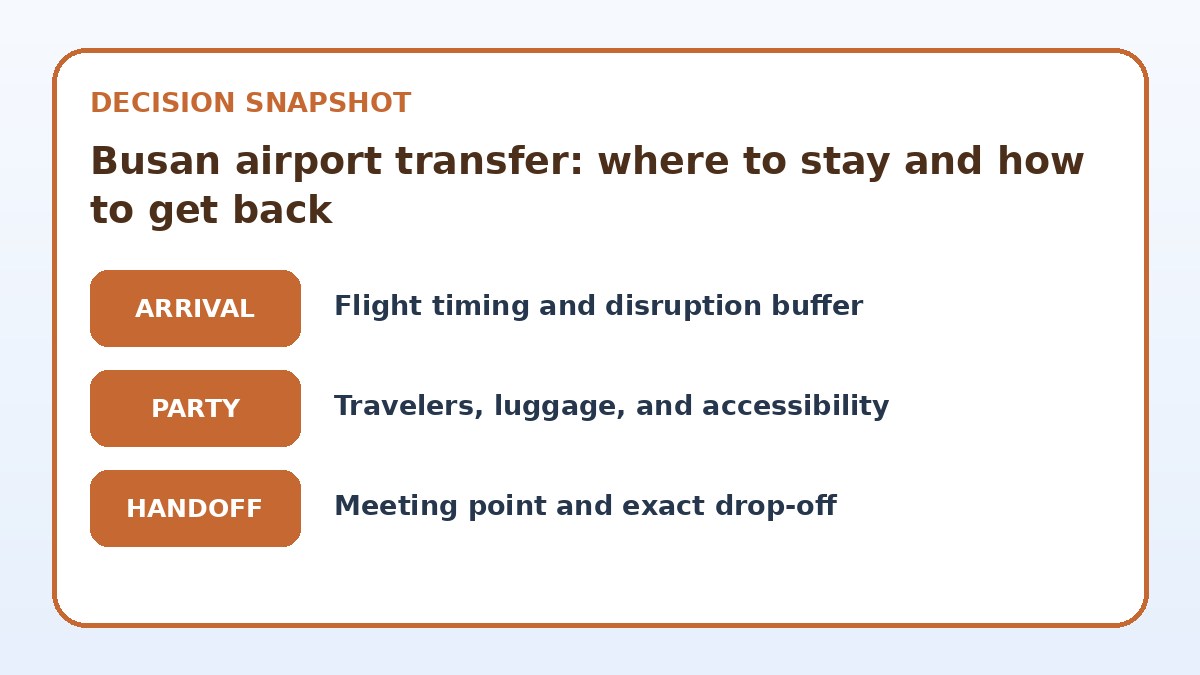
Start by inventorying bags: count suitcases, backpacks, and any oversized items such as sports gear, instruments, or box-shaped purchases. For each bag note approximate dimensions and whether it can be carried up stairs or needs a ramp. If you travel as a group, tally not only total pieces but also how many hands will be available to load and unload. That determines whether you should avoid small taxis and instead book a larger car, a van, or a private minibus. Keep this list handy when you contact providers or compare vehicle options.
When comparing options, think about handling rather than just capacity. A van might fit your bags but not allow easy movement through narrow driveways or hotel entrances; a private transfer company can sometimes meet you at a curb for minimal carrying. If any bag is heavy or awkward, factor in porter help or choose a transfer that explicitly offers trunk loading assistance. Before confirming a provider, verify their baggage allowance and how they handle oversized items on their final booking page so there are no surprises on the return leg.
Arrival details to have ready
- Count and measure every bag and note any oversized or fragile items before comparing transfer vehicles.
- Ask providers about baggage allowances, oversized item handling, and whether drivers assist with loading.
- Confirm pickup and drop-off exact locations and send photos or map pins to your driver and party.
- Check flexible rebooking or delay policies on the final booking page if your flight or plans could change.
- Verify your accommodation’s curb access rules and whether porters or hotel staff will assist with luggage.
- Save driver contact details, the booking voucher, and an alternative pickup plan in case of last-minute changes.
Late or disrupted arrivals: building flexibility into the return plan
Flights and trains can be delayed, connections missed, or plans changed. For the return trip, build buffer time into your schedule so you are not rushing with extra luggage. If your return flight is tight, consider an earlier transfer or a provider with a flexible cancellation or rebooking policy—verify these conditions directly on the provider’s booking page. If you prefer fixed pricing, ask what happens if the pickup time shifts by an hour or more; different operators handle delays differently.
If you expect variability, prioritize a transfer option that accepts on-the-day adjustments or provides a straightforward contact method in English or your preferred language. Keep local emergency and transport contact numbers saved, and store the transfer voucher, pickup instructions, and driver contact in a readily accessible place. Trip.com can be a place to compare availability, but always rely on the final provider page to confirm real-time policies and contact details.
Match the transfer to your arrival
| Arrival approach | Best for | Detail to verify |
|---|---|---|
| Private transfer (car/van) | Groups or heavy/oversized luggage needing door-to-door service | Higher booking coordination and potential access limits at narrow drop-offs |
| Taxi or app-based ride | Single travelers with a few bags who need flexibility and quick pickup | Smaller trunks and variable driver willingness to help with heavy items |
| Airport shuttle or shared transfer | Budget-conscious travelers with standard-sized luggage and flexible timing | Multiple stops and rigid schedules can add handling and walking with bags |
| Public transit (train/bus) plus locker | Travelers comfortable with transfers, who can split luggage or use lockers | More physically demanding and slower, with risk of limited locker size or availability |
Make the meeting plan clear
Check the final pickup instructions, waiting conditions, and exact drop-off coverage.
Meeting-point clarity: reduce the load of coordination
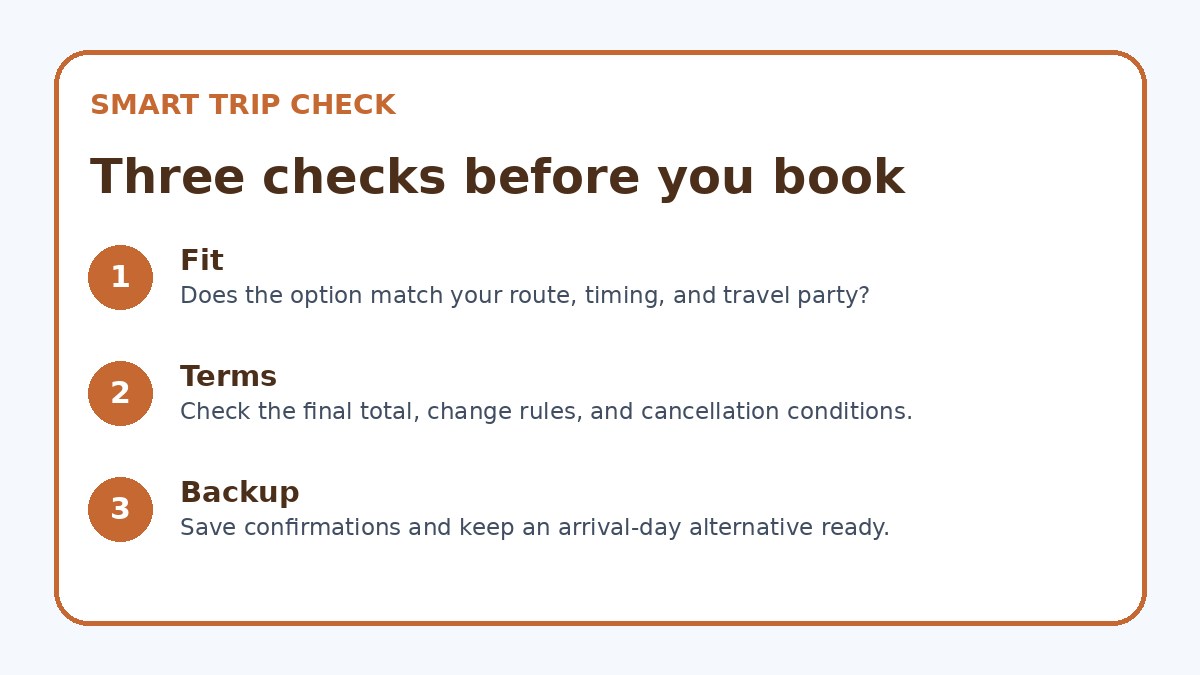
A confusing pickup point can turn a smooth return into a stressful scramble, especially with bulky luggage. Choose a meeting point with distinctive landmarks and shelter—main station exits, clearly named hotel lobbies, or a documented curbside loading zone work best. If your hotel has a formal pickup area, confirm whether drivers can enter the property or must wait at the main road. Share a photo of the exact spot with your party and the driver when possible to avoid miscommunication.
Give precise timing: state whether you will meet the vehicle at the property door or at a nearby road. For large groups, staggered pickups create fewer bottlenecks if the transfer provider allows multiple stops. If you will be collecting luggage from a locker, train station service, or a friend’s apartment, specify that in the booking notes and double-check access hours. Always verify the final pickup instructions on the operator’s booking confirmation to ensure the driver and the group have the same expectations.
Destination-side drop-off fit: think about where the driver can actually go
Not all vehicles can reach every building entrance. Narrow streets, pedestrian zones, and hotel loading restrictions can force passengers with heavy luggage to walk from the drop-off point. Before you book, confirm with your accommodation how close a private transfer or taxi can drop you and whether porters can meet you. If your hotel charges for valet or curbside service, ask whether the driver will assist with luggage or simply unload at the nearest legal stopping point.
If you plan to be dropped near tourist sites or smaller guesthouses, check whether the route includes steps, ramps, or uneven ground that might complicate wheeled suitcases. For final-mile challenges, a handier solution can be a smaller vehicle that can navigate tight streets combined with more hands to carry bags. For any operator-specific limits—like maximum door-to-door access or extra-handling charges—confirm these on the provider’s booking page before you finalize the transfer.
Airport Transfer & Local Mobility questions travelers ask
How do I decide between a private transfer and a taxi in Busan when I have extra luggage?
Start by matching volume and ease of movement: if your bags are numerous or oversized, a private transfer with a van or minibus minimizes handling and reduces multiple car trips. Taxis can be faster to hail but often have smaller trunks and drivers may be reluctant to make long loading efforts. Ask both options about their baggage policy and confirm on the operator’s booking page whether the vehicle type you requested will be provided and whether drivers will help with loading and unloading.
What should I do if my return flight time changes and I already booked a transfer in Busan?
First, contact your transfer provider as soon as you know about the schedule change to ask about rebooking or delaying pickup. Many services offer adjustments but the terms vary—some allow changes without penalty within a certain window, others require a fee. If the provider cannot accommodate your new time, look for alternatives such as a taxi or ride-app that can respond on demand. Always check the provider’s final booking page for their official change and cancellation policy before making decisions.
Is it better to use a luggage storage facility in Busan before heading to the airport?
Luggage storage can simplify your return leg if you want to sightsee or shop without dragging heavy bags. Choose a facility close to your last attraction or to a reliable public-transport hub; verify operating hours and maximum luggage dimensions before dropping anything off. For peace of mind, use locations that provide a receipt, clear security measures, and straightforward pickup procedures. Confirm the storage provider’s terms and any size limits on their booking or information page prior to leaving your bags.
Final decision note
Planning the return leg to Busan’s airport with extra luggage means choosing the transfer fit by real measures: how many bags, who will carry them, how flexible your schedule must be, and where vehicles can legally stop. Do the small homework—measure bags, confirm pickup and drop-off rules with both the operator and your accommodation, and save contacts and vouchers—so the final day is calm rather than chaotic. Use the comparison rows to match your needs (speed, cost, flexibility, handling), and always verify baggage policies and change rules on the provider’s booking page before you commit. With clear meeting points and a realistic match between luggage and vehicle, the last leg home can be straightforward.
Continue planning
Check current options and final conditions
Use the provider page to confirm live availability, the final total, cancellation terms, and every condition that matters to your trip.
This evergreen planning guide was created with AI-assisted drafting and a structured quality review. It does not display live prices, schedules, availability, visa guidance, or provider rankings. Verify current details before booking. Some links are affiliate links; we may earn a commission at no additional cost to you.