Practical answer first: set price alerts for flights and packages to monitor Auckland travel deals, but delay booking until you compare exact inclusions, luggage allowances, change/cancel rules, and total cost for your specific number of bags. Alerts are a monitoring tool, not a signal to buy immediately—use them to gather options, then compare apples-to-apples: same dates, travelers, and baggage needs. For travelers carrying extra luggage, the difference between a bundle’s headline price and the true door-to-door cost can be significant once checked baggage, seat selection, and transfer conditions are added. This guide shows what to compare before deciding whether a package or separate booking is the better fit, how to read the fine print about baggage and flexibility, and simple rules to avoid impulse purchases when alerts flash.
Test package value fairly
| Booking approach | Best for | Tradeoff to check |
|---|---|---|
| Bundle package (flight+hotel+transfer) | Travelers wanting door-to-door simplicity and predictable single-point support for luggage-handling | May hide separate baggage fees or stricter change rules that make changes costly for heavy-luggage travelers |
| Flight-only with pre-paid baggage and separate hotel booking | Travelers who want control over airline baggage options and potentially lower bag-inclusive fares | Requires more time to assemble and compare total costs; transfers and timings may not align automatically |
| Low-cost carrier flight + local transfer and hotel booked separately | Budget-focused travelers who can handle logistics and pack flexibly to meet low-cost baggage limits | Low headline fares often exclude baggage and seat selection; total cost can exceed full-service options once extras are added |
| Full-service airline package with all bags included vs. à la carte comparison | Those who prioritize predictable baggage inclusion and fewer add-on decisions at check-in | Higher upfront price that should be validated against separate booking totals for identical baggage and dates |
Check current package and separate options
Use identical dates, travelers, room needs, baggage, and flexibility so the comparison stays meaningful.
What you must compare before treating a package as a deal
Begin by listing the exact elements you need: outbound and return flight itineraries, number and weight of checked bags, carry-on allowances, seat selection policy, airport transfers, hotel room type and breakfast, and the change/cancellation terms for each component. Price alerts often highlight only the headline tariff; your job is to expand the record. For flights, open the airline’s or booking platform’s final booking page to see the baggage options and the fees associated with each. For hotels, confirm room occupancy rules and whether breakfast or other services are genuinely included or offered as an optional add-on at checkout.
Compare the same dates, same traveler profiles, and the same baggage requirements across any package and separate-booking scenarios. If an alert covers a package, reconstruct the potential separate-booking equivalent: the flight(s) you would take, the hotel you would choose, and the cost of transfers and baggage added to those. Check whether the bundle locks you into specific flight times or carriers that carry different bag policies. Only when those elements match can you fairly judge whether the package truly saves money or simply reconfigures what is charged up front versus at the gate.
Inclusions and fine print: where extra luggage changes the math
A package may advertise a low headline price but exclude checked baggage or charge for transfers—two areas where travelers with extra luggage feel the cost most. Confirm whether the package fare includes checked bags per passenger and whether that allowance is transferable among travelers on the same booking. Also verify whether the listed “transfer” is a private meet-and-greet, shared shuttle, or a suggestion to take paid public transport; each has different costs and baggage-handling practicalities. When in doubt, treat missing or ambiguous baggage language as excluded until the provider’s booking page or customer-service confirmation says otherwise.
Pay attention to size/weight limits and how add-ons are sold. Some suppliers let you pre-pay extra bags at a lower rate than at the airport; others only allow add-ons during online check-in at higher fees. For hotels, confirm whether room layouts can handle extra suitcases—book a larger room category if necessary rather than assuming luggage fits in a standard twin. Practically, make a small spreadsheet: itemize base fare, baggage fees, transfers, seat fees, and any compulsory taxes or resort fees to compare final totals across bundle and separate options.
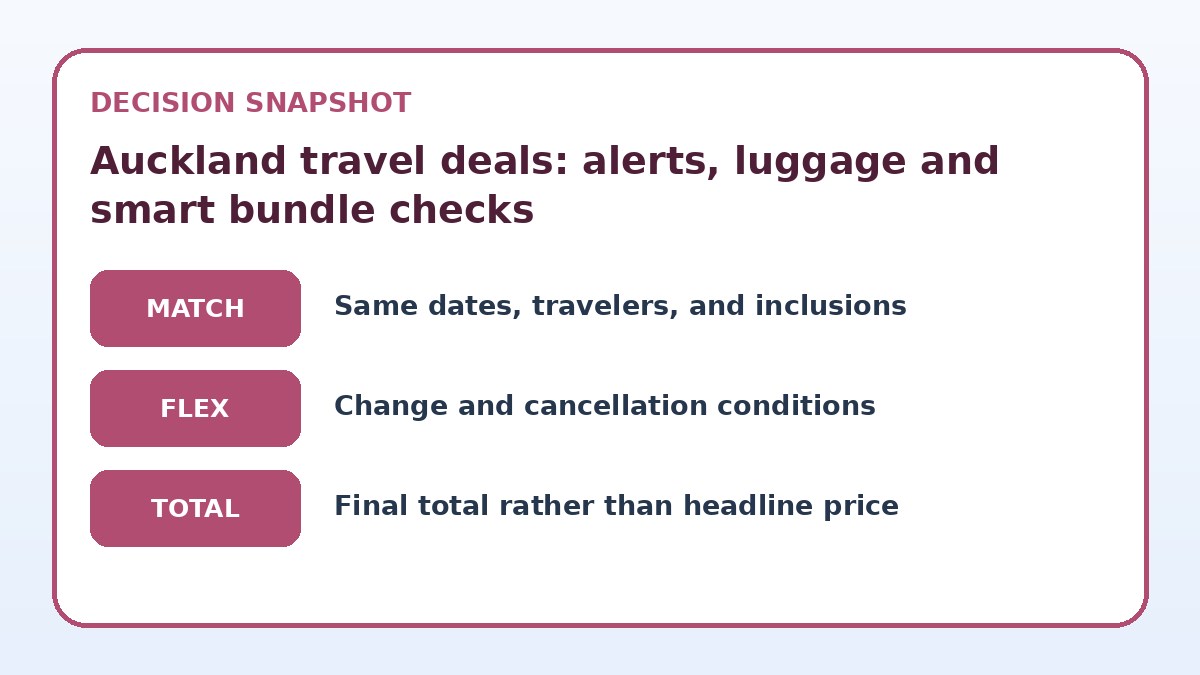
Look past the headline total
Compare inclusions and change conditions before deciding whether a package is genuinely useful for this trip.
Deal comparison checklist
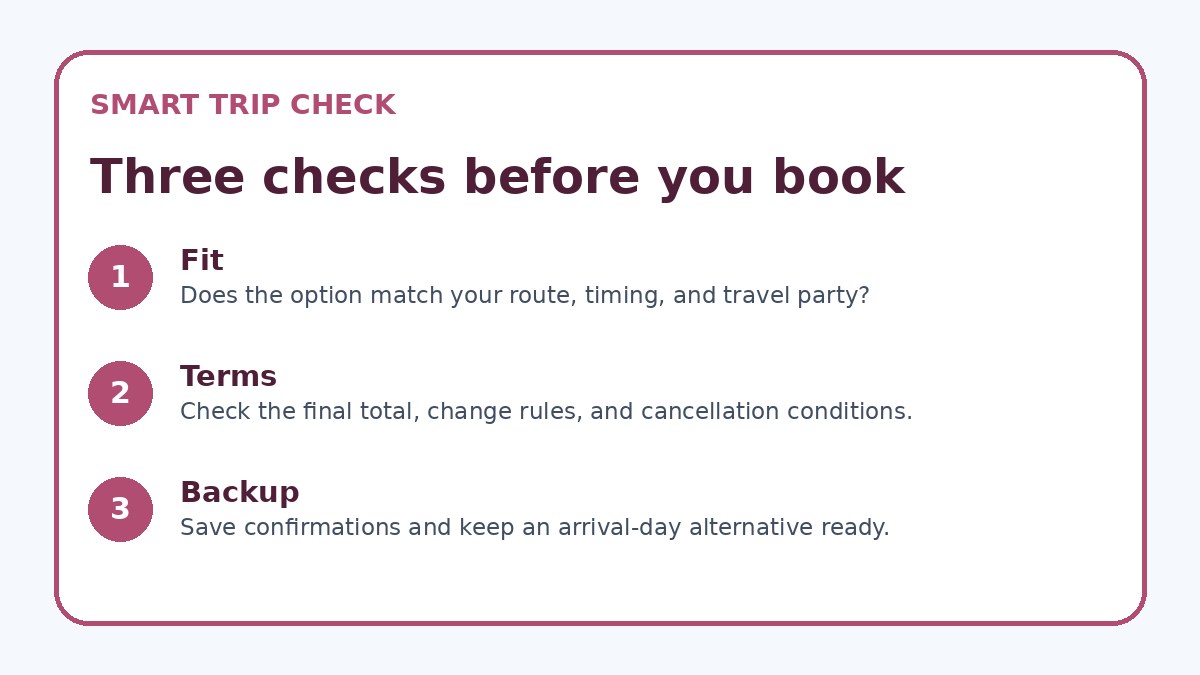
- Create a one-line summary for each alert listing dates, flight times, fare class, and explicit baggage allowance before comparing it to alternatives.
- Open the final booking page for any alert and screenshot or copy the baggage policy, change/cancel terms, and included extras before you move on.
- Build a simple comparison spreadsheet: column for package, flight-only, hotel-only, transfers, baggage fees, and final total per traveler including taxes and compulsory fees.
- If a package lists transfers, confirm transfer type and luggage handling on the provider’s booking page—shuttle, private transfer, or public transit—and price an oversize-item charge if relevant.
- Set two alerts: one for headline price drops and one focused on fares that already include the checked bags you need; prioritize the bag-inclusive alert.
- Wait 24–72 hours after a price alert to purchase unless you have verified inclusions, compared identical scenarios, and accept the stated change and cancellation conditions.
Flexibility and traveler-specific value when you have more bags
Flexibility often becomes more valuable when you travel with more luggage because changes have higher transactional costs: moving flights can mean rebooking seats that accommodate luggage, changing transfers can mean hiring new oversized taxis, and cancelling a hotel may incur nonrefundable rates. Check the package’s change and cancellation rules for each component: does the supplier offer free changes within a certain window? Is there a single-package fee for changes, or do separate suppliers handle changes individually? For people carrying fragile gear or extra sport equipment, verify whether special baggage policies exist and how third-party transfer providers charge for oversize items.
Traveler-specific value also depends on who’s traveling. Families, people moving for work, or long-stay visitors often benefit from the convenience of a bundled transfer that handles luggage door-to-door. Solo travelers or those on short trips may prefer separate bookings to hunt lower bag-inclusive flight fares. Consider the non-monetary value too: bundled options that simplify check-in and transfers may reduce stress and save time—quantify that time and stress savings against any extra cost for included baggage services before deciding.
How to use price alerts without falling for impulse bookings
Treat every alert as an invitation to research, not an instant purchase trigger. When an alert arrives, open the exact airline or package final booking page and immediately look for baggage inclusions, change fees, and the booking class code or package terms. If the alert references a package, rebuild the separate-booking alternative to check whether buying flights and hotels separately with a pre-paid baggage option is cheaper once all extras are included. Use a checklist or spreadsheet to compare final totals for the same dates, passengers, and baggage; this disciplined comparison prevents leaping at an appealing headline price.
Set two kinds of alerts: one for headline price movement and another for specific options that already include the baggage you need. Some fare trackers let you monitor a particular fare class or baggage-inclusive fare; choose that when available. Keep a short cooling-off rule: wait 24–72 hours after a price alert before purchasing unless you have already verified inclusions and are ready to accept the change/cancellation conditions. This buffer reduces impulse errors and gives time to confirm policies directly with the provider or on a platform such as Trip.com if you want to compare availability.
Travel Deals & Booking Strategy questions travelers ask
Will a bundle usually include checked baggage for Auckland trips?
Bundles vary widely; many advertise competitive headline prices but exclude checked baggage or include only a single small bag. Always verify on the provider’s final booking page whether checked bags, weight limits, and the number of permitted items are explicitly listed. If baggage inclusion is essential, look for wording such as “includes X checked bag(s) per passenger” or similar. If the wording is vague or missing, assume baggage is not included until confirmed and factor in the cost of pre-paid bags when comparing options.
How do I avoid impulse decisions when an alert shows a sudden low fare to Auckland?
Use a simple cooling-off process: document the alert details, immediately check the final booking page for baggage and change rules, and rebuild a separate booking comparison for identical dates and luggage needs. Set a 24–72 hour waiting rule unless you’ve already validated inclusions and are comfortable with the cancellation policy. This pause gives you space to verify that the headline price covers the baggage you need and prevents buying a seemingly low fare that becomes expensive after adding standard baggage fees.
If I have oversized sport or equipment bags, what should I check before booking a package?
Confirm whether the package’s flights and transfers explicitly accept oversized items and what additional fees or advance-notice rules apply. Check the airline’s special baggage policy on the final booking page and verify transfer providers’ capacity to handle oversized luggage, since some small shuttles or shared transfers may charge extra or be unsuitable. If policies are unclear, contact the airline and transfer provider directly for confirmation and written proof or choose separate bookings so you can select providers known to accommodate your equipment.
Final decision note
Price alerts are powerful when used as a research tool rather than a trigger to buy. For travelers carrying extra luggage to Auckland, the critical work is comparing identical scenarios: same dates, same number of travelers, and explicit baggage inclusions. Use alerts to collect candidate fares, then verify baggage allowances, transfer types, and change/cancellation conditions on the provider’s final booking pages. Keep a short cooling-off window and a simple spreadsheet to compare final totals. If you need a quick place to cross-check availability and policies, consider platforms such as Trip.com as one source—but always validate baggage and refund rules on the supplier’s booking page before you commit.
Continue planning
Check current options and final conditions
Use the provider page to confirm live availability, the final total, cancellation terms, and every condition that matters to your trip.
This evergreen planning guide was created with AI-assisted drafting and a structured quality review. It does not display live prices, schedules, availability, visa guidance, or provider rankings. Verify current details before booking. Some links are affiliate links; we may earn a commission at no additional cost to you.